
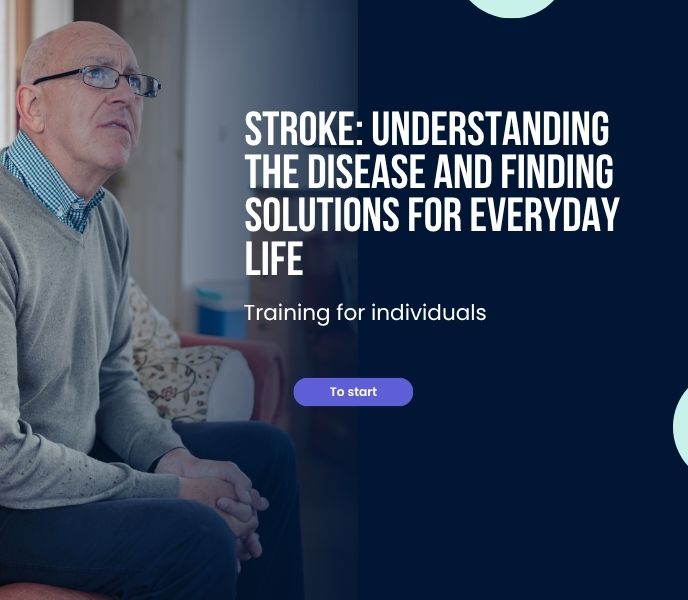
Description
This training course gives you simple guidelines for understanding stroke (ischemic or hemorrhagic), its causes and after-effects, recognizing warning signs and taking immediate action. You’ll find practical tips on how to organize your day-to-day life, and tools to stimulate recovery, safety and serenity at home.
Training objectives
-
Differentiate between types of stroke (ischemic vs. hemorrhagic), risk factors and prevention levers.
-
Identify warning signs ( Face-Arm-Speech rule / VBP, other signs, TIA) and call 15 immediately.
-
Identify common sequelae: motor skills (hemiplegia), language (aphasia), cognition/memory, vision, sensitivity, mood.
-
Secure the home: grab bars, non-slip mats, lighting/lights, clear corridors, accessible objects.
-
Structure daily rehabilitation: simple, regular exercises (motor skills, coordination, balance, walking) with gentle progression.
-
Stimulate cognition and language: memory games, reading, music, simple words and visual/digital aids.
-
Organize your day: split tasks, alternate effort and rest, prioritize and delegate.
-
Maintaining a social life: short, regular outings, patient associations/groups, combating isolation.
-
Communicate positively & support the caregiver: short messages, gestures and looks, encouragement; recognize each person’s emotions and preserve time for yourself.
-
Tool support with DYNSEO – CLINT (30+ games for memory, attention, logic) and monitor progress to adjust.
A 100% practical course to take action now: you’ll leave with a clear plan, effective routines and concrete tools to secure, stimulate and strengthen the bond on a daily basis – for the benefit of the person concerned and the whole family.


Reviews
There are no reviews yet.