
title: Sport Alzheimer’s’s prevention: physical exercises protect the brain, aerobic activity, weight training
description: Complete guide to sport Alzheimer’s’s prevention: physical exercises protect the brain reducing risk by 30%, BDNF neurogenesis, aerobic activities walking swimming cycling, weight training, dancing, yoga, senior programs, frequency intensity WHO recommendations and cognitive benefits of exercise.
keywords: sport, Alzheimer’s’s, prevention, physical exercise, brain, aerobic activity, weight training, dancing, walking, BDNF
[/META]
sport, Alzheimer’s’s, prevention, physical exercise, brain, aerobic activity, weight training, dancing, walking, BDNF, neurogenesis
[/TAGS]
Reading time: 35 minutes
“Does sport really protect the brain?” “At 65, is it too late to start?” “Is walking enough or do you have to run?” “Weight training for Alzheimer’s’s?” “How much time, frequency?” “If mobility is reduced, what are the options?”
Sport = Natural, powerful, free medicine against Alzheimer’s’s. Formal scientific studies: Regular physical activity reduces Alzheimer’s’s risk by 30-40%, slows cognitive decline (if already ill), improves quality of life. Mechanisms: BDNF (neurotrophic factor stimulates neuron growth), neurogenesis (new neurons in the hippocampus), blood circulation in the brain (oxygen, nutrients), reduction of inflammation, control of risk factors (hypertension, diabetes, obesity). No need for a marathon: 150 minutes/week (moderate) or 75 minutes (intense) are sufficient. Fast walking, swimming, cycling, dancing, weight training, yoga: All effective. The key = Regularity, enjoyment, adaptation to abilities.
This guide details the benefits of sport on the brain, recommended exercises, senior programs, practical advice, and daily integration.
—
Table of contents
1. Sport and the brain: scientific evidence
2. Mechanisms: how sport protects the brain
3. Reduction of Alzheimer’s’s risk: the numbers
4. Types of recommended exercises
5. Aerobic activities: walking, swimming, cycling
6. Weight training and strengthening
7. Dancing: the complete exercise
8. Yoga and tai chi: body and mind
10. Frequency and intensity: WHO recommendations
12. Combining sport and other factors
—
Sport and the brain: scientific evidence {#scientific-evidence}
Epidemiological studies
Large cohorts:
Follow-up: Thousands of people, decades.
Results:
- Physically active: Alzheimer’s’s risk reduced by 30-40% (vs sedentary).
- Dose-response: More activity, less risk (linear until plateau).
- Moderate walking : 3 MET.
- Light cycling : 4 MET.
- Swimming : 6 MET.
- Running : 8 MET.
- Monday : Walk 30 min.
- Tuesday : Weight training 30 min.
- Wednesday : Swimming 30 min.
- Thursday : Yoga 30 min.
- Friday : Cycling 30 min.
- Saturday : Dance 1h.
- Sunday : Rest or light walk.
- 150-300 min/week (moderate intensity) OR
- 75-150 min/week (high intensity) OR
- Equivalent combination.
- Alzheimer’s’s training: Sports and prevention
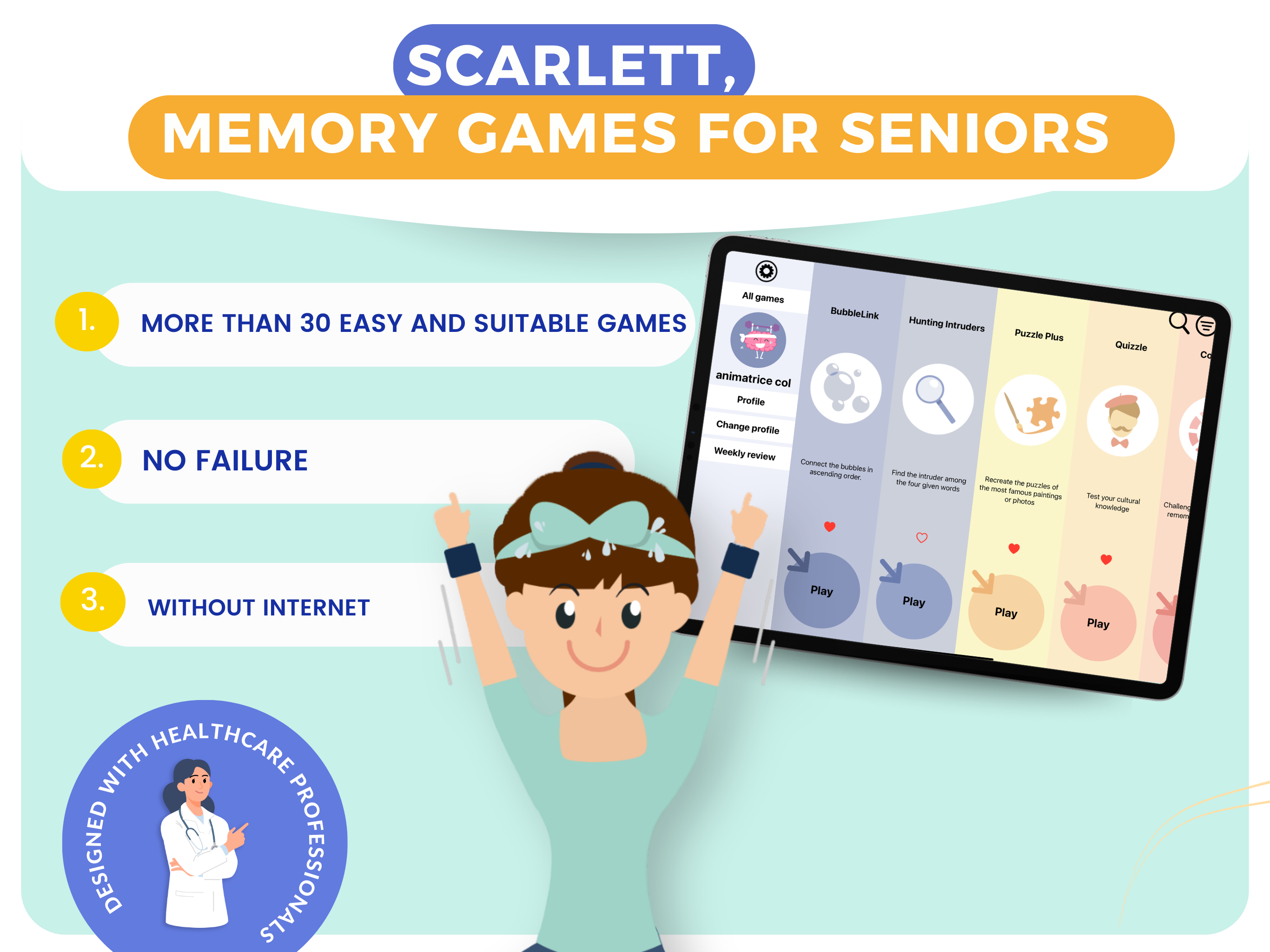
- SCARLETT: Complementary cognitive stimulation through sports
- Free guide to support people with Alzheimer’s’s
Examples:
Rush study: 716 seniors (4 years), daily physical activity = 50% less Alzheimer’s’s.
Lancet study: Physical inactivity = 3% risk attributable to Alzheimer’s’s (12 modifiable factors).
Clinical trials
Interventions:
Groups: Exercise vs control (sedentary).
Duration: 6-12 months.
Measures: Cognitive tests, brain MRI.
Results:
Memory: Improved (exercise group).
Hippocampus: Volume increased (+2% in 1 year, example).
Executive functions: Attention, planning (better).
Diagnosed Alzheimer’s’s
Slowing decline:
Alzheimer’s’s patients: Regular exercise (slows progression, improves quality of life).
Independence: Preserved longer.
Behavioral disorders: Reduced (agitation, depression).
—
Mechanisms: how sport protects the brain {#mechanisms}
BDNF: neurotrophic factor
Brain-Derived Neurotrophic Factor:
Role: Stimulates growth, survival, differentiation of neurons.
Plasticity: Strengthens synapses (learning, memory).
Exercise:
Increases BDNF: Blood, brain (proportional to intensity).
Hippocampus: Memory area (benefits ++).
Effect: “Brain fertilizer” (neuroscientist John Ratey).
Neurogenesis
New neurons:
Hippocampus: Memory area (adult neurogenesis, proven).
Exercise: Stimulates production of new neurons (even in seniors).
Integration: New neurons (into existing, functional networks).
Result: Memory capabilities preserved, improved.
Blood circulation
Angiogenesis:
New vessels: Brain (exercise stimulates).
Perfusion: Oxygen, glucose, nutrients (increased).
Brain areas: Better irrigated (optimal functioning).
Prevention:
Vascular lesions: Micro-strokes (reduced).
Dementia vascular : Decreased risk (also mixed Alzheimer’s’s).
Reduction inflammation
Chronic inflammation :
Brain : Activated microglia (neuron lesions).
Alzheimer’s’s : Inflammation accelerates (plaques, tangles).
Exercise :
Anti-inflammatory : Pro-inflammatory cytokines (reduced).
Anti-inflammatory cytokines : Increased (IL-10).
Effect : Brain protected (inflammation controlled).
Control risk factors
Hypertension :
Exercise : Lowers blood pressure (protects brain vessels).
Obesity :
Weight loss : Reduces inflammation, insulin resistance.
Diabetes :
Insulin sensitivity : Improved (blood sugar controlled).
Depression :
Endorphins : Released (mood, motivation).
Sleep :
Quality : Improved (memory consolidation).
—
Reduction of Alzheimer’s’s risk: the numbers {#reduction-risque}
Statistics
Meta-analyses :
30-40% risk reduction : Active vs sedentary (average).
Dose-response : 10 MET-hours/week (optimal, MET = Metabolic Equivalent).
Examples MET :
10 MET-hours : 150 min moderate walking/week (WHO recommendation).
Never too late
Seniors :
65-80 years : Start exercising (benefits, even late).
Studies : Activity started at 70 years (reduces risk anyway).
Progression : Linear (the earlier you start, the better, but never too late).
Comparison with other interventions
Medications :
No effective : Alzheimer’s’s prevention (to date).
Exercise : Proven effectiveness (free, accessible).
Diet :
MIND : 35-53% reduction (combined exercise = Synergy).
—
Recommended types of exercises {#types-exercices}
Aerobic (cardio)
What : Activities that increase heart rate (sustained).
Examples : Fast walking, running, cycling, swimming, dancing.
Benefits : Blood circulation, BDNF, neurogenesis (maximal).
Priority : Base program (150 min/week).
Muscle strengthening
What : Resistance exercises (weights, bands, body weight).
Examples : Weightlifting, squats, push-ups, pilates.
Benefits : Strength, balance, fall prevention, bone health, cognition (recent studies).
Frequency : 2-3 times/week.
Balance and flexibility
What : Yoga, tai chi, stretching.
Benefits : Fall prevention, coordination, relaxation (stress reduced).
Frequency : 2-3 times/week.
Dual-task activities
What : Physical + cognitive simultaneously.
Examples : Dance (memorizing choreographies), team sports (strategy), tai chi (concentration).
Benefits : Synergies (physical stimulates body, cognitive stimulates brain, combined = Optimal).
—
Aerobic activities: walking, swimming, cycling {#aerobies}
Fast walking
Simplicity :
Accessible : Everywhere, free, minimal equipment.
Adaptation : Adjustable pace (abilities).
Recommendation :
30 min/day : 5 days/week (150 min total).
Intensity : Moderate (slight breathlessness, can talk but not sing).
Variations :
Nordic walking : Poles (engages upper body, balance).
Group walking : Social (motivation, connection).
Nature walks : Forest, park (benefits + psychological).
Benefits :
Hippocampus : Increased volume (MRI studies).
Memory : Improved.
Cardiovascular : Heart health, vessels.
Swimming
Complete :
Whole body : Engaged (cardio, light strength training).
Joints : Protected (water buoyancy).
Recommendation :
2-3 times/week : 30-45 min.
Styles : Freestyle, breaststroke, backstroke (vary).
Aqua aerobics : Alternative (seniors, reduced mobility).
Benefits :
Cardio : Excellent.
Breathing : Control (oxygenation of the brain).
Relaxation : Water (stress reduced).
Cycling
Gentle :
Joints : Protected (no impact).
Outdoor or indoor : Road bike, stationary bike.
Recommendation :
30-60 min : 3-4 times/week.
Intensity : Moderate to intense (depending on abilities).
Safety : Helmet, quiet roads (seniors).
Benefits :
Cardio : Powerful.
Quadriceps : Strengthened (fall prevention).
Pleasure : Landscapes, freedom (motivation).
—
Weight Training and Strengthening {#musculation}
Importance for Seniors
Sarcopenia :
Muscle mass loss : Age (from 30 years, accelerates 50+).
Consequences : Weakness, falls, dependence.
Weight training : Slows down, reverses (possible at any age).
Exercises
Free weights :
Dumbbells : 1-5 kg (beginners).
Exercises : Biceps, shoulders, back.
Body weight :
Squats : Thighs, glutes (chair support if needed).
Push-ups : Chest, arms (wall or knees, adapted).
Plank : Core stability (abdominals, back).
Resistance bands :
Resistance bands : Inexpensive, portable.
Exercises : Varied (full body).
Machines :
Gym : Guided (safety).
Supervision : Coach (beginners).
Program
Frequency : 2-3 times/week.
Sets : 2-3 per exercise.
Repetitions : 10-15 (beginners), 8-12 (advanced).
Progression : Increase weight, repetitions (gradually).
Rest : 1-2 days between sessions (recovery).
Cognitive Benefits
Recent studies :
Weight training : Improves executive functions (attention, planning).
Mechanism : BDNF, IGF-1 (growth factor), circulation.
Combination : Aerobic + Weight training = Optimal (complementary).
—
Dance: the Complete Exercise {#danse}
Advantages
Triple benefit :
Physical : Cardio, balance, coordination.
Cognitive : Memorization of steps, sequences (high demand ++).
Social : Classes, partners (social connection).
Pleasure : Music, creativity (high motivation).
Types of Dance
Seniors :
Ballroom dance : Waltz, tango, cha-cha (partner).
Line dance : Group, synchronized.
Senior Zumba : Adapted (Latin rhythms, moderate).
Contemporary dance : Expression, creativity.
Beginners : Senior classes (adapted pace, kindness).
Studies
Research :
Dancers : Reduced Alzheimer’s’s risk by 76% (study from Albert Einstein College, New York).
Mechanism : Complexity (memorization, coordination, improvisation).
Comparison : Dance > Other exercises (cognitive effect).
Program
Frequency : 1-2 times/week (1-hour classes).
Complement : Walking on other days (150 min total).
Variety : Different styles (novelty, stimulation).
—
Yoga and Tai Chi: Body and Mind {#yoga-taichi}
Yoga
Practice :
Postures : Asanas (balance, flexibility, strength).
Breathing : Pranayama (oxygenation).
Meditation : Mindfulness (reduces stress).
Seniors :
Gentle yoga : Hatha, yin (slow pace, adapted).
Chair : Seated yoga (reduced mobility).
Benefits :
Balance : Improved (fall prevention).
Stress : Reduced (lowered cortisol).
Cognition : Attention, memory (positive studies).
Tai Chi
Martial art :
Slow movements : Fluid, coordinated.
Concentration : Moving meditation.
Balance : Focus (stability).
Seniors :
Adapted : Pace, difficulty.
Groups : Parks, senior centers (social).
Benefits :
Fall prevention : Enhanced balance ++.
Cognition : Memory of sequences, concentration.
Well-being : Serenity, energy.
Program
Frequency : 2-3 times/week (30-60 min).
Complement : Aerobic activities (balance the program).
Classes : Qualified instructor (seniors, beginners).
—
Programs for Seniors {#programmes-seniors}
Beginners (sedentary)
Week 1-4 :
Walking : 10 min/day (daily).
Intensity : Light (comfortable).
Week 5-8 :
Walking : 20 min/day.
Intensity : Moderate (slight breathlessness).
Week 9-12 :
Walking : 30 min/day, 5 days/week (150 min).
Add : Light weight training (2 times/week, 20 min).
Intermediates
Aerobic : 150 min/week (walking, cycling, swimming, varied).
Weight training : 2-3 times/week (30 min).
Balance : Yoga or tai chi (2 times/week).
Example week :
Advanced
Aerobic : 200-300 min/week (moderate to high intensity).
Weight training : 3-4 times/week (45 min).
Variety : Sports (tennis, hiking, intense swimming).
—
Frequency and intensity: WHO recommendations {#frequence-intensite}
WHO 2020
Adults 65+ years :
Aerobic :
Weight training : 2 days/week (major muscle groups).
Balance : 3 days/week (fall prevention).
More = Better : Benefits increase (up to plateau ~300 min/week).
Moderate intensity
Definition :
Light breathlessness : Can talk, not sing.
Heart rate : 50-70% max (220-age).
Examples : Fast walking, flat cycling, aqua aerobics.
High intensity
Definition :
Significant breathlessness : Short sentences.
Heart rate : 70-85% max.
Examples : Running, hill cycling, intense swimming.
Seniors : Caution (consult doctor beforehand).
—
Start at any age {#commencer}
Never too late
65, 70, 80 years :
Benefits : Proven (even late starters).
Studies : Sedentary seniors (start exercise → Cognitive improvement).
Progression : Slow, steady (patience).
Consult doctor
Before starting :
Assessment : Cardiac, joints, chronic diseases.
Green light : Doctor (adaptations if necessary).
Follow-up : Regular (adjust program).
Gradualness
No brutality :
Start gently : 10 min/day (increase gradually).
Listen to body : Pain, fatigue (respect).
Avoid injuries : Warm-ups, stretches, rest.
Pleasure
Motivation :
Favorite activities : Choose (dance vs running, according to preferences).
Variety : Avoid monotony (alternate).
Social : Groups, clubs (support, friendliness).
Goals : Realistic (celebrate progress).
—
Combine sport and other factors {#combiner}
MIND Diet
Synergy :
Sport + MIND : Maximizes benefits (circulation + Nutrition).
Hydration : Water (before, during, after exercise).
Cognitive stimulation
SCARLETT :
Sport + SCARLETT : Complementary (body + Mind).
Timing : Sport (morning), SCARLETT (afternoon), example.
Social
Group activities :
Walking, swimming, dancing clubs : Sport + Social connection (protective factors).
Sleep
Exercise :
Improves sleep : Quality, duration.
Timing : Avoid intense evening (excitement, insomnia).
Ideal : Morning, afternoon.
—
Testimonials
Marguerite, 78 years
“Sedentary for 70 years. Granddaughter insists: Daily walk. Reluctant at first. Started 10 min/day. 8 years later: 30 min daily, swimming 2 times/week. Incredible shape. Doctor: ‘Exceptional memory for your age.’ Sport = Transformation. Regretted not doing it earlier, proud now.”
Paul, 82 years
“Mild Alzheimer’s’s diagnosed at 78 years. Neurologist recommends exercise. Program: Walk 30 min/day, light weight training 2 times/week, tai chi 1 time/week. 4 years later: Decline slowed (stable cognitive tests), excellent mood, preserved autonomy. Sport = Ally.”
Claire, 60 years
“Mother with Alzheimer’s’s at 80 years. Me: Prevention. Exercising for 55 years: Walking, yoga, cycling. Now at 60 years: Great shape, excellent memory, energy. Daily sport (established habit). Genetic fear? Yes. But I act. Sport = Shield.”
—
Conclusion: Move to protect your brain
Sport = Natural, powerful, free medicine. 30-40% reduction in Alzheimer’s’s risk (active vs sedentary) = Huge. Clear mechanisms: BDNF, neurogenesis, circulation, reduced inflammation. Varied exercises: Walking, swimming, cycling, weight training, dancing, yoga. 150 min/week (moderate) is enough. Never too late: 65, 70, 80 years (proven benefits). Start today. 10 minutes walking. Tomorrow 15. Next week 20. Gradually, body strengthens, brain protects. Sport = Life investment. Every step counts. Every session protects. Move. Daily. For life. Your brain will thank you. Today. Tomorrow. Always.
The keys to sport for Alzheimer’s’s prevention:
1. ✅ 150 min/week moderate activity (minimum)
2. ✅ Aerobic priority (walking, swimming, cycling)
3. ✅ Weight training 2 times/week (strengthening)
4. ✅ Dance (triple benefit: physical, cognitive, social)
5. ✅ Balance (yoga, tai chi, fall prevention)
6. ✅ Start gradually (listen to your body)
7. ✅ Consistency (ideal daily routine)
8. ✅ Enjoyment (long-term motivation)
You are not alone. Our Alzheimer’s’s training explains sports. SCARLETT complements (body + Mind). Free guide: All resources.
—
DYNSEO resources for brain health:
—
You tie your shoes. Go out. First step. Second. Third. Walking begins. Heart races (slightly). Blood circulates. Oxygen reaches the brain. BDNF is released. Neurons grow, synapses strengthen. You walk. 10 minutes, 20, 30. Return home. Slight breathlessness, deep satisfaction. Tomorrow? Again. The day after tomorrow? Always. Every step = Protection. Every session = Investment. Alzheimer’s’s? It may come. But you will have moved. Protected. Resisted. Strong body, vibrant brain. Walk. Run. Dance. Live. Fully. Long. Clearly.

