

"ADHD - The Toolbox" by Catherine Collignon
Catherine Collignon, psychoeducator, offers in this book a toolbox filled with strategies, techniques, and advice to help parents support their child with ADHD. The book covers topics such as time management, organization, communication, and provides fun activities to develop social and emotional skills.
"The Practical Guide to ADHD in Children and Adolescents" by Dr. Annick Vincent
Dr. Annick Vincent, neuropsychologist, offers in this practical guide concrete advice for managing the challenges faced by children and adolescents with ADHD. The book addresses topics such as schooling, social relationships, discipline, and provides educational strategies based on scientific approaches.

"The Art of Focusing in a Distracted World" by Dr. Edward M. Hallowell
In this book, Dr. Edward M. Hallowell, a psychiatrist specialized in ADHD, offers practical advice to help children and adults with ADHD improve their concentration and attention. He provides strategies for managing distractions, enhancing motivation, and developing effective work habits.
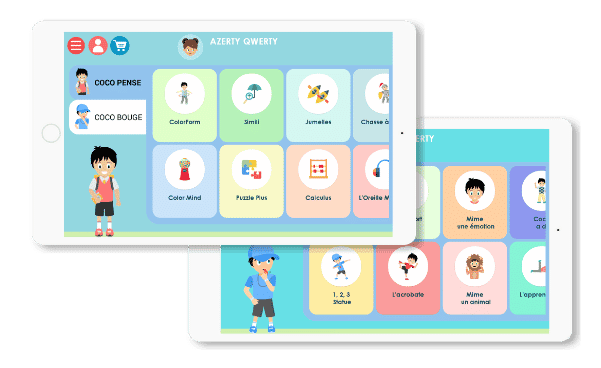
COCO THINKS and COCO MOVES
COCO THINKS and COCO MOVES is a program of educational and physical games for primary schools, from CP to CM2, to implement universal learning.
Children with ADHD have difficulties staying focused. It is therefore important to use games that work on the activation or inhibition of movement, as well as games that require a precise response time.
ATTENTION
Children with ADHD get easily distracted. Improving their attention span allows them to listen to the teacher and complete the assigned exercise.
PLANNING
Planning allows for anticipating the sequence of movements or actions to perform an exercise. This helps the student not to forget things.

PERCEPTION
Students with ADHD tend to quickly switch from one activity to another, so they do not pay much attention to details. Working on perception helps learn to better analyze all elements.
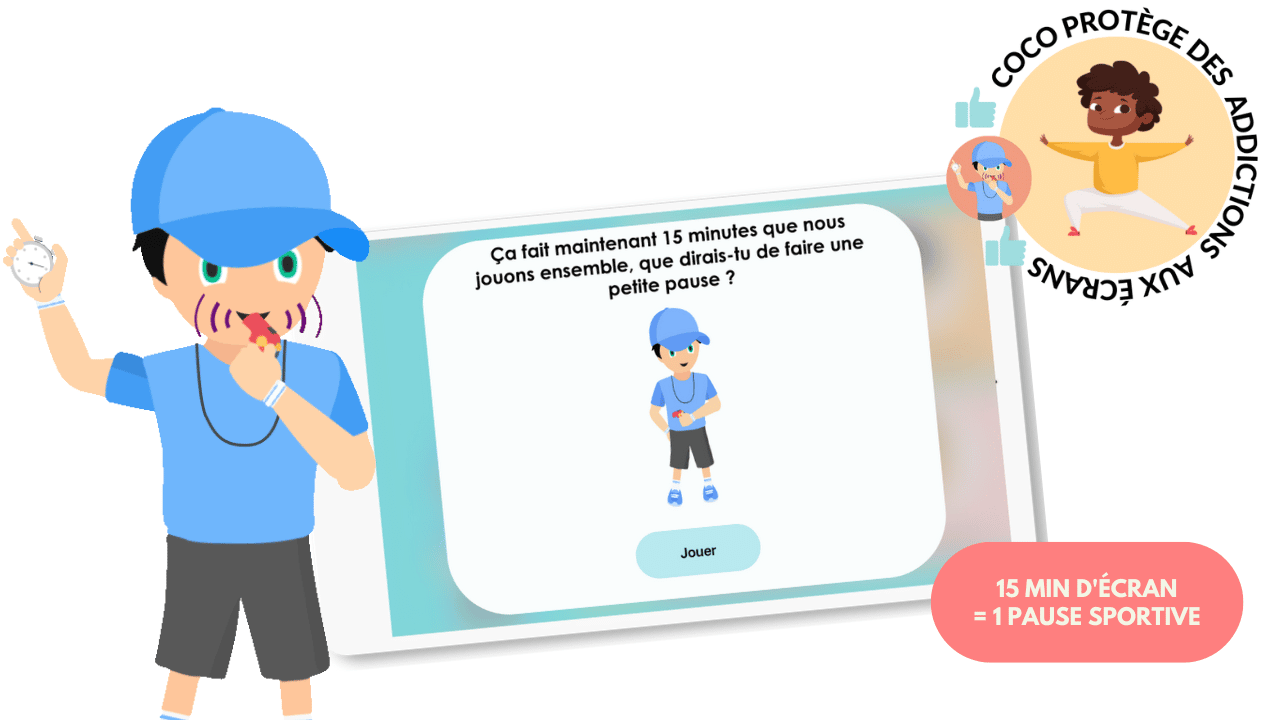
From the age of 5, children should engage in at least 1 hour of physical activity per day, including 30 minutes at school.
The benefits:
Clearing the mind
Respecting the child's need for movement
Motivating children to continue the activity
However, today the situation is different:
Children spend an average of 4h11 per day in front of screensOnly 4 out of 10 children engage in
regular physical activity.
Supporting Children with ADHD
Books are excellent resources for parents who want to better understand Attention Deficit Hyperactivity Disorder (ADHD) and find practical advice to support their children. In this article, we will present a selection of quality books on ADHD, specifically designed for parents. Whether you are looking for in-depth information, educational advice, or inspiring testimonials, this list will help you find the resources that meet your needs.
Dans cet article
Understanding ADHD
ADHD is a neurological disorder that affects attention span, concentration, and impulse control. To better understand this complex disorder, it is essential to have a deep knowledge of its symptoms, causes, and treatments. The following books offer detailed information on ADHD:
"ADHD Explained to Parents" by Dr. Olivier Revol
In this book, Dr. Olivier Revol, an ADHD specialist, provides parents with a deep understanding of this disorder. He explains the symptoms, causes, and various treatment approaches. By relying on concrete examples and practical advice, Dr. Revol guides parents in the daily management of their child's ADHD.
Educating and Supporting Your Child with ADHD
Educating a child with ADHD can present unique challenges. The following books offer practical advice to help parents support and educate their children with ADHD:
"The Gifted Child and the Gifted Adult - Discovering High Potential" by Jeanne Siaud-Facchin
Although this book is not specifically focused on ADHD, it offers an interesting perspective on high-potential children, who often exhibit traits similar to those of ADHD. Jeanne Siaud-Facchin, a specialized psychologist, addresses the specifics of gifted children and provides advice for supporting their development.
"Managing Your Hyperactive or Attention-Deficient Child Without Medication" by Dr. Robert Debré
Dr. Robert Debré, a renowned pediatrician, proposes in this book alternative approaches to managing ADHD symptoms without systematically resorting to medication. He explores behavioral, educational, and environmental strategies to help parents guide their child toward better management of attention and impulsivity.
Inspiring Testimonials
Testimonials from parents and children with ADHD can provide emotional support and valuable advice for facing daily challenges. The following books present inspiring stories:
"ADHD, Attention Disorders with or without Hyperactivity: From Child to Adult" by Saverio Tomasella
Saverio Tomasella, a psychoanalyst, shares in this book his experience as an adult with ADHD. He recounts his life journey, the obstacles he faced, and the strategies he developed to manage his ADHD. This authentic account offers a unique perspective on the condition and inspires parents and children with ADHD.
"ADHD: I Did It All by Myself" by Ariane Hébert
In this poignant book, Ariane Hébert shares her life journey as an adult with ADHD. She describes the challenges she faced, but also the strengths and skills she developed due to her condition. This inspiring account is a source of encouragement for parents and offers a unique perspective on ADHD.
This selection of books on ADHD offers parents a variety of resources to better understand, support, and accompany their children with this disorder. Whether you are looking for medical information, practical advice, or inspiring stories, these works will provide you with the necessary tools to navigate the challenges of ADHD. Remember that each child is unique, so it is important to find the resources that best match your needs and those of your family.
In summary, books on ADHD for parents provide valuable information and practical advice for better understanding, educating, and supporting children with this disorder. Whether you are seeking in-depth explanations, educational strategies, or inspiring testimonials, these resources will help you better navigate the complex world of ADHD.
Establishing structured routines at home to support a child with ADHD
In addition to specialized readings and digital tools like the COCO THINKS and COCO MOVES app, daily routines play an essential role in supporting children with ADHD. A clear and predictable organization helps reduce anxiety, promote autonomy, and improve concentration.
Here are several concrete strategies to implement at home:
Establish a visual routine
Create an illustrated schedule that is easy for the child to understand.
Display this schedule in a strategic location in the house (fridge door, bedroom).
Use pictograms to represent each activity (bathroom, meals, homework, playtime...).
Concrete example: a board with magnets or labels where the child moves the steps of the day as they are completed.
Break tasks into simple steps
Give short, clear instructions, and in several steps.
Avoid long sentences like "Clean your room," and prefer: "Start with the books, then the toys, then the clothes."
Concrete example: create a tracking sheet with checkboxes for each action completed.
Create an environment conducive to concentration
Set up a quiet corner for homework, free from noise and visual distractions.
Use a visual timer to signal work time or breaks.
Allow reassuring objects (stress ball, sensory cushion).
Concrete example: set up a study table with minimalist storage, soft colors, and an appropriate lamp.
Introduce regular movement breaks
Incorporate physical activity moments every 15 to 20 minutes.
These short breaks can include stretching, jumping, dancing, or guided physical games like those in the COCO MOVES app.
Concrete example: after 20 minutes of reading, suggest a 5-minute break to do fun exercises (walking in a straight line, touching toes, doing the robot...).
Encourage emotional expression
Use tools like an emotions wheel or illustrated cards to help the child verbalize what they feel.
Establish a daily verbalization ritual (e.g., at the table or before bed).
Concrete example: every evening, ask the child to share "a moment they liked" and "a difficult moment," to help them become aware of their emotions and calm down.
Supporting children with ADHD using the COCO THINKS and COCO MOVES app
The benefits of the physical activities in COCO THINKS and COCO MOVES:
- Adapted physical exercises
- A personalized interface (ability to hide games)
- Activities to teach body movement in space
- Activities for relaxation
- Activities that can be done sitting
Did this content help you? Support DYNSEO 💙
We are a small team of 14 people based in Paris. For 13 years, we have been creating free content to help families, speech therapists, care homes and healthcare professionals.
Your feedback is the only way we know if our work is useful. A Google review helps us reach other families, caregivers and therapists who need it.
One action, 30 seconds: leave us a Google review ⭐⭐⭐⭐⭐. It costs nothing, and it changes everything for us.

