
Introduction
The COVID-19 pandemic has revealed an unexpected medical reality: beyond the acute phase of infection, many people continue to suffer from persistent and disabling symptoms for months, even years. Among these manifestations of long COVID, neuropsychological and behavioral disorders occupy a prominent place, profoundly affecting the quality of life, professional capacities, and social relationships of those affected.
“Brain fog,” a term that has become emblematic of these post-COVID disorders, describes a constellation of cognitive symptoms: difficulty concentrating, memory problems, slowed thinking, sensation of mental confusion. These difficulties, often fluctuating and aggravated by mental effort, can persist for months after resolution of the initial infection, even in people who presented mild forms of COVID-19.
Irritability, mood disorders, anxiety, and emotional fatigue constitute other frequent manifestations of neuropsychological long COVID. These behavioral and emotional disorders are not simply psychological reactions to the illness but result from complex neurobiological mechanisms involving inflammation, vascular dysfunction, and immune dysregulation affecting the central nervous system.
In France and worldwide, millions of people are affected by long COVID. Estimates suggest that 10 to 30% of people who have had COVID-19 develop persistent symptoms beyond 12 weeks, with a particularly high prevalence of neurocognitive and behavioral disorders. This silent epidemic of post-infectious neurological disorders constitutes a major health challenge requiring recognition, understanding, and appropriate care.
Understanding Long COVID and Its Neurological Manifestations
Definition and Epidemiology of Long COVID
Long COVID, also called post-COVID-19 syndrome or long-haul COVID, refers to the persistence or appearance of symptoms beyond 4 weeks after initial infection with SARS-CoV-2, without other identifiable medical explanation. The WHO more precisely defines post-COVID condition as persistent symptoms 3 months after initial infection, lasting at least 2 months.
The exact prevalence of long COVID remains debated due to variable definitions and diagnostic difficulties, but studies suggest that approximately 10 to 30% of infected people develop persistent symptoms. Risk factors include the severity of the initial infection, female sex, middle age (30-50 years), presence of comorbidities, and the number of symptoms during the acute phase.
Paradoxically, long COVID can occur after initially mild or even asymptomatic infections. The absence of an initially severe form therefore does not protect against the development of chronic disabling symptoms. This reality has surprised many patients and healthcare professionals.
Pathophysiological Mechanisms
The mechanisms explaining the persistence of post-COVID neurological symptoms are multiple and probably intertwined, creating a complex pathophysiological picture that is still imperfectly understood.
Chronic inflammation and aberrant immune response seem to play a central role. Infection with SARS-CoV-2 triggers an intense inflammatory response that, in some patients, does not completely resolve after virus elimination. This low-grade chronic inflammation affects the central nervous system, creating persistent “neuroinflammation” that disrupts neuronal functioning.
Cerebral vascular damage by the SARS-CoV-2 virus that infects endothelial cells of blood vessels, creating dysfunction in cerebral microcirculation. These vascular alterations can induce chronic cerebral hypoperfusion, particularly in frontal and temporal regions, explaining certain cognitive and behavioral disorders.
Direct viral infection of the nervous system is documented in some cases, with presence of the virus or viral components in cerebrospinal fluid or brain tissue. This direct viral invasion can cause persistent neuronal lesions even after virus elimination from the organism.
Autoimmune phenomena with production of autoantibodies directed against central nervous system structures have been identified in some long COVID patients. These autoantibodies can durably disrupt neuronal functioning even in the absence of active virus.
Mitochondrial dysfunction and chronic oxidative stress, resulting from infection, affect cellular energy production, particularly in neurons that are highly dependent on energy metabolism. This energy dysfunction could explain cognitive fatigue and worsening of symptoms during mental efforts.
Dysregulation of the autonomic nervous system (dysautonomia) with alteration of cardiovascular, respiratory, and thermoregulation contributes to fatigue, concentration problems, and symptomatic fluctuations characteristic of long COVID.
Brain Fog: The Emblematic Symptom
Clinical Manifestations
Brain fog, although its name is figurative and not medical, describes a very precise clinical reality experienced by patients as “fog in the head,” “mental cotton wool,” or a “sensation of slowed brain.”
Difficulty concentrating constitutes the main complaint. Patients describe an inability to maintain attention on a task, significant distractibility, a sensation of “flitting” mentally without being able to fix their attention. Reading a book, following a conversation, watching a movie become difficult because attention is constantly lost.
Memory problems mainly affect working memory (short-term memory) and prospective memory (remembering what needs to be done). Patients forget what they were going to do when changing rooms, lose the thread of a conversation, no longer remember information recently read. Memory of old facts is generally preserved, distinguishing brain fog from dementia.
Cognitive slowing manifests as an increase in the time needed to process information, answer questions, make decisions. Patients feel “mentally slow,” as if their thoughts were advancing through a viscous medium. This slowing affects all cognitive tasks, particularly the most complex ones.
Difficulty with word retrieval (“finding words”) is frequent and frustrating. Familiar words suddenly seem inaccessible, replaced by circumlocutions or approximations. This difficulty, generally discreet in daily life, becomes evident in demanding professional or social situations.
Sensation of confusion or “empty head,” difficulty thinking clearly, sensation of having a foggy mind, are described by many patients. These sensations fluctuate throughout the day, generally worsening with fatigue, stress, or cognitive effort.
Worsening with cognitive effort constitutes an important characteristic. Sustained mental effort (intellectual work, meeting, complex conversation) worsens all cognitive symptoms and can trigger a “crash” (sudden collapse) with profound exhaustion requiring several hours to several days of recovery.
Functional Impact
The impact of brain fog on daily functioning is often underestimated by those around the patient because the deficits are subtle, fluctuating, and “invisible.” However, the consequences are major.
Professionally, brain fog seriously compromises performance, particularly for intellectual professions. Difficulty maintaining concentration, slowing of information processing, memory problems make many professional tasks difficult or even impossible. Many patients are forced into prolonged sick leave or therapeutic part-time, some permanently losing their jobs.
In daily life, usual activities become exhausting. Shopping requires detailed lists, administrative management becomes complex, cooking elaborate meals difficult. These difficulties, added to physical fatigue, considerably reduce autonomy.
Socially, brain fog creates isolation and misunderstanding. Group conversations become impossible to follow, social outings exhausting. Loved ones do not always understand these “invisible” difficulties, creating tension and feelings of loneliness.
The psychological impact is major. Loss of cognitive abilities, even partial, profoundly affects identity and self-esteem. Fear that these disorders are permanent, uncertainty about evolution, confrontation with limitations imposed by brain fog generate reactive anxiety and depression.
Irritability and Emotional Disorders
Manifestations of Post-COVID Irritability
Irritability constitutes a frequent and disturbing symptom of long COVID, often described by patients as “not recognizing themselves” emotionally.
This irritability is characterized by a marked decrease in the threshold of frustration tolerance. Minor annoyances that would have been easily managed before now trigger disproportionate emotional reactions. Patients describe “getting angry over nothing,” “getting upset over trifles,” being “on edge.”
Noise intolerance is particularly frequent. Sounds that did not bother before become unbearable: conversations, background noise, music, television. This hyperacusis or misophonia worsens irritability and can lead to social isolation.
Intolerance to stimulation in general (visual, social, emotional) leads to a need for calm and solitude to “recharge batteries.” Social interactions, even pleasant ones, become exhausting and generate irritability.
Excessive emotional reactions can occur: easy tears, disproportionate anger, emotions difficult to control. This emotional lability is experienced as a destabilizing loss of control for the person and their entourage.
Impatience and difficulty tolerating delays, complications, unforeseen events intensify. Cognitive and physical fatigue leaves fewer resources to manage daily frustrations.
Anxiety and Mood Disorders
Anxiety disorders are very frequent in long COVID, affecting approximately 30 to 40% of patients.
Generalized anxiety with permanent worries concerning health, symptom evolution, future capacities, is understandable in this context of medical uncertainty. This anxiety is often aggravated by the absence of effective treatment and the medical misunderstanding sometimes encountered.
Panic attacks can occur, sometimes for the first time in the person’s life. They can be triggered by physical symptoms (palpitations, breathing difficulties) or occur spontaneously.
Social anxiety develops in some patients, through fear of not being able to follow social interactions due to brain fog, or by anticipation of the exhaustion that will follow social efforts.
Depression affects approximately 20 to 30% of long COVID patients. It results from multiple factors: reaction to disability and losses (job, activities, relationships), neurobiology of chronic inflammation affecting neurotransmitters, social isolation, medical and social misunderstanding.
Depressive symptoms include persistent sadness, loss of interest and pleasure, emotional fatigue (adding to physical fatigue), sleep disorders, feelings of worthlessness, sometimes dark thoughts. Suicide risk should not be overlooked, particularly in young active people suddenly confronted with an invisible and disabling handicap.
Fatigue and Emotional Exhaustion
Fatigue in long COVID goes far beyond simple physical fatigue. It is a global fatigue, touching physical, cognitive, and emotional dimensions.
Emotional fatigue manifests as an inability to manage emotions, a sensation of being “emotionally drained,” an absence of resources to cope with daily stresses. Social interactions, even brief ones, are emotionally exhausting.
Post-exertional malaise (PEM) constitutes a characteristic symptom. Physical or cognitive effort, even modest, triggers a collapse of symptoms (worsening of brain fog, fatigue, irritability) occurring with a delay of 12 to 48 hours and requiring several days of recovery. This PEM makes progressive return to activity very difficult.
Sleep disorders are almost constant: difficulty falling asleep, frequent nocturnal awakenings, non-restorative sleep. This sleep disturbance worsens all other symptoms, creating a vicious cycle difficult to break.
Impact on Loved Ones and Family Life
Transformation of Relationships
Long COVID profoundly transforms family and conjugal dynamics, creating tensions and requiring continuous adaptations.
Misunderstanding by loved ones constitutes a major source of suffering for patients. Cognitive and behavioral disorders being “invisible,” loved ones sometimes minimize difficulties or attribute behavioral changes to a lack of will rather than to illness.
Guilt is omnipresent, both on the patient’s side (guilt of no longer assuming responsibilities, of weighing on others) and on the caregiver spouse’s side (guilt of feeling frustration or impatience faced with the loved one’s limitations).
The caregiver spouse often finds themselves in a role they did not choose, having to assume additional responsibilities (daily management, income if the patient can no longer work, emotional support) while facing their partner’s behavioral transformation. The patient’s irritability, fatigability, cognitive limitations transform the relationship.
Children are affected by a parent’s illness, particularly when they were previously active and present. They must adapt to a tired, less available, sometimes irritable parent, without always understanding what is happening.

DYNSEO’s training “Illness-Related Behavior Changes: A Practical Guide for Loved Ones” can help families confronted with long COVID to understand behavioral disorders, develop appropriate communication strategies, and preserve their own balance when facing caregiving challenges.
Social Isolation
Social isolation constitutes a major and aggravating consequence of long COVID.
Progressive withdrawal from social activities results from multiple factors: fatigue making outings impossible, brain fog preventing following conversations, fear of post-exertional malaise, misunderstanding by those around them. This withdrawal, although understandable, worsens isolation and depression.
Friends gradually distance themselves, not always understanding the invisibility and chronicity of symptoms. Invitations repeatedly declined, inability to maintain commitments, lead to erosion of social bonds.
The professional world can also prove unsympathetic. The absence of recognition of long COVID as a chronic disabling illness in many professional contexts, difficulties obtaining workplace accommodations, sometimes dismissal, create isolation and feelings of injustice.
Patient groups (associations, online support groups) often become the only community where people feel understood and validated in their experience. These peer support spaces are valuable but do not replace usual social bonds.
Diagnosis and Assessment
Diagnostic Approach
The diagnosis of long COVID remains primarily clinical, based on the patient’s history, symptom chronology, and exclusion of other pathologies.
Detailed history must establish the temporal link with COVID-19 infection (even if it was mild or not confirmed by test), the evolutionary profile of symptoms, their functional impact, and the absence of other medical explanation.
Symptom assessment must be systematic and multidimensional, covering physical dimensions (fatigue, pain, dyspnea), cognitive (brain fog), behavioral (irritability, mood disorders), and functional (impact on daily life and work).
Complementary examinations have a limited role because often normal in long COVID. They mainly serve to eliminate other pathologies: standard biological assessment, imaging if neurological symptoms, cardiopulmonary explorations if organ symptoms.
Formal neuropsychological assessment can objectify cognitive disorders, quantify their severity, and guide rehabilitation strategies. It is particularly useful in case of professional difficulties or for disability recognition procedures.
Scales and Questionnaires
Several tools allow quantifying and monitoring long COVID symptoms.
The fatigue questionnaire (Chalder scale, Piper fatigue scale) evaluates the intensity and impact of fatigue. The quality of life questionnaire (SF-36, EQ-5D) measures the global impact on functioning. Long COVID-specific scales are being developed and validated.
Cognitive assessment can use standardized tests (MoCA for brief assessment, or more complete batteries) to objectify attentional, memory, and executive disorders reported by patients.
Differential Diagnosis
Several pathologies must be ruled out before retaining the diagnosis of long COVID:
Pre-existing chronic fatigue syndrome/myalgic encephalomyelitis (CFS/ME) can be reactivated or worsened by COVID-19. Diagnostic criteria are similar to long COVID, making distinction sometimes difficult.
Primary anxiety or depressive disorders can mimic or worsen long COVID symptoms. However, the presence of psychiatric disorders does not exclude long COVID, both can coexist.
Neurological pathologies (MS, dementia onset, brain tumor) must be eliminated by appropriate imaging and neurological evaluation.
Thyroid disorders, vitamin deficiencies, sleep apnea are frequent causes of fatigue and cognitive disorders that must be systematically sought.
Management and Adaptation Strategies
Global and Multidisciplinary Approach
Management of long COVID requires a global, personalized, and multidisciplinary approach, as no curative treatment currently exists.
The general practitioner or internist coordinates overall care, ensures regular follow-up, adjusts symptomatic treatments, and refers to specialists if necessary.
Specialized consultations can include neurologist (for cognitive disorders), psychiatrist or psychologist (for mood disorders and adaptation), pulmonologist (respiratory disorders), cardiologist (palpitations, dysautonomia), physical medicine and rehabilitation physician (rehabilitation coordination).
The rehabilitation team (physiotherapist, occupational therapist, neuropsychologist, speech therapist) offers targeted interventions on specific deficits.
Energy Management and Pacing
Pacing (appropriate energy management) constitutes the central strategy for managing long COVID, particularly in the presence of post-exertional malaise.
The principle of pacing consists of:
- Identifying one’s energy envelope: recognizing the level of activity (physical and cognitive) that can be sustained without triggering a crash
- Staying under this threshold even on days when feeling better, to avoid relapses
- Breaking up activities: alternating short periods of activity and recovery breaks
- Planning and prioritizing: identifying essential activities, delegating or eliminating non-essentials
- Accepting temporary limitations to promote long-term recovery
This approach, counterintuitive for usually active people, requires learning and support. It opposes the classic progressive exercise rehabilitation that can worsen symptoms in case of long COVID with PEM.
Cognitive Rehabilitation
Cognitive rehabilitation, conducted by specialized neuropsychologists, can help partially compensate for cognitive disorders.
Compensatory strategies include: systematic use of calendars, alarms and lists, memorization techniques, adapted work environment (quiet, without distractions), breaking up cognitive tasks.
Cognitive stimulation exercises aim to maintain and improve attentional, memory, and executive functions. These exercises must be progressive, adapted to the level of fatigability, and practiced regularly but without excess.
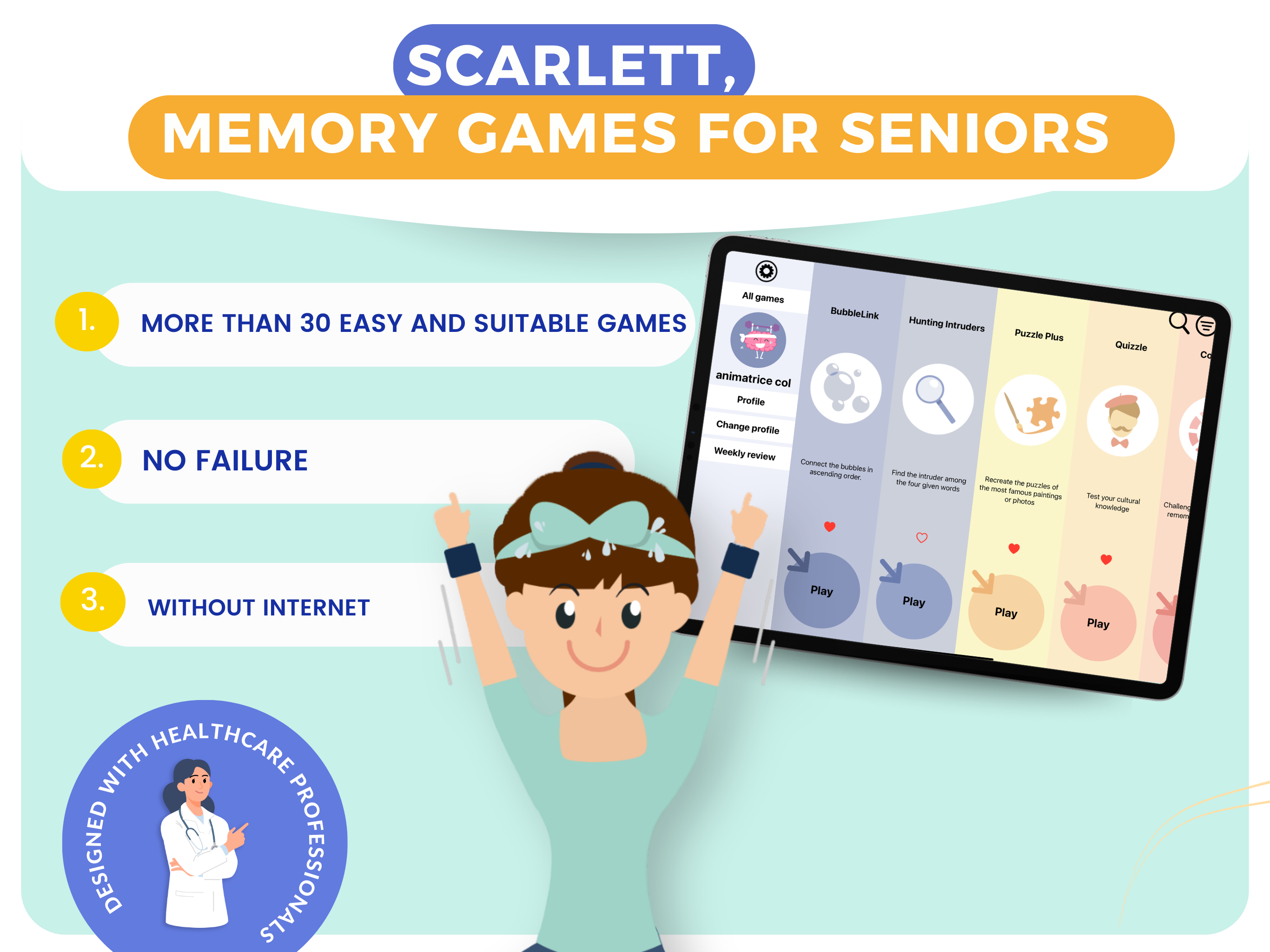
SCARLETT, developed by DYNSEO, can constitute a complementary home cognitive stimulation tool for long COVID patients. The short, progressive, and varied exercises allow regular training adapted to fatigability.
Using SCARLETT in the context of long COVID must respect certain principles:
- Very short sessions (5-10 minutes maximum initially) to avoid cognitive fatigue
- Use at times of best form in the day
- Immediate stop if fatigue or headache appears
- Very gradual progression in duration and difficulty
- Acceptance of performance fluctuations without getting discouraged
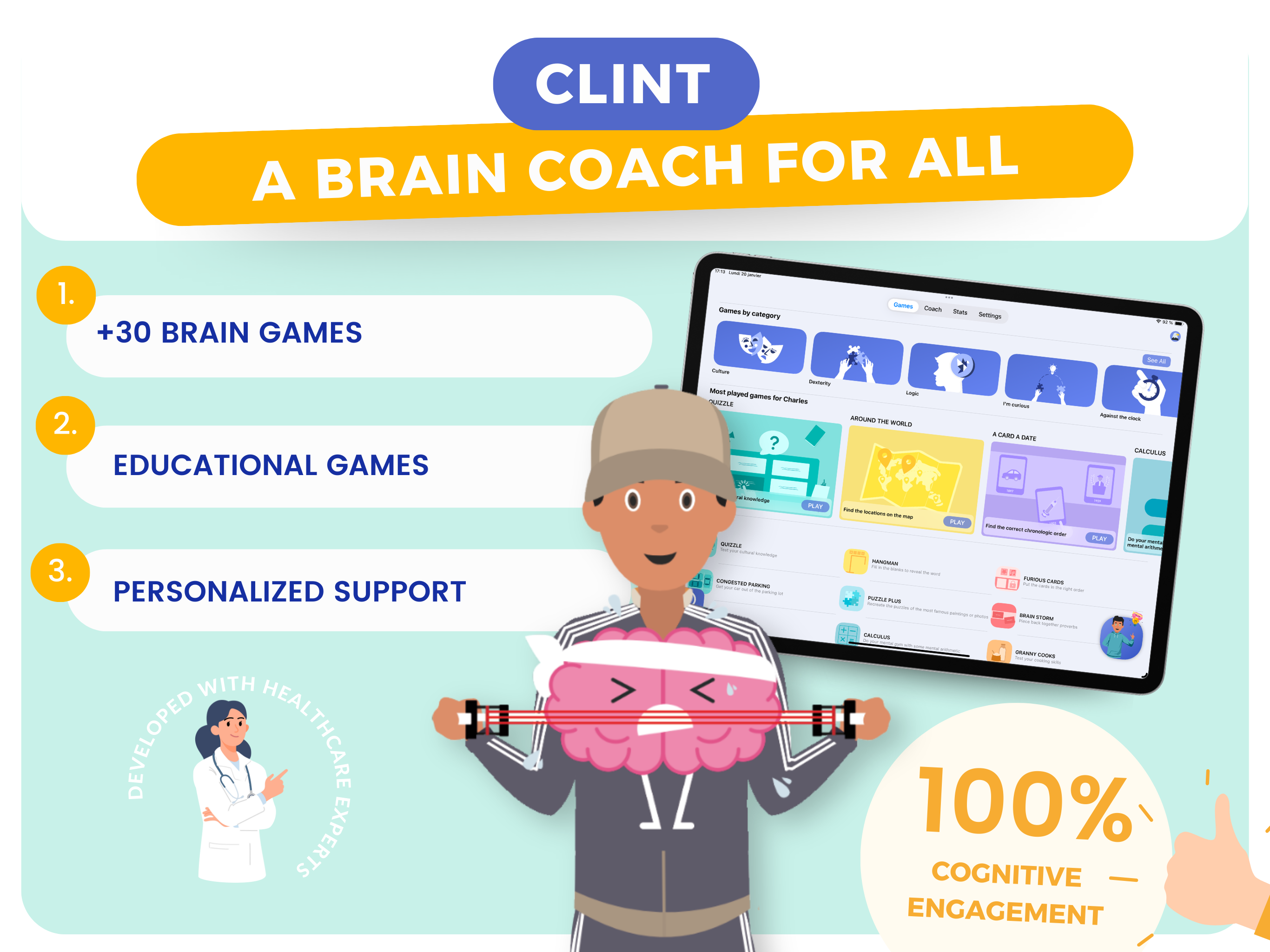
For younger people with mild to moderate long COVID, CLINT, DYNSEO’s brain coach, can offer more varied and stimulating cognitive exercises, always respecting energy limits and avoiding cognitive overexertion.
Managing Irritability and Emotional Disorders
Emotional regulation techniques include:
- Mindfulness helps observe emotions without reacting impulsively
- Breathing techniques (cardiac coherence, abdominal breathing) reduce physiological activation
- Psychoeducation helps understand that irritability results from illness and fatigue, reducing guilt
Environmental accommodations reduce sources of irritation:
- Calm environment: reduce sound, visual, social stimulation
- Planned recovery time in the day
- Communication with those around about needs for calm and solitude
Psychological support by a therapist trained in long COVID helps:
- Manage reactive anxiety and depression
- Grieve lost capacities (even temporarily)
- Adapt identity to new reality
- Maintain hope despite uncertainty
Pharmacological treatments may be necessary:
- Antidepressants if significant depression (SSRIs are generally well tolerated)
- Anxiolytics short-term for anxiety crises (avoid chronic use)
- Sleep treatment (melatonin, sleep hygiene rules, rarely hypnotics)
Professional Adaptation
Return to work after long COVID constitutes a major challenge requiring adaptations and support.
Assessment of capacities by occupational health allows identifying compatible tasks and those requiring accommodation.
Possible accommodations include:
- Progressive therapeutic part-time
- Telework reducing travel fatigue
- Workplace accommodation: quiet environment, frequent breaks, reduction of multitasking
- Mission adaptation: prioritize less cognitively demanding tasks
Recognition as long-term illness (ALD) or as occupational disease for long COVID is still difficult but progressing, allowing better care and social protection.
Prognosis and Evolution
Temporal Evolution
The evolution of long COVID is highly variable among individuals, making individual prognoses difficult.
The first months (3-6 months) are often the most difficult, with intense and fluctuating symptoms. It is during this period that diagnosis is generally made and adaptations implemented.
Between 6 months and 1 year, approximately 50% of patients report partial improvement in symptoms. This improvement is often slow, non-linear, with relapses during overexertion or intercurrent infections.
Beyond 1 year, the majority of patients (60-70%) report progressive improvement, but many retain residual symptoms limiting their activities. Approximately 20-30% of patients do not observe significant improvement, developing chronic disability.
Good prognosis factors include: mild initial form, early start of appropriate care, strict respect for pacing, absence of overexertion, good social and family support, employer recognition and professional accommodations.
Poor prognosis factors include: severe initial form, comorbidities, non-respect of pacing with repeated relapses, chronic stress, lack of support, denial or misunderstanding by those around.
Long-Term Sequelae
For some patients, lasting sequelae can persist, constituting a chronic handicap:
Residual cognitive disorders can durably limit professional capacities, particularly for demanding intellectual professions.
Persistent chronic fatigue with exercise intolerance may require permanent lifestyle adaptations.
Nervous system sensitization with persistence of hypersensitivity to stimuli (noise, light, stress) can last for years.
Chronic mood disorders (anxiety, depression) can persist even after improvement of physical symptoms.
Research and Perspectives
Advances in Understanding
Research on long COVID is progressing rapidly, with many international teams working to better understand its mechanisms.
Immunological studies identify persistent abnormalities of the immune response: chronic inflammation, autoantibodies, T lymphocyte dysregulation.
Brain imaging (functional MRI, PET-scan) objectifies perfusion and cerebral metabolism abnormalities in some patients, validating the biological reality of brain fog.
Longitudinal studies following cohorts of long COVID patients over the long term will allow better understanding of natural evolution and prognostic factors.
Therapeutic Avenues
Several therapeutic avenues are being evaluated:
Anti-inflammatory treatments targeting chronic inflammation are being tested: low-dose corticosteroids, synthetic antimalarials, monoclonal antibodies.
Intravenous immunoglobulins could modulate aberrant immune response in forms with documented autoimmunity.
Anticoagulants at preventive dose are being evaluated to improve cerebral microcirculation.
Intensive cognitive stimulation and neuropsychological rehabilitation are being evaluated for their effectiveness on brain fog.
Integrative medicine approaches (acupuncture, nutritional supplements, mind-body techniques) are the subject of studies, although evidence remains limited.
Prevention
Vaccination
Vaccination against COVID-19 significantly reduces the risk of developing long COVID, even in case of infection despite vaccination (“breakthrough” infection). Vaccinated people who develop long COVID generally have less severe symptoms and better evolution.
For people already having long COVID, vaccination can have variable effects: improvement in approximately 30%, no change in 50%, temporary worsening in 20%. The vaccination decision must be individualized and discussed with the physician.
Management of Acute Infection
Optimal management of the acute phase of infection could reduce the risk of long COVID:
- Strict rest during the acute phase (do not “work sick”)
- Progressive return to activity after apparent recovery
- Avoid overexertion in the 2-3 months following infection
- Monitoring of persistent symptoms for early care
Conclusion
Long COVID, with its neuropsychological and behavioral manifestations centered on brain fog and irritability, constitutes a major medical challenge of this decade. Millions of people worldwide, often young and active, find themselves confronted with an invisible but disabling handicap, profoundly transforming their professional, social, and family life.
Brain fog, emblematic symptom, describes a complex clinical reality of fluctuating and disabling cognitive disorders. Irritability, mood disorders, and emotional fatigue complete this behavioral picture, creating a significant burden for patients and their loved ones.
Medical and social recognition of long COVID is progressing but remains insufficient. Too many patients face misunderstanding, denial, or minimization of their symptoms, adding psychological suffering to the physical burden of illness.
Management currently relies mainly on symptomatic and adaptive approaches, with pacing constituting the cornerstone of management. Training offered by DYNSEO and cognitive stimulation tools like SCARLETT and CLINT can constitute complementary support for patients and their families.
Current research gives hope for better understanding of mechanisms and development of specific treatments in the coming years. In the meantime, recognition of the reality and severity of long COVID, patient support, adaptation of health and social protection systems, and prevention through vaccination remain priorities for facing this new silent epidemic.
—
DYNSEO Resources for Long COVID Support:
- Family Training: Practical Guide for Loved Ones
- SCARLETT: Gentle Cognitive Stimulation
- CLINT: Brain Coach for Adults
Keywords: long COVID, brain fog, cognitive disorders post-COVID, irritability, chronic fatigue, post-exertional malaise, behavioral disorders, cognitive stimulation, cognitive rehabilitation, pacing


