
Introduction: When Music Heals the Soul
Music possesses an extraordinary power over the human brain. It can make us cry with joy or nostalgia, make us want to dance, soothe us in moments of distress. This power persists remarkably in people with cognitive disorders, even at advanced stages of the disease.
Music therapy harnesses this power for therapeutic purposes. It is now recognized as one of the most effective non-pharmacological approaches in managing behavioral disorders related to dementia, with one of the highest levels of scientific evidence in the field.
In this in-depth article, we will explore the mechanisms of action of music on the brain, the different forms of music therapy, validated protocols, and the conditions for successful implementation.
—
Why Music Works: The Neurobiological Mechanisms
The preservation of musical memory
A remarkable fact about dementia, particularly Alzheimer’s’s disease: musical memory often remains preserved while other memories are severely impaired. People who no longer recognize their loved ones can still sing songs from their youth, play an instrument learned decades ago, or be moved to tears by a familiar melody.
This preservation is explained by the fact that musical memory involves brain networks partially different from those of episodic memory, and less early affected by the disease.
Emotional activation
Music directly activates brain structures involved in emotions, notably the amygdala and the limbic system. It can trigger intense emotions without going through complex cognitive processing.
This direct pathway to emotions explains why music can calm an agitated person even if they no longer understand the lyrics or can no longer express what they feel.
The release of neurotransmitters
Listening to pleasant music leads to the release of dopamine (the pleasure neurotransmitter), endorphins (analgesic and euphoric effect), and oxytocin (the social bonding hormone).
These biochemical effects explain the observed benefits on mood, anxiety and behaviors.
Synchronization and rhythmic entrainment
Musical rhythm has the ability to synchronize brain activity and biological rhythms (breathing, heart rate). A slow and regular tempo can induce a state of relaxation; a faster tempo can stimulate and energize.
This synchronization is the basis of certain protocols used to calm agitation or stimulate an apathetic person.
—
The Different Forms of Music Therapy
Receptive music therapy
Receptive music therapy consists of listening to music in a therapeutic setting. It can be individual or group-based.
Personalized listening offers pieces chosen according to the person’s tastes and musical history. It is often the most effective form because it mobilizes personal memories and emotions.
Relaxation listening uses music specifically composed or selected for its soothing properties (slow tempo, simple harmonies, absence of musical surprises).
Group listening creates a moment of sharing and socialization around music.
Active music therapy
Active music therapy involves the person’s participation in musical production.
Singing is the most accessible form. Singing familiar songs in a group is a rewarding activity that mobilizes memory, language, breathing and social abilities.
Instrumental practice can be maintained or adapted for people who had prior practice, or offered with simple instruments (percussion, small melodic instruments).
Movement to music (seated dance, rhythmic movements) combines the benefits of music and physical activity.
Specialized protocols
Several structured protocols have been developed and scientifically evaluated.
MUSIC & MEMORY® is an American program that offers personalized music listening through headphones. It has shown significant effects on agitation and behavioral disorders.
Music & Memory Individualized Listening Therapy (MIST) uses the person’s favorite music, identified by family and friends.
Neurologic music therapy is a structured approach using specific techniques for functional objectives (language, motor skills, cognition).
—
Music Therapy for Behavioral Disorders
Reducing agitation and anxiety
The best documented application of music therapy is the reduction of agitation.
Effective protocols generally use music with a slow tempo (60-80 beats per minute), simple and consonant harmonies, moderate volume, familiar and appreciated pieces by the person.
Listening can be offered at times when agitation is usually strongest (sundowning syndrome for example) or in response to emerging agitation.
Improving mood and reducing depression
Music has a documented positive effect on mood. Pleasant music activates reward circuits and generates positive emotions.
Active music therapy sessions (singing, movement) also have a socializing effect that contributes to mood improvement.
Stimulating apathetic people
For apathetic people, more dynamic music (faster tempo, marked rhythms) can have a stimulating effect.
Active musical activities (singing, percussion) solicit initiative and engagement, counteracting apathy.
Facilitating care
Music can be used during care (bathing, meals) to create a soothing atmosphere and reduce resistant behaviors.
Studies have shown a significant reduction in agitation during bathing when the person’s favorite music is played.
Improving communication
For people whose verbal abilities are impaired, music offers an alternative communication channel. Humming together, tapping a rhythm in mirror, sharing a musical emotion create a connection beyond words.
—
Practical Implementation of Music Therapy
Identifying musical preferences
The effectiveness of music therapy depends largely on the use of meaningful music for the person. The collection of musical preferences should be done with the person (when possible) and their family.
Questions to explore are: What music did they listen to in their youth? Which artists did they like? Did they play an instrument or sing? What music is associated with happy moments in their life?
The intervention framework
Environment: A calm, comfortable space, without distractions.
Timing: Adapted to objectives (evening relaxation for sundowning syndrome, morning stimulation for apathy).
Duration: 20 to 45 minutes depending on tolerance.
Frequency: Effects are better with regular practice (daily or several times a week).
Headphone listening vs. room diffusion
Headphone listening allows maximum personalization and avoids disturbing others. It is particularly suited to situations of individual agitation.
Room diffusion can create a collective atmosphere but requires finding music that suits everyone, which is more difficult.
The role of the music therapist
A certified music therapist brings expertise in needs assessment, choice of techniques, real-time adaptation of interventions, and management of complex situations.
However, certain simple forms of music therapy (listening to favorite music, group singing) can be implemented by trained professionals or sensitized caregivers.
—
Training Teams and Families
Training professionals
Integrating music into daily care requires raising awareness among teams about principles and techniques.
DYNSEO offers comprehensive training on behavioral disorders that addresses music therapy among validated non-pharmacological approaches.
Access training for professionals
Supporting families
At home, family caregivers can easily integrate music into daily life: create a playlist of favorite songs, sing together, dance seated, listen to music during difficult moments.
DYNSEO offers training for families with practical tools including the use of music.
Access training for families
—
Combining Music Therapy and Cognitive Stimulation
A beneficial synergy
Music can be integrated into cognitive stimulation activities: memory exercises around song lyrics, melody recognition, music-era-memories association.
The SCARLETT program
The SCARLETT program from DYNSEO offers cognitive stimulation activities for seniors that can be enriched by musical moments.
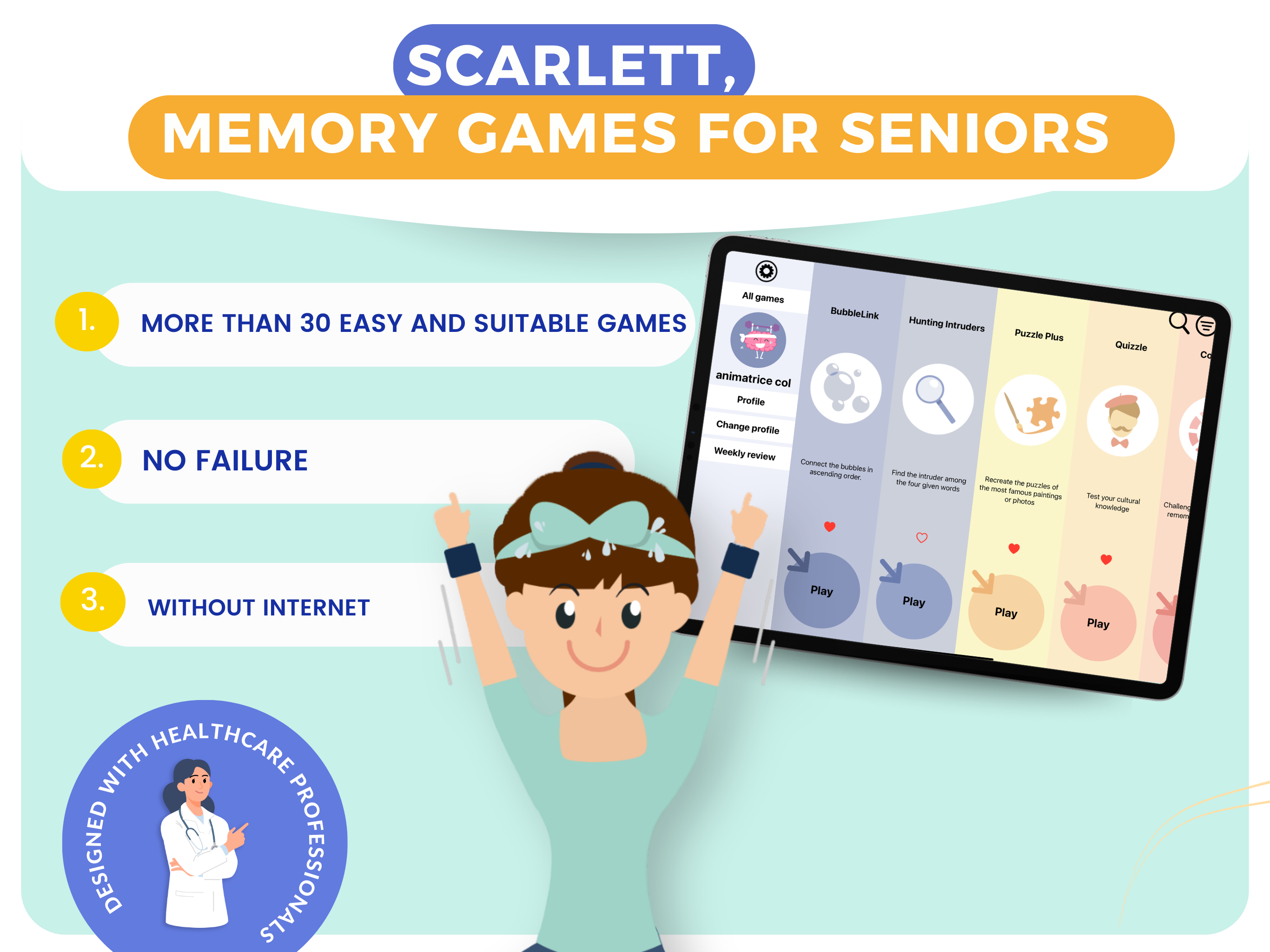
The CLINT program
For adults, the CLINT program offers varied cognitive exercises.
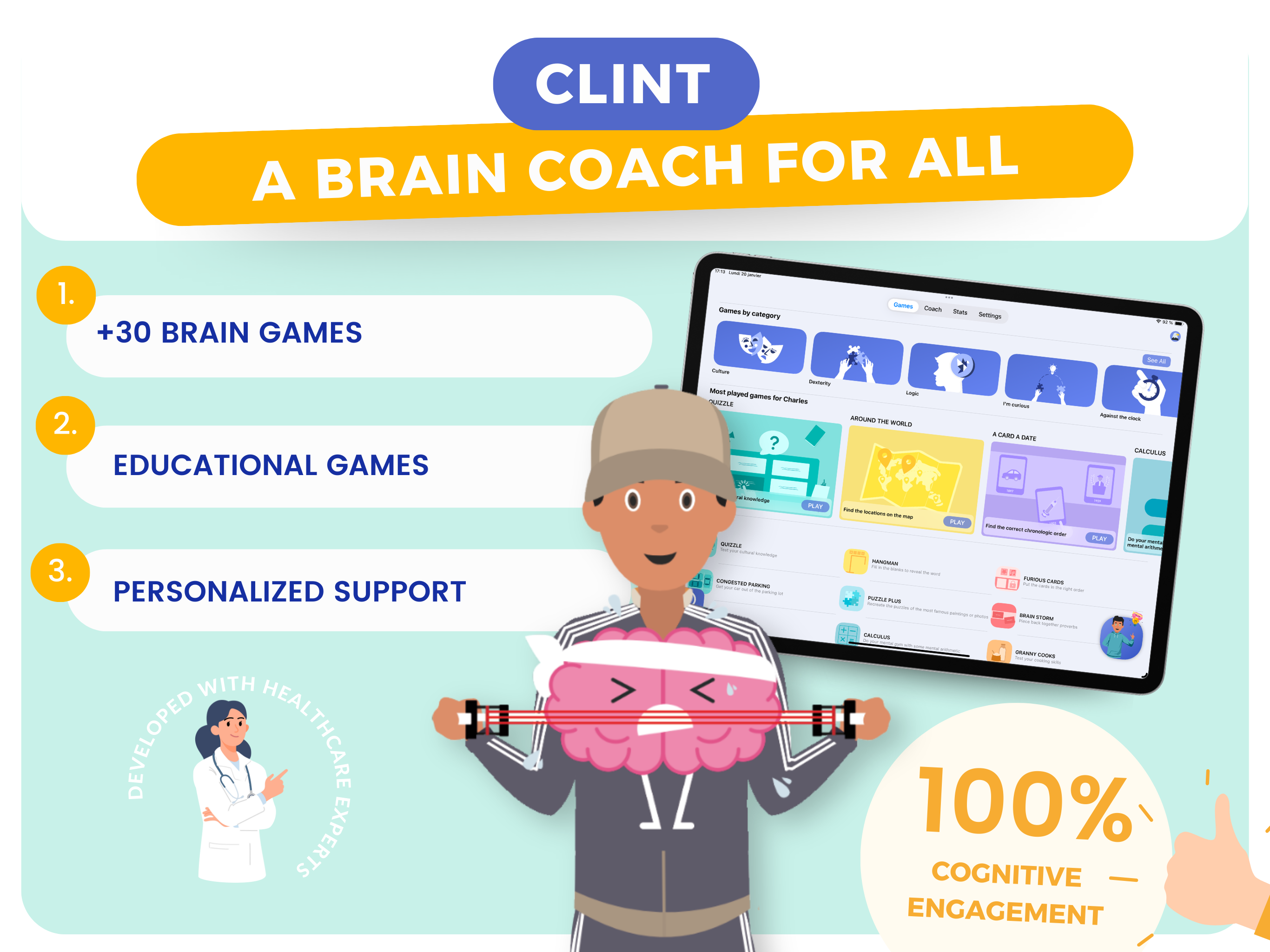
—
Evidence of Effectiveness
A high level of evidence
Music therapy is one of the non-pharmacological approaches with the best level of scientific evidence.
Recent meta-analyses conclude significant effectiveness on agitation and disruptive behaviors, on anxiety, on depressive symptoms, on quality of life, and on social interactions.
Official recommendations
The French National Authority for Health (HAS) recommends music therapy as a first-line non-pharmacological intervention in behavioral disorders of dementia.
—
Conclusion: A Universal Language in the Service of Care
Music is a universal language that speaks directly to our emotions, beyond words and reason. This property makes it a valuable tool in supporting people whose cognitive and verbal abilities are declining.
Integrating music into daily care, offering structured music therapy sessions, training teams and families: so many levers to improve well-being and reduce behavioral disorders.
DYNSEO Resources:
—
This article was written by the DYNSEO team, specialist in cognitive support and training on behavioral disorders.


