
Introduction: A Multi-Dimensional Disorder
Anorexia nervosa immediately evokes images of emaciated bodies and extreme food restriction. However, this reductive vision obscures a much more complex reality. Beyond the visible behaviors, anorexia is accompanied by profound alterations in psychological and cognitive functioning that contribute to maintaining the disorder and complicate recovery.
Among these alterations, executive function deficits occupy a central place. These high-level capacities that allow us to plan, adapt, make decisions and regulate our behaviors are compromised in anorexia, both due to malnutrition and mechanisms specific to the disorder. Understanding these alterations and proposing adapted cognitive stimulation approaches constitutes a promising avenue for complementary treatment.
Understanding Anorexia Nervosa
A Serious and Complex Disease
Anorexia nervosa is an eating disorder characterized by severe food restriction leading to significantly low weight, intense fear of gaining weight or becoming fat despite insufficient weight, and disturbance in the perception of one’s body or weight. This disorder mainly affects women, with a peak onset in adolescence, but can also affect men and occur at any age.
Anorexia represents one of the deadliest psychiatric diseases, with a mortality rate estimated between 5 and 10% over the long term. Medical complications related to malnutrition affect all organs: cardiac disorders, osteoporosis, kidney failure, hormonal disorders, brain damage. Added to these somatic complications are intense psychological suffering and major impact on social, family and professional life.
Mechanisms That Maintain the Disorder
Anorexia self-perpetuates through several reinforcement loops. Food restriction initially provides a sense of control and achievement that is valued by the person. Weight loss sometimes generates compliments from those around them, reinforcing the behavior. Physical hyperactivity, frequently associated, releases endorphins providing a sense of well-being.
Malnutrition itself modifies brain functioning in a way that perpetuates the disorder. Cognitive alterations reduce the ability to consider alternatives, to perceive the seriousness of the situation, to make decisions in favor of recovery. The person becomes trapped in a self-feeding system, making it particularly difficult to exit the disorder.
Beyond Willpower
Contrary to a persistent misconception, anorexia is not a matter of willpower or whim. It is a serious psychiatric disease involving genetic, neurobiological, psychological and sociocultural factors complexly intertwined. People who suffer from it do not choose their disease and cannot simply “decide” to eat normally.
This understanding is essential for approaching associated cognitive disorders without judgment or guilt. Executive deficits are not personal weaknesses but manifestations of the disease that can be worked on and improved.
Executive Functions: Definition and Roles
The Brain’s Conductor
Executive functions refer to a set of high-level cognitive processes that enable control, direction and regulation of thoughts and behaviors. They constitute in a way the “conductor” of the brain, coordinating the activity of other cognitive functions to achieve determined objectives.
These functions are mainly supported by the prefrontal cortex, a brain region located at the front of the brain that continues to develop until early adulthood. This late maturation partly explains why adolescents, the main victims of anorexia, may be particularly vulnerable to executive dysfunctions.
The Different Components
Executive functions group together several distinct but interconnected capacities. Inhibition refers to the ability to brake automatic responses or inappropriate impulses, to resist distractions and to stay on course despite solicitations. Cognitive flexibility allows adapting to changes, modifying strategies in response to new requirements, considering situations from different angles.
Planning and organization concern the ability to anticipate, to sequence the steps necessary to achieve a goal, to manage time and resources. Working memory allows temporarily maintaining information in mind while mentally manipulating it. Decision-making involves evaluating options, weighing advantages and disadvantages, choosing while considering short and long-term consequences.
Daily Importance
These executive capacities are involved in practically all complex activities of daily life. Preparing a meal, managing a budget, organizing a trip, resolving an interpersonal conflict, adapting to the unexpected: all these situations mobilize executive functions. Their alteration therefore significantly compromises a person’s autonomy and overall functioning.
Executive Deficits in Anorexia
Well-Documented Disorders
Neuropsychological research has robustly established that people suffering from anorexia present significant executive deficits. Studies using standardized tests reveal impaired performance in many areas, particularly cognitive flexibility, central coherence and decision-making.
Reduced cognitive flexibility manifests through difficulty modifying strategies, considering alternatives, adapting to changes. This mental rigidity translates in daily life to excessive attachment to routines, difficulty managing the unexpected, characteristic all-or-nothing thinking.
Central coherence deficit refers to a tendency to focus on details at the expense of the overall picture. Anorexic individuals preferentially perceive isolated elements rather than the global picture, which may contribute to their excessive focus on specific aspects of their body or food.
The Vicious Circle of Malnutrition
Malnutrition significantly worsens cognitive disorders. The brain, an extremely energy-hungry organ, directly suffers from caloric and nutritional deficit. Deficiencies in glucose, essential fatty acids, vitamins and minerals alter neuronal functioning and compromise cognitive capacities.
Brain imaging studies reveal a reduction in gray matter volume in anorexic patients in active phase, particularly in prefrontal regions involved in executive functions. These modifications are at least partially reversible with refeeding, underlining the crucial importance of weight restoration.
This vicious circle worsens prognosis: executive deficits compromise the ability to engage in care and maintain behavioral changes, while the persistence of malnutrition worsens these same deficits.
Trait or State?
An important question concerns the origin of these deficits: are they a consequence of the disease (state) or a pre-existing vulnerability factor (trait)? Research suggests that both mechanisms coexist. Some deficits, notably cognitive flexibility, seem present before the disorder develops and persist after recovery, suggesting a vulnerability factor.
Other alterations are clearly related to malnutrition and improve with weight restoration. This distinction has important therapeutic implications: if some deficits constitute persistent vulnerability factors, their specific treatment could help prevent relapses.
Cognitive Stimulation as Complementary Therapy
A Developing Approach
The idea of integrating cognitive remediation into anorexia treatment is relatively recent but generating growing interest. Several specific programs have been developed and evaluated, showing encouraging results in terms of improving executive functions and, in some cases, clinical benefits.
The most studied approach is Cognitive Remediation Therapy (CRT), a structured program specifically targeting cognitive flexibility and central coherence. This program uses varied exercises, metacognitive discussions and strategies for transfer to everyday situations.
Complementarity with Established Treatments
Cognitive stimulation does not claim to replace established anorexia treatments such as refeeding, specialized psychotherapy and, if necessary, medication treatment. It constitutes a complement aimed at strengthening the cognitive capacities necessary for the success of these treatments.
Better cognitive flexibility helps challenge rigid beliefs about food and body. Improved central coherence allows taking distance from obsessive details to see the situation as a whole. Strengthened decision-making capacities facilitate choices in favor of recovery.
Appropriate Timing
The question of optimal timing for introducing cognitive stimulation is debated. Some programs offer it in acute phase, arguing it can facilitate engagement in care. Others reserve it for a more advanced treatment phase, when refeeding has allowed improvement in basic brain functioning.
A reasonable compromise consists of adapting the intensity and complexity of exercises to the disease stage. Simple and encouraging exercises can be offered early, while more complex challenges will be progressively introduced with improvement in nutritional status.
Practical Executive Stimulation Exercises
Cognitive Flexibility Exercises
Cognitive flexibility, particularly deficient in anorexia, deserves particular attention. Perspective-changing exercises can be offered: considering a situation from different people’s viewpoints, identifying advantages of a position opposite to one’s own, imagining alternative outcomes to a given situation.
Switching exercises, where one rapidly alternates between different tasks or rules, directly solicit this capacity. Alternating between classifications according to different criteria, switching from one language to another, changing strategy in a game: these variations impose on the brain to let go of one rule to adopt a new one.
Deliberately modifying daily routines, even in minor ways, constitutes training in real situations. Changing the order of activities, taking a different path, trying a new food: these micro-variations challenge the rigidity characteristic of the disorder.
Central Coherence Exercises
To improve central coherence, exercises requiring perception of the “big picture” are useful. Observing an image then describing it starting with the whole before addressing details, summarizing a text by extracting the main idea, identifying the common theme in a series of elements: these exercises train global vision.
Puzzles and construction games solicit this capacity by requiring keeping the final objective in mind while working on individual pieces. Progression from particular to general exercises this often deficient skill.
In daily life, practicing synthesizing one’s days, identifying major trends rather than details, taking distance from situations contributes to strengthening central coherence.
Decision-Making Exercises
Decision-making can be trained through structured exercises. Listing advantages and disadvantages of different options, evaluating short and long-term consequences, considering impact on different life spheres: these steps systematize a process often biased in anorexic individuals.
Strategy games, where each decision leads to consequences that must be anticipated, constitute playful training. Chess, management games, certain video games solicit this capacity in an engaging framework.
Practicing making small decisions quickly, without excessive rumination, helps counter the decisional perfectionism frequent in anorexia. Accepting that imperfect decisions can be adjusted later frees from decisional paralysis.
The CLINT Program as Training Support
The CLINT program developed by DYNSEO offers a complete set of cognitive exercises particularly adapted to the needs of people suffering from eating disorders. Its variety of activities targets all executive functions: flexibility, planning, working memory, inhibition.
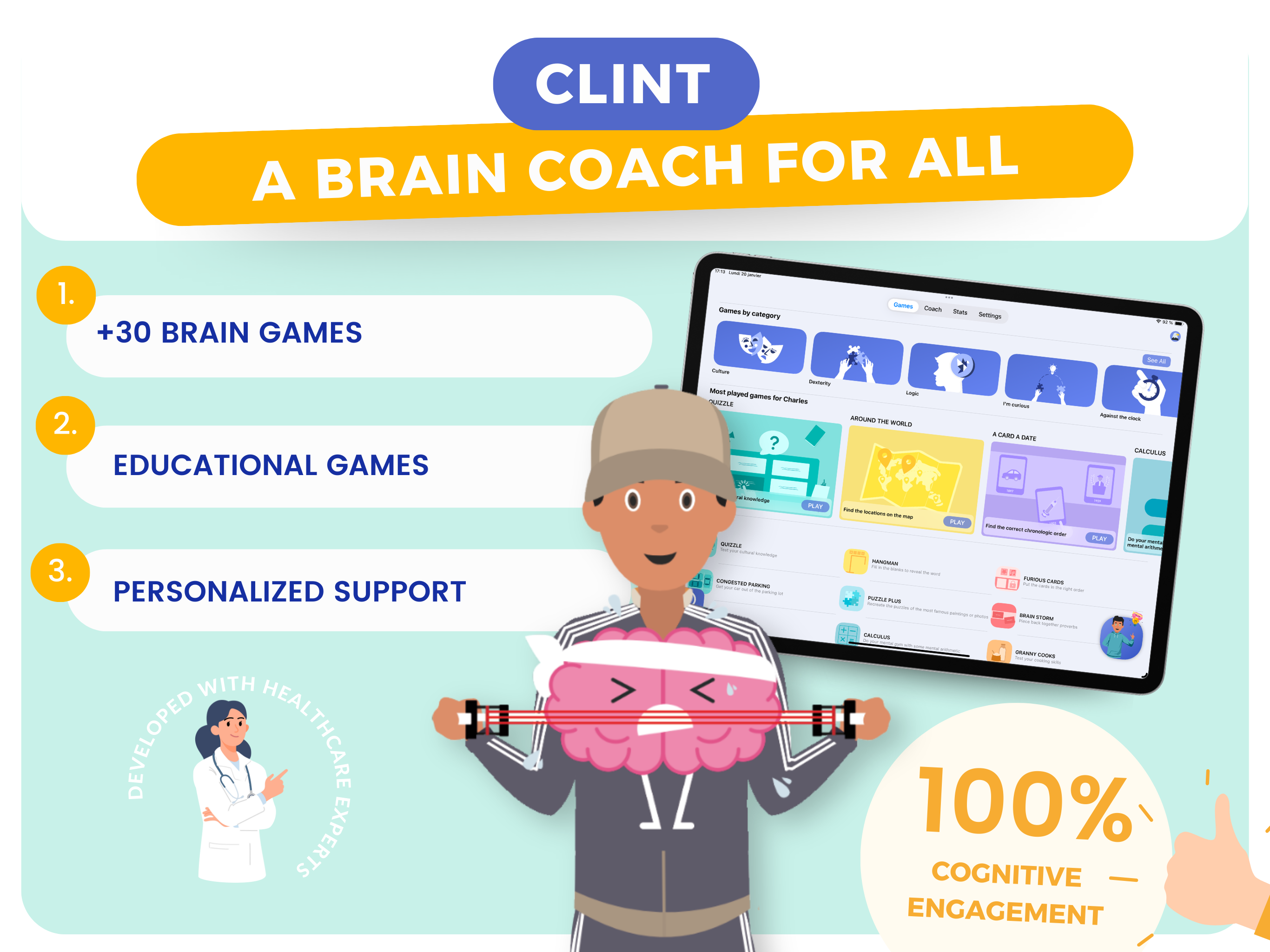
The benevolent interface and adaptive progression avoid brutal failures that could reactivate pathological perfectionism. The playful character of exercises promotes long-term adherence, an indispensable condition for obtaining lasting benefits.
Discover CLINT and its exercises for executive functions
Adapted Support
The Multidisciplinary Team
Anorexia care requires a coordinated multidisciplinary team: psychiatrist, somatic physician, psychologist, dietitian, and potentially other professionals according to needs. Integration of cognitive stimulation into this system requires close coordination to avoid contradictions and optimize synergies.
The neuropsychologist can contribute to evaluating the person’s cognitive profile and designing a personalized remediation program. Their collaboration with other team members allows articulating cognitive work with other dimensions of care.
Training Caregivers
Relatives and professionals accompanying anorexic individuals benefit from specific training to understand the disorder’s mechanisms and adapt their approach. Sometimes bewildering behaviors related to anorexia make sense when one understands the underlying cognitive alterations.
DYNSEO offers comprehensive training on behavioral disorders related to neuropsychiatric pathologies. This training addresses validated support strategies and the importance of a coordinated approach among different care actors.
Avoiding Pitfalls
Certain pitfalls must be avoided in cognitive support of anorexic individuals. The perfectionism characteristic of the disorder can transform exercises into a new source of pressure if care is not taken. The objective is not performance but process, pleasure of exercise and gradual progress.
Competition, even implicit, must be prohibited as it risks feeding pathological comparative tendencies. Emphasis must be placed on personal progression, self-kindness and acceptance of difficulties as a normal part of learning.
Toward Recovery: An Integrative Approach
Refeeding as Priority
Whatever the value of cognitive stimulation, it cannot replace refeeding which remains the absolute priority of treatment. The brain needs fuel to function, and no cognitive exercise can compensate for severe energy deficit.
Restoration of sufficient weight is generally accompanied by spontaneous improvement in cognitive capacities, with gray matter progressively reconstituting. Cognitive stimulation amplifies and accelerates this natural recovery.
The Importance of Lifestyle
Beyond nutrition, other lifestyle aspects influence cognitive functioning. Sleep, often disturbed in anorexia, plays a crucial role in consolidating learning and brain recovery. Its normalization constitutes an important objective.
Physical activity, problematic when it becomes compulsive in anorexia, nevertheless exerts beneficial cognitive effects when practiced appropriately. Moderate activity, supervised and dissociated from weight control objectives can contribute to brain health.
Preventing Relapses
Since executive deficits sometimes persist after clinical recovery, their continued work could contribute to relapse prevention. Maintaining regular cognitive stimulation practice, even light, maintains capacities developed during treatment.
Awareness of one’s own cognitive vulnerabilities also allows anticipating and managing at-risk situations. Recognizing moments when mental rigidity regains ground, when vision focuses excessively on details, helps implement corrective strategies before the disorder regains territory.
Conclusion: A Founded Hope
Cognitive stimulation in anorexia nervosa represents a promising complementary approach, targeting well-documented deficits that contribute to maintaining the disorder. Without claiming to replace established treatments, it can facilitate their effectiveness by strengthening cognitive capacities necessary for change.
Cognitive flexibility, central coherence and decision-making exercises, offered progressively and kindly, help anorexic individuals loosen the grip of their rigid patterns. Tools like the CLINT program offer accessible and adapted support for this approach.
Support by trained professionals and multidisciplinary coordination optimize the benefits of this approach. Caregiver training improves the quality of daily support.
Recovery from anorexia is possible, and cognitive stimulation can contribute to this path toward healing.
—
DYNSEO Resources to Support You:
- CLINT, your brain coach for adults: Exercises targeting executive functions, adapted and benevolent.
- Training “Disease-Related Behavioral Disorders”: For professionals and caregivers accompanying people suffering from eating disorders.


