
Pain Management: Preventing Agitation through Relief
Assessing, recognizing, and treating pain to reduce behavioral disorders
Pain is one of the most common and underestimated causes of behavioral disorders in nursing homes. An elderly person who is suffering but cannot verbally express their pain due to cognitive disorders will manifest this suffering through behaviors: agitation, aggression, refusal of care, shouting, withdrawal, sleep or appetite disturbances. Too often, these behaviors are interpreted as symptoms of dementia and treated with psychotropic medications, while a simple analgesic treatment could have resolved the issue. Recognizing, assessing, and relieving pain in non-communicative individuals is therefore a major ethical and therapeutic imperative. It is a powerful lever for preventing behavioral disorders and improving quality of life.
Pain in the Elderly: Realities and Misconceptions
Prevalence of Pain in Nursing Homes
Pain is extremely common among elderly people living in nursing homes. Studies show that 50% to 80% of residents suffer from chronic pain, and this figure rises to 80-90% among individuals with severe dementia. Yet, pain remains largely underdiagnosed and undertreated in this population. The reasons are multiple: communication difficulties, minimization by caregivers, misconceptions about pain and aging, lack of training in assessing non-verbal pain.
The sources of chronic pain in elderly people are numerous. Osteoarthritis affects the majority of seniors and causes constant joint pain, worsened by movement. Low back pain and spinal pain are common, related to wear and tear of the intervertebral discs, osteoporosis, and vertebral compressions. Neuropathic pain (diabetes, shingles, nerve compressions) causes burning sensations, electric shocks, and painful tingling.
Acute pain adds to chronic pain: infections (urinary, respiratory, dental), trauma (falls, bruises, fractures), pressure ulcers, severe constipation or fecal impaction, postoperative complications. This acute pain can transform an already uncomfortable baseline state into unbearable suffering, triggering major behavioral disorders.
⚠️ Dangerous Misconceptions about Pain
- "Pain is a normal part of aging" → FALSE. Aging does not mean mandatory suffering
- "Elderly people feel less pain" → FALSE. They feel it just as much, if not more (pain threshold sometimes lowered)
- "If they don't complain, they are not in pain" → FALSE. Many cannot express verbally
- "Advanced dementia no longer feels pain" → FALSE. Pain persists even with severe cognitive disorders
- "It's better to endure some pain than to take too many medications" → FALSE. Unrelieved pain = unnecessary suffering
- "If we give analgesics, they will become dependent" → FALSE. Addiction is virtually non-existent in elderly people with pain
These misconceptions lead to a dramatic underassessment and undertreatment of pain, generating unnecessary suffering and behavioral disorders.
The Link between Pain and Behavioral Disorders
The link between pain and agitation is particularly strong in individuals with dementia. When a person can no longer say "I am in pain," their body and behavior express suffering. Psychomotor agitation (anxious wandering, inability to stay still, repetitive movements) may be an attempt to relieve pain or escape a painful position. The person moves constantly because remaining still intensifies the pain.
Aggression towards caregivers, particularly during care, is often related to pain. When a caregiver mobilizes a painful limb (lifting the arm to dress, turning to wash the back, standing up when the knees are arthritic), the person reacts with a defensive gesture that may be interpreted as aggression when it is actually a protective reaction to anticipated or felt pain.
Repeated cries and vocalizations may be the verbal expression of pain in someone who can no longer articulate "I am in pain." Sleep disturbances (frequent awakenings, inability to find a comfortable position, nighttime agitation) are often related to pain that worsens at night, in silence and immobility. Loss of appetite may be caused by dental pain, canker sores, or painful digestive disorders.
Withdrawal and apathy can paradoxically also indicate pain: the person withdraws, refuses to move, becomes passive to avoid triggering pain. What is sometimes interpreted as depression or worsening cognitive disorders is actually a strategy to avoid suffering.
🚨 Behavioral Manifestations of Pain
- Motor agitation : anxious wandering, inability to stay still, incessant movements
- Aggressiveness during care : pushing, hitting, biting when being moved
- Refusal of care or mobilization : does not want to be touched, does not want to be moved
- Screaming, moaning, repeated complaints : vocalization of suffering
- Sleep disturbances : frequent awakenings, nighttime agitation
- Loss of appetite : food refusal without apparent cause
- Withdrawal, apathy : social withdrawal, refusal to participate in activities
- Facial expression : grimaces, furrowing of brows, fixed or absent gaze
- Protective posture : curled position, protection of a body area
Why Pain is Underestimated in Nursing Homes
Several obstacles prevent a correct assessment of pain. The first is the difficulty of communication : with the progression of dementia, the ability to verbally express pain decreases. The person can no longer find the words, does not remember that they are in pain a few seconds after feeling it, can no longer precisely locate where the suffering comes from. This aphasia of pain makes its expression indirect, solely behavioral.
The lack of time for caregivers is a major obstacle. Assessing pain in a non-communicative person takes time: observing facial expressions, postures, reactions during mobilization, filling out an assessment scale. In a context of chronic understaffing, this assessment is often neglected in favor of urgent technical care. Pain, invisible and silent, comes after everything else.
The lack of training of teams in assessing non-verbal pain means that signs are misinterpreted. A grimace is attributed to a bad character, agitation to dementia, refusal of mobilization to opposition. Pain is not systematically considered as the primary explanation. The use of assessment scales (Algoplus, Doloplus) is not systematic because it is not mastered or perceived as time-consuming.
Prejudices and minimizations persist: "At her age, it's normal to be in pain", "She never complains, she is not in pain", "We are not going to load her up with medication". These attitudes lead to a systematic underestimation of pain and undertreatment that leaves people in suffering.
🎓 DYNSEO Training: Behavioral Disorders for Professionals
Learn to recognize and assess pain in non-communicative individuals, to use assessment scales, and to implement effective pain management protocols. Qualiopi certified training with a practical approach.
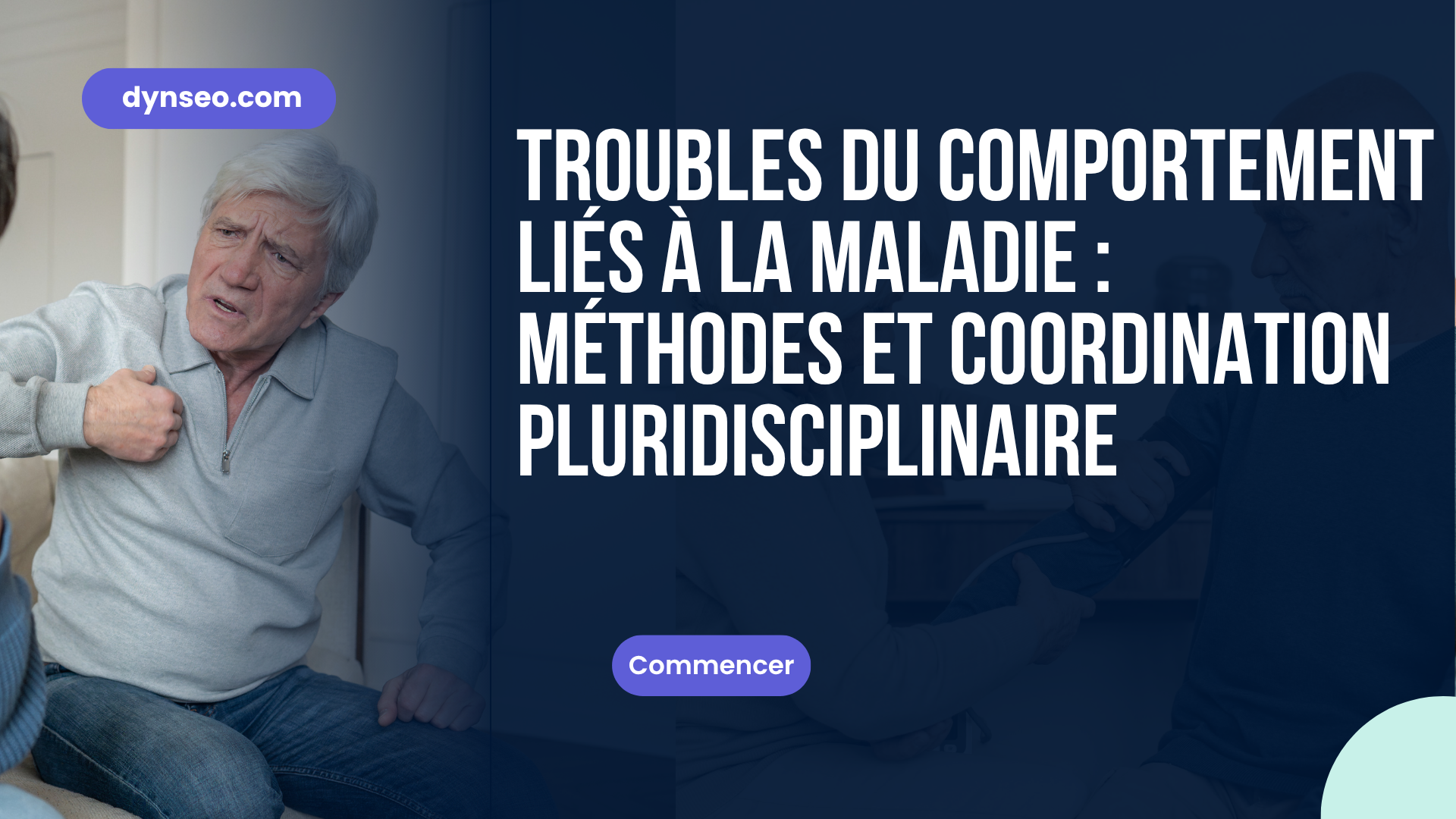
Assessing Pain in Non-Communicative Individuals
Assessment Scales: Algoplus and Doloplus
To objectify pain in individuals who cannot express it verbally, behavioral assessment scales have been developed and validated. The Algoplus scale is a quick scale (5 items, assessment in a few minutes) designed for the assessment of acute pain. It explores five observable behavioral dimensions during care or mobilization.
The face is observed: furrowing of the brow, grimaces, facial tension, change in usual expression. The gaze may convey pain: inattentive, fixed, distant gaze, absence of eye contact, or conversely, pleading gaze, tears. Complaints are noted: moans, cries during mobilization or care, verbal complaints if the person can still partially express themselves.
The body manifests pain: withdrawal or protection of an area, refusal to be mobilized, antalgic posture (position aimed at minimizing pain), stiffness. The overall behavior is assessed: unusual agitation or aggressiveness, gripping of sheets or people. Each item present is worth 1 point. A score ≥ 2/5 indicates probable pain that justifies pain management treatment.
The Doloplus-2 scale is more comprehensive and assesses chronic pain. It includes 10 items divided into three dimensions. The somatic impact (5 items) observes: somatic complaints (if expressible), antalgic positions at rest, protection of painful areas during mobilization, mimicry (facial expression of pain), sleep (disturbed by pain).
The psychomotor impact (2 items) assesses: bathing and dressing (difficulties or refusals related to pain during these cares), movements (decrease or conversely increase related to pain). The psychosocial impact (3 items) observes: communication (decreased, withdrawal), social life (reduced participation in activities), behavioral disorders (new or intensified agitation, aggressiveness).
Each item is rated from 0 to 3 according to intensity. The total score ranges from 0 to 30. A score ≥ 5/30 indicates pain requiring management. The higher the score, the more intense the pain and its impact on the individual's life. Regular use of Doloplus (at least weekly for at-risk individuals) allows for early detection of the onset or worsening of chronic pain.
⚡ Algoplus (Acute Pain)
- 5 items : Face, Gaze, Complaints, Body, Behavior
- Quick : 2-3 minutes to complete
- Usage : During care, mobilization, suspected acute pain
- Score : ≥ 2/5 = probable pain
- Action : Analgesic treatment and search for cause
📊 Doloplus-2 (Chronic Pain)
- 10 items in 3 dimensions : Somatic, Psychomotor, Psychosocial
- Complete : 5-10 minutes to complete
- Usage : Regular assessment (weekly/biweekly)
- Score : ≥ 5/30 = pain requiring treatment
- Action : Analgesic protocol adapted to intensity
🩺 Other Scales
- ECPA : Behavioral Assessment of Elderly Person (8 items)
- Abbey Pain Scale : 6 items, easy to use
- PAINAD : Pain Assessment in Advanced Dementia (5 items)
- PACSLAC : Pain Assessment Checklist (60 items, very comprehensive)
- Choose according to context and team training
Observe Non-Verbal Signs in Daily Life
Beyond formal scales, attentive daily observation allows for the detection of pain signs. Facial expression is very revealing: a tense face, permanently furrowed brows, a tight mouth, squinted or closed eyes, a lack of smile when the person usually smiled. These expressions can be fleeting (grimace during a movement) or permanent (face frozen in chronic pain).
Body posture provides clues: curled position, protection of an area (hand on the stomach, shoulder raised to protect the neck), refusal of certain positions (does not want to lie on the back, always prefers the same side), general stiffness, difficulties in moving. Movements are altered: unusual slowness, hesitation before moving, sudden stops mid-action, limping, difficulty getting up or sitting down.
Vocalizations express pain: spontaneous moans or during mobilization, repeated complaints ("Ouch", "It hurts", even if the person can no longer say where), screams during certain care actions, frequent sighs. Disturbed sleep (frequent awakenings, difficulty falling asleep, nighttime agitation, searching for a position without finding it) is often linked to pain that worsens at night.
Recent behavioral changes should raise alarms: a usually calm person becoming agitated, a sociable person withdrawing, a participative person refusing all activity, a person with a good appetite who no longer eats. These sudden or gradual changes are rarely without cause. Pain, even if not verbally expressed, is often the explanation.
💡 Pain Observation Checklist
Ask these questions for each resident, particularly in case of new behavioral issues:
- Has the facial expression changed? (tension, grimaces, frowning)
- Is the posture modified? (hunched, protecting an area, stiffness)
- Are the movements different? (slowness, hesitation, difficulties)
- Are there any vocalizations? (moans, cries, complaints)
- Is sleep disturbed? (frequent awakenings, nighttime agitation)
- Has appetite decreased? (new food refusal)
- Has participation in activities dropped? (withdrawal, refusal)
- Is there a reaction during mobilization? (grimace, withdrawal, scream)
- Do certain areas seem protected? (doesn't want to be touched)
If several answers are positive: assess with a scale and consider analgesic treatment.
Systematically Search for Causes of Pain
In the face of a positive scale score or clinical signs of pain, it is necessary to search for the cause to treat specifically. The clinical examination by the nurse or doctor is a priority. Examination of the musculoskeletal system: gentle mobilization of the joints to identify painful areas, palpation of the muscles, observation of gait. Skin examination: looking for pressure sores, wounds, fungal infections, shingles. Abdominal examination: checking for bladder distension, fecal impaction, pain on palpation.
The examination of the mouth and teeth is often neglected even though it is crucial: cavities, dental abscesses, canker sores, oral thrush, poorly fitted dentures can cause significant pain and explain food refusal or agitation. The examination of the feet (ingrown toenails, fungal infections, corns, calluses, ill-fitting shoes) often reveals sources of pain while walking.
Medical history guides the search: known osteoarthritis (look for an inflammatory flare-up), history of fracture (sequelae pain, malunion), diabetes (painful neuropathy), old shingles (postherpetic pain), cancer (metastatic bone pain). Additional examinations may be necessary: X-ray if fracture or vertebral compression is suspected, urine culture if urinary infection is suspected, blood tests if infection or metabolic disorder is suspected.
Sometimes, no obvious cause is found, but the pain is evident on the scale. However, one should not give up on analgesic treatment. The pain may be of multifactorial origin (a sum of small pains that create overall suffering) or neuropathic (without visible lesions). A trial treatment (therapeutic test) can then confirm the hypothesis: if the pain decreases under analgesics, it was indeed pain.
🎓 DYNSEO Training: Practical Guide for Family Caregivers
Help families recognize signs of pain in their loved ones and communicate with the medical team. Family members are often the first to notice subtle changes and can be valuable allies in detecting pain.
Implementing Effective Pain Relief Protocols
WHO Pain Management Levels and Their Application
The World Health Organization (WHO) has defined a stepwise strategy for pain management in three levels. This approach remains the reference for chronic pain treatment. Level 1 corresponds to mild to moderate pain and uses non-opioid analgesics: paracetamol (first-line, well tolerated, up to 4g/day in the absence of hepatic contraindications), non-steroidal anti-inflammatory drugs or NSAIDs (ibuprofen, ketoprofen) if there is an inflammatory component, but with caution in elderly people (gastrointestinal, renal, cardiovascular risks).
Level 2 corresponds to moderate to severe pain and combines a non-opioid analgesic with a weak opioid: codeine, tramadol. These molecules are more powerful but have side effects (drowsiness, constipation, nausea, risk of confusion in elderly people) that require monitoring. The prescription should be gradual, starting with low doses.
Level 3 is reserved for severe pain and uses strong opioids: morphine, oxycodone, fentanyl. These molecules are very effective but require close medical supervision due to potential side effects and the risk (low in elderly people with pain) of dependence. They are indicated for cancer pain, severe postoperative pain, and refractory chronic pain.
The WHO approach recommends gradually increasing the levels: start with level 1, if ineffective after a few days, move to level 2, if still insufficient, move to level 3. At each level, regularly assess effectiveness (reduction in pain score, improvement in behaviors) and side effects (constipation, drowsiness, confusion). Adjust doses or change molecules if necessary.
🟢 Level 1: Mild Pain
- Paracetamol: first choice, well tolerated, 1g x3-4/day
- NSAIDs (ibuprofen, ketoprofen): if inflammation, with caution
- Aspirin: less used, hemorrhagic risks
- Monitoring: effectiveness, digestive tolerance (NSAIDs)
🟡 Level 2: Moderate Pain
- Paracetamol + Codeine: effective combination
- Paracetamol + Tramadol: alternative
- Monitoring: constipation (frequent), drowsiness, confusion
- Constipation prevention: systematic laxatives
🔴 Level 3: Severe Pain
- Morphine: oral (immediate or extended release), injectable
- Oxycodone, Fentanyl: alternatives
- Close monitoring: constipation (systematic), drowsiness, respiratory depression, confusion
- Progressive titration: increase doses according to response
Neuropathic Pain: Specific Treatments
Neuropathic pain (related to nerve damage) does not respond well to conventional analgesics. It requires specific treatments. Tricyclic antidepressants (low-dose amitriptyline) are effective but must be used with caution in elderly people (anticholinergic effects: dry mouth, constipation, urinary retention, confusion, risk of falls).
Antiepileptics (gabapentin, pregabalin) are an alternative, better tolerated, effective for neuropathic pain (diabetes, shingles, nerve compression). Introduction should be gradual to limit side effects (drowsiness, dizziness). Duloxetine, a new generation antidepressant, has a specific indication in diabetic neuropathic pain and is generally well tolerated.
Local applications can complement: lidocaine patches (local anesthetic) on localized neuropathic pain areas (post-herpetic for example), capsaicin cream (active ingredient of chili) that desensitizes peripheral nerves. These local treatments have the advantage of acting directly on the painful area with few systemic effects.
Complementary Non-Pharmacological Approaches
Non-pharmacological approaches do not replace analgesics but effectively complement them. Appropriate physiotherapy (gentle mobilizations, stretching, massages) relieves musculoskeletal pain, maintains joint mobility, and prevents ankylosis. Heat or cold applications are simple and effective: hot water bottle, warm compresses on muscle contractions, ice pack (protected) on inflammatory areas.
Occupational therapy adapts the environment to reduce painful stimuli: toilet risers to limit knee flexion, grab bars, technical aids for dressing and personal hygiene, adapted chairs with good lumbar support. Relaxation (sophrology, soothing music, deep breathing) reduces muscle tension and anxiety that amplifies pain perception.
Gentle massages provide immediate well-being, promote muscle relaxation, and create a soothing relational bond. Aromatherapy with analgesic essential oils (wintergreen, lavender, peppermint) in massage or diffusion can provide additional relief. Transcutaneous electrical stimulation (TENS) is a neurostimulation technique that can relieve certain chronic pains.
🧩 SCARLETT Application: Cognitive Stimulation for Seniors
SCARLETT offers soothing activities that can help divert attention from chronic pain and improve overall well-being. Calm and rewarding games create moments of pleasure that reduce focus on suffering.

Pain Relief Protocols: Anticipation and Regularity
The effectiveness of pain relief treatments relies on two principles: anticipation and regularity. For chronic pain, one should not wait for the pain to become unbearable to administer pain relief. Medications should be given at fixed times, preventively, to maintain a constant level of pain relief and avoid painful spikes.
For example, if Mrs. D. has painful osteoarthritis, she should receive her paracetamol 1g three times a day (8am, 2pm, 8pm) systematically, and not "as needed". This regularity maintains continuous pain relief and prevents crises. "As needed" pain relievers are reserved for unpredictable acute pain or painful spikes despite background treatment.
Anticipation of painful care is essential. If bathing or mobilization causes pain, administering a rapid-release pain reliever 30 to 60 minutes before the procedure allows for better conditions during the care, without triggering unbearable pain and thus without aggressive reactions. This preventive treatment of painful care transforms the experience: instead of a dreaded and postponed bath, it becomes an accepted or even appreciated moment.
Regular reassessment of effectiveness is essential. Use scales (Algoplus, Doloplus) before starting treatment, then 48-72 hours later, and then weekly. If the score decreases significantly and behaviors improve, the treatment is effective. If there is no improvement, reassess: insufficient dose? Poor choice of molecule? Untreated cause of pain? Adjust accordingly.
✅ Principles of a Good Pain Relief Protocol
- Thorough initial assessment : use a scale, quantify the pain
- Identify the cause : treat the cause if possible (infection, fracture, inflammation)
- Choose the appropriate level : according to the intensity of the pain
- Regular administration : fixed times, not just "as needed"
- Anticipation of care : pain relief before painful procedures
- Prevention of side effects : systematic laxatives if opioids, monitor constipation
- Frequent reassessment : scale at 48-72h then weekly, adjust if needed
- Complementary approaches : physiotherapy, massages, heat, relaxation
- Team coordination : clear transmission of the protocol to all caregivers
Conclusion: Relieve Pain, Calm Behaviors
Pain is a major and often overlooked cause of behavioral disorders in nursing homes. A person who suffers and cannot express it verbally will necessarily manifest this suffering through their behavior: agitation, aggression, refusal, shouting, withdrawal. Too often, these behaviors are interpreted as psychiatric symptoms of dementia and treated with antipsychotics or anxiolytics, when a simple well-conducted pain relief treatment would have resolved the issue.
Recognizing pain in non-communicative individuals is a challenge that requires observation, training, and the use of validated tools. The Algoplus and Doloplus scales are valuable instruments that objectify pain and guide treatment. But beyond the scales, it is a professional stance that must change: always consider pain as a possible explanation for a behavioral disorder, never assume that it is normal to suffer with age, never give up on relieving pain on the pretext that the person cannot express their pain verbally.
Effectively treating pain transforms the lives of residents and the work of caregivers. Relieved residents are calmer, more cooperative, more participative. They regain sleep, appetite, and the desire for activities. Care becomes easier as it is not associated with pain. The overall atmosphere improves: less shouting, less agitation, less tension. Caregivers regain the pleasure of accompanying calm individuals rather than constantly managing crisis situations.
Implementing structured pain relief protocols requires an initial investment: training for teams, acquisition of scales, dedicated time for assessment, coordination with doctors. But this investment quickly pays off through the reduction of behavioral disorders, the decrease in prescriptions of psychotropics (which have heavy side effects), the improvement of quality of life, and the satisfaction of families.
Relieving pain is not a luxury or a secondary objective in nursing homes. It is a fundamental ethical imperative and a major therapeutic lever. No human being should suffer unnecessarily, especially when solutions exist. Elderly people with dementia, because they can no longer defend themselves verbally, because they rely entirely on caregivers to be relieved, deserve special attention, constant vigilance, and a fierce will never to leave them in suffering.
"Unrelieved pain is a silent violence. It destroys the person from within, gnaws at their morale, turns every moment into a trial. When this pain cannot even be named or expressed, it becomes doubly unbearable. Our responsibility as caregivers is to see beyond words, to read in bodies, in faces, in behaviors, the signs of this silent suffering. And once seen, to do everything possible to relieve it. Because relieving pain is not just treating a symptom. It is restoring to the person their dignity, their serenity, their ability to live and no longer just survive."
🧠 Application CLINT: Mental and Cognitive Health for Adults
CLINT offers gentle cognitive activities that can contribute to overall well-being. For residents whose pain is relieved, CLINT provides moments of pleasant stimulation that enhance the sense of capability and pleasure, thus shifting the focus away from residual suffering.
