
title: The role of the psychomotor therapist in the development of a child with Down syndrome
description: A comprehensive guide on the essential role of the psychomotor therapist for children with Down syndrome: therapeutic objectives, exercises, benefits, session frequency, and collaboration with the family for harmonious development.
keywords: psychomotor therapist Down syndrome, psychomotricity child with Down syndrome, psychomotor rehabilitation Down syndrome, motor development Down syndrome, hypotonia Down syndrome, psychomotricity sessions
[/META]
Down syndrome, psychomotor therapist, psychomotricity, motor development, hypotonia, rehabilitation, coordination
[/TAGS]
Reading time: 20 minutes
"My doctor recommended a psychomotor therapist, but what exactly do they do?" "What are the sessions for?" "My son is 2 years old, is it too early to start?" "How long does it take to see progress?" "Is psychomotricity really useful for Down syndrome?"
The psychomotor therapist is an essential health professional in supporting children with Down syndrome. Their role? To help the child develop their motor skills, to better understand their body, to improve their coordination, balance, and to build a positive self-image through movement.
In the face of muscle hypotonia, coordination difficulties, and the motor delays characteristic of Down syndrome, the psychomotor therapist offers playful and adapted exercises that promote harmonious development. But concretely, how do the sessions unfold? What are the expected benefits? How to effectively collaborate with this professional?
This guide explains everything about the role of the psychomotor therapist in the development of your child with Down syndrome.
Table of Contents
1. What is a psychomotor therapist?
2. Why is psychomotricity essential for Down syndrome
What is a psychomotor therapist? {#definition}
Definition
The psychomotor therapist is a state-certified auxiliary medical health professional (DE in psychomotricity, 3 years of study).
Their field: The interaction between motor and psychic functions. They work on the link between body and mind.
Distinction from other professionals
Psychomotor therapist vs Physiotherapist:
- Physio: Functional rehabilitation (muscles, joints, after trauma)
- Psychomotor therapist: Global development (motor skills + cognition + emotion)
- Occupational therapist: Autonomy in daily activities (dressing, eating, writing)
- Psychomotor therapist: Development of psychomotor functions (tone, balance, coordination, body schema)
- Muscle tone
- Balance and coordination
- Body schema (awareness of the body)
- Spatial and temporal orientation
- Fine and gross motor skills
- Lateralization
- Graphomotricity (preparation for writing)
- Emotional regulation through the body
- Self-confidence
Psychomotor therapist vs Occupational therapist:
Complementary, not competitors. A child with Down syndrome can benefit from all three.
Field of intervention
The psychomotor therapist works on:

Why is psychomotricity essential for Down syndrome {#pourquoi-essentiel}
The motor specificities of Down syndrome
Muscle hypotonia:
"Soft" muscles, lack of tone.
Consequences: Delay in motor skills acquisition (holding head, sitting, walking), rapid fatigue, slumped postures.
Ligament laxity:
Too flexible, hyper-extensible joints.
Consequences: Instability, risk of injury, balance difficulties.
Motor delays:
Walking around 2-3 years (vs 12-15 months), coordination difficulties.
Fine motor difficulties:
Manipulating small objects, writing, buttoning.
Body schema disorders:
Difficulty knowing their body, its limits, its position in space.
How psychomotricity helps
Strengthen muscle tone
Progressive exercises to "wake up" the muscles.
Improve balance and coordination
Obstacle courses, balance games.
Develop body schema
Awareness of their body, its parts.
Stimulate fine motor skills
Manipulation, finger games.
Encourage autonomy
Through motor progress (dressing, eating alone).
Strengthen self-confidence
"I can move, jump, climb. I am capable!"
Emotional regulation
Calming tensions through movement, breathing.
Therapeutic objectives {#objectifs}
General objectives
1. Improve muscle tone
2. Develop motor skills (gross and fine)
3. Strengthen balance and coordination
4. Build body schema
5. Encourage autonomy
6. Improve self-confidence
Objectives by age
Baby (0-2 years):
Early childhood (2-6 years):
Childhood (6-12 years):
Adolescence and adulthood:
Individualized objectives
Every child is unique. The psychomotor therapist establishes a personalized therapeutic plan after the initial assessment.
Examples of specific objectives:
Session structure {#deroulement}
The initial psychomotor assessment
First step: Comprehensive evaluation (1-2 sessions).
The psychomotor therapist evaluates:
Tools: Standardized tests, observations, object manipulation, motor courses.
Result: A report with strengths, difficulties, and therapeutic objectives.
Shared with parents, the doctor, and other professionals (with parental consent).
Weekly sessions
Duration: 30-45 minutes (depending on the child's age and attention span).
Frequency: Generally once a week (sometimes twice if intense need).
Location: Private practice, hospital, medico-psychological center, sometimes at home.
Typical session structure
1. Welcome (5 min):
Beginning ritual (song, calm game), building trust.
2. Warm-up (5 min):
Gentle movements, stretching, breathing.
3. Targeted activities (20-30 min):
Exercises according to objectives.
Examples of activities:
For tone:
For balance:
For coordination:
For fine motor skills:
For body schema:
4. Calm down (5 min):
Relaxation, breathing, gentle massage, story.
5. Exchange with the parent:
Brief discussion about the session, advice for home.
Playful approach
Sessions are always playful.
The child plays, has fun, they do not realize they are "working".
Varied materials: Balls, hoops, tunnels, mats, beams, sensory games, musical instruments, dolls, etc.
Adaptation to the child's level and interests.
Collaboration between psychomotor therapist and family {#collaboration}
Regular communication
The psychomotor therapist shares:
Communication notebook or exchanges via email/phone.
Exercises at home
The psychomotor therapist can suggest simple exercises to do daily (5-10 min).
Examples:
Daily repetition = anchoring progress.
Daily life tips
Environment setup:
Encouragement:
Value efforts, small progress.
Favorable activities:
Coordination with other professionals
The psychomotor therapist works in a network: speech therapist, occupational therapist, teacher, doctor.
Coordination meetings (ESS at school, meetings in CAMSP/SESSAD).
Consistency in care = better results.
When to start and how often? {#quand-frequence}
When to start?
As early as possible.
From the first months if significant hypotonia.
Often, follow-up starts at 6 months-1 year.
Why early?
Never too late: even in adolescence or adulthood, progress is possible.
What frequency?
Standard: 1 session per week.
If intense need (significant delays): 2 sessions per week.
If maintaining skills (teen/adult): 1 session every 2 weeks or once a month.
Duration of follow-up
Variable according to needs.
Often, several years (throughout childhood).
Regular reassessment (every 6 months-1 year): review, adjust objectives.
Possibility of stopping if objectives are met and sufficient autonomy.
Possible resumption if new difficulties arise (e.g., adolescence, preparation for a sport).
Reimbursement
In private practice:
In institutions (CAMSP, SESSAD, hospital):
Possible assistance: PCH (Disability Compensation Benefit) can fund private sessions if need is recognized (request MDPH).
Expected benefits
Motor progress
Cognitive progress
Emotional and social progress
Autonomy
Parent testimonials
"Thanks to psychomotricity, my son walked at 2 and a half years old. Now at 5, he runs, jumps, rides a bike. I didn't believe it at first."
"The sessions have really improved his balance. He falls much less, he is more confident."
"She loves the sessions. For her, it's play. But I see the progress in fine motor skills, she can now cut and thread beads."
Conclusion: An indispensable ally
The psychomotor therapist is a key professional in supporting children with Down syndrome. Through playful, adapted, and regular sessions, they help the child develop their motor skills, better understand their body, gain autonomy and confidence. The benefits are real, measurable, and positively impact daily life.
The keys to successful care:
1. Start early (as soon as possible in the first months)
2. Regularity (1 session per week)
3. Collaboration between family and psychomotor therapist (exercises at home, communication)
4. Coordination with other professionals
5. Patience and valuing progress
If you haven't done so yet, consult a psychomotor therapist. Your child will reap lasting benefits. Their body is their tool to explore the world, to learn, to grow. Help them tame it, strengthen it, and make it their ally.
DYNSEO resources to complement psychomotricity:
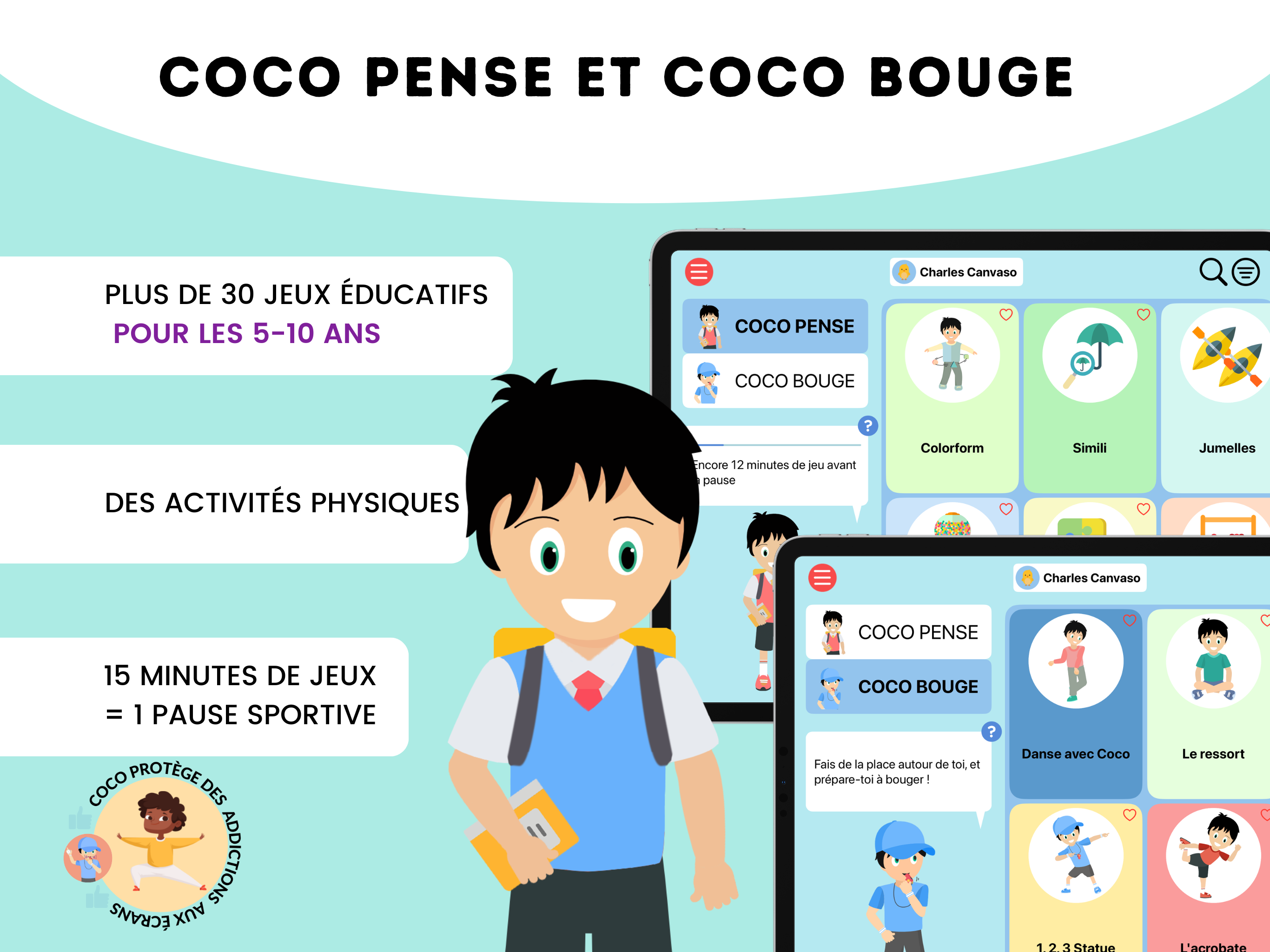
The body in motion is the brain awake. Offer your child the support of a psychomotor therapist. Their progress will amaze you.