
title: Down syndrome and learning numbers: fun and progressive methods
description: Practical guide for teaching numbers and mathematics to children with Down syndrome: fun methods, adapted progression, concrete materials, games, and digital tools for successful learning.
keywords: learning numbers Down syndrome, mathematics Down syndrome, teaching numbers to Down syndrome, mathematical games Down syndrome, counting Down syndrome, disability numeration
[/META]
Down syndrome, learning, numbers, mathematics, numeration, fun methods, educational games
[/TAGS]
Reading time: 22 minutes
"My son doesn't understand numbers." "She always confuses 6 and 9." "How can I teach him to count?" "Mathematics is too abstract for him." "Are there any adapted methods?"
Learning mathematics is often considered particularly difficult for children with Down syndrome. Abstract concepts, memorization of numbers, understanding quantity, mental calculation: so many cognitive challenges.
However, with adapted, progressive, and fun methods based on concrete manipulation and play, children with Down syndrome can learn numbers, understand quantities, count, and even perform simple operations. The key? Start with the concrete, go slowly, make learning enjoyable.
This guide offers you a step-by-step progression, practical exercises, games, and tools to teach mathematics effectively and joyfully.
Table of Contents
1. Understanding difficulties in mathematics
2. General principles for teaching numbers
Understanding difficulties in mathematics {#understanding-difficulties}
Why are mathematics difficult?
Abstraction:
Numbers are abstract concepts. "3" cannot be touched or seen directly.
Limited working memory:
Mental calculation requires holding multiple pieces of information in mind (7 + 5 = ? → keep 7, add 5, remember the result).
Attention:
Concentration is needed to follow steps and not get lost.
Mathematical language:
Specific vocabulary (addition, plus, equals, difference).
Logical thinking:
Reasoning, problem-solving.
Mathematical abilities in individuals with Down syndrome
Varies by individual, but generally:
Possible:
- Count up to 10, 20, sometimes more
- Recognize written numbers
- Compare quantities (more/less)
- Simple additions (with concrete support)
- Use money (with practice)
- Complex operations (multiplication, division)
- Quick mental calculation
- Multi-step problem-solving
- Abstract concepts (fractions, percentages)
More difficult:
Realistic goal: Acquire the basics (numeration, counting, small operations) for daily independence (shopping, simple money management, telling time).

General principles for teaching numbers {#principles}
1. From concrete to abstract
Always start with the manipulation of real objects.
Progression:
1. Real objects (apples, cubes)
2. Images (drawings of apples)
3. Symbols (the written number "3")
Example:
2. Multisensory learning
Use all senses:
Example:
Learn the number 5:
3. Repetition and regularity
Repeat daily (even 5-10 minutes).
Better to do 10 minutes every day than 1 hour once a week.
Anchoring in long-term memory through repetition.
4. Contextualization
Use everyday situations:
Mathematics in real life = more meaningful.
5. Very gradual progression
Do not skip steps.
Master one step before moving to the next.
If the child is stuck, go back, break it down further.
6. Positive reinforcement
Value every small success:
"Well done, you counted to 5 correctly!"
Do not punish mistakes, correct gently.
Climate of trust = better learning.
7. Gamification
Learn through play.
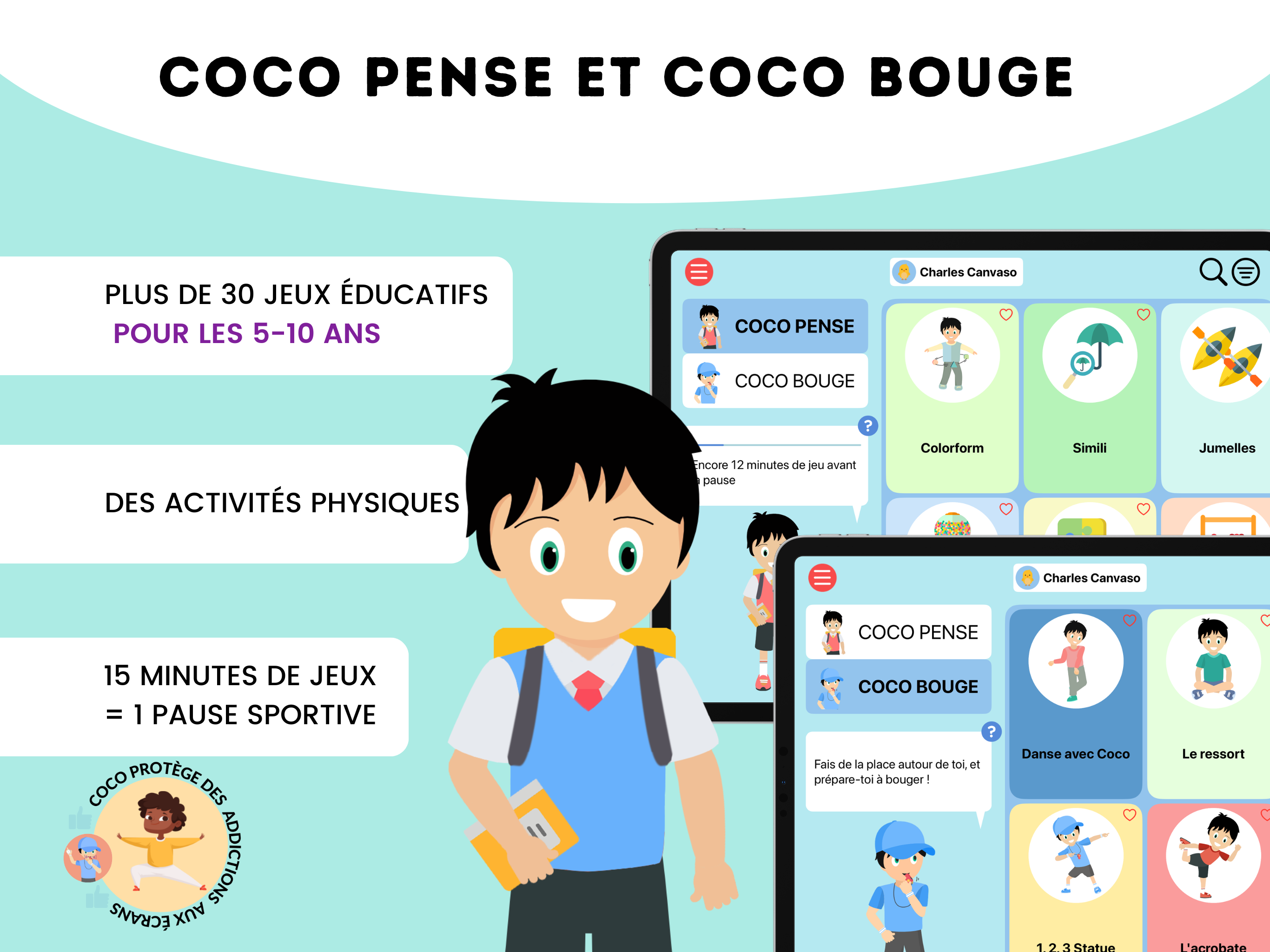
Board games, card games, apps (COCO THINK and COCO MOVE).
If it's fun, the child is motivated.
Step-by-step progression {#progression}
Step 1: Concept of quantity (pre-numerical)
Before learning numbers, understand "many / few", "one / several".
Activities:
Vocabulary: Many, few, one, several, full, empty.
Step 2: One-to-one correspondence
Associate 1 object with 1 other.
Activities:
Understand: "Same quantity" without counting.
Step 3: Count up to 3, then 5
Learn the number rhyme.
Count objects by touching them (number-object correspondence).
Activities:
Master 1-3, then move to 1-5.
Step 4: Recognize written numbers (1 to 5)
Associate the written symbol with the name and quantity.
Activities:
Step 5: Count up to 10
Progression from 6 to 10.
Activities:
Step 6: Recognize written numbers (1 to 10)
Same as step 4, but up to 10.
Write the numbers (with help: dotted lines, guided hand).
Step 7: Compare quantities
Bigger / smaller, more / less.
Activities:
Vocabulary: More, less, equal, as much, bigger, smaller.
Step 8: Simple additions (with objects)
Start with concrete additions.
Example: 2 apples + 1 apple = ?
Vocabulary: More, add, in total.
Gradually introduce the sign "+".
Step 9: Simple subtractions (with objects)
Remove objects.
Example: 5 candies - 2 candies = ?
Vocabulary: Less, remove, take away, remains.
Step 10: Simple mental calculation
After a lot of concrete practice, try without objects.
Start with small numbers (up to 5).
Use fingers if necessary (visual support).
Step 11: Use money
Practical application of mathematics.
Activities:
Very motivating (real independence)!
Beyond: Advanced concepts
Depending on abilities:
Always with concrete support and patience.
Concrete materials and tools {#materials}
Everyday objects
Free, accessible:
Advantage: Real manipulation, contextualization.
Abacuses
Classic tool, very effective.
Each bead = 1 unit.
Count, add, subtract by moving the beads.
Cuisenaire rods
Colored sticks of different lengths.
Each color = a number.
Visualize quantities, operations.
Tokens, poker chips
Manipulate, count, exchange.
Store games: 1 token = 1€.
Dice
Classic dice (1-6), 10-sided dice.
Games of chance, count the points.
Playing cards
Classic cards, cards from 1 to 10.
Games: War (compare), Memory (memorize numbers). ### Flashcards
Cards with numbers, quantities (dots, images).
Daily review (2-3 minutes).
Counting books
Children's albums with numbers, illustrations.
Learn by reading a story.
Calendar, clock
Learn numbers in a temporal context.
Count the days, tell time (gradually).
Fun games and activities {#games}
Board games
1. Dice and counting games
Little Horses, Goose Game: Roll the dice, count, move forward.
2. War (cards)
Compare the numbers: who has the biggest?
3. Uno
Recognize numbers, colors.
4. Dobble Numbers
Speed, visual recognition.
Manipulation games
1. Play dough
Form numbers, quantities (3 sausages = 3).
2. Beads to string
"String 5 red beads, 3 blue beads."
3. Lego / Duplo
Build towers: "Put 4 cubes."
Songs and nursery rhymes
Counting songs:
Melody helps memorize the number sequence.
Movement games
1. Jump, clap
"Jump 3 times!" "Clap 5 times!"
2. Simon says
"Simon says: touch your nose 2 times."
3. Motor course
"Crawl under 1 table, jump over 2 cushions."
Cooking
Follow a simple recipe:
"Break 2 eggs." "Add 3 spoons of flour."
Measure, count (useful and delicious learning!).
Digital tools {#digital-tools}
COCO THINK and COCO MOVE
Educational app adapted for children with specific needs.
Math games:
Advantages:
Discover COCO THINK and COCO MOVE
Other applications
1. AB Math (Free/Paid)
Mental calculation games, additions, subtractions.
2. DragonBox Numbers (Paid, ~€7)
Understand numbers in a fun and intuitive way.
3. Montessori Maths (Paid)
Montessori method, virtual manipulation.
4. Slice Fractions (Paid)
Understand fractions (advanced level).
Educational videos
YouTube:
Parental supervision recommended.
Drill applications
Quick daily review (digital flashcards).
Examples: Quizlet, Anki (for older children).
Practical tips
Short and regular sessions
10-15 minutes a day rather than 1 hour once a week.
Limited attention: respect it.
Integrate into daily life
Mathematics everywhere:
Natural, contextualized learning.
Celebrate progress
Every number learned = victory.
Congratulate, encourage, take photos, write in a notebook.
Patience
Learning takes time.
Some children take years to master 1-10.
Go at the child's pace, without pressure.
Adapt to interests
If the child loves trains: Count the cars.
If the child loves animals: Count the stuffed animals.
Increased motivation if related to interests.
Conclusion: Mathematics within reach
Learning numbers and mathematics is a challenge for children with Down syndrome, but it is possible with the right methods: concrete, progressive, fun, and repeated. Every child can progress at their own pace and acquire essential mathematical skills for daily independence.
The keys to success:
1. From concrete to abstract: manipulate before calculating
2. Multisensory learning: see, hear, touch
3. Daily repetition: short but regular
4. Contextualization: mathematics in real life
5. Very gradual progression: master each step
6. Gamification: games, songs, applications like COCO THINK and COCO MOVE
7. Patience and celebration: every progress counts
Numbers are not enemies. With kindness, creativity, and perseverance, your child will tame them. And one day, they will count to 10, 20, maybe more. And you will be proud. Proud of them, proud of yourself.
DYNSEO resources for learning mathematics:
1, 2, 3... Numbers are learned step by step. With patience, play, and love, your child will count their victories.