About Course
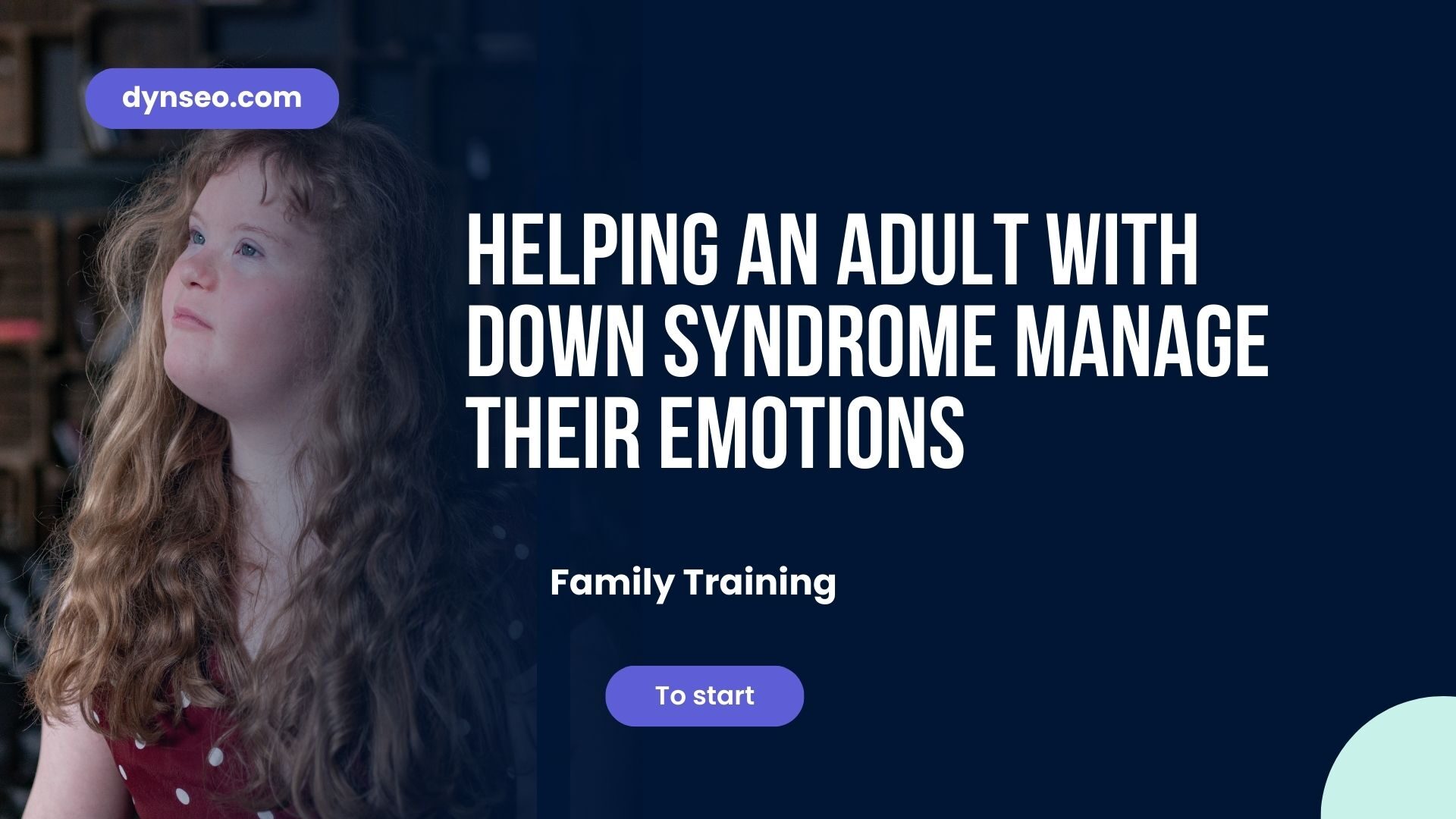
Helping an adult with Down syndrome manage their emotions
Supporting daily anger, frustration, anxiety, and hypersensitivity
Understand triggers, prevent crises, and build a secure environment
Target audience
Parents, family caregivers, professionals, and relatives supporting an adult with Down syndrome, wishing to better understand their intense emotional reactions and help them develop their self-regulation skills.
Duration
Comprehensive training divided into 5 progressive modules
Format
100% online training, accessible from your computer or tablet. You progress at your own pace, whenever you wish, without time constraints.
What you will learn
Adults with Down syndrome experience their emotions with particular intensity. This is not a whim or immature behavior, but the result of neurological and developmental factors that persist into adulthood. Understanding these mechanisms is the first step to providing accurate and respectful support.
This training gives you concrete keys to understand the emotional world of the adult with Down syndrome. You will discover why emotions can be so intense: different development of the prefrontal cortex, communication frustration, sensory hypersensitivity, difficulty decoding social cues, and acute awareness of their difference. You will learn to identify common triggers and recognize the warning signs of a crisis.
You will gain practical tools to help the adult express their emotions: age-appropriate visual supports, development of emotional vocabulary, and regulation routines. You will know how to manage emotional crises while maintaining a firm but respectful framework that preserves adult dignity, and how to support the post-crisis phase to turn it into a learning opportunity.
Finally, you will learn to build a predictable and secure environment that prevents overflow, while fostering the person’s emotional confidence in the long term.
By the end of this training, you will be able to:
- Understand why emotions can sometimes be intense: different development of the prefrontal cortex, gap between feeling and expression (communication frustration), sensory hypersensitivity (noises, crowds, lights), difficulty decoding implicit social cues, acute awareness of their difference and accumulated wounds
- Identify common triggers: physical and cognitive fatigue (workshops, outings), unexpected events and changes in routine, misunderstandings and complex social situations, transitions between activities or environments, sensory overload, frustrations related to autonomy, relational and emotional issues, anxiety related to health and aging
- Recognize signs before a crisis: physical signs (tense shoulders, clenched fists, rapid breathing), changes in behavior (agitation or withdrawal, avoidance of eye contact), modifications in communication (altered tone, compulsive repetitions), disproportionate reactions, verbalizations of discomfort
- Use visual supports appropriate for adults: emotion cards with realistic faces and nuanced emotions, simple stress scale, smartphone apps to track mood, pictograms of situations, need cards — present as communication aids, not as childish tools
- Develop emotional vocabulary: start from what exists, model emotional expression, put words to observed emotions, use media (films, series), introduce nuances, link emotions and bodily sensations
- Establish regulation routines: freely accessible retreat space (safe haven, not punishment), breathing techniques (abdominal, square 4-4-4-4), regular physical activity, calming sensory activities, decompression time, regular emotional check-ins
- Manage crises with a firm but respectful framework: prioritize safety, remain calm (breathe, lower your tone, slow down movements), maintain limits while respecting adult dignity, adapt your posture (open, non-confrontational), use simple and calming language, respect individual needs, do not punish the crisis
- Apply calming techniques: guided breathing (modeling, counting out loud), movement (walking, shaking, stretching), deep pressure (firm hug, weighted blanket), voluntary isolation in a calm space, water (drinking, face, warm shower), redirection of attention
- Support the post-crisis phase: allow recovery time, welcome post-crisis emotions (crying, shame, guilt), respectful debriefing to identify the trigger without blaming, explore alternatives together, separate emotion from behavior
- Value progress in an adult manner: celebrate small steps (verbalizing discomfort, withdrawing before a crisis), recognize efforts without a condescending tone, involve the person in self-assessment, avoid comparisons, accept ups and downs
- Create a predictable and secure environment: visual schedules appropriate for adults (agenda, app), warn of changes as early as possible, transition rituals, stability of reference persons, prepare new experiences (photos, videos, preparatory visits)
- Anticipate difficult situations: list recurrent high-risk situations, create social scenarios for each situation, prepare the toolbox (headphones, music, sensory object), briefing before the situation, gradual introduction, always have a plan B
Practical tools included
- Emotional episode journal template
- Visual stress scale from 1 to 5
- Guided breathing techniques
- Warning signs identification grid
- Social scenarios for difficult situations
- Post-crisis debriefing strategies
Bonus
Discover the JOE app, your brain coach: 30+ cognitive stimulation games for adults, adaptable levels to progress without frustration, a rewarding activity that can be integrated into a calming daily routine, two-player mode for moments of connection.
Course Content
Module 1 – Understanding Emotions in Adults with Down Syndrome
-
Lesson 1: Why Emotions Are Sometimes Intense
03:23 -
Lesson 2: Common Triggers
03:23 -
Lesson 3: How to Spot the Signs Before the Crisis
02:25
Module 2 – Helping the adult express their emotions
Module 3 – Managing Emotional Crises
Module 4 – Developing Emotional Trust
Module 5 – The DYNSEO tools
Final quiz
Student Ratings & Reviews