Assessing and Tracking the Progress of Autistic Children: Tool Guide
Discover assessment tools, progress indicators, and tracking methods for data-driven and results-oriented support.
Dans cet article
Effective support for autistic children relies on rigorous assessment and systematic tracking of progress. Without objective measurement, it becomes impossible to verify the effectiveness of interventions, adjust strategies, or celebrate advancements. This guide presents essential tools, observation methodologies, and relevant indicators to structure an evaluation and tracking system that transforms data into levers for continuous improvement of support.
📋 Why assess and track progress
Assessment and tracking of progress are not an additional administrative burden. They form the foundation of responsible and effective professional practice. Assessing allows us to know where the person stands, to define relevant goals, and to measure the impact of interventions. Tracking allows for early detection of progress, stagnation, or regression, and for real-time adjustment of support.
Guide the intervention
The initial assessment identifies strengths and needs to define relevant and personalized goals
Measure effectiveness
Regular tracking verifies that interventions produce the expected results and justifies the resources committed
Continuously adjust
Data allows for quick modification of ineffective strategies and reinforcement of those that work
For autistic individuals, whose progress may be slow and subtle, objective tracking is particularly important. Without measurable data, minimal but significant progress may go unnoticed, discouraging professionals and families. Conversely, tracking highlights every small victory and maintains the motivation of the team and family.
📊 Standardized assessment tools
Standardized assessment tools provide comparable quantitative data over time and between individuals. They are administered by trained professionals (psychologists, neuropsychologists) during formal assessments scheduled at regular intervals.
- PEP-3 (Psychoeducational Profile): developmental assessment that identifies acquired, emerging, and unacquired skills in each area. Particularly useful for developing the educational program and measuring progress
- Vineland-II: adaptive behavior scale assessing communication, autonomy, socialization, and motor skills. Administered through interviews with relatives, it measures functional skills in real life
- AAPEP: psychoeducational profile for adolescents and adults, assessing skills related to autonomy and professional integration
- EFI (Evaluation of Functional Skills for Intervention): functional assessment tool adapted for ASD, covering daily living skills, communication, and socialization
- ABLLS-R (Assessment of Basic Language and Learning Skills): assessment of basic language and learning skills, particularly used in ABA programs
💡 The frequency of formal assessments
Standardized assessments are not conducted daily. They are scheduled at key moments: upon entering the establishment, every 6 to 12 months for regular follow-up, and during important transitions. Between these formal assessments, continuous follow-up is ensured by observation grids and digital tools that collect data daily.
👁️ Daily observation grids
Observation grids are the first-line monitoring tools, used daily by educators and caregivers. They allow for the systematic collection of data on behaviors, skills, and progress of the individuals supported in real-life situations. Unlike standardized assessments that provide a snapshot at a given moment, observation grids document the evolution day by day.
A good observation grid is easy to fill out (to avoid discouraging professionals), focused on the objectives of the personalized project (to remain relevant), quantifiable (to allow for trend analysis), and standardized (to ensure reliability between different observers). It should be completable in less than two minutes to be compatible with the work pace of field professionals.
Types of observation grids
Frequency grids count the number of occurrences of a behavior over a given period (for example, the number of times the child initiates a request in a day). Rating grids assess the level of assistance needed to perform a task (full autonomy, verbal guidance, physical guidance). Temporal grids measure the duration or latency of a behavior (duration of concentration on an activity, waiting time before a crisis).
📏 Defining relevant progress indicators
Progress indicators are concrete measures that allow for quantifying evolution in each area targeted by the personalized project. They must be precisely defined, reliably measurable, and sensitive to changes, even minimal ones.
For each objective of the personalized project, one or more indicators are defined. For example, for the objective "develop autonomy in dressing," the indicators may include: the number of steps completed without assistance, the level of guidance needed for each step, and the total time for the task. These indicators are measured regularly and graphically reported to visualize trends.
Examples of indicators by domain
- Communication: number of communicative initiations per day, diversity of communication functions used, size of functional vocabulary
- Autonomy: number of steps completed without assistance in daily routines, level of guidance needed, time taken
- Behavior: frequency of challenging behaviors, average duration of crises, time between the precursor signal and the crisis, number of successfully managed situations
- Cognition: success rate in cognitive stimulation activities, progression in levels of difficulty, duration of concentration
- Socialization: number of interactions with peers, duration of shared play, spontaneous use of taught social rules
🎮 COCO THINKS and COCO MOVES: integrated continuous assessment
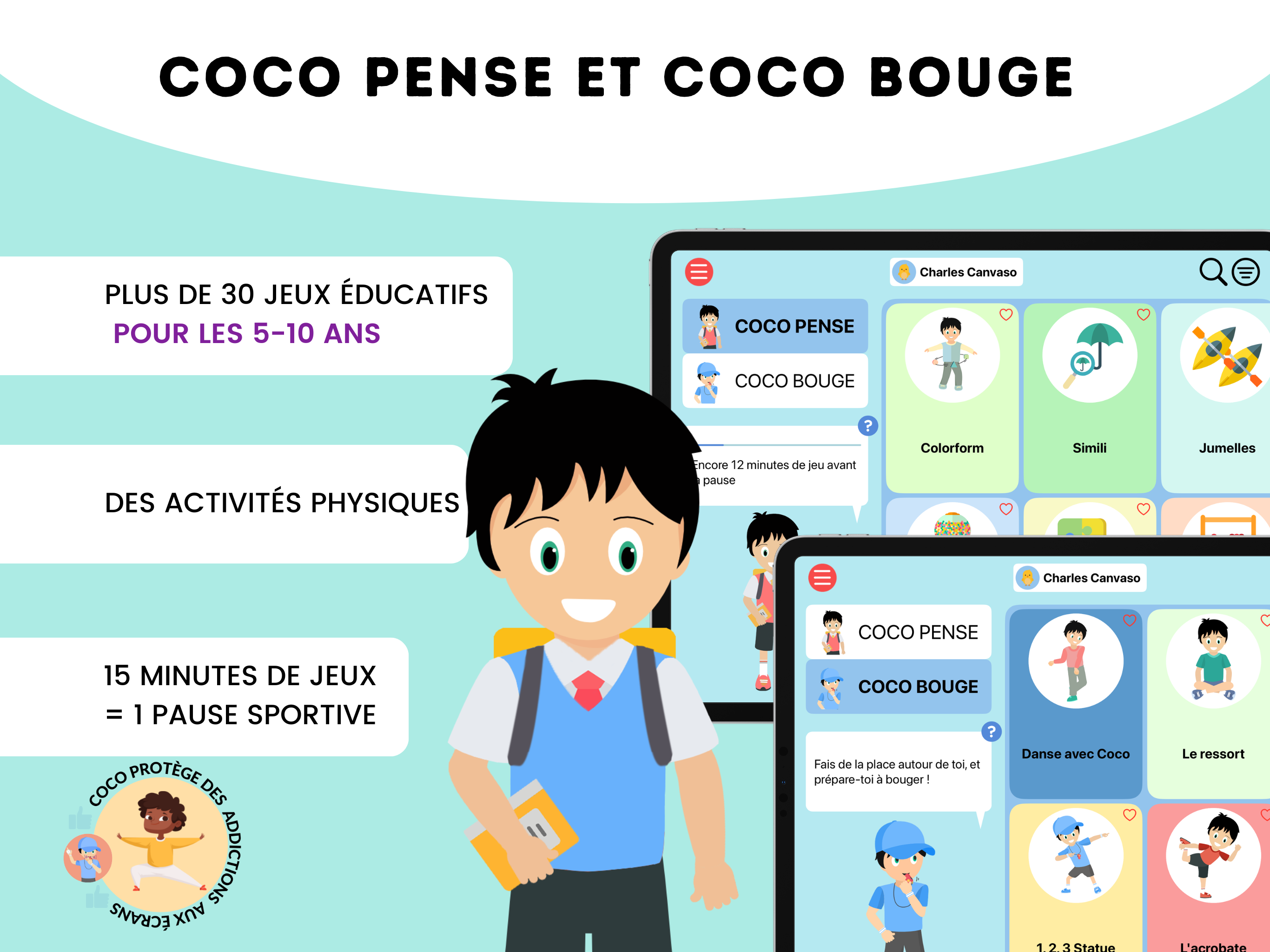
The COCO THINKS and COCO MOVES program from DYNSEO offers a major advantage for tracking progress: automatic collection of performance data at each session. Success rates, response times, levels of difficulty reached, and cognitive domains engaged are recorded without additional effort from the professional.
Objective data for informed decisions
The data from COCO complements the qualitative observations of professionals by providing objective and reproducible measures. The evolution of scores in each cognitive domain (attention, memory, reasoning, flexibility) can be tracked over time and correlated with observed progress in daily life. This data enriches assessments and synthesis meetings, and offers families a concrete view of their child's progress.
🎯 Discover COCO THINKS and COCO MOVES
A program that combines cognitive stimulation and integrated progress tracking, ideal for objectively documenting the evolution of each child.
Discover the COCO program →📈 Analyze and communicate the data
Collecting data only makes sense if it is analyzed and communicated usefully. Data analysis must be accessible to all team members, not just psychologists. Simple graphs showing the evolution of indicators over time are the most effective tool for visualizing trends and making decisions.
Communicating results to families is an important moment. Parents appreciate concrete data showing their child's progress, but also explanations that help them understand what this data concretely means in daily life. A graph showing the increase in communicative initiations, accompanied by concrete examples ("this week, Lucas spontaneously asked three times to eat his snack"), is more meaningful than a table of raw numbers.
The DYNSEO guides for supporting autistic children and supporting autistic adults provide useful benchmarks for contextualizing observed progress.
⚠️ Do not drown in data
The trap of monitoring is wanting to measure everything. An excess of unprocessed data is as useless as a lack of data. The key is to focus on a limited number of truly relevant indicators, linked to the priority objectives of the personalized project, and to monitor them regularly and rigorously rather than spreading the collection effort over too many measures.
🔄 Adjust interventions based on data
The ultimate goal of monitoring is to allow for quick and relevant adjustments to interventions. When the data shows consistent progress, the team can gradually increase the difficulty or introduce new objectives. When a plateau is observed, the team analyzes possible causes (too ambitious an objective, inappropriate strategy, environmental factor) and proposes adjustments. When a regression appears, further investigation is necessary to identify the causes and address them.
Synthesis meetings, scheduled regularly, are the ideal time to analyze monitoring data, discuss adjustments, and update personalized projects. Each professional brings their observations and data, and the team makes collective decisions based on objective elements.
🎓 Train with DYNSEO
DYNSEO offers a certified Qualiopi training “Supporting a child with autism: keys and solutions for everyday life” that addresses the principles of assessment and monitoring progress in supporting autistic individuals.

🎓 Master assessment and monitoring
Certified Qualiopi training to develop your skills in assessing and monitoring the progress of autistic individuals.
Discover the training →🎯 Conclusion
Assessment and monitoring of progress are the pillars of quality support in specialized institutions. By combining standardized assessments, daily observation grids, and digital data from tools like COCO THINKS and COCO MOVES, professionals have a comprehensive monitoring system that informs their decisions and documents the progress of each supported individual.
An institution that assesses and monitors is an institution that progresses. Data allows for valuing the work done, motivating teams and families, and above all, providing each autistic individual with tailored, evolving, and evidence-based support.
Measure to progress:
Every piece of data is a key to better support.
Did this content help you? Support DYNSEO 💙
We are a small team of 14 people based in Paris. For 13 years, we have been creating free content to help families, speech therapists, care homes and healthcare professionals.
Your feedback is the only way we know if our work is useful. A Google review helps us reach other families, caregivers and therapists who need it.
One action, 30 seconds: leave us a Google review ⭐⭐⭐⭐⭐. It costs nothing, and it changes everything for us.