

semantic memory
Here are examples of using memory in everyday life: when we need to go to the pharmacy, we have to remember the way. When we go shopping, we have to remember the things we want to buy.
It is important to know that there are several types of memory: semantic memory (related to language), visual memory (related to images), or working memory (to keep information for a limited time).
If we do not stimulate our memory, we lose information. Over time, searching for information also becomes slower and more difficult. That is why it is important to continuously work on your memory.

Training your memory is very important and you can train it at any age. You should not wait until you have difficulties to start your training; on the contrary, keeping your brain active can delay the onset of signs of frailty.
If you have already started to notice signs of frailty or memory loss, it is not too late! You can start training your memory to regain lost skills when possible. In some cases, the goal will simply be to slow down the decline, as in Alzheimer's disease.
The first step, the most important, is to discern which memory is affected, cognitive or semantic? The article next to this could help you understand what semantic memory is.
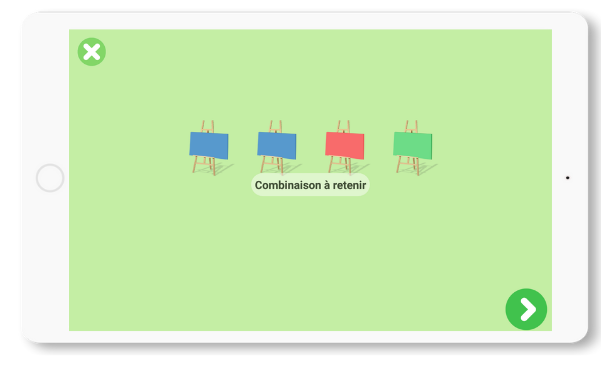
ColorMind
In this game, the person must memorize a sequence of colors. Thus, we work on visual memory since there are colors to recognize, and working memory since you have to remember the sequence immediately. During the appearance of the objects, each color is associated with a different sound. You can also work on auditory memory if you try to remember the sequence of sounds.

Devilish Cards
In this game, the person must remember the sequence of the cards. Here there are several ways to train memory because you can remember images (visual memory) or remember the names of objects (semantic memory).

One Card One Date
In this game, the person must put historical events in chronological order. By using historical events, you can work on memory with your general knowledge (for events before your birth) or your autobiographical memory for events related to your youth. Cultural games are more fun and motivating because they are related to your experience and your life.


Download the game programs CLINT and SCARLETT, and enjoy a 7-day trial


ATTENTION PROGRAM
For 4 weeks, follow our program to work on attention by playing our specially selected games for 15 minutes a day.

MEMORY PROGRAM
For 4 weeks, follow our program to work on memory by playing our specially selected games for 15 minutes a day.

LANGUAGE PROGRAM
For 4 weeks, follow our program to work on language by playing our specially selected games for 15 minutes a day.


Do you want to test your memory? You are in the right place!
You can test your memory with a quick test about your feelings in everyday life. You can take the test right away, but we recommend reading this article where you can find some information about memory and cognitive functions in general.
Knowing your memory level helps you act better and adapt your environment according to your needs.
What is memory?
Memory is a cognitive function that allows us to store information for a limited time or keep it in long-term memory. Every time we receive information, our brain looks for similar or inherent information to complete our knowledge. If the information is important, we keep it in memory; if it is not important, we will forget it.
The symptoms of memory loss
Sometimes, we may experience memory loss or cognitive fragilities. You should not worry if you occasionally forget words or objects, but be cautious if it starts to become more frequent.
The first signs of memory fragility are forgetting certain words or confusing them with each other. One may feel disoriented in familiar spaces or not immediately recognize a place (for example, if you take the bus to a friend's house and once you get off the bus, you can't remember which direction to go).
When symptoms become more severe you may start to forget important appointments or forget to take medications.
Memory is linked to other cognitive functions, so you may also have difficulties with attention or language. For example, you may start to have trouble following a conversation or a movie.
It can sometimes be difficult to realize your fragilities, which is why it is important to pay attention to changes. Regularly test your memory to see if there are differences over time. You can test your memory online for free. If you feel uncomfortable and think you have fragilities, talk to your loved ones or make an appointment with your doctor. In a situation of doubt, it is always better to have the opinion of a health professional.
When to call the doctor
If you realize that you are starting to have memory difficulties, you can talk about it with your loved ones to see if they have also noticed changes. Together you can discuss it and choose how to act afterwards.
It may happen that your loved ones bring up the subject with you, in case you haven't noticed any differences. It is important to be open to listening because if your loved ones have chosen to talk to you about this, it is because they have noticed a change and they want to help you.
If you feel uncomfortable, if you have difficulty doing activities that you used to do easily, or if you notice significant differences in your daily activities, then you can talk to your doctor.
The doctor will schedule an initial appointment to listen to you and understand your doubts and needs. Then, he may suggest specific tests to see if there are indeed difficulties and to discover the cause.
How to improve your memory
To train your memory, you can implement some small tips.
There are several activities you can do at home:
- Make mental lists: in the evening, before going to sleep, try to make a list of the important things you did during the day. Additionally, you can make a list of things to do for the next day. To make the activity more complex, try to make the list only in your head and not write it down (of course, for important events it’s always better to have a post-it or a reminder on your phone!).
- Cooking: making recipes allows you to stimulate your memory because you have to remember the ingredients and the necessary steps. Also, going grocery shopping can become a training exercise when you don’t have a written list.
- Using game apps: there are several apps to train memory in a fun way. Who said that improving your memory is boring? You can use fun and cultural games.
And if you are looking for other ways to stimulate your memory, feel free to check out the article below.
CLINT and SCARLETT, brain coaches to train your memory
CLINT and SCARLETT are two applications to improve cognitive functions, such as memory. In the app, there are more than 30 cultural games to play at home while having fun. SCARLETT is the easier version for people who already have memory difficulties but want to continue training. CLINT is the more difficult version for independent people who wish to train for prevention.
Here are some examples of the games available in the applications to improve memory:
Adopt a lifestyle that is favorable to memory
Beyond cognitive games and exercises, it is essential to understand that lifestyle directly impacts memory health. A good lifestyle helps preserve cognitive abilities longer while improving daily quality of life.
Here are concrete areas to work on to effectively support your memory:
Prioritize a diet beneficial for the brain
Certain foods have demonstrated their effectiveness in supporting memory and concentration:
Fatty fish (salmon, mackerel, sardines), rich in omega-3, promote neuron health.
Berries (such as blueberries or strawberries) contain antioxidants that protect brain cells.
Leafy green vegetables (spinach, broccoli, kale) provide B vitamins, important for cognition.
Nuts and seeds (almonds, flaxseeds, walnuts) enhance brain functions due to their essential fatty acids.
Sleep sufficiently and regularly
Sleep plays a fundamental role in consolidating memories. It is recommended to:
Sleep between 7 and 9 hours per night, regularly.
Encourage a fixed bedtime and limit screens in the evening.
Take a short nap (20 minutes maximum) during the day to stimulate memory and attention, especially in seniors.
Incorporate daily physical activity
Physical exercise is recognized for its benefits on the brain. It improves oxygenation and stimulates neuroplasticity.
Walking at least 30 minutes a day is an excellent starting point.
Gentle activities like swimming, yoga, or tai chi combine physical well-being and mental stimulation.
Regular physical activity also reduces stress, which is an aggravating factor for memory disorders.
Maintain an active social life
Social connections stimulate the brain through exchanges, shared memories, emotions, and verbal expression.
Participating in workshops, clubs, or associations helps create a stimulating routine.
Maintaining family and friendship ties fosters a sense of belonging and keeps cognitive functions alert.
Volunteering is also an excellent way to stay active, useful, and engaged while exercising your memory.
FOLLOW A TRAINING PROGRAM
FOR 4 WEEKS
To train effectively, you can also follow our memory training program. It is a 4-week program, with activities of 20 minutes per day. Don't worry, there are of course rest days, and you can go at your own pace! Discover all our training programs:
PLANNING PROGRAM
For 4 weeks, follow our program to work on planning by playing our specially selected games for 15 minutes a day.
PERCEPTION PROGRAM
For 4 weeks, follow our program to work on perception by playing our specially selected games for 15 minutes a day.