Personalized Life Project: Prevention of Disorders through Meaningful Activity
Giving meaning to daily life in Nursing home through rewarding and adapted activities
Boredom, feelings of uselessness, and lack of meaningful occupation are among the main causes of behavioral disorders in Nursing home. When a person spends their days sitting doing nothing, without a project, without activities that have meaning for them, agitation, apathy, depression, or aggression can arise. The personalized life project is a fundamental tool for preventing these disorders by offering each resident activities tailored to their abilities, linked to their life history, interests, and aspirations. It is not about occupying for the sake of occupying, but about creating a daily life rich in meaning, where the person continues to feel alive, useful, and recognized. Therapeutic occupation thus becomes a powerful lever for well-being and prevention of behavioral disorders.
Dans cet article
La formation associée
Understanding the Personalized Life Project in Nursing home
Definition and Foundations of the Life Project
The personalized life project is a document that defines the life goals, wishes, needs, and adapted activities for each resident. It differs from the care project (which concerns physical health and treatments) by emphasizing quality of life, maintenance of autonomy, social participation, and personal fulfillment. This project is co-constructed with the resident (to the extent of their abilities), their family, and the multidisciplinary team.
The foundational principles of the life project are multiple. First, the respect for self-determination: even with cognitive disorders, the person must be able to express their preferences, make choices, and decide on their daily life as much as possible. Next, biographical continuity: the life project is based on the person's history, past habits, and passions, to create a present that has meaning.
The principle of active participation is central: the resident is not a passive recipient of care, but an actor in their own life. They are encouraged to participate, contribute, and do for themselves what they can still do. Individualization is also essential: each life project is unique, tailored to the person concerned, and not a standardized program applied to all.
Finally, the life project is based on a global and holistic vision of the person: it is not limited to recreational activities but encompasses all aspects of daily life (care, meals, lifestyle, social relationships, spirituality, leisure). It is an integrated approach that aims for well-being in all its dimensions.
💡 The 5 Pillars of the Personalized Life Project
- Know the person: life history, values, preferences, current abilities
- Define personalized goals: what does the person wish/can accomplish?
- Propose meaningful activities: related to history and abilities
- Adapt the environment and organization: make the project feasible on a daily basis
- Regularly evaluate and adjust: the project evolves with the person
Why Meaningful Activity Prevents Behavioral Disorders
Behavioral disorders in Nursing home are often the expression of deep discomfort related to lack of occupation, feelings of existential emptiness, and loss of meaning. When a person has nothing to do with their days, several harmful mechanisms come into play. Chronic boredom generates anxiety, agitation, or conversely, apathy. The brain needs stimulation: in its absence, it can create internal stimulations (ruminations, hallucinations) or seek excitement in inappropriate behaviors.
The feeling of uselessness is devastating for self-esteem. Throughout their life, the person has had valued social roles: parent, professional, partner, citizen. In Nursing home, if no activity allows them to feel useful or competent, they gradually lose the sense of their own value. This devaluation can express itself through sadness, withdrawal, but also through irritability or aggression ("Since I am useless, I might as well do nothing / react violently").
The lack of cognitive stimulation accelerates the decline of mental abilities. The brain operates on the principle "use it or lose it": unused functions deteriorate more quickly. Regular cognitive activities, even simple ones, maintain memory, attention, language, and reasoning abilities for longer. Conversely, intellectual inactivity leads to a spiral of cognitive degradation that in turn fosters behavioral disorders.
The social isolation resulting from the lack of shared activities creates a feeling of loneliness and abandonment. Human beings are social animals who need interactions, relationships, and recognition from others. Collective activities create bonds, opportunities for communication, and a sense of belonging to a group. Without these opportunities, the person isolates themselves, withdraws, and may develop depressive or anxious symptoms.
In contrast, meaningful activities provide multiple preventive benefits. They structure time: having a schedule with expected activities provides temporal references, reduces disorientation, and anxiety related to boredom. They bring pleasure: doing something one loves, succeeding in a task, being valued for one’s contribution generates positive emotions that are a powerful antidote to depression and agitation.
They maintain abilities: physical (mobility, dexterity), cognitive (memory, attention, language), and social (communication, empathy, cooperation). They reinforce identity: by engaging in activities that correspond to who the person was and loved, they maintain a connection with their past and present identity. Finally, they create social bonds: shared activities are opportunities for exchange, laughter, and complicity.
🧠 Prevention Mechanisms through Activity
- Reduction of anxiety : occupation = less time to ruminate
- Improvement of mood : pleasure and pride = dopamine and serotonin
- Cognitive maintenance : stimulation = preserved brain plasticity
- Boosting self-esteem : competence = appreciation
- Reduction of apathy : engagement = motivation to participate
- Improvement of sleep : physical/mental activity = healthy fatigue
- Prevention of depression : meaning and pleasure = emotional protection
- Decrease of agitation : energy channeled positively
Different Types of Therapeutic Activities
The activities proposed in a personalized life project can be classified into several categories according to their therapeutic objectives. Cognitive stimulation activities aim to maintain or slow the decline of intellectual functions: memory games, cultural quizzes, reading, writing, word games, adapted mental calculation, card or board games. These activities must be adapted to the current cognitive level of the person: neither too easy (boredom) nor too difficult (frustration).
Physical and motor activities maintain mobility, muscle strength, balance, and coordination: gentle gymnastics, walking, adapted dance, motor courses, ball games, fine motor skills exercises (stringing beads, screwing/unscrewing, handling small objects). Physical activity also has cognitive (better brain oxygenation) and emotional (release of endorphins) benefits.
Creative and expressive activities allow for the expression of emotions, creation, and leaving a mark: painting, drawing, modeling, music (singing, simple instruments), free dance, theater, creative writing, scrapbooking. These activities are particularly beneficial for people with verbal communication difficulties: they offer another mode of expression.
Sensory activities stimulate the senses and provide well-being: gardening (touching the soil, smelling plants), cooking (tasting, smelling, handling), perfume workshops, textile workshops (touching different materials), music therapy, Snoezelen (controlled multi-sensory stimulation). These activities are accessible even to people with severe cognitive disorders as they engage preserved abilities for longer.
Social and relational activities create connections: collective games, conversation workshops, support groups, intergenerational activities (meetings with children, teenagers), cultural outings in groups, shared themed meals, parties and celebrations. These activities combat isolation and strengthen the sense of belonging.
Occupational and rewarding activities provide a role, a utility: participating in adapted household tasks (folding laundry, setting the table, watering plants), cooking workshops where the result is shared (making a cake for everyone’s snack), taking care of animals (if present in a Nursing home), useful manual work (knitting for a charity). These activities restore the feeling of being useful and capable.
🧩 Cognitive Activities
- Customized memory games
- Thematic quizzes (history, geography, culture)
- Reading aloud and discussions
- Adapted board games (simplified Scrabble, dominoes)
- Reminiscence (recalling memories)
- Collective writing workshops
🏃 Physical Activities
- Gentle adapted gymnastics
- Daily walking (indoor/outdoor)
- Dancing (old dances, slow)
- Senior yoga or Tai-Chi
- Safe motor skills courses
- Sitting ball games
🎨 Creative Activities
- Free painting and drawing
- Modeling (play dough, clay)
- Group singing or karaoke
- Theater and role-playing games
- Visual arts with various materials
- Creating seasonal decorations
🎓 DYNSEO Training: Behavioral Disorders for Professionals
Learn to build personalized life projects, to design and animate meaningful activities adapted to cognitive disorders. Certified Qualiopi training with practical tools and feedback.
Building an Effective Personalized Life Project
Initial Assessment: Knowing Abilities, Needs, and Desires
The construction of a life project begins with a comprehensive multidimensional assessment of the person. The assessment of functional abilities allows us to know what the person can still do independently, what they can do with help, and what has become impossible. Mobility (walking, transfers, grasping), sensory abilities (sight, hearing, touch), cognitive abilities (memory, attention, language, understanding), and social abilities (communication, interaction with others) are assessed.
The assessment of interests and passions is based on life biography: what did this person enjoy doing? What were their hobbies, leisure activities, professional activities? What brought them joy? This information, gathered from the person themselves and their family, is valuable for designing activities that will have meaning.
The assessment of psychological and emotional needs identifies the gaps to be filled: need for stimulation, need for calm, need for socialization or conversely intimacy, need to feel useful, need to maintain a connection with the past, need to learn more or create. Each person has a unique combination of needs that must be understood to respond adequately.
Exploring wishes and aspirations, even among very dependent individuals, is essential. Simple questions can be asked: "What would you like to do?" "Is there something you regret not being able to do anymore?" "What would make you happy on a daily basis?" The answers, even fragmentary or expressed non-verbally (facial expression, body language), provide clues about what would matter to the person.
Finally, the assessment of barriers and obstacles identifies what might prevent participation: pain, excessive fatigue, uncompensated sensory disorders, pre-existing behavioral disorders (systematic refusal, aggression), preferences for solitude, psychological reluctance (fear of failure, shame of no longer being as capable). Knowing these barriers allows us to remove or circumvent them.
⚠️ Errors to Avoid in the Assessment
- Relying solely on the care needs level : the level of physical dependence says nothing about cognitive, social, or emotional abilities
- Evaluating only once at entry : abilities evolve, the assessment should be regular (every 3-6 months)
- Not involving the family : they often know better the tastes and history than the person themselves (if cognitive disorders)
- Judging what is "worthy" or not : if the person liked watching football on TV, it's a valid activity, even if it seems "passive"
- Underestimating abilities : many people can do more than we think if given the opportunity and support
- Not taking refusals into account : if the person systematically refuses certain activities, respect that choice
Co-Construction with the Resident and their Family
The life project must be co-constructed, meaning developed with the active participation of the person concerned and their family. The interview with the resident, even if their communication abilities are limited, is central. Visual aids (activity photos), simple multiple-choice questions ("Do you prefer music or gardening?"), and observing non-verbal reactions (smiling, interest, rejection) can be used to gather their preferences.
It is important to respect the rhythm and concentration abilities of the person: several short interviews are better than one long tiring interview. Using "what if" can help: "What if you could do an activity tomorrow, which one would you choose?" This formulation opens up possibilities without imposing an immediate reality.
The interview with the family provides an essential complement. The family knows the habits, tastes, and life history. They can share what brought joy to their loved one, what they hated, their routines, and their values. They can also express their own wishes for their loved one: "We would like him to continue having moments of joy," "We wish for her to maintain her abilities for as long as possible."
The family can be involved in the implementation of the life project if they wish: participating in certain activities with their loved one (walks, cooking workshops, games), providing materials (photos, objects, books), suggesting outings. This involvement strengthens family bonds and gives relatives an active role, reducing their feelings of helplessness.
The presentation of the project to the family is important: presenting the developed project, explaining the chosen activities and why, gathering their feedback, and adjusting if necessary. This transparency creates an alliance and shows that the establishment takes the well-being of their loved one seriously.
💡 Key Questions for Co-Construction
To the resident:
- What made you happy before?
- What would you like to do here?
- Do you prefer to be with other people or alone?
- Is there something you would like to learn or try?
- What time do you prefer to do activities? (morning, afternoon)
- Are there things you definitely do not want to do?
To the family:
- What were your loved one's passions?
- How did he/she spend his/her days before?
- What are his/her special talents?
- Are there activities that have always been very important to him/her?
- What are his/her dislikes, what has he/she never liked?
- Would you like to participate in certain activities with your loved one?
Formalize the Project: Objectives and Means
Once the assessment is completed and preferences collected, the life project must be formulated in writing. This formalization includes several elements. First, a summary of the assessment: summary of abilities, interests, needs, and wishes. Then, personalized objectives, formulated in a SMART manner (Specific, Measurable, Achievable, Realistic, Time-bound).
For example, instead of a vague objective "Ms. D. will participate in activities", we will formulate: "Ms. D. will participate in a small group gardening workshop (3-4 people) twice a week on Tuesday and Thursday mornings, to maintain her fine motor skills and her enjoyment related to gardening that she has practiced all her life. Objective in 3 months: regular participation with expressions of pleasure (smiles, active engagement)."
The project must also detail the means implemented: types of activities proposed, frequency, schedules, locations, responsible professionals, necessary materials, specific adaptations (for example: "activity in a small group because Ms. D. is anxious in a large group", "provide lightweight tools due to muscle weakness", "sessions of maximum 30 minutes due to fatigue").
The evaluation indicators must be defined: how will we know that the objective has been achieved? Effective participation (number of sessions), level of engagement (active, passive, refusal), expressions of satisfaction (verbal or non-verbal), maintenance or improvement of targeted abilities, reduction of behavioral disorders. These indicators will allow measuring the effectiveness of the project and adjusting it if necessary.
Finally, a reassessment deadline must be set: generally every 3 to 6 months, or more frequently in case of significant changes in the person's condition. The life project is not fixed; it evolves with the person, their abilities, and their desires.
🎓 DYNSEO Training: Practical Guide for Caregivers
This training helps families understand the importance of meaningful activities and actively participate in their loved one's life project. Offer it to strengthen family-professional collaboration.
Implementing and Facilitating Daily Activities
Adapting Activities to Cognitive Abilities
Adapting activities to stages of dementia is crucial to ensure their therapeutic effectiveness. At mild stages (MMS 20-26), the person retains a relative cognitive autonomy. Activities can be quite complex: elaborate board games, memory writing workshops, discussions on current events, creative activities requiring planning (canvas painting, knitting with a pattern), cultural outings (museum, concert). The important thing is to maintain stimulation while valuing preserved skills.
At moderate stages (MMS 10-19), activities should be simplified but remain meaningful. We favor games with few rules, sensory activities (gardening, simple cooking, handling materials), guided reminiscence exercises (with photo support), free creative activities (free painting, modeling without a specific goal), music (singing, listening, simple instruments). Sessions are shorter (20-30 minutes), in small groups or individually.
At severe stages (MMS < 10), activities are essentially sensory and relational: tactile stimulation (touching different materials), olfactory stimulation (smelling perfumes, spices), auditory stimulation (soft music, nature sounds), visual stimulation (looking at contrasting images, bright colors), relational presence (holding hands, gentle stroking, speaking in a soothing voice). Even if the person can no longer "do," they can still "feel" and benefit from these moments.
Adaptation also involves flexibility in facilitation: accepting that the activity does not go as planned, following the person's pace and interest rather than imposing a rigid sequence, valuing participation even if partial or different from what was expected, never putting the person at risk of failure by insisting on what they can no longer do.
🟢 Mild Dementia
- Card games, scrabble
- Discussion on current events
- Memory writing
- Elaborate cooking
- Cultural outings
- Simple volunteering (reading to children)
- Creative activities with a project
🟡 Moderate Dementia
- Simple games (dominoes, bingo)
- Reminiscence with photos
- Guided gardening
- Simple cooking (mixing, tasting)
- Free painting
- Group singing
- Handling familiar objects
🔴 Severe Dementia
- Tactile stimulation (fabrics, textures)
- Olfactory stimulation (scents, spices)
- Personalized soft music
- Look at contrasting images
- Soothing relational presence
- Snoezelen
- Contact with animals (doll therapy)
Create a Favorable Environment for Activities
The physical environment greatly influences the success of activities. A calm and suitable space is essential: neither too large (loss of bearings), nor too small (feeling of suffocation), well-lit (preferably natural light), with correct acoustics (no excessive reverberation), at a pleasant temperature. The decoration should be warm but not cluttered, with soothing colors.
The material must be suitable: large buttons, easy plugs, lightweight tools, visual contrasts for the visually impaired, non-slip supports to prevent objects from sliding. The material must be of good quality, dignified, and not infantilizing: real playing cards and not children's cards, real gardening tools (suitable) and not toys.
The temporal organization is important: respect the circadian rhythm (stimulating activities in the morning when cognitive abilities are better, calm activities in the afternoon and evening), avoid times of fatigue (just before or after meals), offer activities at regular times to create temporal landmarks (for example: gardening workshop every Tuesday at 10 am).
The social organization also influences participation: some people prefer individual activities (one-on-one relationship with the facilitator), others thrive in small groups (3-5 people, dynamic of mutual aid and sharing), and others in larger groups (feeling of celebration, belonging to a community). Offering different formats allows everyone to find what suits them.
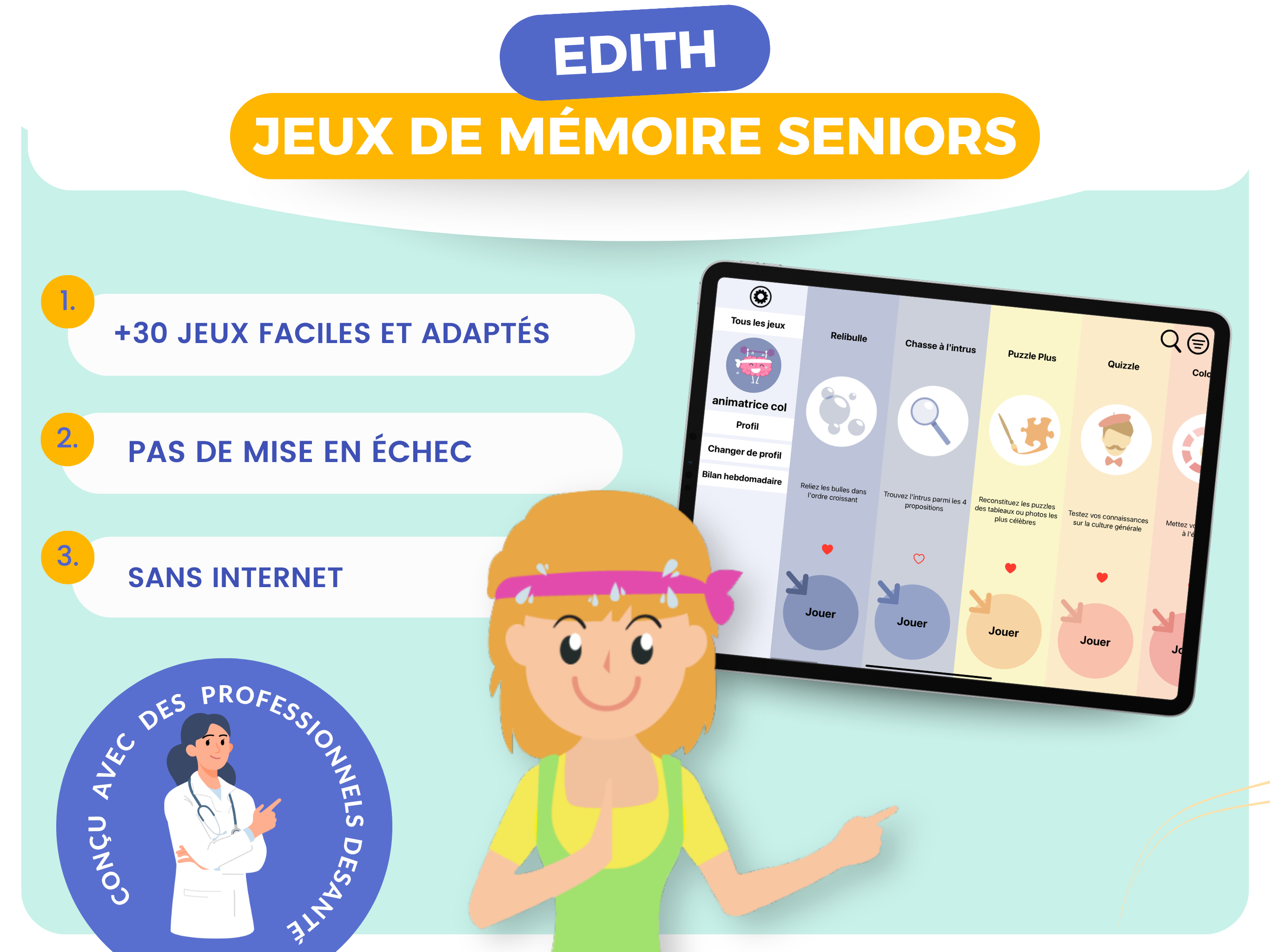
🧩 SCARLETT Application: Cognitive Stimulation for Seniors
SCARLETT offers more than 30 cognitive games tailored for elderly people with or without cognitive disorders. Usable individually or in small groups, SCARLETT allows for personalizing sessions according to the abilities and interests of each resident. A valuable complementary tool to enrich the life project.
Encourage Participation and Value Achievements
Obtaining active participation requires a caring and motivating approach. The invitation must be personalized and warm: go to the person in their room, explain the activity in a simple and attractive way, use arguments that correspond to their interests ("We are going to make a cake, you who loved to cook so much, would you like to help us?"), respect refusals without insisting heavily but offer again another time.
During the activity, the role of the facilitator is crucial: create a warm and relaxed atmosphere, value every participation even minimal ("Thank you Mrs. D. for mixing the batter, it's thanks to you that the cake will be successful"), adapt the level of difficulty in real-time (simplify if the person is struggling, complicate if they are bored), encourage mutual assistance among participants, manage any conflicts or frustrations gently.
The valorization of achievements strengthens self-esteem and motivation to participate. It is not about congratulating in a patronizing way ("That's very good my little lady!") but sincerely recognizing the contribution ("Your idea was excellent", "You really have talent for this", "Without you, we wouldn't have made it"). This recognition can be verbal but also symbolic: displaying creations, collective tasting of the prepared dish, applause from the group.
Creating traces and memories of the activity prolongs enjoyment and strengthens identity: photos displayed in common areas or given to the family, creations kept and exhibited, articles in the establishment's newspaper recounting the workshop, recipe booklets created collectively. These traces show that what has been done matters, has value, and deserves to be preserved.
🌟 Principles of Kind Animation
- Welcome with a smile : human warmth is the first factor of motivation
- Explain simply : say what we are going to do, why, how
- Respect the pace : do not rush, allow time
- Value the process more than the result : the important thing is to participate, not to succeed perfectly
- Accept mistakes : never correct in a humiliating way, turn the mistake into a creative variant
- Encourage autonomy : let the person do what they can do, even if it's imperfect
- Create connections : the activity is a pretext for human relationships
- Laugh together : kind humor relaxes and creates complicity
Evaluate and Adjust the Life Project
The life project must be evaluated regularly to check its effectiveness and adjust it if necessary. The evaluation focuses on several dimensions. Effective participation : does the resident participate in the proposed activities? How often? If they do not participate, why? (inappropriate activity, inadequate schedule, health problem, refusal). A low participation rate should raise alarms and lead to a review of the project.
The level of engagement during activities: is the person active, focused, involved? Or are they passive, distracted, uninterested? Low engagement may indicate that the activity does not match their interests or is too/not complex enough. Expressions of satisfaction, verbal or non-verbal, are valuable indicators: smiles, laughter, positive comments, requests to repeat, versus grimaces, sighs, attempts to escape, negative comments.
The impact on behavioral disorders must be evaluated: since the implementation of the life project, has there been a reduction in agitation, apathy, aggression, anxiety? Conversely, has there been an improvement in mood, better social participation, better sleep? These changes can be quantified using scales (NPI, CMAI) filled out regularly.
The maintenance or evolution of abilities should also be monitored: are physical, cognitive, or social abilities maintained, progressing, or declining? If the decline is slowed compared to what was expected given the pathology, it is a sign of the effectiveness of the life project.
Finally, the satisfaction of the family must be collected: does the family observe positive changes in their loved one? Are they satisfied with the proposed activities? Do they have suggestions? Their feedback can provide valuable insights that professionals may not have.
Based on this evaluation, the project is adjusted : new activities introduced, ineffective activities abandoned, modalities modified (schedule, format, frequency), objectives revised upwards (if the person is progressing) or downwards (if their condition is deteriorating). This flexibility ensures that the project remains relevant and beneficial.
🧠 Application CLINT: Mental and Cognitive Health for Adults
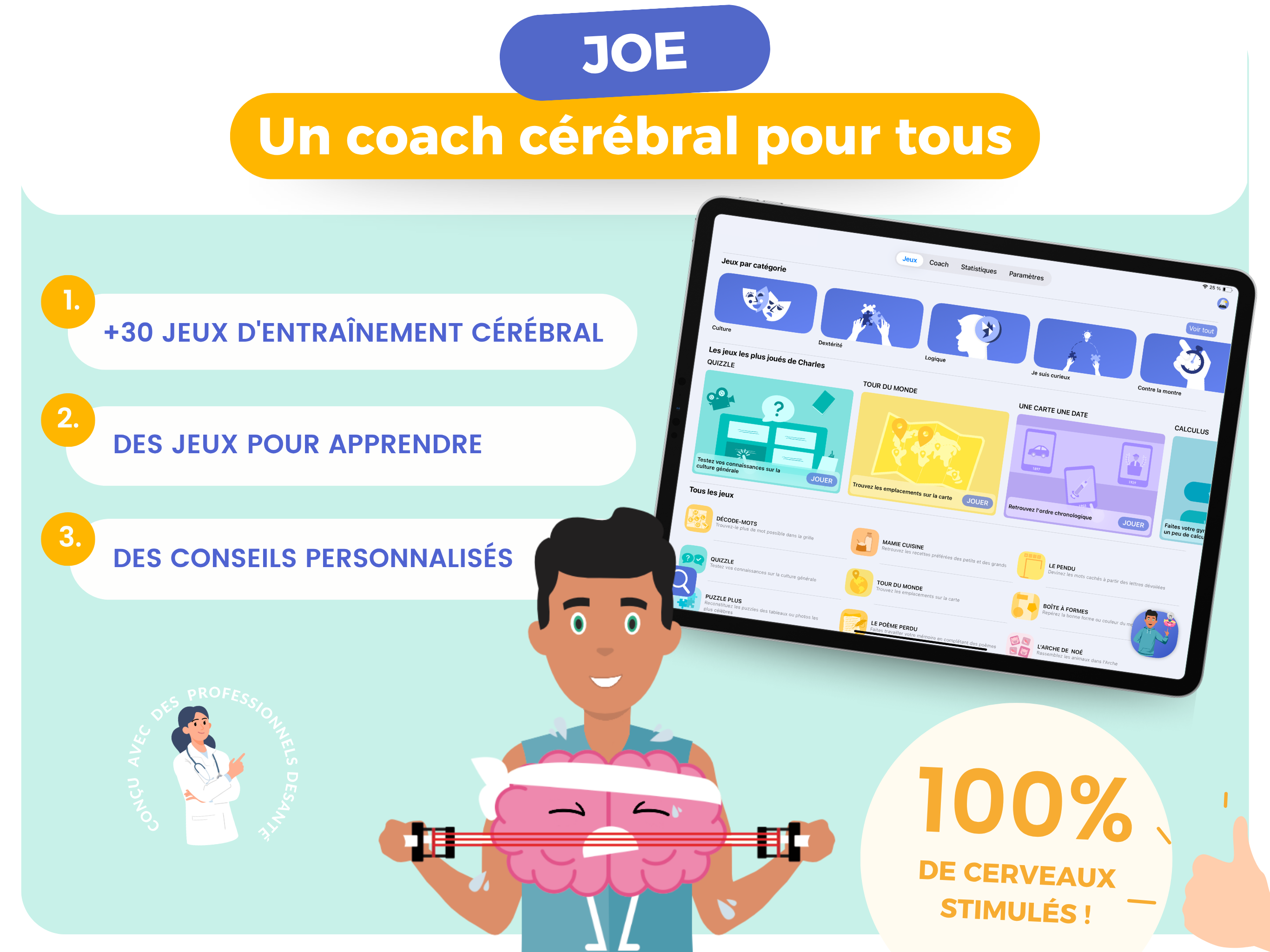
CLINT offers cognitive games for adults, complementary to SCARLETT for some residents with better-preserved cognitive abilities. CLINT can also serve as a playful cognitive assessment tool to track the evolution of abilities within the framework of the life project.
Conclusion: The Life Project, the Backbone of Quality of Life in Nursing Homes
The personalized life project is not just another administrative document to fill out to satisfy inspections. It is the backbone of support in nursing homes, giving meaning and coherence to all actions taken with the resident. It transforms an establishment into a true place of life, not just a simple care structure.
By offering each resident meaningful activities, tailored to their abilities, tastes, and history, we allow them to continue to exist as a unique, capable person, contributing to collective life. We combat boredom, feelings of uselessness, and loss of identity that are at the heart of many behavioral disorders. We create a daily life where things happen, where each day brings its share of small pleasures, small successes, and shared moments.
For residents, having a life project means having reasons to get up in the morning, expected activities, moments of joy. It is about maintaining physical and cognitive abilities longer through regular stimulation. It is about building social connections, making friends, sharing laughter. It is about feeling alive, useful, recognized. Even in great dependence, even with severe cognitive disorders, each person can benefit from adapted activities that bring well-being.
For families, knowing that their loved one has a rich and personalized life project eases guilt and worry. Seeing their loved one participate in activities they enjoy, smile, and thrive despite illness is a tremendous comfort. Being involved in the construction and implementation of the project gives them an active role and strengthens the bond with their loved one and with the establishment.
For professionals, implementing personalized life projects gives meaning to their work. Instead of being confined to technical care and nursing tasks, they become life companions, facilitators of flourishing. Seeing a resident light up during an activity, progress, express joy is deeply rewarding. It rekindles the passion for the profession, combats exhaustion and burnout.
Certainly, building and implementing personalized life projects requires time, resources, and creativity. It requires trained staff, adapted spaces, materials, and time dedicated to activities, not just care. But this investment is worthwhile: fewer behavioral disorders mean fewer crises to manage, less medication treatment, less team burnout, less turnover. It is a virtuous circle that benefits everyone.
"A life without a project is mere survival. A life with meaningful activities, even simple ones, even adapted to reduced abilities, is a life worthy of the name. In nursing homes, giving each resident a personalized life project tells them: 'You matter. You have value. You still have your place in this world. You can still contribute, feel pleasure, create, share.' It is about transforming the last years of life into a time that makes sense, not a long resigned wait. It is the very essence of humanity in service of the most fragile."
Did this content help you? Support DYNSEO 💙
We are a small team of 14 people based in Paris. For 13 years, we have been creating free content to help families, speech therapists, care homes and healthcare professionals.
Your feedback is the only way we know if our work is useful. A Google review helps us reach other families, caregivers and therapists who need it.
One action, 30 seconds: leave us a Google review ⭐⭐⭐⭐⭐. It costs nothing, and it changes everything for us.