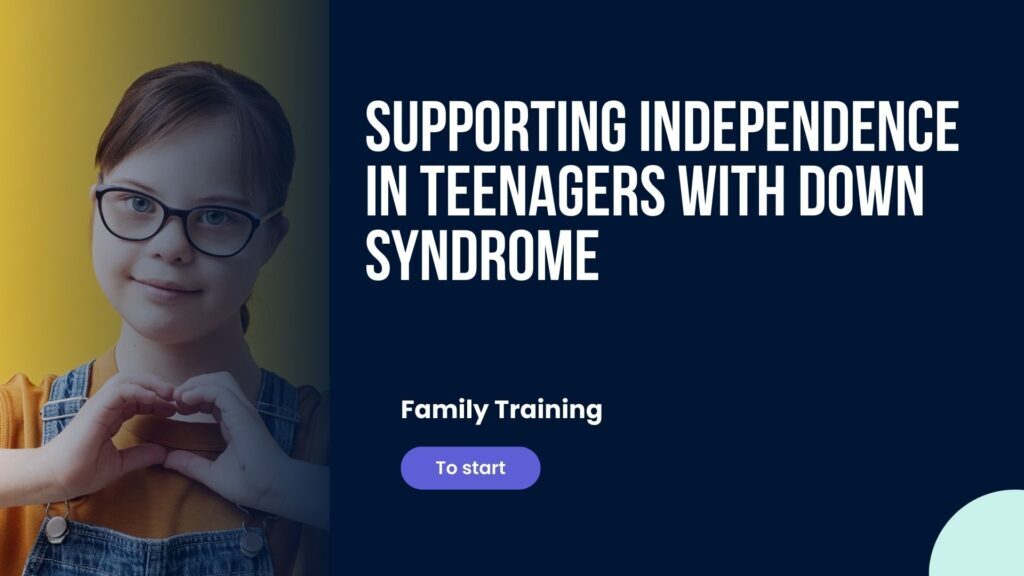
Training: Supporting a teenager with Down syndrome towards autonomy
Adolescence is a key period for young people with Down syndrome — and often the most complex to support. This certified training provides you with concrete tools to support the development of autonomy at every stage.
Dans cet article
La formation associée
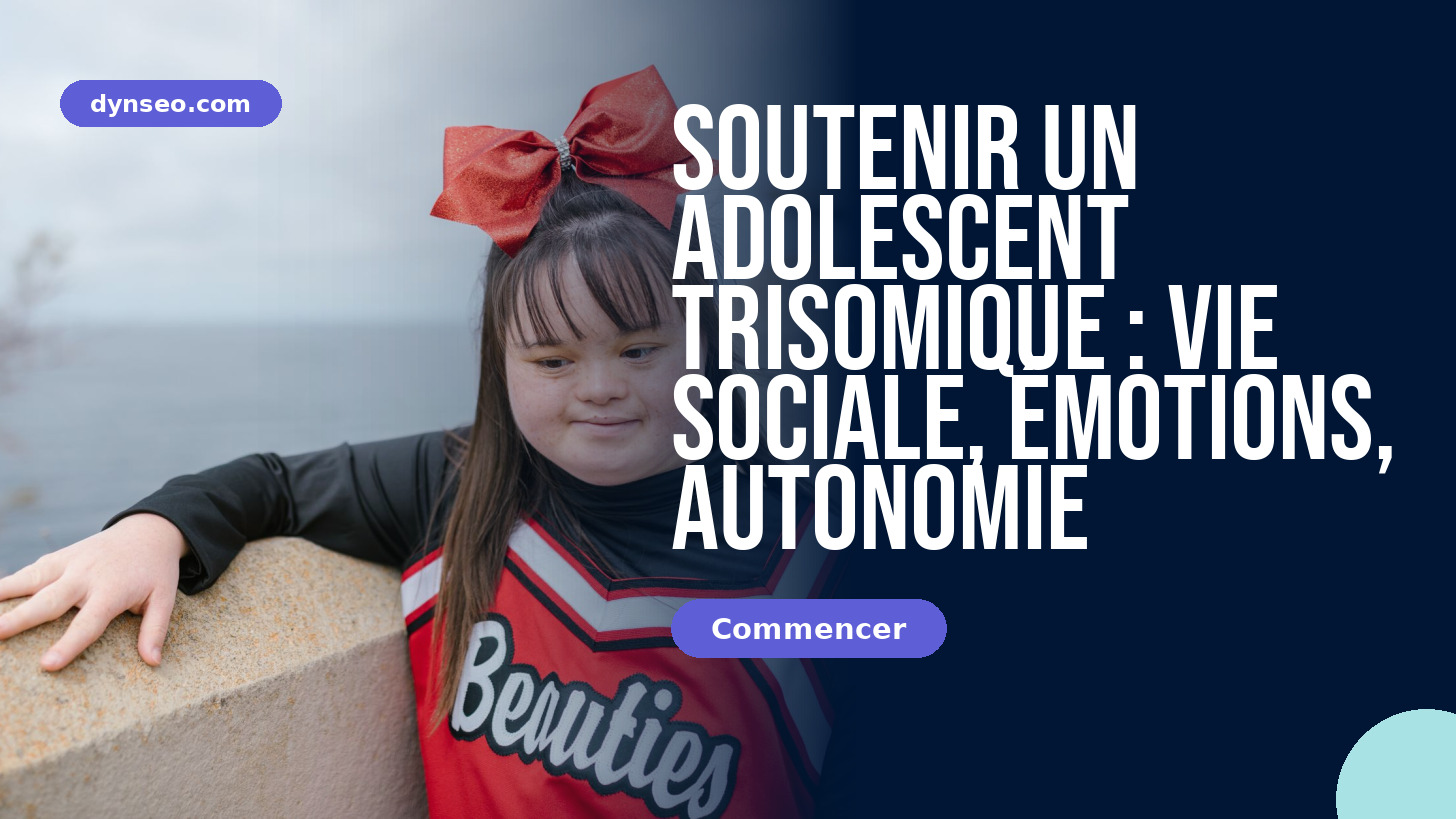
Les ressources citées
 Thermomètre des émotions
 Roue des choix - Outils Formation DYNSEO
Understanding Down syndrome in adolescence
Down syndrome (trisomy 21) is caused by the presence of a third chromosome 21, leading to varying degrees of intellectual disability and developmental particularities in motor, cognitive, and language domains. But each person with Down syndrome is unique — profiles vary considerably, and potentials are often underestimated.
In adolescence, new challenges emerge. Cognitively: the gap between peers widens, school and social demands increase. Emotionally: emotional and sexual awakening, identity construction, awareness of difference. Practically: gradual preparation for adult life, autonomy in daily activities, first experiences of sheltered or non-sheltered work.
The DYNSEO training
Supporting a teenager with Down syndrome towards autonomy
Comprehensive online training for professionals and families who support teenagers with Down syndrome. Practical content, adapted tools, proven strategies. Accessible at your own pace.
Discover the training →The 4 pillars of autonomy to develop
🏠 Autonomy in daily life
Personal hygiene, dressing, preparing simple meals, managing pocket money, using public transport. These skills are learned progressively with visual routines and adapted supports.
💬 Social skills and communication
Greeting, asking for help, politely refusing, managing conflicts, understanding implicit social codes. Appropriate communication is at the heart of all these skills.
❤️ Emotional and affective life
Identifying and expressing emotions, managing frustrations, understanding friendships and romantic relationships, adapted sexual education. An area too often neglected.
🎯 Preparation for adult life
School and professional orientation, internships, activities in sheltered or ordinary environments, shared or independent living. The ambition is always maximum participation in social life.
Tools to support the development of autonomy
The DYNSEO Illustrated Routine Chart is a visual tool that structures daily routines — morning, evening, before leaving for school — making them predictable and independent of adult intervention. The Adapted Communication Sheet for Down syndrome guides exchanges with visual supports and simplified formulations. The Adaptation Guide for Down syndrome provides the keys to adapting learning materials to the specific cognitive profile of Down syndrome.
For managing emotions — often complex in adolescence for all young people, even more so for those with Down syndrome — the Emotion Thermometer and the Choice Wheel are accessible visual supports that the young person can use independently over time.
Adapted communication: the cornerstone of support
Down syndrome is almost universally accompanied by difficulties in oral language — delayed acquisition, sometimes limited intelligibility, often better comprehension than expression. For teenagers whose verbal communication remains limited, Alternative and Augmentative Communication (AAC) tools are essential.
The MY DICTIONARY application from DYNSEO is specifically designed for these profiles: it allows for constructing sentences from pictograms, expressing needs and preferences, and participating in social interactions with greater ease. Used from childhood and continued into adolescence, it can profoundly transform the quality of life and social inclusion of the person.
📱 DYNSEO Applications for teenagers with Down syndrome
• MY DICTIONARY — communication through pictograms, expression of needs and emotions
• COCO — progressive cognitive stimulation, adapted memory and attention activities
Sexuality and emotional life: an essential topic
One of the most delicate — and important — aspects of supporting teenagers with Down syndrome is that of sexuality and emotional life. People with Down syndrome have an emotional life and can experience romantic relationships. The training addresses this topic directly, without taboos, providing tools to discuss it in an adapted and respectful manner.
A fundamental right often neglected
Adapted sexual education for teenagers with Down syndrome includes: understanding the different forms of relationships (friendship, love, family), notions of consent and bodily boundaries, risks of non-consensual relationships, and contraceptive protection. The training teaches how to approach these topics appropriately, with clear vocabulary and suitable visual supports — without infantilizing or exposing the young person to unnecessary risks.
Preparing the transition to adult life
One of the most common anxieties among families and professionals is the question of "what comes next": what awaits the young adult with Down syndrome after schooling? Where will they live? Will they have a job? The training addresses these questions pragmatically — presenting the different existing structures (ESAT, adapted companies, living centers, shared apartments) and showing how to prepare for this transition from adolescence.
✔ Preparing the transition to adult life — from adolescence
- Work experiences: internships in companies or ESAT, valuing practical skills
- Domestic autonomy: cooking simple meals, doing laundry, managing a simple budget
- Transport: learning to use public transport on familiar routes
- Social life: maintaining friendships, participating in collective activities, using a phone
- Simple administrative tasks: with adapted supports, developing understanding and management of usual documents
Supporting a teenager with Down syndrome towards autonomy
Online training at your own pace · Practical tools included · Certificate of completion · Support available
Register for the training →Conclusion: autonomy as a horizon, not a destination
Supporting a teenager with Down syndrome towards autonomy means offering them the right to be fully themselves — with their differences, abilities, and ambitions. It is not a goal that can be achieved in a few months, but a path that is built over years, with patience, consistency, and adapted tools. The DYNSEO training gives you the keys to this path.
Join the training →FAQ
Can we talk about autonomy for a teenager with Down syndrome?
Yes — autonomy is a continuum, not a binary condition. Each autonomous skill acquired improves quality of life and dignity.
Is sexuality addressed in the training?
Yes — it is a fundamental right. The training teaches how to approach emotional and sexual awakening, consent education, and protection, in an adapted and respectful manner.
Is the training certified?
Yes — DYNSEO is Qualiopi certified. Certificate of completion at the end of the training.
Who is this training for?
Families, specialized educators, reference teachers, AESH, psychomotor therapists, speech therapists — anyone supporting a teenager with Down syndrome.
Did this content help you? Support DYNSEO 💙
We are a small team of 14 people based in Paris. For 13 years, we have been creating free content to help families, speech therapists, care homes and healthcare professionals.
Your feedback is the only way we know if our work is useful. A Google review helps us reach other families, caregivers and therapists who need it.
One action, 30 seconds: leave us a Google review ⭐⭐⭐⭐⭐. It costs nothing, and it changes everything for us.