Training Establishment Staff for Supporting Autism
Discover the stakes of continuous training, essential content, and pedagogical methods to develop your teams' skills.
Dans cet article
The quality of support for autistic individuals in establishments directly depends on the skills of the professionals who intervene on a daily basis. Training staff is therefore a major strategic investment, not only to meet regulatory requirements but especially to ensure respectful, caring, and effective support. This guide explores the stakes of staff training, priority content, adapted pedagogical methods, and strategies to sustainably anchor learning in daily practices.
🏢 Specific Challenges of Support in Establishments
Support in specialized establishments has characteristics that distinguish it from support in private practice or outpatient settings. Staff intervene over long periods, covering the entire day and sometimes the night, in daily life situations that constantly call upon relational and technical skills. The diversity of resident profiles, from young children to aging adults, requires constant versatility and adaptability.
The first challenge is that of coherence. Autistic residents are supported by multiple professionals who rotate through the teams. If each professional has their own way of doing things, the resident faces a constant unpredictability that generates anxiety and challenging behaviors. Collective training helps to harmonize practices and ensures that each team member applies the same strategies, uses the same visual supports, and respects the same routines.
The heterogeneity of professional profiles
A specialized establishment employs professionals with very diverse training: specialized educators, educational monitors, medical-psychological assistants, educational and social support workers, nurses, nursing assistants, service agents, cooks, drivers. All these professionals interact with residents and influence their environment. Training should therefore not be limited to educational staff but include all stakeholders, with content adapted to each person's role.
🌱 Create an establishment culture adapted to autism
Beyond individual skills, training aims to create a true institutional culture centered on understanding and respecting the needs of autistic individuals. This culture manifests in daily attitudes, shared values, and common practices that permeate the entire organization.
Understand before acting
Every behavior has a function: the first reaction should be to seek understanding, never to punish
Adapt rather than demand
It is the environment that must adapt to the autistic person, not the other way around
Value strengths
Build on the skills and interests of each resident, not just on their difficulties
This establishment culture is built through the initial training of each new professional, regular ongoing training for the entire team, support through supervision and practice analysis, and the exemplary nature of management. It must be formalized in the establishment project and translated concretely into protocols, procedures, and tools used daily.
💡 Welcoming new professionals
The moment of integrating a new professional is crucial. A structured welcome process, including basic training on autism, mentoring by an experienced professional, and a detailed presentation of each resident (their specifics, strategies, supports), allows the newcomer to integrate quickly and maintain the coherence of support.
🏗️ Structure the institutional environment
Structuring the environment is a fundamental principle of supporting autistic individuals that all staff must master. In an establishment, this structuring concerns physical spaces, temporal organization, and the presentation of activities.
The organization of spaces
Each space in the establishment must be clearly identified by its function: living space, activity space, rest space, dining space, sensory space. Visual markers (pictograms, photos, color codes) indicate the purpose of each place. This spatial organization allows the autistic resident to orient themselves, anticipate what will happen in each place, and feel safe in a predictable environment.
The temporal organization
Visual schedules are essential tools in establishments. Each resident has an individualized schedule, displayed in an accessible location, detailing the day's activities with visual supports adapted to their level of understanding. Staff must be trained in creating, using, and updating these schedules, as well as managing changes that must be communicated in advance to the resident.
- Visual schedules: sequences of activities represented by photos, pictograms, or objects according to the level of understanding
- Visual timers: tools showing the remaining time for an activity, reducing anxiety related to temporal uncertainty
- Work systems: visual organization of tasks indicating what to do, how many there are, when it’s finished, and what comes next
- Institutional signage: visual markers in all spaces of the establishment to facilitate orientation and autonomy
🔥 Prevent and manage crises
Challenging behaviors are common in establishments and constitute one of the main stress factors for staff. Training allows for a shift from a reactive posture to a proactive posture by understanding the causes of crises, identifying early warning signs, and implementing effective prevention strategies.
The functional analysis of challenging behaviors is an essential tool that all staff must master at their level. Educators and psychologists conduct in-depth analyses, but each team member must know how to observe and record the antecedents and consequences of a behavior to contribute to collective understanding. This systematic approach allows for the identification of patterns and the implementation of targeted preventive interventions.
The crisis management protocol
Each establishment must have a clear crisis management protocol known to all. This protocol specifies the steps to follow, the roles of each person, the authorized and prohibited techniques, and the methods for returning to calm. Practical training on this protocol, including role-playing scenarios, is essential for staff to respond appropriately and consistently in moments of intense stress.
⚠️ Restraint: last resort and strict framework
Physical restraint should only be used as a last resort, when the person or those around them are in immediate danger, and for the shortest duration possible. Its use must be governed by a strict protocol, be subject to systematic reporting, and be analyzed afterwards to identify how the situation could have been avoided. Training should emphasize alternatives to restraint and de-escalation techniques.
☀️ Supporting daily life with competence
Daily support covers all activities of daily living: getting up, personal hygiene, dressing, meals, activities, outings, and bedtime. Each of these moments requires specific adaptations to the particularities of autistic residents. Trained staff know how to turn these routine moments into opportunities for learning and autonomy, within a structured and respectful framework.
Meals, for example, are a complex moment that combines several challenges for an autistic person: intense sensory environment (noises, smells, food textures), expected social interaction, required motor skills, and tolerance for unexpected menu items. Trained staff know how to adapt the environment (separate table if necessary, noise reduction), offer food alternatives, respect sensory particularities, and use visual supports to facilitate choices.
Leisure activities and outings also require specific preparation. The autistic person must be informed in advance about what will happen, with adapted visual supports. Staff must anticipate potentially problematic situations (sensory environment, crowds, waiting times) and plan adaptation strategies. DYNSEO guides for supporting autistic children and supporting autistic adults provide additional resources to enrich daily support practices.
🎮 COCO THINKS and COCO MOVES: cognitive stimulation in institutions
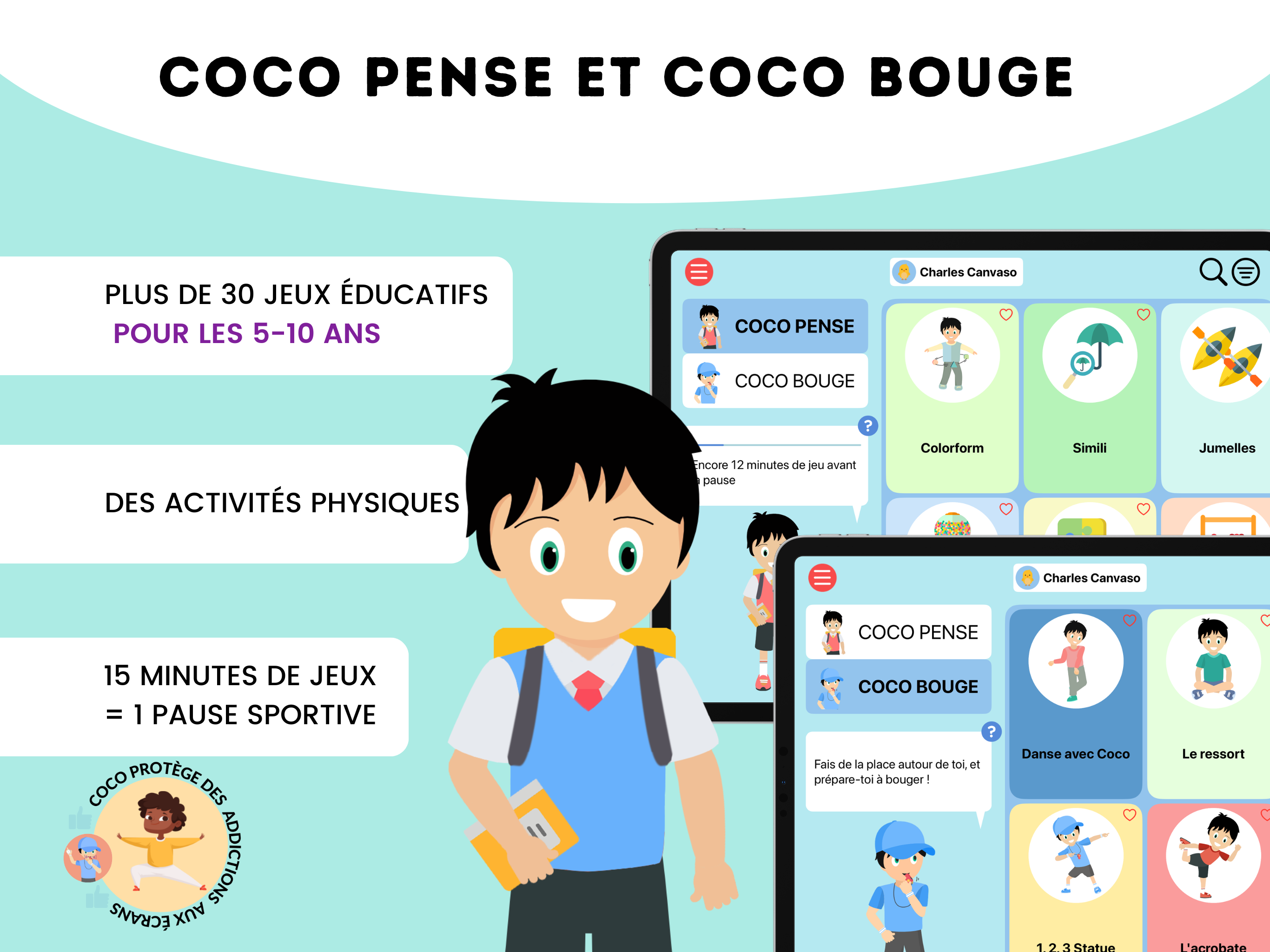
The COCO THINKS and COCO MOVES program from DYNSEO is a valuable tool for specialized institutions welcoming autistic children aged 5 to 10 years. Its playful and structured format easily integrates into the activity schedule and offers regular and adapted cognitive stimulation.
A structuring tool for activities
In institutions, COCO can be integrated into cognitive activity times, with individual or small group sessions. Alternating between cognitive and physical activities every 15 minutes structures the session in a predictable way and allows children to maintain their attention and engagement. Educators and support staff can use COCO even without advanced technical training, as the interface is intuitive and the levels automatically adapt to each child's abilities.
🎯 Discover COCO THINKS and COCO MOVES
A stimulation program adapted to specialized institutions, easily usable by the entire educational team.
Discover the COCO program →🛡️ Preventing professional burnout
Working in a specialized institution with autistic people is physically and emotionally demanding. Daily exposure to challenging behaviors, the physical burden of certain support tasks, the feeling of helplessness in the face of persistent difficulties, and lack of recognition can lead to professional burnout. Continuous training is a major protective factor: it provides tools to better understand and manage difficult situations, strengthens the sense of competence, and offers spaces for reflection and sharing among peers.
Practice analysis sessions, led by an external professional, allow teams to take a step back from the situations experienced, share their emotions, and co-construct solutions. These supervision times are an investment in workplace quality of life and, consequently, in the quality of support provided to residents.
Recognizing the expertise developed by field professionals is also essential. Their in-depth knowledge of residents, their ability to anticipate crisis situations, and their creativity in adapting activities constitute valuable knowledge that must be valued and passed on to newcomers.
🎓 Training with DYNSEO
DYNSEO offers a certified Qualiopi training “Supporting a child with autism: keys and solutions for daily life” which constitutes an excellent foundation for training specialized institution teams. Accessible online, it can be followed by all staff at their own pace.

🎓 Train your entire team
Qualiopi certified training accessible online, ideal for harmonizing the skills of all staff in a specialized institution.
Discover the training →🎯 Conclusion
Training all staff in specialized institutions is a strategic investment that directly impacts the quality of life of autistic residents and the quality of work life for professionals. By creating an institution culture centered on understanding autism, structuring the environment, preventing crises, and using adapted tools like COCO THINKS and COCO MOVES, institutions provide a truly suitable living environment.
A trained institution is one where residents are calmer, challenging behaviors are less frequent, professionals are more competent and satisfied with their work, and families are more confident in the quality of support provided.
Train to transform:
A trained institution is an adapted living space.
Did this content help you? Support DYNSEO 💙
We are a small team of 14 people based in Paris. For 13 years, we have been creating free content to help families, speech therapists, care homes and healthcare professionals.
Your feedback is the only way we know if our work is useful. A Google review helps us reach other families, caregivers and therapists who need it.
One action, 30 seconds: leave us a Google review ⭐⭐⭐⭐⭐. It costs nothing, and it changes everything for us.