
Autism and Occupational Therapy: Sensory and Motor Approaches
In this article
1. Understanding autism and its manifestations
Autism is a complex neurodevelopmental disorder characterized by differences in social communication, interpersonal interactions, and the presence of restricted and repetitive behaviors, interests, or activities. The concept of "spectrum" reflects the immense variability of autistic manifestations, ranging from people requiring intensive support in all areas of daily life to autonomous individuals with more discreet but nonetheless significant characteristics.
This diversity is explained by the very nature of autism, which results from atypical neurological development affecting different brain regions variably among individuals. Recent neuroscience research has highlighted differences in neural connectivity, brain architecture, and information processing, partly explaining the great heterogeneity of autistic profiles. These neurobiological differences translate into unique strengths and challenges for each autistic person.
The evolution of understanding autism has significantly progressed in recent decades. We have moved from a pathologizing view to a neurodiversity approach that recognizes autism as a natural neurological variation. This modern perspective directly influences occupational therapy practices, guiding intervention towards adapting the environment and developing functional skills rather than normalizing behaviors.
Main Characteristics of ASD
- Social Communication: Difficulties in social interactions, non-verbal communication, emotional reciprocity
- Restricted Behaviors: Specific interests, routines, repetitive movements, resistance to changes
- Sensory Particularities: Hyper or hyposensitivity to sensory stimuli, seeking or avoiding sensations
- Cognitive Differences: Heterogeneous cognitive profiles with specific strengths and challenges
- Individual Variability: Each autistic person presents a unique profile of skills and challenges
Positive Approach to Autism
Modern occupational therapy is part of a positive approach to autism, which recognizes the strengths and skills of autistic people while supporting them in their challenges. This perspective respects autistic identity and aims for personal fulfillment rather than conformity to neurotypical standards. It emphasizes adapting the environment, developing functional skills, and improving quality of life.
2. Sensory Particularities in Autism
Sensory particularities are one of the most significant aspects of autism, affecting more than 90% of those concerned. These particularities are now recognized as an official diagnostic criterion in the DSM-5, highlighting their clinical importance. They can affect all sensory systems and manifest in very varied ways depending on the individuals.
The nervous system of autistic people processes sensory information atypically. This difference in processing can manifest as hypersensitivity (excessive reaction to stimuli), hyposensitivity (diminished reaction), or difficulties in sensory modulation (inability to adjust the response according to the context). These variations can even coexist in the same person depending on sensory modalities or situations.
The impact of these sensory particularities on daily life is considerable. They can affect eating, dressing, hygiene, school learning, social interactions, and participation in community activities. Understanding and supporting these particularities is therefore essential to promote autonomy and well-being for autistic people.
🖐️ Tactile System
Sensitivity to textures, clothing, light touch. May manifest as avoidance of certain fabrics, seeking specific textures, or discomfort during physical contact.
👂 Auditory System
Sensitivity to noise, difficulties in sound filtering. Everyday sounds may seem amplified or distorted, making some environments unbearable.
👁️ Visual System
Sensitivity to light, movement, patterns. May include a fascination with spinning objects or discomfort with fluorescent lighting.
⚖️ Vestibular System
Balance, perception of movement. May result in seeking intense vestibular sensations or avoiding them.
💪 Proprioceptive System
Perception of the body in space. Difficulties in body awareness can affect coordination and motor control.
👅 Gustatory and Olfactory Systems
Marked food selectivity, sensitivity to smells. Can significantly limit the food repertoire or acceptance of certain environments.
Sensory overload and meltdowns: The accumulation of sensory stimuli can lead to overload, manifesting as a shutdown or a meltdown. These reactions are not "tantrums" but neurological responses to an unbearable environment. Prevention involves identifying triggers and proactively adjusting the environment.
3. Motor Aspects in Autism
Although less visible than sensory aspects, motor difficulties are common in autism and deserve special attention. Recent research estimates that 80 to 90% of autistic individuals exhibit motor peculiarities that can affect their overall development and daily autonomy. These difficulties affect both gross motor skills and fine motor skills, as well as motor planning abilities.
Motor peculiarities in autism are partly explained by differences in the development of the cerebellum, basal ganglia, and motor cortex. These brain regions are involved in motor control, learning new movements, and coordination. Difficulties may manifest from the first months of life as delays in motor milestones or persist into adulthood as clumsiness or fatigue.
The functional impact of these motor difficulties is significant. They can affect writing, object manipulation, sports practice, the use of technological tools, and even non-verbal communication. Appropriate assessment and management of these aspects can significantly improve the autonomy and self-confidence of autistic individuals.
Poor perception of the body in space directly affects coordination and motor control. Autistic people may have difficulty perceiving the position of their limbs, complicating the execution of precise movements.
Vestibular peculiarities impact balance, bilateral coordination, and motor planning. They may explain certain difficulties in sports activities or movement.
Eye-hand coordination, essential for writing and fine manipulations, can be affected by visual processing peculiarities present in autism.
For every age and every need, a tool designed for the peculiarities of autistic people.

Helps communication through images and pictograms — valuable for autistic people who are minimally or non-verbal.

Cognitive games and sports break every 15 min, in a streamlined interface that avoids sensory overload.

Brain coach: memory, attention, logic, and language, at their own pace and without time pressure.

Gentle cognitive stimulation, without timer or score, on an easy-to-use tablet.
4. Occupational therapy assessment in autism
The occupational therapy assessment of the autistic person is a crucial step that requires a specialized and adapted approach. This assessment must take into account the peculiarities of communication, sensory processing, and behavior specific to autism. It aims to identify the person's strengths, specific challenges, and environmental factors that influence their daily functioning.
The occupational therapist must adapt their assessment methods to obtain an accurate picture of the autistic person's skills. This involves creating a secure assessment environment, using adapted communication supports, and allowing sufficient time for the person to fully express themselves. The assessment must also consider the variability of performance depending on contexts and times.
A comprehensive assessment in autism combines multiple sources of information: direct observations, interviews with family and professionals, use of adapted standardized tools, and self-assessment when possible. This multidimensional approach allows for understanding the person's real needs and defining relevant and achievable intervention goals.
Specialized Evaluation Tools
Comprehensive questionnaire evaluating sensory processing in all sensory modalities
Adapted version for autistic adolescents and adults evaluating sensory responses
Assessment battery for gross and fine motor skills
Visual-motor integration test evaluating eye-hand coordination
Assessment scale for adaptive behaviors and daily autonomy
Computerized measure of functional independence and participation
Necessary Adaptations for Evaluation
- Adapted Environment: Reduction of distracting sensory stimuli, dim lighting, limitation of distractors
- Clear Communication: Simple, concrete instructions, repetition if necessary, use of visual aids
- Respectful Pace: Regular breaks, respect for processing time, flexibility in duration
- Predictability: Explanation of the process, visual sequencing of activities, anticipation of transitions
- Ecological Observation: Evaluation in natural environments when possible
5. Specialized Intervention Approaches
Occupational therapy intervention for autistic individuals relies on scientifically validated approaches adapted to the specificities of autistic functioning. These approaches must be individualized, respectful of autistic identity, and centered on the priority objectives identified by the person and their family. The effectiveness of the intervention largely depends on this personalization and consideration of the person's preferences.
Modern intervention approaches favor a positive view of autism, aiming to develop functional skills rather than eliminate autistic behaviors. This respectful perspective recognizes that certain repetitive behaviors or routines may have important adaptive functions for the autistic person, such as sensory regulation or anxiety management.
Occupational therapy intervention also integrates the principles of motor learning and neuroplasticity. By offering progressive, meaningful, and motivating activities, the occupational therapist promotes the development of new skills and the adaptation of the nervous system. Using the person's specific interests as learning levers proves particularly effective in this population.
Sensory Integration
Targeted sensory activities to improve sensory processing and modulation
Behavioral Approach
Structured strategies to develop new functional skills
Environmental Modification
Modifying spaces to optimize functioning and reduce obstacles
Compensatory Tools
Technical aids and strategies to overcome specific difficulties
Use Specific Interests
The specific interests of autistic people are powerful levers for motivation and learning. The occupational therapist can integrate them into therapeutic activities to enhance engagement, facilitate learning new skills, and strengthen self-esteem. This respectful approach transforms "obsessions" into therapeutic strengths.
6. Sensory Integration Approach
The sensory integration approach, developed by Jean Ayres, is one of the most used interventions in occupational therapy for autistic people. This theoretical approach postulates that sensory processing difficulties can affect learning, behavior, and overall development. It aims to improve the nervous system's ability to organize and process sensory information more effectively.
In the context of autism, sensory integration takes on a particular dimension because sensory peculiarities are almost universal in this population. The occupational therapist trained in this approach uses specific sensorimotor activities to stimulate neurological adaptation. These activities are generally playful, motivating, and adapted to the unique sensory profile of each person.
However, the application of sensory integration in autism must be nuanced and individualized. Not all autistic people benefit in the same way from this approach, and it is essential to adapt it to each individual's specific needs. The occupational therapist must also integrate it into a global approach including other therapeutic and educational strategies.
A sensory diet is a program of planned sensory activities throughout the day to maintain an optimal state of alertness. It is developed in collaboration with the family and adapted to daily routines. This program may include:
Heavy work, carrying loads, resistance exercises to improve body awareness
Swings, trampolines, controlled rotations to regulate the state of alertness
Texture games, massages, brushing to desensitize or stimulate as needed
A free visual aid to help the person identify and express their emotional level — from 1 (calm) to 10 (overload) — without having to verbalize it.
7. Development of daily autonomy
The development of autonomy in daily living activities is a priority goal of occupational therapy intervention with autistic individuals. This autonomy is essential for quality of life, self-esteem, and social inclusion. It concerns various areas such as personal hygiene, dressing, eating, time management, and domestic organization.
The challenges of developing autonomy in autistic individuals are numerous. They may include difficulties in motor planning, sensory peculiarities that complicate certain activities, resistance to changes in routine, or difficulties in generalizing learning. The occupational therapist must therefore adapt their teaching methods to take these peculiarities into account.
The most effective approach to developing autonomy combines several strategies: breaking down tasks into simple steps, using visual aids, adapting the environment, choosing facilitating materials, and repeated training in different contexts. The active involvement of family and educators is also crucial to ensure the generalization and maintenance of skills.
Task breakdown method (example: brushing teeth)
- Take the toothbrush from the glass
- Open the toothpaste tube
- Put a small amount of toothpaste on the brush
- Close the toothpaste tube
- Turn on the water tap
- Slightly wet the brush
- Bring the brush to the mouth
- Perform brushing movements on each area
- Rinse the mouth with water
- Rinse and store the toothbrush
Chaining technique: Backward chaining involves teaching the last step of a sequence first, then gradually working backward to the beginning. This technique allows the person to successfully complete the activity from the start of learning, which enhances their motivation and sense of competence.
8. Environmental adaptation
Environmental adaptation represents one of the most powerful and lasting interventions of occupational therapy in autism. Rather than solely seeking to modify the person's skills, this approach adapts the physical and social environment to optimize their functioning. This perspective perfectly aligns with the social model of disability, which recognizes that difficulties result from the mismatch between the person's needs and their environment.
The environment of an autistic person must meet their specific needs for predictability, sensory regulation, and organization. This involves creating visually clear, acoustically controlled, and logically and consistently organized spaces. The adaptation must also provide withdrawal areas where the person can recharge in case of sensory overload or stress.
The effectiveness of environmental adaptations relies on their adjustment to individual needs. What works for one autistic person may be inappropriate for another. Therefore, the occupational therapist must conduct a thorough analysis of the interactions between the person and their different environments (home, school, work, leisure) to propose targeted and effective modifications.
Principles of adaptation for autism
- Visual predictability: Clear organization, labeling, color codes, elimination of visual clutter
- Sensory control: Management of lighting, noise, odors, textures
- Functional zones: Spaces dedicated to specific activities (work, rest, play, meals)
- Regulation spaces: Quiet places for sensory and emotional recovery
- Visual supports: Schedules, rules, displayed activity sequences
- Accessibility: Adaptation to specific motor and sensory difficulties
🏃♂️ COCO MOVES: Adapted physical activity
Active breaks are essential for autistic people. COCO MOVES offers short and adapted physical exercises, perfect for sensory regulation.
9. Digital tools and autism
Digital tools offer particular advantages for autistic people, naturally aligning with their cognitive strengths and sensory preferences. Digital technologies provide a predictable, structured, and controllable environment, characteristics appreciated by many autistic individuals. Moreover, they allow for extensive customization of content, pace, and interaction modalities.
The use of digital tools in occupational therapy can facilitate learning, communication, organization, and emotional regulation. Applications like those developed by DYNSEO are designed with clear interfaces, immediate visual feedback, and adaptable progressions, meeting the specific needs of autistic individuals. These tools can effectively complement traditional intervention.
However, the integration of digital tools must be thoughtful and supervised. It is important to avoid excessive use that could reinforce social isolation or create dependency. The occupational therapist must guide families in the appropriate choice and use of these tools, by setting clear objectives and monitoring the effects on overall development.
Predictability
Applications operate consistently and predictably, reducing anxiety related to unpredictability
Immediate Feedback
Instant feedback on performance, allowing for quick adjustment of strategies
Customization
Adaptation of level, pace, sensory stimulations according to individual needs
Non-social Interaction
Learning without social pressure, allowing focus on content
Objective Monitoring
Accurate data on progress and difficulties to adapt intervention
Unlimited Repetition
Possibility to redo exercises as many times as necessary without tiring the therapist
10. Training and Support for Families
Supporting families is an essential pillar of occupational therapy intervention in autism. Parents and relatives are the primary therapeutic partners, present daily to support the development of autonomy and the application of strategies developed in sessions. Their training and support largely determine the effectiveness and sustainability of interventions.
Families of autistic children face particular challenges that require specialized support. They must understand their child's sensory and behavioral characteristics, adapt their family environment, manage crises and overloads, while maintaining family balance. The occupational therapist plays a crucial role in guiding them through these adaptations.
Family training must be practical and personalized. It includes explaining the autistic characteristics of their relative, demonstrating support techniques, implementing environmental strategies, and teaching methods for managing difficult situations. This training is ideally conducted in the family's natural environment to maximize generalization.
Explain autism, sensory and motor characteristics, and suitable intervention strategies
Support parents in the daily application of therapeutic strategies
Recognize and validate family difficulties, guide towards support resources
Facilitate communication between the different professionals involved with the person
A free tool to coordinate parents, teachers, and therapists around the person: observations, effective strategies, and shared follow-up in one place.
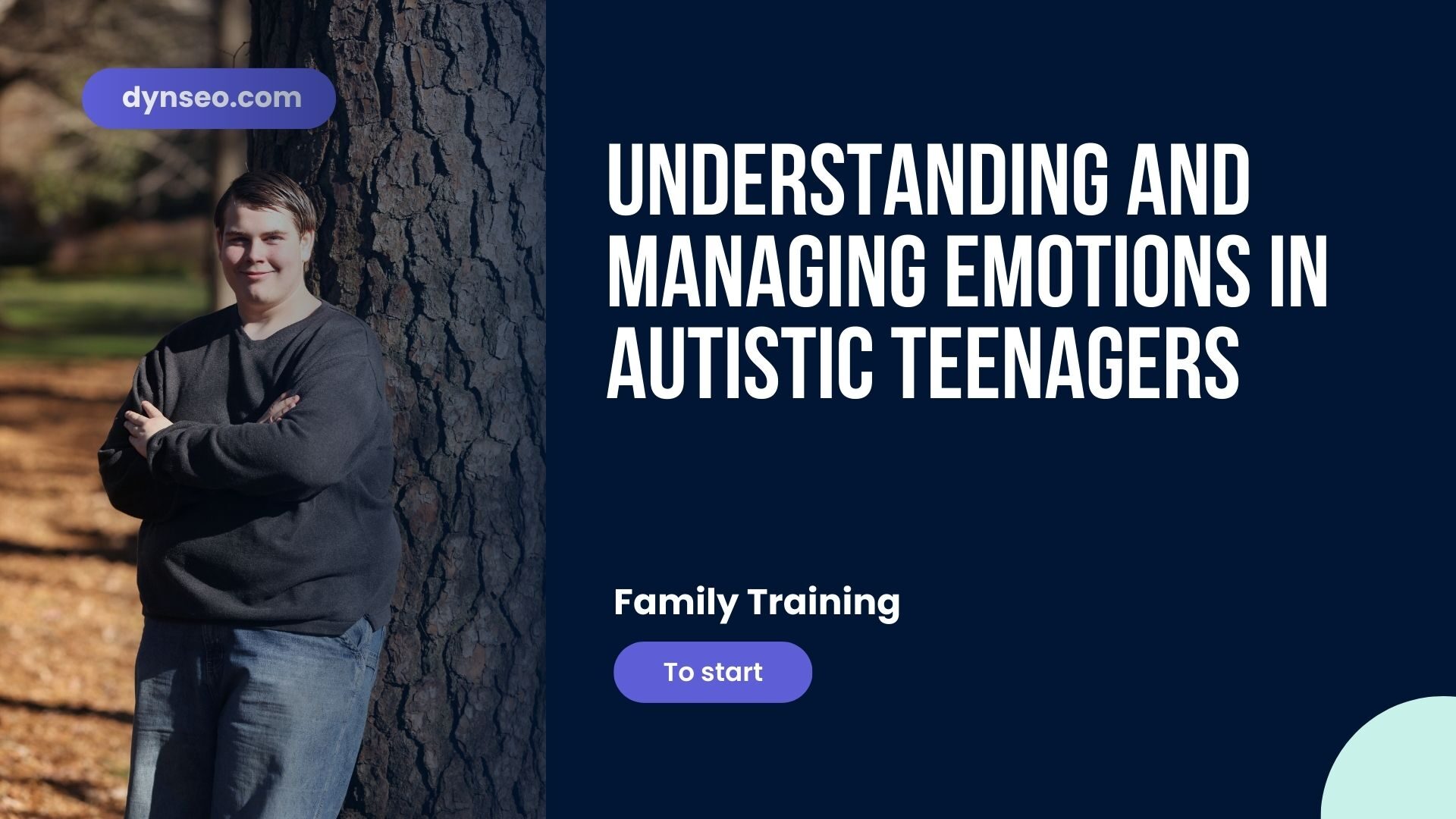
DYNSEO courses for professionals, families, and teachers — to follow online, at your own pace.




11. School environment intervention
School represents a major environment for autistic children and teenagers, where they spend a large part of their time and where crucial learning for their development takes place. Occupational therapy intervention in the school environment aims to optimize the participation of the autistic student by adapting the environment, providing compensatory tools, and training the educational team on the characteristics of autism.
School challenges for autistic students are numerous: sensory overload in classrooms, difficulties in emotional regulation, fine motor problems for writing, organizational and planning difficulties, challenges in social interactions with peers. The occupational therapist assesses these different aspects and proposes concrete and applicable solutions in the school context.
Collaboration with the educational team is essential for the success of school intervention. The occupational therapist raises awareness among teachers about the characteristics of autism, proposes educational accommodations, trains in the use of specific tools, and supports the implementation of a favorable environment. This collaboration allows for a coherent and coordinated approach to supporting the autistic student.
Recommended School Accommodations
- Sensorial Environment: Place away from noise sources, appropriate lighting, reduction of visual distractors
- Temporal Organization: Visual schedule, preparation for changes, sensory breaks
- Compensatory Tools: Computer for writing, visual aids, time timer for time management
- Pedagogical Strategies: Clear and concrete instructions, visual examples, task breakdown
- Regulation Space: Quiet area accessible when sensory recovery is needed
12. Transition to Adulthood
The transition to adulthood represents a critical period for autistic individuals, marked by significant changes in support services, living environments, and social expectations. The occupational therapist plays a crucial role in preparing for this transition by developing the necessary autonomy skills for adult life and anticipating
Did this content help you? Support DYNSEO 💙
We are a small team of 14 people based in Paris. For 13 years, we have been creating free content to help families, speech therapists, care homes and healthcare professionals.
Your feedback is the only way we know if our work is useful. A Google review helps us reach other families, caregivers and therapists who need it.
One action, 30 seconds: leave us a Google review ⭐⭐⭐⭐⭐. It costs nothing, and it changes everything for us.

