Cognitive assessment: check your memory and attention the easy way
Do you misplace your keys more often than you used to, lose the thread of a conversation, or search for a word that's right "on the tip of your tongue"? A cognitive assessment lets you take stock, calmly and without worry, of your memory, attention, language and reasoning. In the CLINT brain-coach app, this assessment takes the form of a quick first evaluation that leads to a personalised memory-training programme. One thing to keep in mind from the start: this is a first, everyday evaluation — not a medical diagnosis.
🎯 Key points at a glance
- A cognitive assessment looks at several major brain functions: memory, attention, language, visual perception and planning.
- In the CLINT app it takes just a few minutes, at home, on a tablet or smartphone.
- The results are used to build a tailor-made training programme based on your strengths and the areas you'd like to work on.
- ⚠️ It is not a medical evaluation: it is a first assessment. If something worries you, only a healthcare professional can make a diagnosis.
What is a cognitive assessment?
A cognitive assessment is a set of short exercises designed to observe how the major mental abilities known as "cognitive functions" are working. We use these functions constantly without thinking about them: remembering a shopping list, following a recipe, finding our way around an unfamiliar town, understanding what we read, staying focused despite noise. The assessment isn't about labelling a person; it's about drawing a "portrait" of these abilities at a given moment, much like taking a photograph.
In practice, each exercise targets a specific function and measures how you respond to it: speed, accuracy, consistency. Adding up these observations gives an overall picture that highlights the areas where you're comfortable and those that could use a little training. That's exactly the principle behind the evaluation offered by CLINT: mini-games designed to be enjoyable, yet whose results reveal your cognitive profile.
The word "assessment" can sound intimidating, because we often associate it with the medical world. Here it should be understood in a broader, gentler sense: taking stock, setting a benchmark, measuring your progress over time. Many people repeat the assessment every few months, simply to track how their memory evolves, the way they would track their physical fitness.
Why take a cognitive assessment?
The reasons for taking a cognitive assessment are many and rarely alarming. The most common is friendly curiosity: understanding how your memory works and where your strengths lie. Others want reassurance after noticing a few lapses linked to tiredness, stress or a busy spell. Others still want a starting point before beginning regular training, so they can measure their progress later.
Taking stock also has a practical benefit: once you know your weaker areas, you can put simple everyday strategies in place. Someone who spots fragile attention will learn to reduce distractions during an important task; someone noticing word-finding difficulties will work on it through targeted games. The assessment turns a vague impression ("I'm not as sharp as I used to be") into concrete information you can act on.
Finally, repeating the assessment over time is an excellent source of motivation. Seeing your scores improve, or simply stay stable despite the years, is encouraging and makes you want to keep going. That's one of the strengths of a tool like CLINT: it keeps a history of your evaluations and shows you how you're progressing.
The 5 key domains assessed
A complete cognitive assessment is never limited to memory alone. It explores several complementary functions, because it is how they all work together that makes us effective in daily life. Here are the five key domains that CLINT's evaluation reviews.
1. Memory
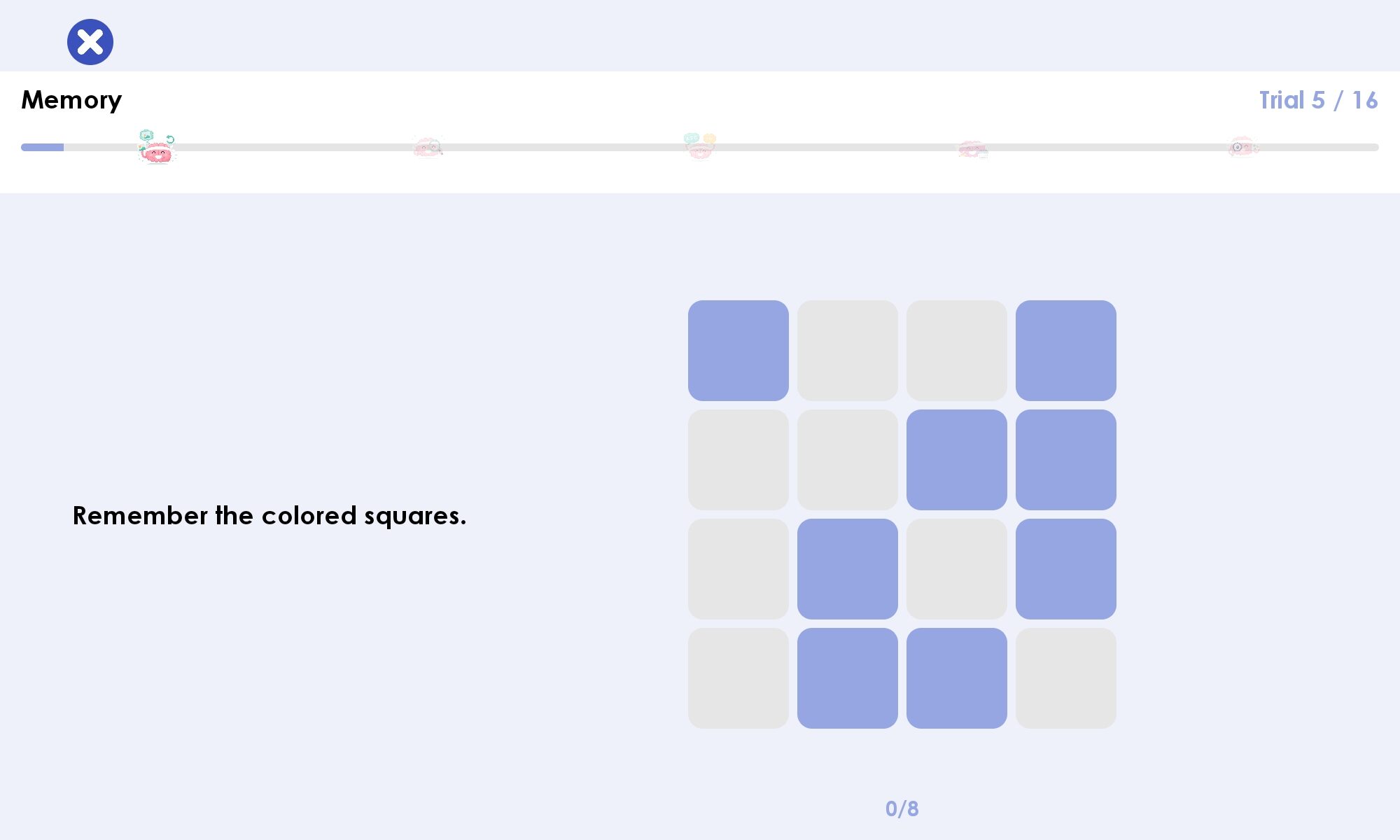
Memory actually brings together several mechanisms: short-term memory (holding a phone number long enough to dial it), working memory (manipulating information in your head) and long-term memory (recalling an event from yesterday or ten years ago). The assessment exercises observe your ability to store and then retrieve information, images or words.
2. Attention
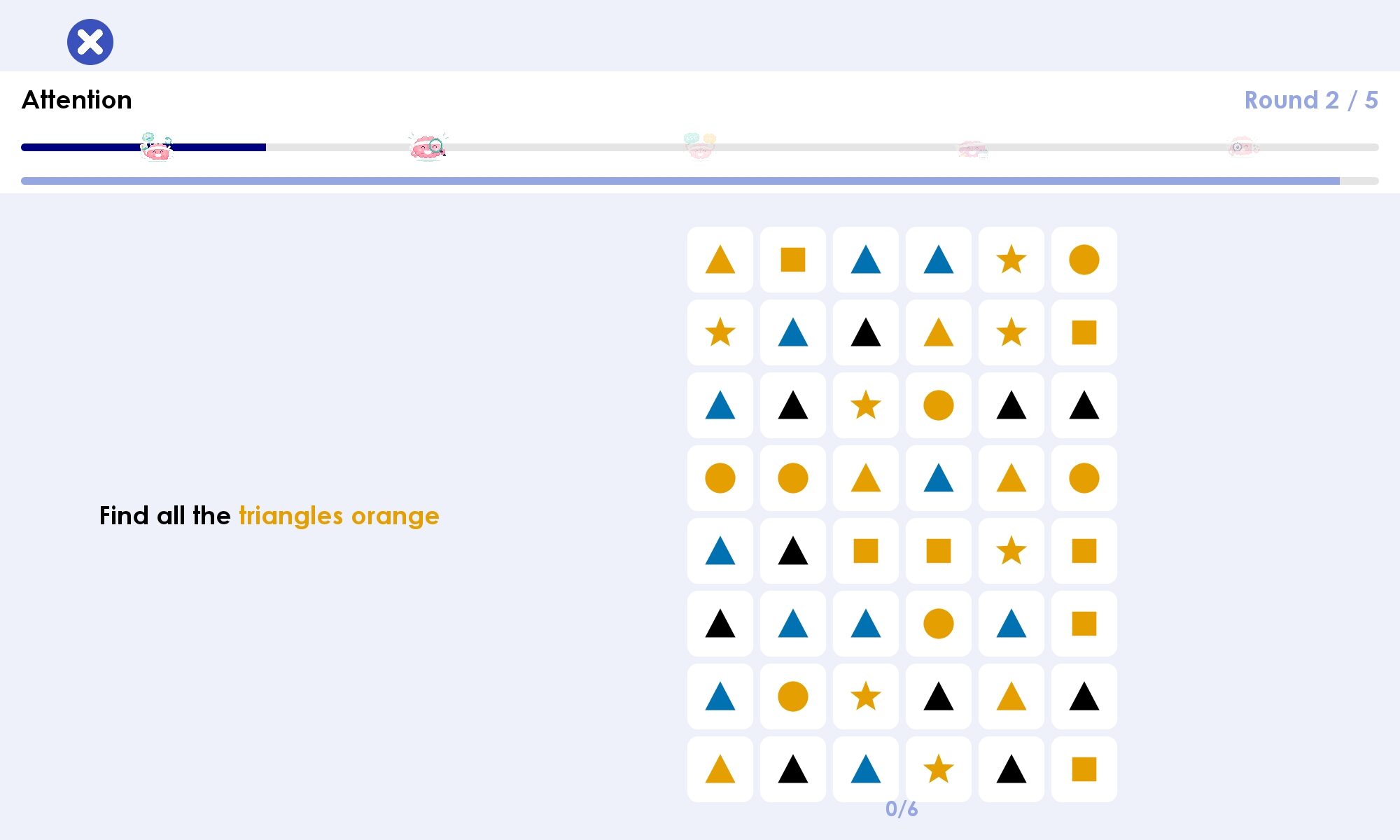
Attention is the ability to focus on a piece of information while ignoring distractions, and to sustain that effort over time. It's a central function: without it, memory can't even record properly. The assessment measures your alertness, your reaction speed and your ability to stay focused despite disruptive elements.
3. Language
Language covers comprehension, vocabulary and the ability to quickly find the right word. Language difficulties often show up as that familiar "tip of the tongue" feeling. The assessment exercises evaluate your verbal fluency and lexical range through simple, stimulating word games.
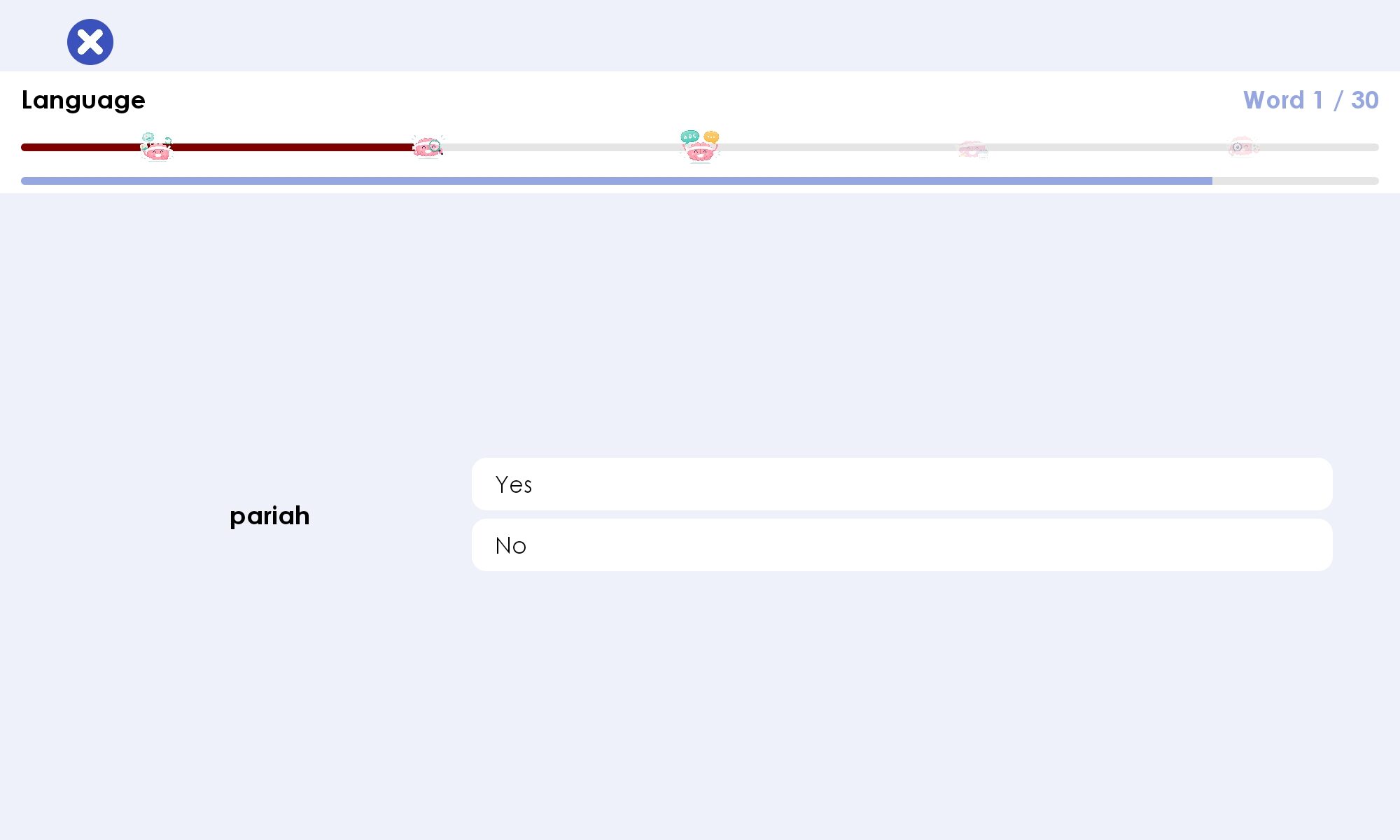
4. Visual perception
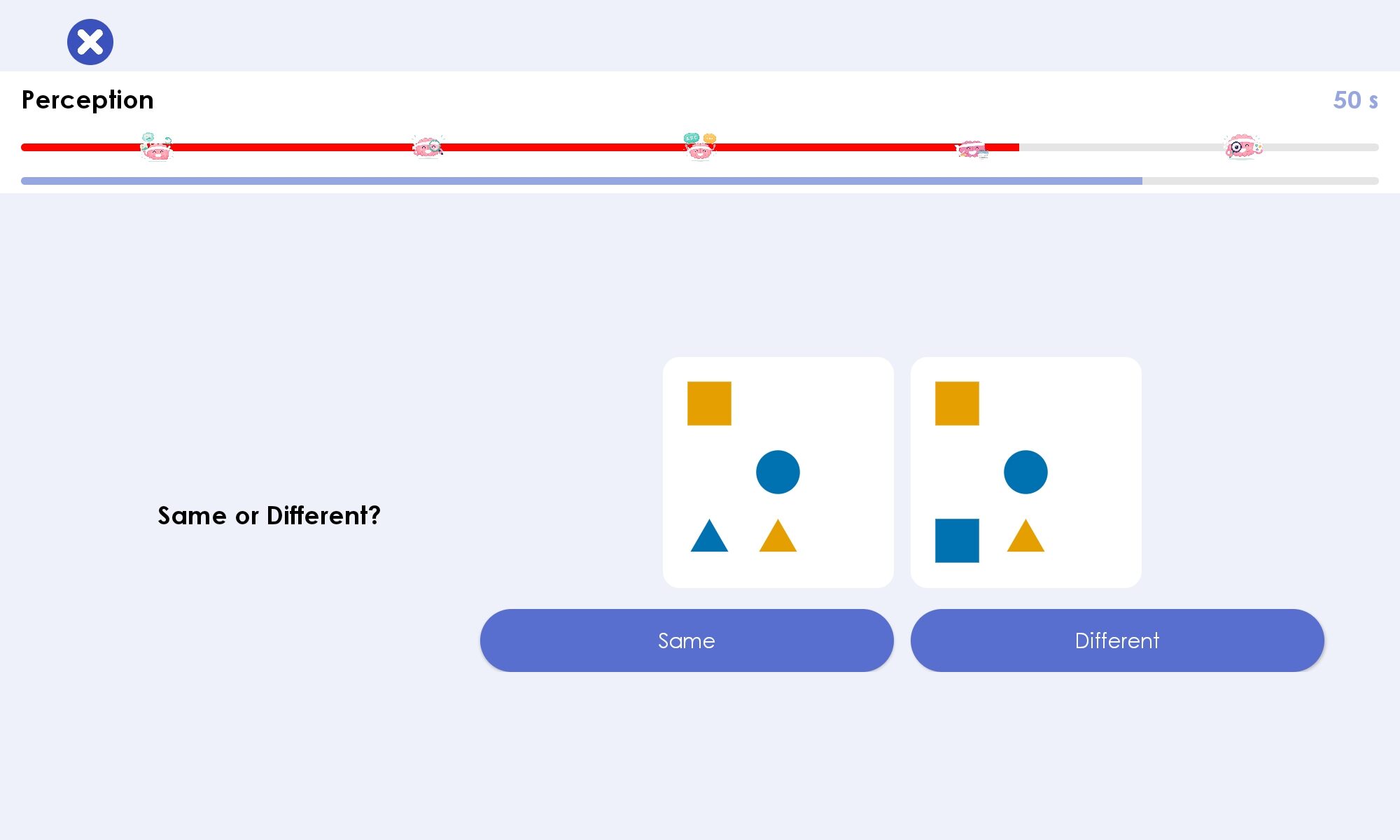
Visual perception is the way the brain interprets what the eyes see: recognising shapes, spotting differences, orienting in space. It plays a key role in reading, driving or simply finding an object in a room. The assessment observes your precision and your speed in processing visual information.
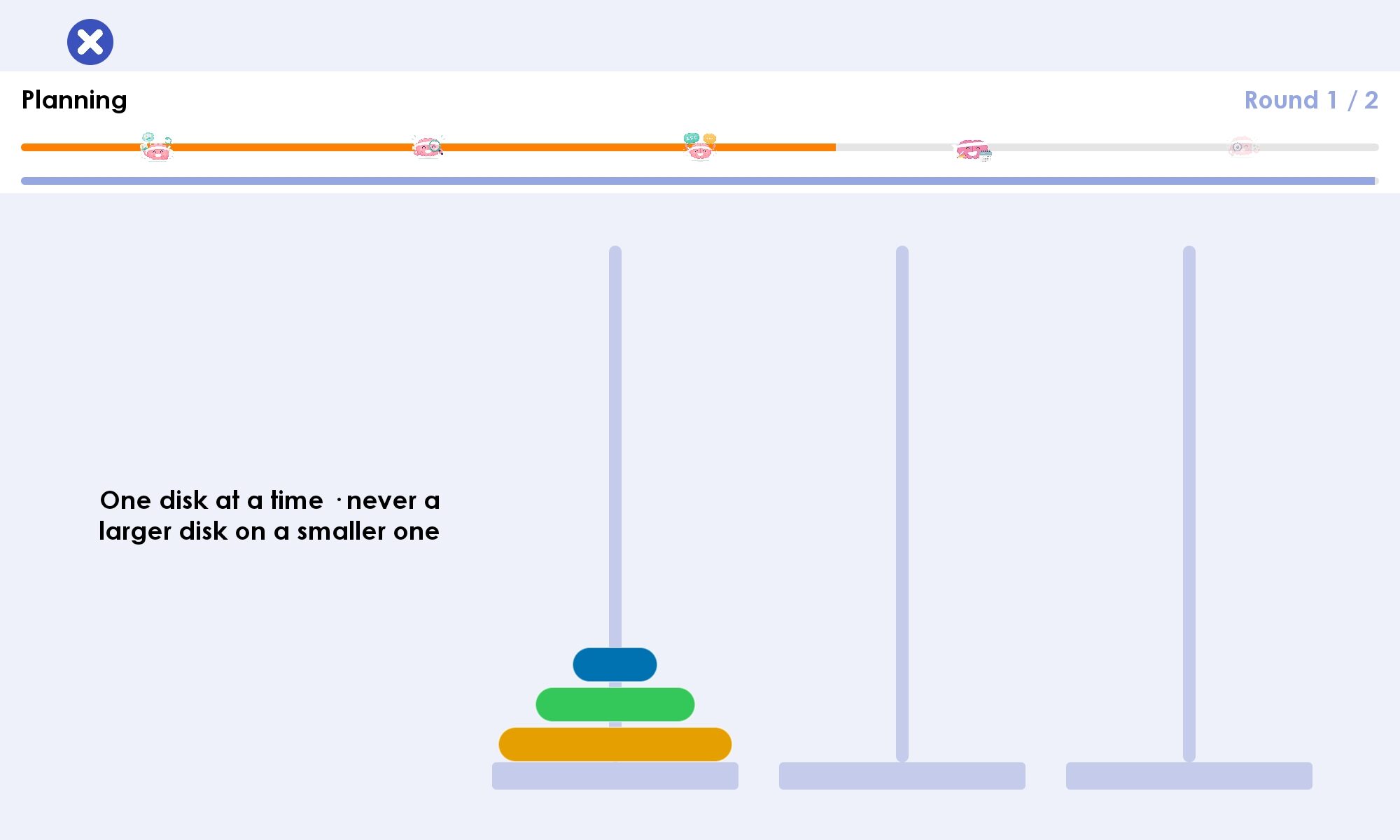
5. Planning (executive functions)
Planning, or executive function, is our inner "conductor": organising the steps of a task, anticipating, solving a problem, adapting to the unexpected. It's what allows us to prepare a meal while juggling several dishes at once. The assessment exercises evaluate your logic, your strategy and your ability to organise your reasoning.
✨ Why assess several domains?
Because our cognitive functions work together. A dip in attention can look like a memory problem, when the real cause lies elsewhere. By assessing all five domains, the evaluation avoids hasty conclusions and helps direct training to where it will be most useful.
How does the cognitive assessment work in the CLINT app?
With CLINT, your brain coach, the assessment was designed to be simple and stress-free. You need no special knowledge or equipment: a tablet or smartphone is enough. The evaluation takes the form of a series of short mini-games, each targeting one of the major functions described above. You move at your own pace, comfortably settled, at home.
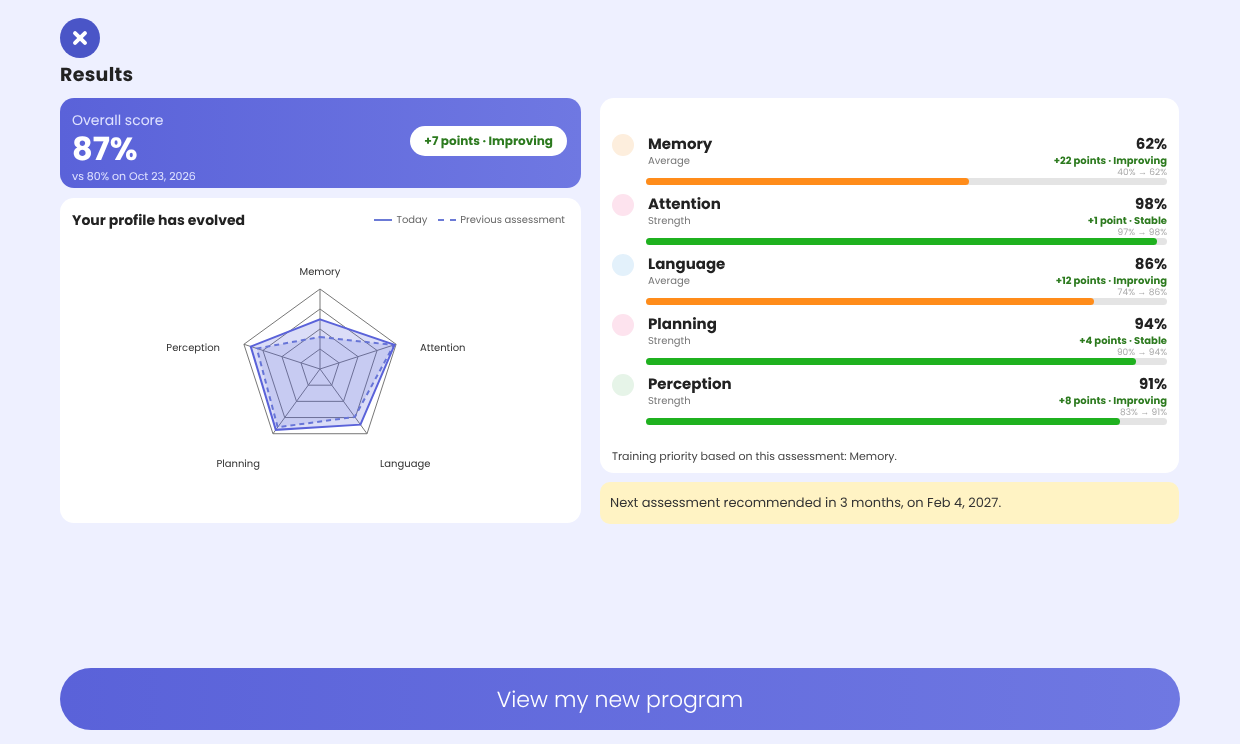
When the exercises are done, CLINT calculates a set of results and presents them clearly and visually, domain by domain. You immediately see where your strengths lie and which functions would benefit from training. This feedback is deliberately easy to read: no jargon, simple benchmarks, a colourful layout that helps you understand at a glance.
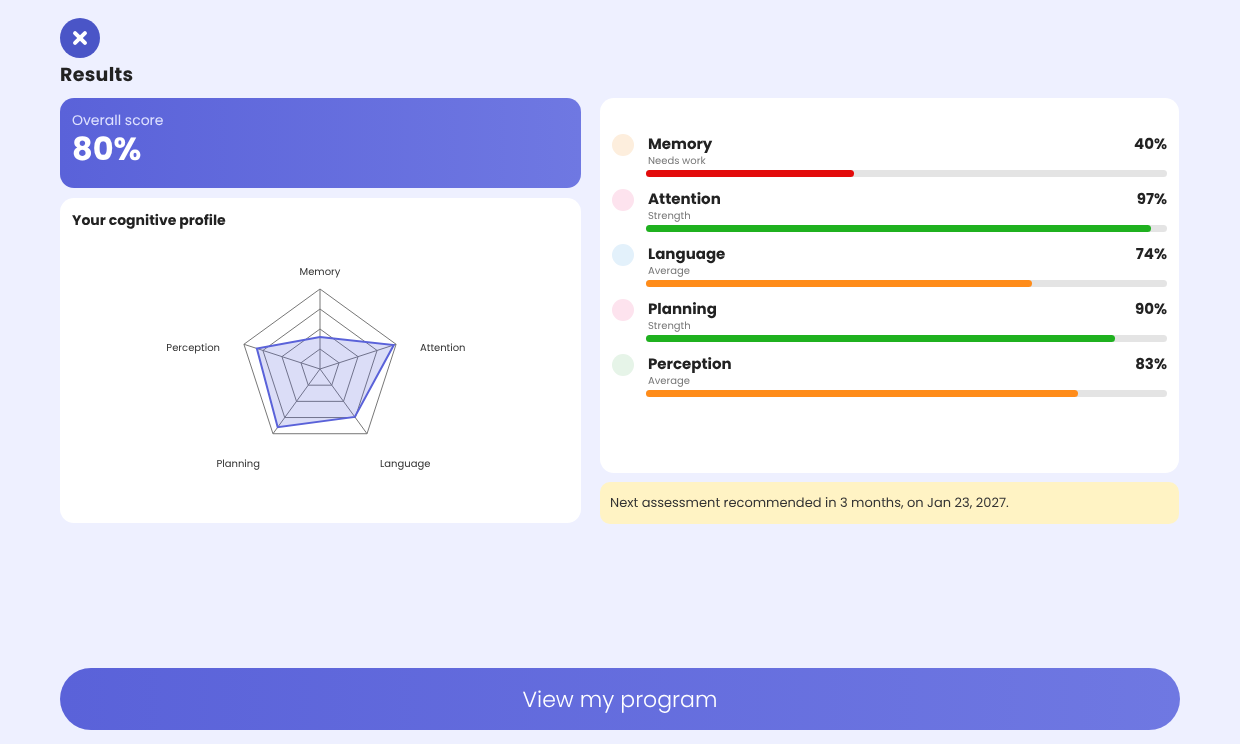
The results are not an end in themselves: they are the starting point of your training. That is where the real value of the evaluation lies. Rather than offering random exercises, CLINT uses your profile to build a path genuinely suited to your needs.
From assessment to a personalised training programme
The true value of a cognitive assessment lies not in the score on display, but in what you do with it next. In CLINT, every assessment automatically feeds a dedicated memory-training programme. If the evaluation reveals, for example, slightly fragile attention, the programme will offer more concentration exercises; if language is your strength and memory your weaker area, the balance of games adjusts accordingly.
This principle of adaptation is essential for making progress without getting discouraged. Training that is too easy achieves nothing; training that is too hard is demotivating. By calibrating difficulty to your real level, measured by the assessment, CLINT maintains that sweet spot that makes training both stimulating and enjoyable. And since you can retake the assessment regularly, the programme evolves with you, session after session.
The training stays playful: these are games, not an exam. The aim is to keep your abilities sharp with pleasure, a little each day, the way you'd maintain physical fitness with a daily walk. Consistency matters far more than intensity.
⚠️ Important: a first assessment, not a medical diagnosis
The cognitive assessment in CLINT is a tool for stimulation and personal tracking. It offers a first evaluation of your cognitive functions, useful for taking stock and guiding your training. However, it in no way replaces an examination carried out by a healthcare professional, and it is neither a diagnosis nor a medical screening. If you experience unusual, persistent or worrying difficulties, talk to your doctor: only they can, if necessary, prescribe a full neuropsychological assessment and make a diagnosis.
Online assessment, paper test, consultation: what's the difference?
There are several ways to evaluate your cognitive functions, and they don't serve the same needs. The online cognitive assessment, like CLINT's, is available immediately, at home, as many times as you like. It's the ideal tool for taking stock on your own, staying motivated and tracking your progress over time.
Paper tests, often offered in workshops or by associations, have the advantage of friendliness and social connection, but they are harder to repeat and compare over time. Finally, the neuropsychological assessment in consultation, carried out by a professional, is far more in-depth: it is the only one with diagnostic value. The three approaches are complementary. A tool like CLINT isn't meant to replace a consultation: it helps you stay active between appointments and spot the moment when it would be useful to talk to a professional.
Who is the cognitive assessment for?
The cognitive assessment is for any adult curious about how their mind works. Busy professionals find it a way to keep their concentration sharp despite a hectic routine. People in recovery — after intense fatigue, a stressful period or convalescence — use it to track their recovery. And a great many seniors use it to keep their mind alert and preserve their independence for as long as possible.
It is especially popular with people who like to set goals and see their efforts rewarded. For family carers, it's also a valuable support: offering a light, playful assessment, followed by suitable training, is a positive way to support an elderly parent without dramatising. In every case, the spirit stays the same: caring for your brain with pleasure and regularity. You can explore the full range on our training courses page.
How to prepare for your cognitive assessment
A cognitive assessment is not an exam to revise for: there's nothing to learn by heart and no right answer to prepare. That said, a few simple conditions help you get a more faithful snapshot of your abilities. First, pick a time when you're rested: tiredness weighs heavily on attention and memory, and an assessment taken at the end of an exhausting day will give lower results than reality. The morning, after a good night's sleep, is often ideal.
Then settle into a quiet environment, without television or conversations around you. Distractions interfere with attention exercises and skew the measurement. Put your phone on silent, let those around you know you need ten quiet minutes, and keep a glass of water within reach. These small precautions apply to daily training too: a brain always concentrates better in good conditions. And approach the assessment in a relaxed frame of mind — the stress of "doing well" can itself lower performance. Remember it's a game whose only purpose is to help you.
Understanding your results without worry
When you discover your results, keep in mind that they describe a moment, not a permanent truth. A lower score in one domain doesn't mean there's a problem: it may simply reflect a tiring day, a lack of familiarity with that kind of exercise, or a function used less recently. That's exactly why repeating the assessment is recommended: a trend seen across several measurements is far more meaningful than a single result.
What matters isn't aiming for a "perfect score", but spotting your personal balance and tracking how it evolves. Two high-performing people can have opposite profiles: one strong in memory and weaker in attention, the other the reverse. There's no good or bad profile, only yours, which is there to be maintained. If a result surprises or lastingly concerns you, the right move isn't to self-diagnose from a game, but to talk about it calmly with your doctor. You can also reach the DYNSEO team any time with a question about how the evaluation works.
The benefits of regular brain training
An assessment only makes sense if it leads to action, and that action is regular training. Just as gentle but daily physical activity maintains the body, regular cognitive stimulation helps keep the mind alert, support concentration and preserve the pleasure of learning. The key word is consistency: a few minutes of games each day beats one long session once a month.
Well-designed training works all the functions, without neglecting those that seem secure. It adapts to your level to stay stimulating — neither too easy nor discouraging. That's the whole point of starting from an assessment: the programme knows where to focus the effort. To go further into how memory works and the simple everyday habits that support it, the course on designing effective memory workshops usefully complements the app's training. Beyond performance, brain training brings an often underrated benefit: the feeling of doing something for yourself. That virtuous circle nourishes motivation and, more broadly, wellbeing.
Three myths about cognitive assessment
"An assessment is always medical and frightening." Not true. There are medical assessments, carried out by professionals, but also everyday, playful and reassuring ones like CLINT's. The latter makes no diagnosis: it simply helps you get to know yourself better and train. Approaching it as a game, not an exam, changes everything.
"If my score drops, my memory is declining." Not necessarily. A single result depends on a thousand factors: tiredness, stress, environment, familiarity with the exercise. Only a repeated trend across several assessments is meaningful — and even then, it's a healthcare professional, never an app, who can draw medical conclusions from it.
"It's only for older people." False again. Caring for your brain concerns every adult age. An overworked thirty-something, an exhausted parent, an adult in recovery all have as much to gain as a senior from taking stock and training. The brain remains able to learn and improve throughout life: this is what we call brain plasticity.
Frequently asked questions about cognitive assessment
Is CLINT's cognitive assessment a medical diagnosis?
No. It is a first, everyday evaluation intended to help you take stock and guide your training. It does not replace an examination by a healthcare professional and makes no diagnosis. If you have persistent or worrying difficulties, consult your doctor.
How long does the assessment take?
A few minutes is enough. The assessment is made of short mini-games that you complete at your own pace, without pressure, on your tablet or smartphone.
What exactly does the assessment measure?
It evaluates five key domains: memory, attention, language, visual perception and planning. This overview avoids confusing, for instance, a simple lack of attention with a memory problem.
What are the results for?
The results let CLINT build a personalised memory-training programme that focuses on your weaker areas while maintaining your strengths. Difficulty adjusts to your real level.
Can you take the assessment several times?
Yes, and it's recommended. Repeating the assessment regularly lets you track your progress over time and adjust your programme. Seeing your progress is a great source of motivation.
Do you have to be a senior to take a cognitive assessment?
Not at all. The assessment is for every adult: professionals wanting to keep their focus sharp, people in recovery, or seniors keen to stay mentally alert. Everyone benefits according to their goals.
Take your cognitive assessment with CLINT
Check your memory and attention in a few minutes, then let CLINT, your brain coach, build your personalised training programme.
Did this content help you? Support DYNSEO 💙
We are a small team of 14 people based in Paris. For 13 years, we have been creating free content to help families, speech therapists, care homes and healthcare professionals.
Your feedback is the only way we know if our work is useful. A Google review helps us reach other families, caregivers and therapists who need it.
One action, 30 seconds: leave us a Google review ⭐⭐⭐⭐⭐. It costs nothing, and it changes everything for us.