
dynseo.com/wp-content/uploads/2020/10/cerveau-normal.png” width=”140″ height=”131″ class=”wp-image-33977 aligncenter size-full” / alt=”dynseo brain mental exercise”>
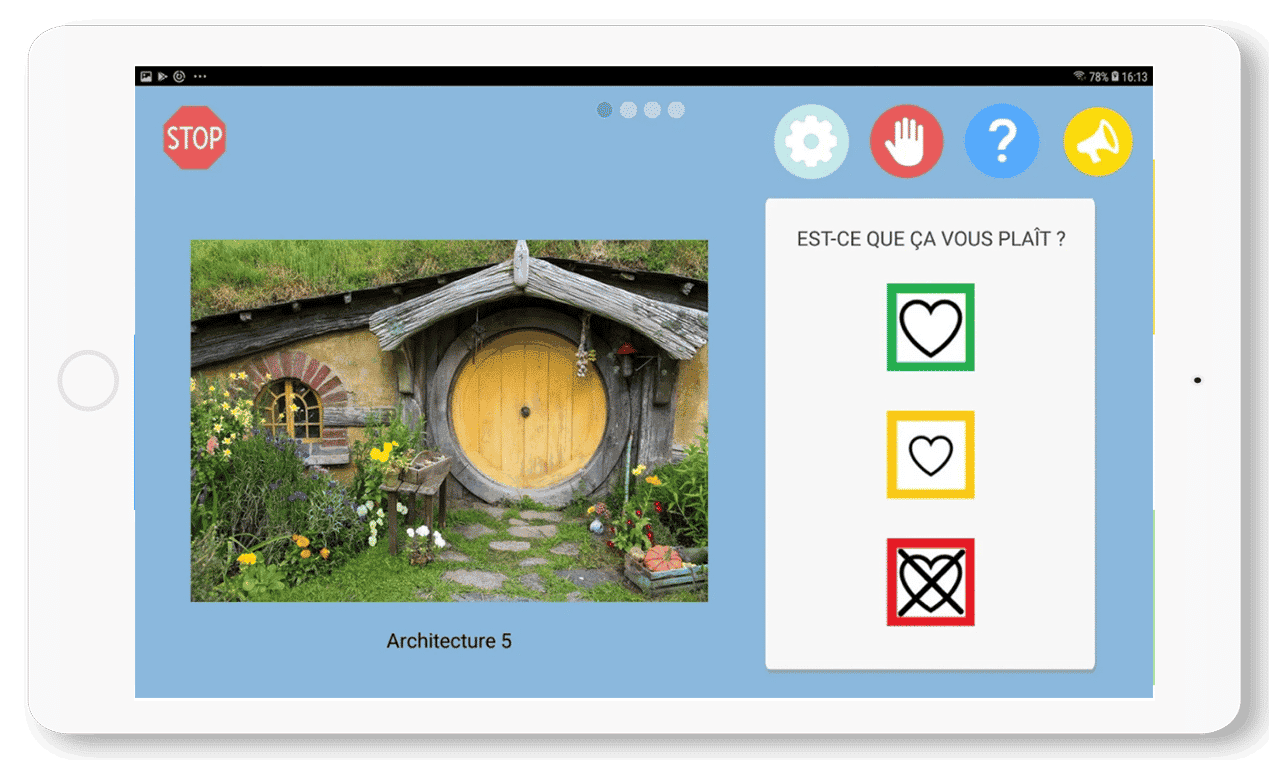
The harmonic cube (CH) in its initial paper version, designed and developed from 1992 by R. Forestier, is modernized (CH2) with the help of A. Miezelyte-Lopez and G. Maurin for therapeutic and educational applications, and A. Thésée and J. Richer for technical implementation.
Art is the support for the self-evaluation tool Harmonic Cube 2. The cubic form is a reference and not a goal. The aim here is to put the objectivity of an evaluation at the service of a person’s subjectivity. The reference science is artistic epistemology.
It makes a statement of a person’s emotional expression. It provides markers for the ability to express:
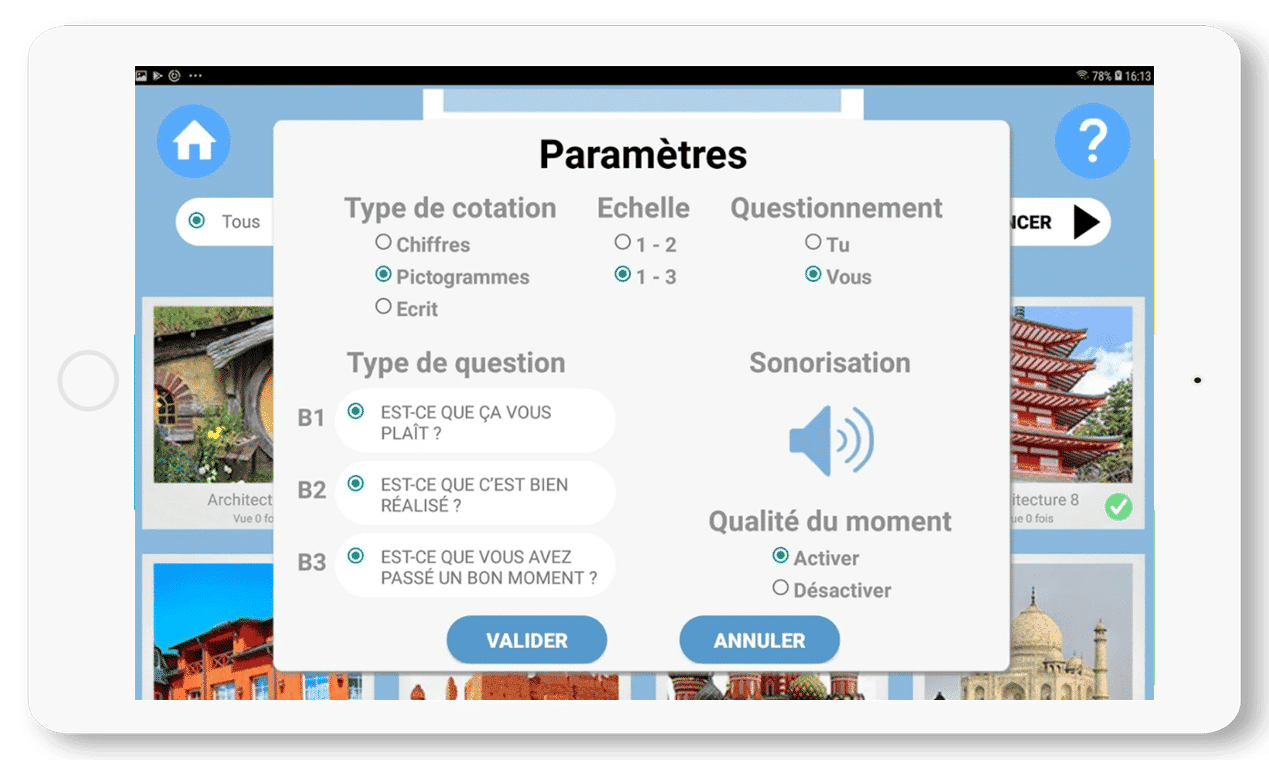
- their aesthetic feel (The BEAUTIFUL or B1 – focused on taste),
- *their appreciation and analysis of the technical aspect (WELL DONE or B2- focused on style)
- their expression of pleasure, interest, and desire in contact with production and/or artistic action (GOOD or B3- focused on engagement).
Expression, communication, relationship, and existential state are concerned. It can be used as an indicator for an assessment or as an expressive processor.
CH2 responds to personal, educational, or therapeutic use. It is a fun and easy-to-use application. Each exercise can be exploited separately.
The tool allows to:
- Create a personal file with a confidential part for a professional.
- Perform 2 types of exercises with administrations: contemplative (predefined libraries: images, music, videos) or active (library of photographs of personal productions made or images/objects brought).
EX 1. : aims to make an initial assessment of a person’s expressive abilities
Ex 2 : aims at the ability to make a decision and express a choice (images).
- Set up the sessions to make them feasible for various audiences depending on their mental, physical, and social capacities. Different settings and choices of artistic techniques are offered. Each “B” offers several questions that the practitioner adapts to their audience in terms of objectives.
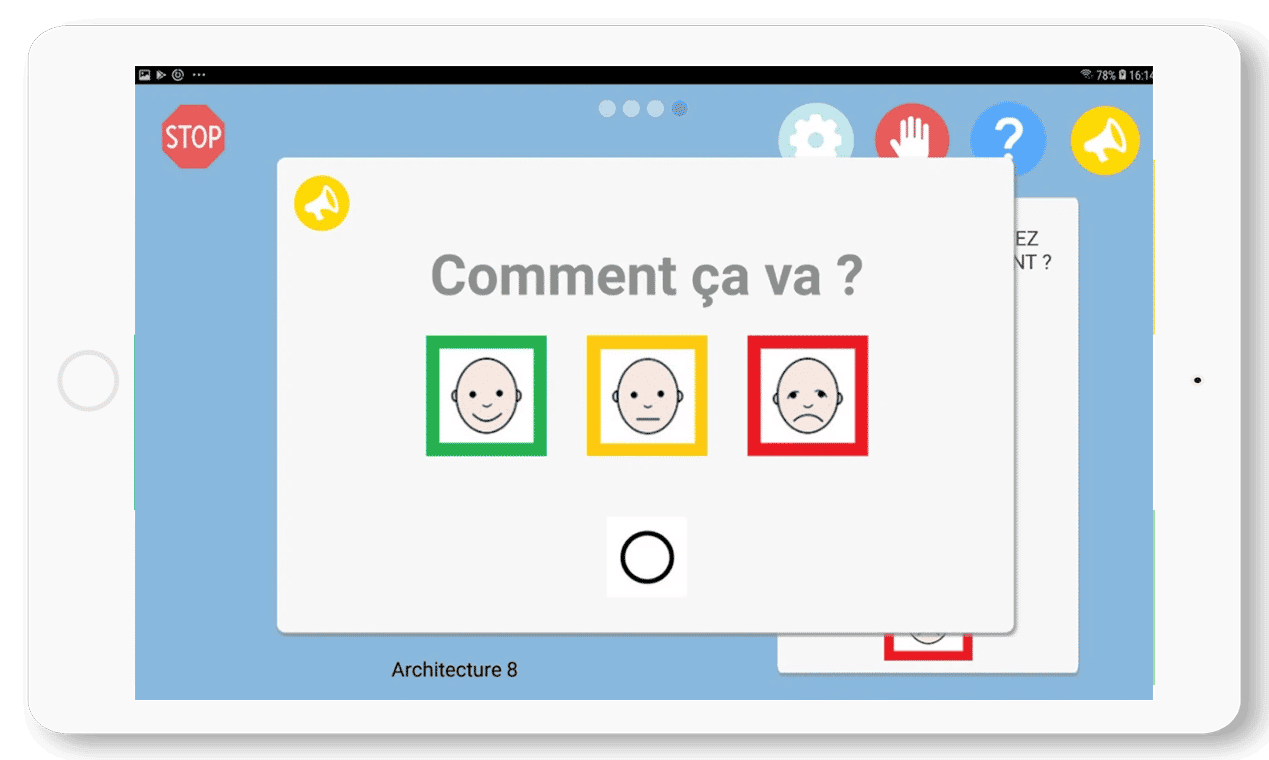
- Consider the quality of the moment (QM). It is a patient’s view of their general state. A correlation with daily life can be established; it is a possible transition between the specific care undertaken and the multidisciplinary team.
- Exploit data in analytical graphs immediately. Bar graphs particularly reveal personal trends, while curves relate more to the temporal sequence of administrations. A detailed analysis of the components of the parameters allows for refining the person’s expressiveness.
- Establish strategies tailored to objectives. The data can be implemented in health through a personalized therapeutic strategy. For the beautiful (B1) involve the affirmation and sensitivity of the person, for the Well (B2) involve confidence and motor skills, for the Good (B3) involve considering existential momentum and tonicity.
Reported to multidisciplinary observations, complemented by the person’s view of their general state (QM), CH2 is an interesting complement for determining indications and therapeutic strategies or personalized educational activities and exercises.
TEST HARMONIC CUBE FOR FREE FOR 1 WEEK
CONTACT
Phone: 09 66 93 84 22
E-mail: curieux@dynseo.com
Address: 6 rue du Docteur Finlay, 75015 PARIS

France – UK – Belgium – Netherlands – Italy – Switzerland – USA – Québec – Canada – China – Antilles
