Social skills: building and development
Communicating, listening, asserting oneself, resolving conflicts — social skills are built throughout life and make a profound difference in well-being and the quality of relationships.
Dans cet article
La formation associée
The 7 fundamental social skills
Verbal and non-verbal
Expressing ideas clearly, adapting one's register to the interlocutor and the context. Mastering non-verbal communication (appropriate eye contact, open posture, tone of voice) which represents 55-65% of the received message.
Truly hearing the other
Active listening goes beyond passive listening — it involves rephrasing, asking clarifying questions, recognizing the other’s emotions, and not preparing one’s response while the other is speaking. It is the most transformative skill in relationships.
Expressing needs without aggression
Assertion is the ability to express one’s needs, opinions, and boundaries directly and respectfully — without passivity (being walked over) or aggression (imposing one’s will). The classic formula: "When you do X, I feel Y, and I would like Z."
Resolution, cooperation, friendship
Resolving conflicts constructively (seeking compromise, separating people from the problem), cooperating effectively in a group, initiating and maintaining friendships, understanding implicit social norms and expectations.
Development by profile
For children: modeling (observing parents), guided practice (role-playing), supportive feedback. Group games, team sports, and extracurricular activities provide natural contexts. For adults: CBT, social coaching, social skills training groups. Autism/ADHD: social stories (Carol Gray), specific role-playing scenarios, group EHS — the goal is to provide tools without "normalizing" the difference.
💭 DYNSEO Resources
• 10 DYNSEO social tools
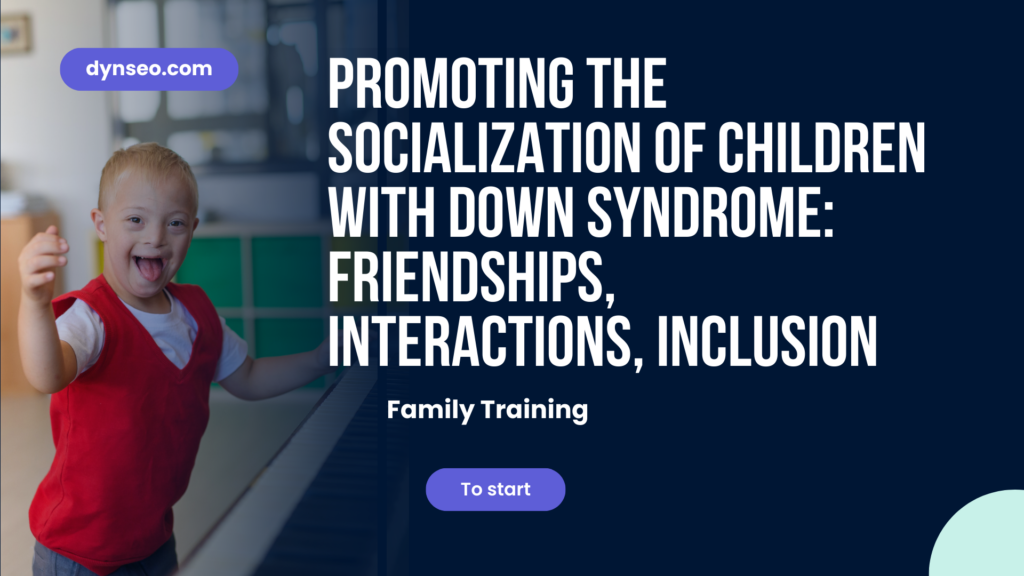
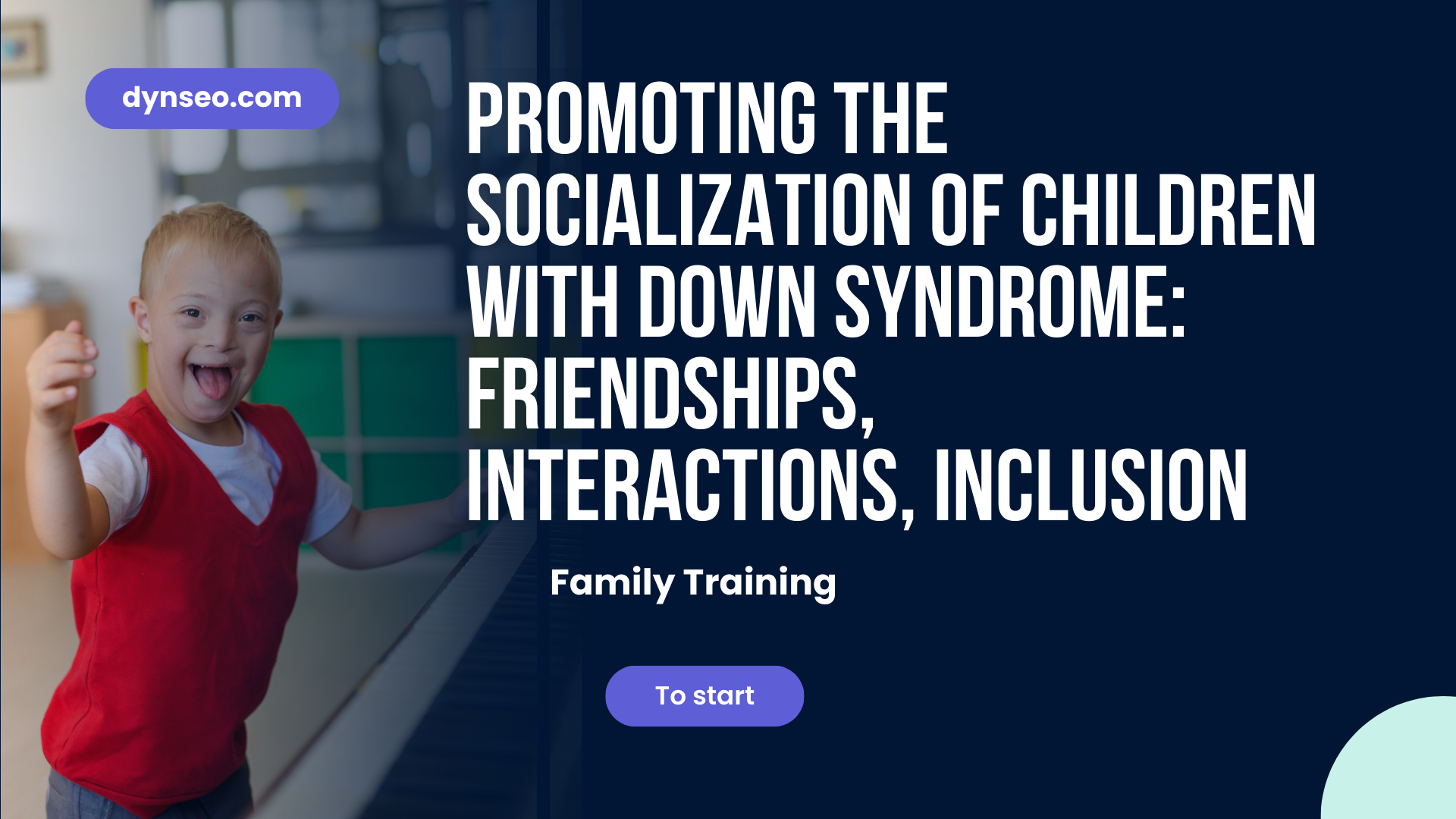
• Training "Socialization of children with Down syndrome"
• Training "Emotions of hypersensitive children"
FAQ
What are social skills?
Skills that allow for effective interaction: communication, active listening, empathy, assertion, conflict resolution, cooperation, friendship.
How to develop them in a child?
Modeling, guided practice, supportive feedback. Group games, team sports, extracurricular activities.
Social skills and autism?
Social stories, role-playing, group EHS. The goal is to provide tools to navigate the social world — not to "normalize".
Conclusion: skills for a lifetime
Social skills can be learned at any age. They are at the heart of our mental health, our relationships, and our flourishing. Investing in their development — for oneself, one's children, or the people one supports — is one of the best long-term investments possible.
Did this content help you? Support DYNSEO 💙
We are a small team of 14 people based in Paris. For 13 years, we have been creating free content to help families, speech therapists, care homes and healthcare professionals.
Your feedback is the only way we know if our work is useful. A Google review helps us reach other families, caregivers and therapists who need it.
One action, 30 seconds: leave us a Google review ⭐⭐⭐⭐⭐. It costs nothing, and it changes everything for us.