
.dbi-art-d75b8e96{font-family:'Poppins',-apple-system,BlinkMacSystemFont,sans-serif;line-height:1.75;color:#333;background:#fff;overflow-x:hidden;}
img{max-width:100%;height:auto;display:block;}.dbi-art-d75b8e96 a{color:inherit;text-decoration:none;}
.dbi-art-d75b8e96 {--blue:#5e5ed7;--blue-dark:#5268c9;--teal:#a9e2e4;--teal-soft:#f0fafb;--yellow:#ffeca7;--yellow-soft:#fffbee;--pink:#e73469;--pink-soft:#fef0f4;--dark:#1a1a2e;--radius:20px;--shadow:0 4px 20px rgba(0,0,0,.06);}
.dbi-art-d75b8e96 .container{max-width:820px;margin:0 auto;padding:0 24px;}
.article-hero{background:linear-gradient(160deg,#f0fafb 0%,#fef9ff 55%,#fffbee 100%);padding:70px 24px 0;position:relative;overflow:visible;}
.dbi-art-d75b8e96 .article-hero-curve{position:absolute;bottom:-2px;left:0;right:0;width:100%;height:60px;background:#fff;border-radius:50% 50% 0 0;z-index:4;}
.article-hero-inner{max-width:820px;margin:0 auto;position:relative;z-index:3;padding-bottom:80px;}
.dbi-art-d75b8e96 .article-breadcrumb{font-size:12px;color:var(--blue);margin-bottom:20px;}
.article-breadcrumb a{color:var(--blue);border-bottom:1px solid rgba(94,94,215,.25);}
.dbi-art-d75b8e96 .article-category{display:inline-block;font-family:'Montserrat',sans-serif;font-size:11px;font-weight:700;letter-spacing:1.5px;text-transform:uppercase;color:var(--blue);background:#fff;border-radius:30px;padding:7px 18px;margin-bottom:16px;box-shadow:var(--shadow);}
.article-hero h1{font-family:'Montserrat',sans-serif;font-size:clamp(24px,4vw,34px);font-weight:900;color:var(--dark);line-height:1.3;margin-bottom:16px;}
.dbi-art-d75b8e96 .article-hero h1 .hl{display:inline;color:#fff;background:var(--blue);border-radius:8px;padding:1px 12px 3px;}
.article-meta{font-size:13px;color:#555;display:flex;gap:20px;flex-wrap:wrap;align-items:center;}
.dbi-art-d75b8e96 .article-body{padding:50px 0 60px;}
.article-body p{margin-bottom:22px;text-align:justify;font-size:15px;color:#444;line-height:1.9;}
.dbi-art-d75b8e96 .article-body strong{color:var(--dark);font-weight:600;}
.article-body h2{font-family:'Montserrat',sans-serif;font-size:clamp(20px,3vw,26px);font-weight:800;color:var(--dark);margin:55px 0 18px;padding-bottom:10px;box-shadow:inset 0 -3px 0 var(--teal);}
.dbi-art-d75b8e96 .article-body h3{font-family:'Montserrat',sans-serif;font-size:clamp(17px,2.5vw,20px);font-weight:700;color:var(--blue);margin:35px 0 14px;}
.intro-block{background:var(--teal-soft);box-shadow:inset 4px 0 0 var(--teal),var(--shadow);border-radius:var(--radius);padding:24px 28px;margin:30px 0 40px;font-size:15px;color:#444;line-height:1.85;}
.dbi-art-d75b8e96 .stats-grid{display:grid;grid-template-columns:repeat(auto-fit,minmax(150px,1fr));gap:16px;margin:35px 0;}
.stat-card{text-align:center;padding:26px 16px;background:#fff;border-radius:var(--radius);box-shadow:inset 0 4px 0 var(--teal),var(--shadow);}
.dbi-art-d75b8e96 .stat-card:nth-child(2){box-shadow:inset 0 4px 0 var(--blue),var(--shadow);}
.stat-card:nth-child(3){box-shadow:inset 0 4px 0 var(--pink),var(--shadow);}
.dbi-art-d75b8e96 .stat-card:nth-child(4){box-shadow:inset 0 4px 0 var(--yellow),var(--shadow);}
.stat-card .number{font-family:'Montserrat',sans-serif;font-size:2rem;font-weight:900;color:var(--dark);line-height:1;}
.dbi-art-d75b8e96 .stat-card .label{font-size:12px;color:#777;margin-top:8px;font-weight:500;line-height:1.4;}
.cards-grid{display:grid;grid-template-columns:repeat(3,1fr);gap:16px;margin:30px 0;}
@media (max-width:640px){.dbi-art-d75b8e96 .cards-grid{grid-template-columns:1fr 1fr;}}
.dbi-art-d75b8e96 .info-card{background:#fff;border-radius:var(--radius);padding:22px 18px;text-align:center;box-shadow:inset 0 -3px 0 var(--teal),var(--shadow);transition:transform .25s;}
.info-card:hover{transform:translateY(-4px);}
.dbi-art-d75b8e96 .info-card:nth-child(3n+1){box-shadow:inset 0 -3px 0 var(--teal),var(--shadow);}
.info-card:nth-child(3n+2){box-shadow:inset 0 -3px 0 var(--pink),var(--shadow);}
.dbi-art-d75b8e96 .info-card:nth-child(3n+3){box-shadow:inset 0 -3px 0 var(--blue),var(--shadow);}
.info-card .icon{font-size:2rem;margin-bottom:10px;}
.dbi-art-d75b8e96 .info-card h4{font-family:'Montserrat',sans-serif;font-size:13px;font-weight:700;color:var(--dark);margin-bottom:6px;}
.info-card p{font-size:12px;color:#666;margin:0;line-height:1.55;}.dbi-art-d75b8e96 .astuce-card{background:#fff;border-radius:var(--radius);padding:28px 30px;box-shadow:inset 5px 0 0 var(--teal),0 4px 22px rgba(0,0,0,.07);margin:24px 0;display:flex;gap:22px;align-items:flex-start;}
.astuce-card:nth-child(2n){box-shadow:inset 5px 0 0 var(--blue),0 4px 22px rgba(0,0,0,.07);}
.dbi-art-d75b8e96 .astuce-card:nth-child(3n){box-shadow:inset 5px 0 0 var(--pink),0 4px 22px rgba(0,0,0,.07);}
.astuce-number{font-family:'Montserrat',sans-serif;font-size:2.2rem;font-weight:900;color:var(--blue);opacity:.18;flex-shrink:0;line-height:1;min-width:44px;}
.dbi-art-d75b8e96 .astuce-card:nth-child(2n) .astuce-number{color:var(--pink);}
.astuce-card:nth-child(3n) .astuce-number{color:var(--teal);}
.dbi-art-d75b8e96 .astuce-content{flex:1;}
.astuce-label{font-family:'Montserrat',sans-serif;font-size:11px;font-weight:700;letter-spacing:1.5px;text-transform:uppercase;color:var(--blue);margin-bottom:5px;}
.dbi-art-d75b8e96 .astuce-title{font-family:'Montserrat',sans-serif;font-size:17px;font-weight:800;color:var(--dark);margin-bottom:10px;}
.astuce-card p{font-size:14px;color:#444;line-height:1.85;margin-bottom:8px;}
.dbi-art-d75b8e96 .astuce-card p:last-child{margin-bottom:0;}
.astuce-inner{background:var(--teal-soft);border-radius:12px;padding:14px 18px;margin-top:12px;}
.dbi-art-d75b8e96 .astuce-inner-title{font-family:'Montserrat',sans-serif;font-size:11px;font-weight:700;color:var(--blue-dark);margin-bottom:6px;text-transform:uppercase;letter-spacing:.8px;}
.astuce-inner p{font-size:13px;color:#444;margin:0;line-height:1.65;}.dbi-art-d75b8e96 .joe-card{background:#fff;border-radius:var(--radius);padding:22px 24px;box-shadow:0 4px 18px rgba(0,0,0,.07);margin:14px 0;display:flex;gap:18px;align-items:center;transition:all .25s;}
.joe-card:hover{transform:translateY(-3px);box-shadow:0 10px 26px rgba(169,226,228,.45);}
.dbi-art-d75b8e96 .joe-card .joe-icon{font-size:2.2rem;flex-shrink:0;}
.joe-card-content h4{font-family:'Montserrat',sans-serif;font-size:15px;font-weight:800;color:var(--dark);margin-bottom:5px;}
.dbi-art-d75b8e96 .joe-card-content p{font-size:13px;color:#555;margin:0;line-height:1.6;}
.key-points{background:var(--teal-soft);padding:28px 32px;border-radius:var(--radius);margin:35px 0;box-shadow:var(--shadow);}
.dbi-art-d75b8e96 .key-points h3{font-family:'Montserrat',sans-serif;font-size:16px;font-weight:800;color:var(--blue-dark);margin:0 0 14px;}
.key-points ul{list-style:none;padding:0;margin:0;}
.dbi-art-d75b8e96 .key-points li{margin:10px 0;padding-left:26px;position:relative;color:#444;font-size:14px;line-height:1.75;}
.key-points li::before{content:'✦';position:absolute;left:0;color:var(--pink);font-size:11px;top:3px;}
.dbi-art-d75b8e96 .tip-box{background:var(--yellow-soft);box-shadow:inset 4px 0 0 #f5c842,var(--shadow);border-radius:var(--radius);padding:22px 26px;margin:30px 0;}
.tip-box-label{font-family:'Montserrat',sans-serif;font-size:11px;font-weight:700;letter-spacing:1.2px;text-transform:uppercase;color:#a07000;margin-bottom:8px;}
.dbi-art-d75b8e96 .tip-box p{font-size:14px;color:#444;margin:0;line-height:1.8;}
.expert-box{background:#fff;border-radius:var(--radius);padding:28px 30px;box-shadow:inset 0 4px 0 var(--blue),0 6px 25px rgba(0,0,0,.07);margin:35px 0;}
.dbi-art-d75b8e96 .expert-box-head{display:flex;align-items:center;gap:16px;margin-bottom:10px;}
.expert-box-head img{width:56px;height:56px;border-radius:14px;flex-shrink:0;background:#fff;padding:3px;box-shadow:0 4px 12px rgba(0,0,0,.1);}
.dbi-art-d75b8e96 .expert-box-label{font-family:'Montserrat',sans-serif;font-size:11px;font-weight:700;letter-spacing:1.5px;text-transform:uppercase;color:var(--blue);margin-bottom:6px;}
.expert-box-title{font-family:'Montserrat',sans-serif;font-size:17px;font-weight:800;color:var(--dark);margin-bottom:14px;}
.dbi-art-d75b8e96 .expert-box-head .expert-box-title{margin-bottom:0;}
.expert-box p{font-size:14px;color:#444;line-height:1.8;margin-bottom:10px;}
.dbi-art-d75b8e96 .expert-box p:last-child{margin-bottom:0;}
.expert-inner{background:var(--teal-soft);border-radius:12px;padding:18px 22px;margin-top:14px;}
.dbi-art-d75b8e96 .expert-inner-title{font-family:'Montserrat',sans-serif;font-size:12px;font-weight:700;color:var(--blue-dark);margin-bottom:8px;text-transform:uppercase;letter-spacing:.8px;}
.expert-inner p{font-size:13px;color:#444;margin:0;line-height:1.7;}
.dbi-art-d75b8e96 .dynseo-table{width:100%;border-collapse:collapse;margin:30px 0;border-radius:var(--radius);overflow:hidden;box-shadow:var(--shadow);}
.dynseo-table thead tr{background:var(--blue);color:#fff;}
.dbi-art-d75b8e96 .dynseo-table th{padding:14px 12px;text-align:left;font-family:'Montserrat',sans-serif;font-size:13px;font-weight:700;}
.dynseo-table td{padding:13px 12px;font-size:13px;color:#444;border-bottom:1px solid #f0f0f0;}
.dbi-art-d75b8e96 .dynseo-table tr:nth-child(even){background:#f8f8ff;}
.dynseo-table tr.hl td{background:var(--yellow-soft);color:var(--dark);font-weight:600;}
.dbi-art-d75b8e96 .quote-block{background:#fff8f0;padding:32px;border-radius:var(--radius);margin:40px 0;box-shadow:var(--shadow);position:relative;}
.quote-block::before{content:'201C';font-size:100px;position:absolute;top:-20px;left:18px;font-family:Georgia,serif;color:var(--teal);opacity:.3;line-height:1;}
.dbi-art-d75b8e96 .quote-block p{font-size:15px;font-style:italic;color:#555;position:relative;z-index:1;margin-bottom:10px;line-height:1.85;}
.quote-block .quote-author{font-family:'Montserrat',sans-serif;font-weight:800;font-style:normal;color:var(--blue);font-size:13px;}
.dbi-art-d75b8e96 .faq-list{margin:30px 0;}
.faq-item{background:#fff;border-radius:14px;margin-bottom:14px;overflow:hidden;box-shadow:0 3px 14px rgba(0,0,0,.05);}
.dbi-art-d75b8e96 .faq-q{padding:18px 22px;font-family:'Montserrat',sans-serif;font-size:14px;font-weight:700;color:var(--dark);display:flex;justify-content:space-between;align-items:center;cursor:pointer;}
.faq-q .faq-icon{font-size:1.2rem;color:var(--pink);transition:transform .3s;flex-shrink:0;margin-left:12px;}
.dbi-art-d75b8e96 .faq-item.open .faq-icon{transform:rotate(45deg);}
.faq-a{padding:0 22px;max-height:0;overflow:hidden;transition:all .3s;}
.dbi-art-d75b8e96 .faq-item.open .faq-a{max-height:400px;padding:0 22px 18px;}
.faq-a p{font-size:14px;color:#555;margin:0;line-height:1.75;}
.dbi-art-d75b8e96 .internal-link{display:flex;align-items:center;gap:20px;background:var(--yellow-soft);padding:24px 28px;border-radius:var(--radius);box-shadow:var(--shadow);margin:40px 0;transition:all .3s ease;}
.internal-link:hover{transform:translateY(-3px);box-shadow:0 8px 28px rgba(0,0,0,.1);}
.dbi-art-d75b8e96 .internal-link-icon{font-size:2.5rem;flex-shrink:0;}
.internal-link img.internal-link-img{width:56px;height:56px;border-radius:14px;flex-shrink:0;background:#fff;padding:3px;box-shadow:0 4px 12px rgba(0,0,0,.1);}
.dbi-art-d75b8e96 .internal-link-content{flex:1;}
.internal-link-label{font-size:11px;font-weight:700;letter-spacing:1.5px;text-transform:uppercase;color:var(--pink);margin-bottom:4px;}
.dbi-art-d75b8e96 .internal-link-title{font-family:'Montserrat',sans-serif;font-size:16px;font-weight:800;color:var(--dark);margin-bottom:4px;}
.internal-link-desc{font-size:13px;color:#555;}
.dbi-art-d75b8e96 .internal-link-arrow{font-size:1.5rem;color:var(--blue);flex-shrink:0;transition:transform .3s;}
.internal-link:hover .internal-link-arrow{transform:translateX(4px);}
.dbi-art-d75b8e96 .cta-box{background:linear-gradient(135deg,var(--blue) 0%,var(--blue-dark) 100%);padding:40px 36px;border-radius:22px;margin:50px 0;text-align:center;color:#fff;}
.cta-box h3{font-family:'Montserrat',sans-serif;font-size:22px;font-weight:800;margin-bottom:12px;}
.dbi-art-d75b8e96 .cta-box p{font-size:14px;color:rgba(255,255,255,.88);margin-bottom:24px;max-width:550px;margin-left:auto;margin-right:auto;}
.cta-buttons{display:flex;justify-content:center;gap:14px;flex-wrap:wrap;}
.dbi-art-d75b8e96 .btn-white{display:inline-block;padding:14px 34px;border-radius:30px;font-family:'Montserrat',sans-serif;font-size:14px;font-weight:700;background:#fff;color:var(--blue);transition:all .3s ease;}
.btn-white:hover{background:var(--dark);color:#fff;transform:translateY(-2px);}
.dbi-art-d75b8e96 .btn-outline{display:inline-block;padding:14px 34px;border-radius:30px;font-family:'Montserrat',sans-serif;font-size:14px;font-weight:700;border:2px solid rgba(255,255,255,.5);color:#fff;}
.article-tags{display:flex;flex-wrap:wrap;gap:8px;margin:40px 0 20px;padding-top:30px;box-shadow:inset 0 2px 0 #f0f0f0;}
.dbi-art-d75b8e96 .article-tag{display:inline-block;padding:6px 16px;border-radius:30px;font-size:12px;font-weight:600;}
.article-tag:nth-child(odd){color:var(--blue);background:#eeeeff;}
.dbi-art-d75b8e96 .article-tag:nth-child(even){color:var(--pink);background:var(--pink-soft);}.tldr{background:#fff;border-radius:var(--radius);padding:26px 30px;margin:30px 0 40px;box-shadow:inset 0 4px 0 var(--pink),var(--shadow);}
.dbi-art-d75b8e96 .tldr h3{font-family:'Montserrat',sans-serif;font-weight:800;font-size:17px;color:var(--dark);margin:0 0 14px;display:flex;align-items:center;gap:10px;}
.tldr ul{list-style:none;padding:0;margin:0;}
.dbi-art-d75b8e96 .tldr li{padding:8px 0 8px 28px;position:relative;font-size:14px;color:#444;line-height:1.7;}
.tldr li::before{content:'✓';position:absolute;left:0;color:var(--blue);font-weight:800;}
.dbi-art-d75b8e96 .tldr li strong{color:var(--dark);}
.app-showcase{display:grid;grid-template-columns:repeat(3,1fr);gap:16px;margin:28px 0;}
@media (max-width:640px){.dbi-art-d75b8e96 .app-showcase{grid-template-columns:1fr;}}
.dbi-art-d75b8e96 .app-showcase a{display:flex;flex-direction:column;align-items:center;text-align:center;background:#fff;border-radius:var(--radius);padding:24px 18px;box-shadow:var(--shadow);transition:transform .25s,box-shadow .25s;}
.app-showcase a:hover{transform:translateY(-5px);box-shadow:0 12px 30px rgba(30,30,80,.12);}
.dbi-art-d75b8e96 .app-showcase img{width:62px;height:62px;border-radius:16px;margin-bottom:12px;background:#fff;padding:4px;box-shadow:0 5px 14px rgba(0,0,0,.12);}
.app-showcase .ac-n{font-family:'Montserrat',sans-serif;font-weight:800;color:var(--dark);font-size:15px;}
.dbi-art-d75b8e96 .app-showcase .ac-t{display:inline-block;font-size:10px;font-weight:700;letter-spacing:.5px;text-transform:uppercase;padding:3px 11px;border-radius:20px;margin:7px 0 9px;}
.app-showcase .ac-d{font-size:12px;color:#666;line-height:1.55;}
.dbi-art-d75b8e96 .ac-enfant{background:#fff3cc;color:#b8960a;}
.ac-adulte{background:#ededfc;color:var(--blue-dark);}
.dbi-art-d75b8e96 .ac-senior{background:#d9f4f5;color:#2a7577;}
@media (max-width:768px){.dbi-art-d75b8e96 .cards-grid{grid-template-columns:1fr 1fr;}.dbi-art-d75b8e96 .stats-grid{grid-template-columns:1fr 1fr;}.dbi-art-d75b8e96 .cta-box{padding:28px 22px;}.dbi-art-d75b8e96 .astuce-card{flex-direction:column;gap:10px;}}.dbi-art-d75b8e96 .lg-fiches-head{text-align:center;margin:55px 0 10px;}
.lg-fiches-head h2{box-shadow:none;padding:0;}
.dbi-art-d75b8e96 .lg-fiches-head p{text-align:center;color:#555;max-width:620px;margin:8px auto 0;font-size:14px;}
.lg-fiche{background:#fff;border-radius:var(--radius);margin:26px 0;box-shadow:0 8px 26px rgba(94,94,215,.12);overflow:hidden;scroll-margin-top:90px;}
.dbi-art-d75b8e96 .lg-fiche-head{background:linear-gradient(135deg,var(--blue),var(--blue-dark));color:#fff;padding:18px 26px;display:flex;justify-content:space-between;align-items:center;gap:12px;flex-wrap:wrap;}
.lg-num{font-size:11px;opacity:.9;font-weight:700;letter-spacing:1px;}
.dbi-art-d75b8e96 .lg-fiche-head h3{color:#fff;margin:3px 0;font-size:18px;font-family:'Montserrat',sans-serif;font-weight:800;}
.lg-badges{display:flex;gap:6px;flex-wrap:wrap;margin-top:5px;}
.dbi-art-d75b8e96 .lg-badge{background:rgba(255,255,255,.22);padding:4px 12px;border-radius:20px;font-size:11px;font-weight:600;}
.lg-print{background:var(--yellow);color:var(--blue-dark);border:none;padding:10px 18px;border-radius:24px;font-weight:700;font-size:13px;cursor:pointer;font-family:'Poppins',sans-serif;box-shadow:0 4px 12px rgba(0,0,0,.12);transition:all .2s;}
.dbi-art-d75b8e96 .lg-print:hover{background:var(--pink);color:#fff;}
.lg-fiche-body{padding:24px 28px;}
.dbi-art-d75b8e96 .lg-consigne{background:var(--yellow);color:var(--blue-dark);padding:12px 18px;border-radius:10px;font-weight:600;font-size:13.5px;margin-bottom:18px;}
.lg-consigne::before{content:"✏️ ";}
.dbi-art-d75b8e96 .lg-content{background:#fafbff;border-radius:12px;padding:22px;}
.lg-sub{font-family:'Montserrat',sans-serif;font-weight:700;color:var(--blue);font-size:14px;margin:4px 0 10px;}
.dbi-art-d75b8e96 .lg-sub.mt{margin-top:20px;}
.lg-row{background:#fff;border-radius:8px;padding:12px 16px;margin:9px 0;box-shadow:0 3px 10px rgba(30,30,80,.06);font-size:14px;color:#444;}
.dbi-art-d75b8e96 .lg-row .lg-n{color:var(--pink);font-weight:700;margin-right:8px;}
.lg-blank{display:inline-block;min-width:60px;border-bottom:2px solid var(--blue-dark);margin:0 4px;}
.dbi-art-d75b8e96 .lg-tip{background:#fff5f7;border-radius:10px;padding:13px 18px;margin-top:16px;font-size:13px;color:#555;box-shadow:inset 4px 0 0 var(--pink);}
.lg-tip strong{color:var(--pink);}
.dbi-art-d75b8e96 .lg-sudoku{display:grid;grid-template-columns:repeat(9,1fr);max-width:390px;margin:6px auto;background:var(--dark);gap:1px;padding:2px;border-radius:6px;}
.lg-sudoku .c{background:#fff;aspect-ratio:1;display:flex;align-items:center;justify-content:center;font-family:'Montserrat',sans-serif;font-weight:700;font-size:clamp(13px,4.2vw,19px);color:#bbb;}
.dbi-art-d75b8e96 .lg-sudoku .c.given{color:var(--blue);}
.lg-sudoku .c.br{box-shadow:inset -2px 0 0 var(--dark);}
.dbi-art-d75b8e96 .lg-sudoku .c.bb{box-shadow:inset 0 -2px 0 var(--dark);}
.lg-sudoku .c.brb{box-shadow:inset -2px 0 0 var(--dark),inset 0 -2px 0 var(--dark);}
.dbi-art-d75b8e96 .lg-stroop{display:grid;grid-template-columns:repeat(4,1fr);gap:12px;text-align:center;}
.lg-stroop span{font-family:'Montserrat',sans-serif;font-weight:800;font-size:clamp(15px,4vw,20px);padding:10px 4px;background:#fff;border-radius:8px;box-shadow:0 3px 10px rgba(30,30,80,.06);}
.dbi-art-d75b8e96 .lg-cells{display:grid;grid-template-columns:repeat(5,1fr);gap:10px;margin:10px 0;}
.lg-cell{background:#fff;border-radius:10px;padding:14px 6px;text-align:center;box-shadow:0 3px 10px rgba(30,30,80,.06);font-weight:700;color:var(--blue-dark);font-size:14px;}
@media print{
.dbi-art-d75b8e96 *{visibility:hidden;}
.dbi-art-d75b8e96 .lg-fiche.printing, .dbi-art-d75b8e96 .lg-fiche.printing *{visibility:visible;}
.dbi-art-d75b8e96 .lg-fiche.printing{position:absolute;left:0;top:0;width:100%;margin:0;box-shadow:none;}
.dbi-art-d75b8e96 .lg-fiche.printing .lg-print, .dbi-art-d75b8e96 .lg-fiche.printing .lg-tip{display:none!important;}
.dbi-art-d75b8e96 .lg-fiche.printing .lg-fiche-head{background:#5e5ed7!important;-webkit-print-color-adjust:exact;print-color-adjust:exact;}
.dbi-art-d75b8e96 .lg-stroop span, .dbi-art-d75b8e96 .lg-sudoku .c.given{-webkit-print-color-adjust:exact;print-color-adjust:exact;}
@page{margin:1.4cm;}.dbi-art-d75b8e96 }.astuce2{display:grid;grid-template-columns:180px 1fr;background:#fff;border-radius:var(--radius);overflow:hidden;box-shadow:0 6px 24px rgba(30,30,80,.08);margin:22px 0;transition:transform .25s,box-shadow .25s;}
.astuce2:hover{transform:translateY(-4px);box-shadow:0 14px 32px rgba(30,30,80,.12);}
.dbi-art-d75b8e96 .astuce2.rev{grid-template-columns:1fr 180px;}
.astuce2.rev .astuce2-illus{order:2;}
.dbi-art-d75b8e96 .astuce2-illus{position:relative;display:flex;align-items:center;justify-content:center;padding:22px;}
.astuce2-illus .num{position:absolute;top:10px;left:16px;font-family:'Montserrat',sans-serif;font-weight:900;font-size:1.6rem;opacity:.35;color:var(--blue);}
.dbi-art-d75b8e96 .astuce2-illus svg{width:100%;max-width:132px;height:auto;display:block;}
.astuce2-body{padding:24px 28px;}
.dbi-art-d75b8e96 .astuce2-label{font-family:'Montserrat',sans-serif;font-size:11px;font-weight:700;letter-spacing:1.5px;text-transform:uppercase;color:var(--blue);margin-bottom:5px;}
.astuce2-title{font-family:'Montserrat',sans-serif;font-size:18px;font-weight:800;color:var(--dark);margin-bottom:10px;line-height:1.3;}
.dbi-art-d75b8e96 .astuce2-body>p{font-size:14px;color:#444;line-height:1.75;margin-bottom:14px;text-align:left;}
.astuce2-do{background:var(--teal-soft);border-radius:10px;padding:12px 16px;font-size:13.5px;color:#1a5556;margin-bottom:12px;line-height:1.6;}
.dbi-art-d75b8e96 .astuce2-do b{color:var(--dark);}
.astuce2-plus{font-size:13px;color:#666;line-height:1.6;}
.dbi-art-d75b8e96 .astuce2-plus b{color:var(--blue-dark);}
.astuce2-plus a{color:var(--pink);font-weight:700;}
@media (max-width:640px){.dbi-art-d75b8e96 .astuce2, .dbi-art-d75b8e96 .astuce2.rev{grid-template-columns:1fr;}.dbi-art-d75b8e96 .astuce2.rev .astuce2-illus{order:0;}.dbi-art-d75b8e96 .astuce2-illus{padding:22px 22px 4px;}.dbi-art-d75b8e96 .astuce2-illus svg{max-width:110px;}}
Therapeutic Reminiscence:
benefits and concrete examples
📌 Key Points
- Reminiscence involves evoking old memories (photos, music, objects, smells) to stimulate memory, language, and well-being.
- Its benefits: memory and language stimulated, mood soothed, identity and self-esteem strengthened, social connection revived.
- Old memory is often preserved for a long time in Alzheimer's disease: it becomes a support point.
- The golden rule: listen without correcting, value, never force — it's the pleasure of the memory that counts.
- The E-Memories app (personalized albums + questions) and SCARLETT facilitate reminiscence, at home and in Nursing homes.



In this article
What is therapeutic reminiscence?
Reminiscence refers to the act of deliberately recalling past events and experiences. Used in a therapeutic way, it involves triggering these memories using aids — photos, music, objects, smells — to derive cognitive, emotional, and social benefits. Formalized in the 1980s, it is now widely practiced among elderly people, especially those with neurocognitive disorders.
Its effectiveness is based on a peculiarity of the brain: in Alzheimer's disease, the old (autobiographical) memory often lasts much longer than recent memory. A person who no longer remembers their lunch can recount their wedding or first job in detail. Reminiscence relies on these preserved memories to reopen access to words, emotions, and a sense of identity.
The goal is never to "test" memory or verify the accuracy of memories. It is about sharing: listening, valuing, not correcting. A slightly distorted memory that brings pleasure is better than an exact fact obtained under pressure.
The benefits of reminiscence
Practiced regularly and with kindness, reminiscence acts on several levels at once — making it a valuable tool for "caring".
Memory & Language
Reopens access to words and exercises autobiographical memory.
Soothing
Reduces anxiety and agitation, especially in dementia.
Identity & Self-esteem
"I am someone who has lived, loved, worked" — strengthens the sense of self.
Social Connection
Creates rich exchanges with loved ones and caregivers.
Mood & Pleasure
Revives positive emotions, smiles, and laughter.
Behavior
Reduces behavioral issues and improves sleep.
Concrete examples: reminiscence aids
It all starts with a sensory trigger. Here are the five main aids, with a concrete way to use each.
The most universal aid. A family photo, a vacation photo, or a youth photo instantly reopens an entire scene, with its names, places, and emotions.
The music of youth is deeply ingrained. It awakens memories and emotions… and sometimes the lyrics, even when spontaneous speech has become difficult.
A work tool, a piece of jewelry, a pocket watch, an old toy: objects that are touched bring up very concrete stories, with gesture and material.
This is the famous "Proust's madeleine": smells and flavors are directly linked to emotional memory and trigger particularly vivid and spontaneous memories.
Some chapters speak to everyone: school, first job, romantic encounter, children, vacations, and traditions.
How to conduct a reminiscence session
No need to be a therapist to offer a moment of reminiscence to a loved one. A few simple principles are enough to make it a successful and pleasant moment.
✦ The 7 keys to a successful session
- Choose a calm moment: without noise or rush, when the person is rested and available.
- Start with an aid: a photo, a song, an object, a smell — a concrete trigger rather than an abstract question.
- Ask open questions: "Tell me about…", "How was it…" rather than closed questions (yes/no) or dates to recall.
- Really listen: take your time, welcome silences, sincerely engage with the story.
- Never correct: do not correct a date or a name. What matters is the pleasure and emotion, not accuracy.
- Keep sessions short: 15 to 30 minutes, to end on a positive note rather than fatigue.
- Individually or in small groups: groups encourage exchanges, but some prefer the intimacy of one-on-one.

"Revisiting the past to better live the present": learn to conduct reminiscence sessions, choose aids, and adapt your approach, for caregivers and professionals.
Discover the training →Reminiscence Questions, by Theme
Some precautions
Reminiscence is gentle, but it touches on the intimate. Not all memories are happy: bereavements, wars, breakups can resurface. Stay attentive to emotions, never force a subject that causes discomfort, and know how to redirect to a soothing memory. For people with significant cognitive disorders, reminiscence is best supervised or advised by a professional (psychologist, trained facilitator, care team), who will adapt the aids and identify what benefits each person.
The success of a session is not measured by the number of "correct" memories retrieved, but by the shared pleasure, smiles, and the feeling, for the person, of being listened to and recognized for the life they have lived.
Reminiscence in the digital age: E-Memories
Digitizing photos, creating thematic albums, preparing suitable questions: all this takes time. This is precisely what E-Memories, the DYNSEO app dedicated to evoking memories, facilitates. It allows you to create personalized photo albums, enlarged and easy to handle on a tablet, accompanied by questions that reignite the story. A tool designed for families and Nursing homes, making reminiscence easy to implement daily.
The SCARLETT Notebooks
The SCARLETT notebooks are thematic booklets — Old Cars, The Village Café, Military Service, The Farm… — designed to bring back memories: beautiful period images and questions to tell stories. A ready-to-use reminiscence aid, to browse at home or in a facility, alone or with others.


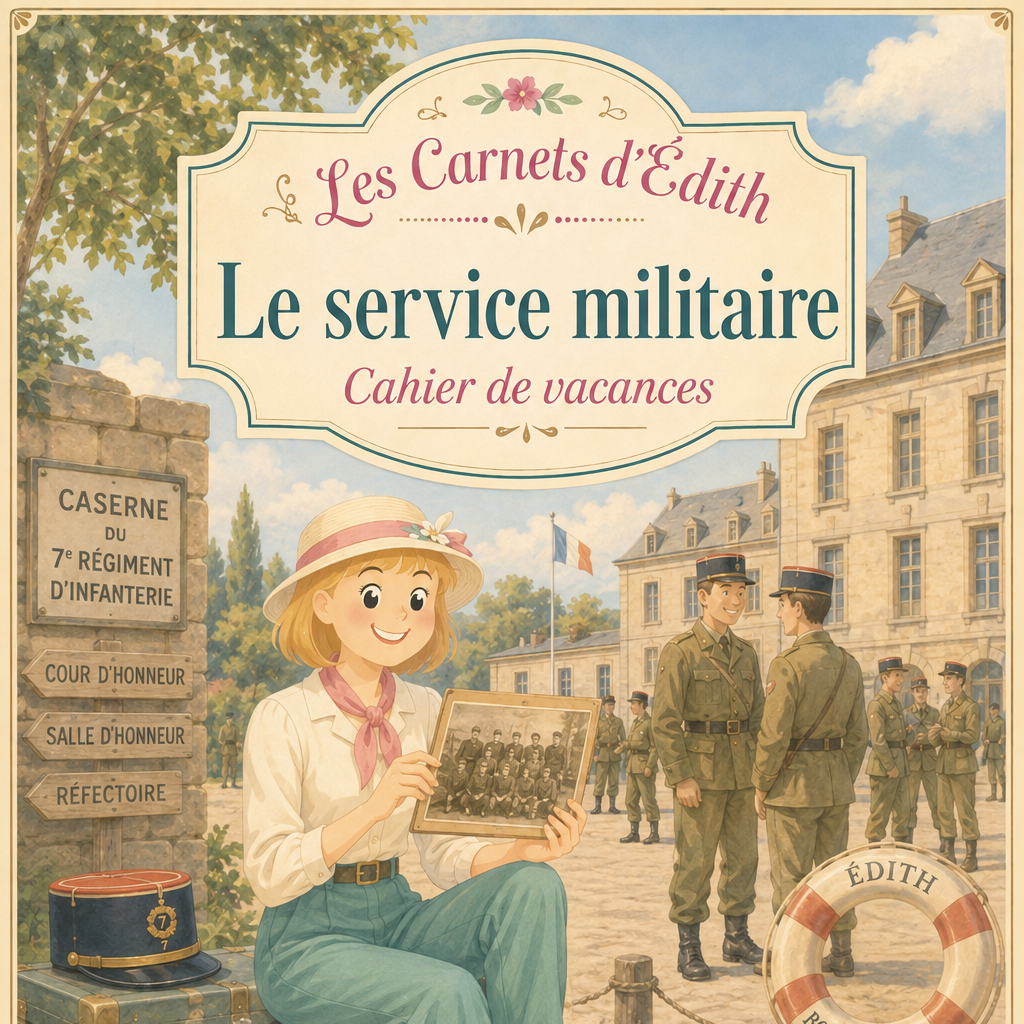



🖼️ Revive the Memories
Discover E-Memories and SCARLETT to support reminiscence, and the "Therapeutic Reminiscence" training for caregivers and professionals.
Frequently Asked Questions
It is an approach that involves deliberately evoking old memories — using photos, music, objects, or smells — to stimulate memory and language, soothe, and strengthen the sense of identity. It is widely used among elderly people and those with neurocognitive disorders.
Primarily for seniors, especially those with memory disorders (Alzheimer's disease and related dementias). But it is beneficial at any age: it is also a beautiful moment of transmission between generations.
Yes, because old memory is often preserved for a long time, even when recent memory is affected. Reminiscence relies on these memories to reopen access to words and emotions. It is recognized for reducing anxiety and improving mood, without claiming to stop the disease.
Start with a photo album or songs from their youth, in a calm moment. Ask open questions, listen without correcting, and keep the session short. A memory box and the E-Memories app greatly facilitate implementation.
No: a loved one can certainly offer reminiscence moments. However, for very fragile individuals or in facilities, it is advisable to rely on a trained professional, who will adapt the aids and ensure emotional well-being. A dedicated training exists for this.
Did this content help you? Support DYNSEO 💙
We are a small team of 14 people based in Paris. For 13 years, we have been creating free content to help families, speech therapists, care homes and healthcare professionals.
Your feedback is the only way we know if our work is useful. A Google review helps us reach other families, caregivers and therapists who need it.
One action, 30 seconds: leave us a Google review ⭐⭐⭐⭐⭐. It costs nothing, and it changes everything for us.
