Behavioral Intervention for Psychologists Specializing in Autism
Discover the reference behavioral approaches - ABA, ESDM, adapted CBT - and the digital tools for quality psychological support.
Dans cet article
The psychologist specializing in autism plays a strategic role in supporting individuals with ASD. Whether working in neuropsychology, developmental psychology, or clinical psychology, their expertise covers diagnosis, skills assessment, implementation of behavioral interventions, psychological support, and parental guidance. This guide presents the reference behavioral approaches, assessment tools, and intervention strategies for evidence-based psychological practice.
🧠 The central role of the psychologist in supporting ASD
The psychologist is often the first professional consulted when autism is suspected. Their role in the diagnostic process is crucial: they administer psychometric and neuropsychological tests that help characterize the individual's profile, identify strengths and difficulties in each cognitive domain, and contribute to the development of the diagnosis in collaboration with other professionals on the multidisciplinary team.
Beyond diagnosis, the psychologist is involved in the implementation and supervision of intervention programs. They define therapeutic goals based on the evaluated profile, choose the most appropriate approaches, supervise field workers, and regularly assess the effectiveness of interventions. This coordinating position requires advanced skills in behavior analysis, intervention techniques, and program evaluation.
Diagnosis and assessment
Neuropsychological assessments, cognitive tests, and adaptive evaluations to characterize the individual profile
Intervention and supervision
Designing programs, choosing approaches, supervising teams, and evaluating results
Parental guidance
Supporting families, sharing strategies, and providing psychological support for caregivers
The psychological support of autistic individuals themselves is often an underestimated dimension of practice. Autistic individuals, especially those without intellectual disabilities, exhibit high rates of anxiety, depression, and self-esteem difficulties. The trained psychologist knows how to adapt their therapeutic approaches to the cognitive and communicative particularities of ASD to provide effective and accessible psychological support.
📊 ABA: reference approach and certifications
Applied Behavior Analysis (ABA) is the most documented and recommended approach by health authorities for supporting autistic individuals. Based on the principles of operant conditioning and social learning, it offers a rigorous methodological framework for analyzing behaviors, understanding their functions, and implementing targeted interventions.
Professional certifications
The field of ABA has an international certification system managed by the Behavior Analyst Certification Board (BACB). Psychologists wishing to specialize can aim for the BCBA (Board Certified Behavior Analyst) certification, which requires a master's degree, specific courses, and hours of practical supervision. This internationally recognized certification attests to an advanced level of expertise in applying the principles of ABA.
In France, several universities and training organizations offer specialization programs in ABA: DU (University Diplomas), certifying continuing education, and supervised programs. The psychologist must choose training provided by trainers who are themselves certified and engage in regular supervision to maintain the quality of their practice.
The components of modern ABA
- Discrete Trial Teaching (DTT): structured learning in short sequences with immediate reinforcement, tailored to skills that require intensive practice
- Natural Environment Teaching (NET): leveraging everyday situations to create motivating and contextualized learning opportunities
- Functional Analysis: identifying antecedents and consequences that maintain a behavior to propose targeted interventions
- Verbal Behavior (VB): an approach to language teaching based on the functions of communication rather than on form
- Pivotal Response Training (PRT): targeting pivotal behaviors that lead to cascading improvements in many areas
💡 Ethical and respectful ABA
Modern ABA has significantly evolved from its historical versions. The current approach prioritizes positive reinforcement, respects the preferences and interests of the individual, integrates non-problematic autistic behaviors as part of the person's identity, and rejects any form of punishment or coercion. The psychologist trained in current practices knows how to balance methodological rigor and respect for the individual.
💭 CBT adapted for autism
Cognitive Behavioral Therapy (CBT) is an effective therapeutic approach for treating anxiety, depression, and emotional difficulties that frequently accompany autism. However, its application to autistic individuals requires significant adaptations that only specialized training can master.
The adaptations concern several dimensions. Communication must be more concrete and visual, with significant use of illustrated materials to explain abstract concepts such as automatic thoughts or emotions. Metaphors, often used in traditional CBT, should be replaced with concrete and personalized examples. The cognitive component (identifying and restructuring thoughts) may require significant preparatory work on recognizing and naming emotions.
CBT programs specific to ASD
Several CBT programs have been specifically adapted for autistic individuals. The "Exploring Feelings" program by Tony Attwood, the "Cat-Kit," and programs based on social skills groups use visual supports, structured role-playing, and social scenarios to teach emotional and social skills. The psychologist trained in these programs has structured and validated materials for their intervention.
⚠️ Do not apply classic CBT to autism
Applying CBT without adaptation to autistic individuals can be ineffective or even counterproductive. Difficulties in theory of mind, frequent alexithymia, and literal thinking style require adjustments that cannot be improvised. Specialized training allows the psychologist to master these adaptations and to offer a truly effective CBT for their autistic patients.
🎲 The Denver Model (ESDM): reference early intervention
The Early Start Denver Model is an early intervention program that combines the principles of ABA with a developmental and relational approach. Designed for very young autistic children (12 to 48 months), it uses play and natural social interactions as vectors for learning. The psychologist trained in ESDM intervenes in the crucial early years of development with an intensive program that simultaneously targets communication, cognition, motor skills, and social skills.
Training in ESDM is structured in several levels. The first level allows the professional to understand the principles of the model and to apply the basic techniques. Advanced levels include therapist certification and the ability to train other professionals. This rigorous training ensures fidelity to the model, which is essential for its effectiveness.
The results of studies on ESDM are among the most encouraging in the scientific literature on autism. Significant improvements have been documented in the areas of language, cognition, adaptive behavior, and brain activity after an intensive two-year intervention. These results highlight the crucial importance of early intervention and the training of professionals who provide it.
📋 Specialized neuropsychological assessment
The neuropsychological assessment of autistic individuals is a specialized skill that requires in-depth training. The psychologist must master the appropriate assessment tools, know how to administer them in conditions that respect the specifics of ASD, and interpret the results while considering specific cognitive profiles.
Cognitive assessment batteries (WISC-V, Leiter-3, NEPSY-II) must be supplemented by tools specific to ASD (PEP-3, Vineland-II, Sensory Profile) to obtain a complete picture. The trained psychologist knows that overall scores can mask significant heterogeneity between domains and prioritizes a thorough qualitative analysis of profiles rather than a limited interpretation based on numbers.
🎮 COCO THINKS and COCO MOVES: stimulation and monitoring tool
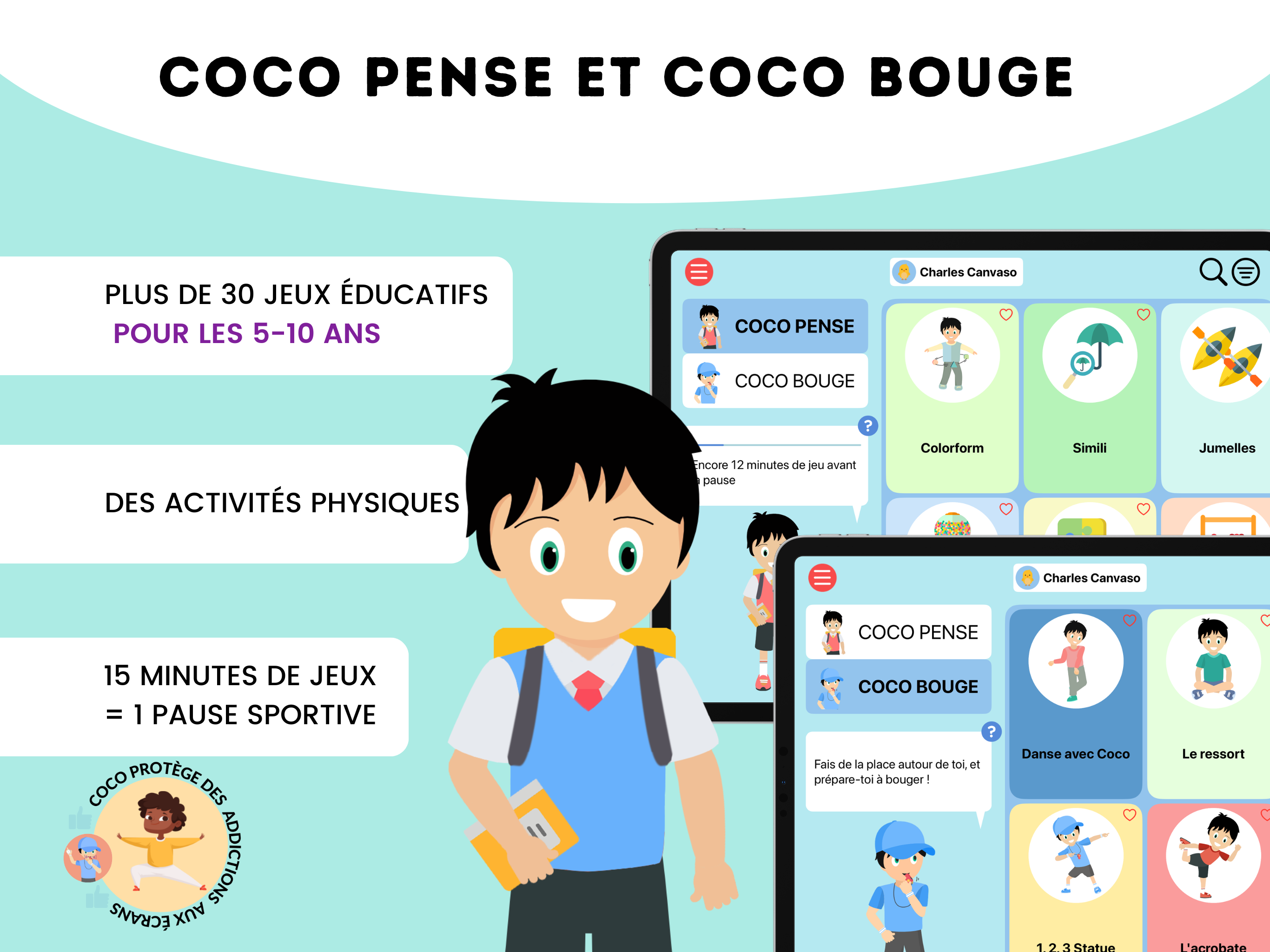
The COCO THINKS and COCO MOVES program from DYNSEO is a valuable tool for psychologists supporting autistic children aged 5 to 10 years. It combines targeted cognitive stimulation and physical activities with very suitable levels, allowing for use both in sessions and as a complement at home.
A complement to behavioral interventions
The COCO games target cognitive functions often worked on in psychological sessions: attention, memory, mental flexibility, reasoning, and visuospatial functions. The psychologist can use these games to informally assess the child's abilities, propose playful training between sessions, and monitor performance over time. Alternating between cognitive and physical activities promotes regulation and optimizes learning.
🎯 Discover COCO THINKS and COCO MOVES
A cognitive stimulation program with very suitable levels, ideal for complementing psychological interventions for autistic children.
Discover the COCO program →👨👩👧 Parental guidance: an essential skill
Parental guidance is a fundamental aspect of the psychologist's role in supporting autism. Parents are the first responders to their child, and their involvement in the therapeutic program is a determining factor for success. The trained psychologist knows how to convey educational and behavioral strategies in an accessible manner, support parents during difficult times, and help them become competent and confident partners.
Parental guidance includes teaching basic behavioral techniques (positive reinforcement, structuring the environment, managing challenging behaviors), providing emotional support in the face of parental stress, and assisting in decision-making regarding educational and therapeutic pathways. The psychologist must adapt their explanations to the parents' level of understanding and propose practical exercises that allow for gradual application.
The DYNSEO guides for supporting autistic children and supporting autistic adults are valuable resources to recommend to families to complement guidance sessions.
🎓 Training with DYNSEO
DYNSEO offers a certified Qualiopi training “Supporting a child with autism: keys and solutions for everyday life” that complements the psychologist's specialization by providing a comprehensive overview of daily support strategies.

🎓 Enrich your psychological practice
Certified Qualiopi training available online, complementary to academic specializations in behavioral intervention.
Discover the training →🎯 Conclusion
Advanced training in behavioral intervention is essential for psychologists who wish to provide cutting-edge support to autistic individuals. Mastery of ABA, adapted CBT, and ESDM, combined with the use of digital tools like COCO THINKS and COCO MOVES, allows for evidence-based and personalized interventions for each profile.
The trained psychologist is a key player in care coordination, progress assessment, and family support. Their specialization in autism enables them to play a referent role within multidisciplinary teams and contribute to the continuous improvement of the quality of support.
Specialize to intervene better:
Psychological expertise at the service of autism.
Did this content help you? Support DYNSEO 💙
We are a small team of 14 people based in Paris. For 13 years, we have been creating free content to help families, speech therapists, care homes and healthcare professionals.
Your feedback is the only way we know if our work is useful. A Google review helps us reach other families, caregivers and therapists who need it.
One action, 30 seconds: leave us a Google review ⭐⭐⭐⭐⭐. It costs nothing, and it changes everything for us.