Cognitive Assessment Tools for Autism: Complete Guide
Discover the tests, protocols, and digital tools for cognitive assessment specifically adapted for autistic individuals for personalized and effective monitoring.
Dans cet article
Cognitive assessment is the foundation of any quality support for autistic individuals. It allows for a precise portrait of cognitive strengths and difficulties, defines relevant intervention goals, and objectively measures progress. However, assessing the cognitive functions of an autistic person presents specific challenges that require adapted tools and a rigorous methodology. This guide details the available tools, recommended protocols, and digital solutions for a respectful and reliable assessment.
🔍 Specific challenges of cognitive assessment in autism
Assessing the cognitive functions of an autistic person cannot be done in the same way as with the neurotypical population. Sensory particularities, communication difficulties, oppositional or withdrawn behaviors, and atypical cognitive profiles can significantly skew results if the professional does not adapt their approach. This is why specific training is essential to obtain reliable and actionable results.
The first challenge is that of cooperation. Many autistic individuals, especially children, may refuse to participate in a standardized assessment situation perceived as unmotivating or anxiety-inducing. The trained professional knows how to create a reassuring environment, use the individual's specific interests as a motivational lever, and adapt the pace of assessment to individual needs.
Sensory barriers
The assessment environment must be adapted to minimize sensory interferences that could alter performance
Communicative barriers
Verbal instructions must be simplified, accompanied by visual supports, and adapted to the level of understanding
Attention barriers
Sessions must be broken down, and the pace adapted to maintain engagement and the reliability of results
Another major challenge concerns the interpretation of results. The cognitive profiles of autistic individuals are often very heterogeneous, with peaks of skills in certain areas and significant lows in others. A global score may mask this heterogeneity and lead to erroneous conclusions. The trained professional knows how to analyze the profile as a whole, identify exploitable strengths and priority needs, and not limit themselves to decontextualized numerical scores.
The underestimation bias
One of the most common risks is underestimating the cognitive abilities of an autistic person due to their communication or behavioral difficulties. A child who does not verbally respond to a question may very well have understood the question and know the answer but may not be able to express it under the conditions of the assessment. Training helps develop vigilance against this bias and propose alternative response modalities (pointing, showing, using a digital support).
📊 Standardized assessment tools adapted for ASD
Several standardized assessment tools are particularly recommended for assessing autistic individuals. Each of them requires specific training to be administered correctly and interpreted meaningfully. Here are the main instruments that professionals should master.
General cognitive assessments
- WISC-V (Wechsler Intelligence Scale for Children): comprehensive assessment of intellectual functioning with distinct indices for each cognitive area. For autistic children, analyzing the dispersions between indices is particularly informative and often reveals a characteristic profile with strengths in perceptual reasoning and weaknesses in processing speed
- Leiter-3: non-verbal intelligence test, particularly suitable for autistic individuals with little or no language. It allows for assessing reasoning without linguistic bias and offers results that are more representative of actual cognitive potential
- K-ABC-II (Kaufman Assessment Battery): cognitive assessment that distinguishes sequential and simultaneous processes, providing complementary insights into the learning styles of the autistic individual
- NEPSY-II: neuropsychological battery assessing attentional, executive, language, memory, and visuo-spatial functions. Particularly useful for creating a detailed cognitive profile
Assessments specific to ASD
- PEP-3 (Psychoeducational Profile): developmental assessment specifically designed for autistic children, identifying acquired, emerging, and unacquired skills in each area. It is a valuable tool for developing the individualized educational program
- AAPEP (Psychoeducational Profile for adolescents and adults): extension of the PEP for older individuals, assessing functional skills related to autonomy and professional integration
- Vineland-II (adaptive behavior scale): assessment through interviews with relatives, measuring adaptive skills in four essential areas: communication, daily living, socialization, and motor skills
- Dunn's Sensory Profile: questionnaire assessing sensory processing particularities, essential for understanding sensory reactions and adapting the environment
💡 Combine tools for a complete picture
No single tool can provide a complete picture of an autistic person's skills. Best practice involves combining several complementary instruments: a general cognitive assessment, a specific developmental assessment, a tool for measuring adaptive behavior, and a sensory assessment. This multimodal approach allows for a comprehensive and nuanced view of the individual's functioning.
🧠 Understanding cognitive profiles in ASD
Autistic individuals often present cognitive profiles that significantly differ from the neurotypical population. Understanding these particularities is essential for the professional who evaluates and supports, as they condition the most effective intervention and learning strategies.
Common cognitive strengths
Many autistic individuals exhibit remarkable abilities in certain cognitive areas. Visual memory, detail processing, pattern recognition, and systematic reasoning are often strong points. These strengths are valuable levers for learning and should be identified during assessment to be utilized in the support plan.
Common cognitive difficulties
Mental flexibility
Difficulty changing strategies or perspectives, tendency towards cognitive rigidity and perseverative behaviors
Executive functions
Difficulties in planning, organization, and inhibition that impact daily autonomy and learning
Social cognition
Difficulty understanding others' mental states, interpreting emotions, and adapting behavior to social context
Cognitive assessment should precisely map these strengths and difficulties for each person. It is based on this mapping that intervention goals will be defined and support strategies developed. Digital tools for cognitive stimulation, such as those offered by DYNSEO, then allow for specific work on the functions identified as priorities, with objective monitoring of progress.
🏠 Functional assessment: beyond tests
Functional assessment complements standardized tests by observing the person in their real-life environments. It measures the concrete impact of cognitive particularities on daily autonomy, academic learning, social relationships, and participation in leisure activities. For autistic individuals, this dimension is particularly important as transferring skills from one context to another can be challenging.
Functional assessment involves direct observations in natural settings (school, home, leisure place), interviews with relatives and professionals, and the use of structured observation grids. The trained professional knows how to cross-reference these different sources of information to obtain a realistic and comprehensive view of the person's abilities and needs.
The domains of functional assessment
- Personal autonomy: hygiene, dressing, eating, managing personal affairs
- Functional communication: expressing needs, understanding instructions, participating in conversations
- Social skills: interactions with peers, respecting social rules, managing conflicts
- Domestic autonomy: participating in household tasks, managing money, organizing time
- Academic skills: reading, writing, calculating, problem-solving
- Leisure and interests: ability to engage in varied and socially integrated leisure activities
💻 Digital assessment and monitoring tools
Digital technologies have revolutionized cognitive assessment possibilities by offering tools that complement traditional standardized batteries. Cognitive stimulation applications, in particular, allow for continuous monitoring of performance that significantly enriches the data collected during one-off assessments.
The major advantage of digital tools lies in their ability to collect objective data in real-time: response times, success rates, error patterns, progress curves. These data, analyzed over time, allow for identifying trends that one-off assessments do not always capture. Furthermore, the digital environment reduces anxiety related to the assessment situation, which can improve the reliability of results for autistic individuals.
⚠️ The digital tool does not replace clinical evaluation
Digital data is a valuable complement to clinical evaluation, but it does not replace it. Direct observation, qualitative analysis of the strategies used, and consideration of the emotional and environmental context remain irreplaceable. The trained professional knows how to integrate digital data into a comprehensive evaluation approach and interpret it with discernment.
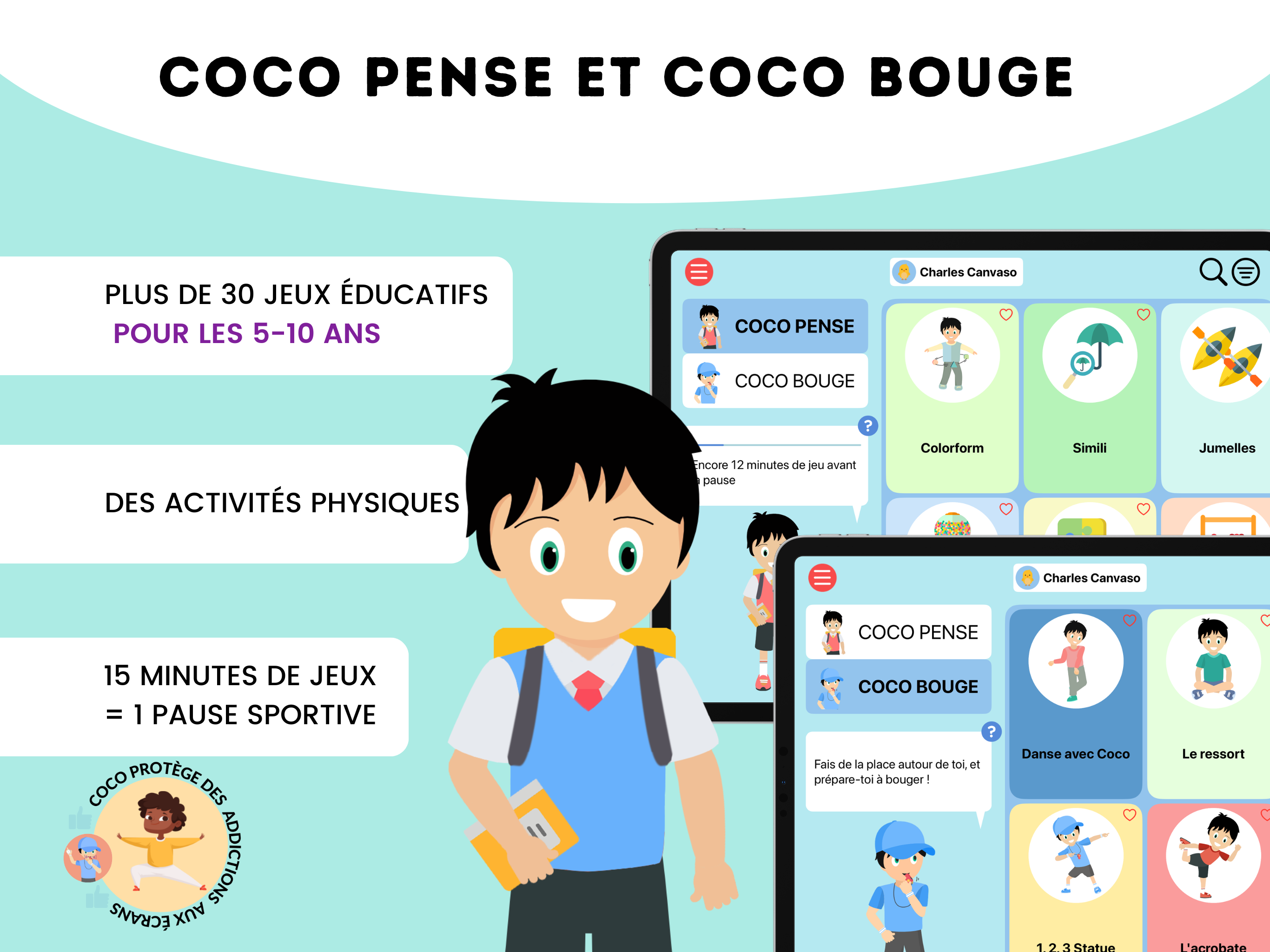
🎮 COCO THINKS and COCO MOVES: evaluate and stimulate continuously
The COCO THINKS and COCO MOVES program from DYNSEO offers professionals a valuable tool that combines cognitive stimulation and performance tracking. Designed for children aged 5 to 10, it features games specifically targeting essential cognitive functions, with very suitable levels allowing for a progressive assessment of skills.
A tool for continuous evaluation
Unlike one-time assessments, COCO allows for the collection of data on the child's cognitive performance over time. The professional can observe the evolution of scores in each domain (attention, memory, executive functions, reasoning) and identify significant trends. This continuous evaluation is particularly valuable in the context of ADHD, where progress can be slow and difficult to perceive without objective measures.
Finely graded levels for precise evaluation
The multiple levels of difficulty offered by COCO allow for precise positioning of the child's level in each cognitive domain. By offering games of increasing difficulty, the professional can identify the child's "ceiling" of competence and determine the zone of proximal development, where intervention will be most effective. This dynamic approach to evaluation is perfectly aligned with current recommendations.
The alternation between cognitive activities (COCO THINKS) and physical activities (COCO MOVES) also allows for the assessment of the impact of motor skills on cognitive performance, a dimension particularly relevant for children with autism, where movement can promote regulation and attention.
🎯 Discover COCO THINKS and COCO MOVES
A cognitive stimulation program with very suitable levels, allowing for the evaluation and stimulation of cognitive functions in autistic children in a playful and continuous manner.
Discover the COCO program →📈 Longitudinal follow-up protocols
The longitudinal follow-up of progress is an essential aspect of supporting autistic individuals. It allows for documenting the evolution of skills over the long term, adjusting interventions based on results, and communicating objectively with families and care pathway partners. Implementing a structured follow-up protocol requires training that covers the selection of relevant indicators, the frequency of evaluations, and data analysis.
Recommended frequency of evaluations
- In-depth initial evaluation: upon entering the system, combining standardized tests, functional assessment, and observations in a natural environment
- Intermediate assessments (every 6 months): re-evaluation of priority areas to measure progress and adjust the intervention plan
- Continuous follow-up (weekly/monthly): data collection via digital tools and observation grids for close monitoring of developments
- Comprehensive annual assessment: overall re-evaluation to review the entire pathway and redefine objectives
🎓 Training with DYNSEO
DYNSEO offers a certified Qualiopi training "Supporting a child with autism: keys and solutions for everyday life" that addresses aspects related to the evaluation and follow-up of children with ADHD. This training is accessible to all professionals involved in supporting autistic individuals.

To deepen your knowledge and discover practical support strategies, also consult our dedicated guides: the guide for supporting autistic children and the guide for supporting autistic adults.
🎯 Conclusion
Training in cognitive evaluation tools is an essential investment for any professional supporting autistic individuals. A rigorous, adapted, and multidimensional evaluation forms the foundation of quality support. By combining standardized tools, functional evaluation, and digital tools like COCO THINKS and COCO MOVES, professionals have a comprehensive arsenal to understand, stimulate, and track the cognitive development of autistic individuals.
Technology does not replace clinical expertise, but it significantly enriches it. Training in these tools means equipping oneself to offer support based on objective, personalized, and evolving data.
Evaluate to better support:
Rigor in the service of kindness.
Did this content help you? Support DYNSEO 💙
We are a small team of 14 people based in Paris. For 13 years, we have been creating free content to help families, speech therapists, care homes and healthcare professionals.
Your feedback is the only way we know if our work is useful. A Google review helps us reach other families, caregivers and therapists who need it.
One action, 30 seconds: leave us a Google review ⭐⭐⭐⭐⭐. It costs nothing, and it changes everything for us.