About Course
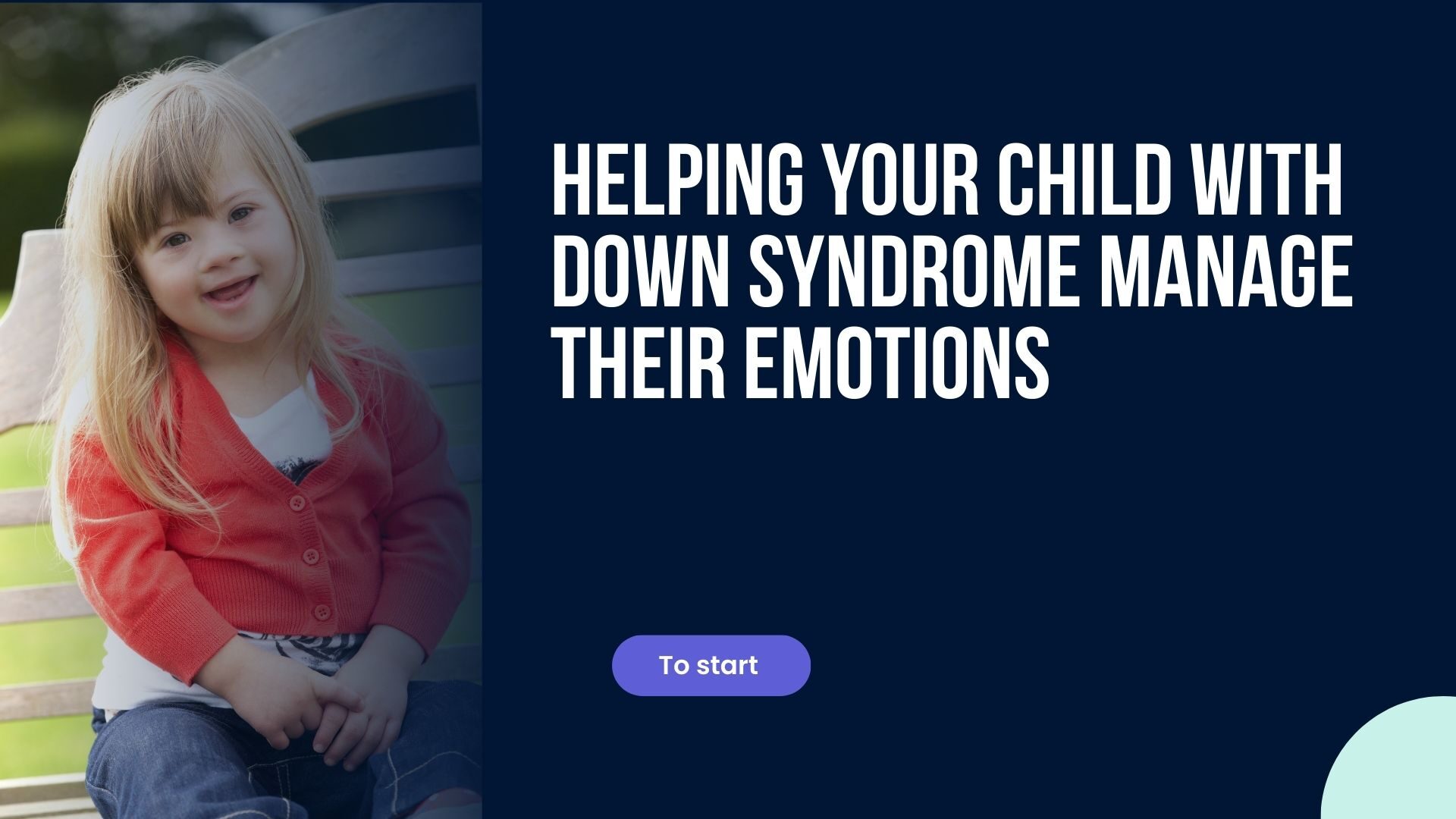
Helping your child with Down syndrome manage their emotions
Supporting daily anger, tears, frustrations, and hypersensitivity
Understand intense emotions and build regulation skills
Practical tools and routines to use at home
Target audience
Parents, grandparents, family caregivers, and relatives of children with Down syndrome who wish to better understand their intense emotional reactions and acquire concrete tools to support them with serenity.
Duration
2 to 3 hours of training divided into 5 progressive modules
Format
100% online training, accessible from your computer or tablet. You progress at your own pace, whenever you wish, without time constraints.
What you will learn
This training allows you to understand why your child experiences their emotions with such intensity and how to help them gradually develop their emotional regulation skills. You will learn to identify the triggers of crises, recognize the warning signs to intervene in time, and implement appropriate visual tools and routines.
Through concrete explanations and immediately applicable strategies, you will discover how to transform difficult moments into opportunities for learning and bonding.
By the end of this training, you will be able to:
- Understand the neurological reasons for emotional intensity in children with Down syndrome (development of the prefrontal cortex, language delays, sensory hypersensitivity)
- Identify the 6 common triggers of crises: fatigue, unexpected events, misunderstandings, transitions, sensory overload, frustrations related to limitations
- Recognize the warning signs (physical, behavioral, vocal) to intervene before a crisis erupts
- Create appropriate visual supports: emotion cards, emotional thermometer, emotion wheel, pictograms, needs cards
- Build a simple emotional vocabulary with the 4 fundamental emotions and link them to bodily sensations
- Establish emotional release routines: calm corner, breathing techniques, physical releases, anger box
- Maintain a firm yet reassuring framework during a crisis: appropriate posture, calm voice, simple phrases
- Use calming techniques: breathing, repetitive movements, deep pressure, positive isolation
- Manage the post-crisis phase: recovery time, verbalization, reconstruction of the sequence, exploration of alternatives
- Value your child’s emotional efforts and celebrate small victories
- Create a predictable environment: visual schedules, transition rituals, stable spatial organization
- Anticipate difficult situations with social stories, a toolbox, and preparatory role-playing
Key takeaway
You will leave with concrete tools and strategies that can be applied at home starting tonight.
Bonus
Discovery of the COCO THINKS and COCO MOVES application, specially designed for children with Down syndrome to stimulate their cognitive and emotional abilities.
Course Content
Module 1 – Understanding Emotions in Children with Down Syndrome
-
Lesson 1: Why Emotions are Sometimes Intense
02:21 -
Lesson 2: Common Triggers
02:43 -
Lesson 3: Identifying Signs Before the Crisis
02:53
Module 2 – Helping the Child Express Their Emotions
Module 3 – Managing Crises and Frustrations
Module 4 – Developing Emotional Confidence
Module 5 – The DYNSEO Applications
Final quiz
Student Ratings & Reviews