About Course
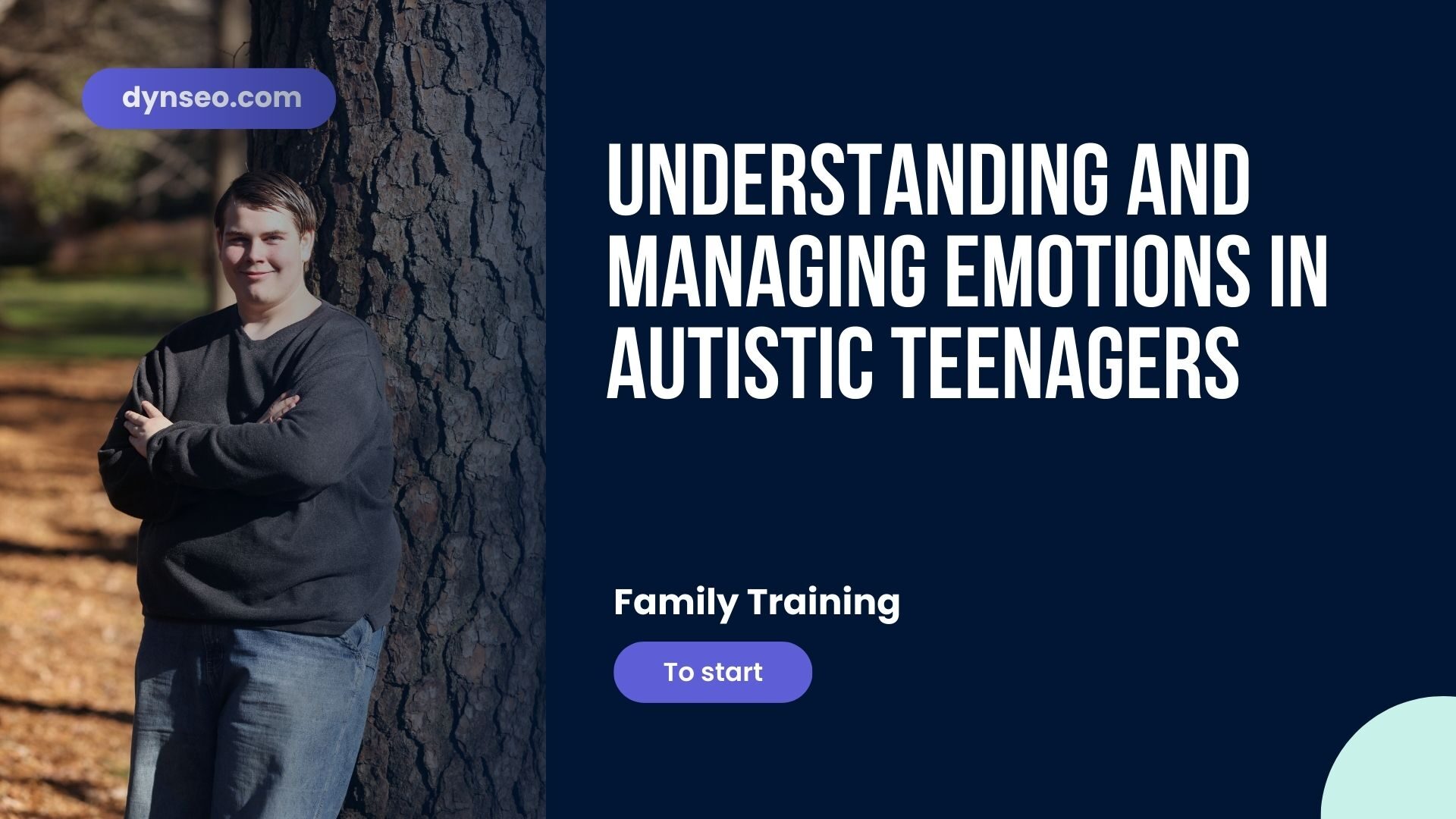
Understanding and managing emotions in autistic teenagers
Understanding neurodivergence, preventing burnout, and developing self-regulation
Strategies for school, home, and social life
Support your teen toward emotional independence
Target Audience
Parents, grandparents, and family caregivers of autistic teenagers (middle and high school students) who want to understand the specific challenges of autistic adolescence and support their teen towards emotional independence.
Duration
1 hour of training divided into 5 progressive modules
Format
100% online training, accessible from your computer or tablet. You progress at your own pace, whenever you wish, without time constraints.
Course Overview
This training allows you to understand autism as a neurodivergence and not as a defect to be corrected. You will discover the specific challenges of autistic adolescence: masking, autistic burnout, alexithymia, and emotional intensity amplified by puberty.
Through concrete strategies adapted to a teen’s life (middle school, high school, social life, home environment), you will learn to identify triggers, implement effective regulation techniques, and help your teenager communicate their needs and build their support network.
Learning Outcomes
- Understand autism as neurodivergence: a different functioning, not a defect
- Identify masking and its enormous cost: exhaustion, anxiety, loss of self-identity
- Recognize sensory peculiarities in adolescence: hypersensitivity and hyposensitivity amplified by puberty
- Understand alexithymia: difficulty identifying and naming emotions
- Spot signs of autistic burnout: regression of skills, collapse of masking, frequent meltdowns/shutdowns
- Identify the 7 typical triggers: sensory overload, social interactions, changes, academic load, lack of recovery, injustice, social pressure
- Use the self-observation tool: context, bodily signals, reaction, underlying need
- Apply the spoon theory to manage energy rather than time
- Implement strategies for the school environment: PAP/PPS, accommodations, quiet places, breaks
- Master sensory regulation techniques: deep pressure, vestibular stimulation, fidgets, environmental modulation
- Use adapted cognitive techniques: controlled breathing, crisis script, situation exit, delay technique
- Understand and manage meltdowns and shutdowns: two forms of collapse, what helps during and after
- Arrange an adapted home environment: bedroom as a sensory sanctuary
- Help the teen communicate their needs: to parents, teachers, friends, healthcare professionals
- Build a support network: autistic peers, specialized professionals, ally adults, crisis plan
You will leave with concrete tools
- Self-observation journal
- Personalized crisis script
- Strategies for middle/high school
- Sensory and cognitive regulation techniques
- Guide to arrange the environment
Bonus
Discovery of the COCO app with its mandatory physical breaks every 15 minutes, and other useful digital tools (meditation apps, mood tracking, white noise, routines).
Course Content
Module 1 – Understanding Autism in Adolescence
-
Lesson 1: Autism, a neurodivergence
-
Lesson 2: Sensory and Emotional Particularities in Adolescence
-
Lesson 3: Autistic Burnout in Adolescents
Module 2 – Identify Triggers & Prevent Overflows
Module 3 – Regulation Techniques for Adolescents
Module 4 – Building a Suitable Environment and Communicating Your Needs
Module 5 – The JOE application from DYNSEO
Final quiz
Student Ratings & Reviews