Support groups and social support: breaking the isolation of patients and their loved ones
In the face of illness or disability, isolation often sets in silently — for the patient as well as for their loved ones. Yet, talking, sharing, and feeling understood changes everything. This DYNSEO guide explores support groups and social support: why they are essential, how they help, and how to access them.
Dans cet article
When chronic illness, disability, or loss of autonomy enters a life, they not only affect the body: they also disrupt the relational fabric, morale, and sense of belonging — for the patient as well as for their surroundings. Gradually, often without realizing it, isolation sets in. One gives up outings due to fatigue, embarrassment, or lack of time; friends drift away, uncomfortable or helpless; caregivers exhaust themselves in silent solitude, focused on the sick person to the point of forgetting themselves. This isolation is not trivial: it exacerbates suffering, fuels anxiety and depression, and degrades the quality of life for all. Yet, a simple and powerful response exists: social support, and in particular support groups. Being able to express what one is experiencing, being listened to without judgment, meeting others going through a similar ordeal, exchanging practical advice, and above all feeling less alone: all of this has a profoundly restorative effect, both on morale and on the ability to cope. This guide explores in depth support groups and social support as levers to break the isolation of patients and their loved ones: what they are, why they are so beneficial, who they are for, how they work, and how to access them. Because no one should go through illness or disability in solitude — and because breaking isolation is one of the most valuable supports one can offer, and give to oneself.
1. Understanding isolation in the face of illness and disability
1.1 An isolation that sets in silently
Social isolation related to illness or disability is a frequent, profound, and yet often invisible phenomenon. It rarely occurs all at once: it gradually sets in, through small successive renunciations, until it becomes a daily reality. For the patient, chronic illness, fatigue, treatments, sometimes invisible symptoms, loss of mobility or autonomy, embarrassment in the eyes of others, gradually lead to withdrawal: one goes out less, sees fewer people, gives up activities, distances oneself from the social life that was once theirs.
On the side of the surroundings, the mechanism is just as insidious. Caregivers, preoccupied with the support, the time, and the energy it demands, often end up sacrificing their own social life, their leisure, their relationships. They lock themselves into a daily life centered on the sick person, sometimes out of devotion, sometimes out of guilt, sometimes simply out of exhaustion. And around them, friends, extended family, uncomfortable in the face of illness or unsure of what to say, sometimes drift away — not out of indifference, but out of clumsiness or fear. The result is the same: an increasing isolation, experienced in silence, which adds to the suffering of illness the pain of solitude.
1.2 The consequences of isolation on health and morale
Isolation is not just sad: it has real and documented consequences on physical and mental health. Psychologically, prolonged solitude feeds anxiety, lowers morale, leads to a loss of self-esteem, and promotes depression. The feeling of being alone in facing a trial, of not being understood, of no longer having a place in society, is profoundly harmful. For both the patient and the caregiver, isolation amplifies distress and reduces the ability to cope.
Isolation also has effects on physical health and the evolution of the situation. An isolated person tends to take less care of themselves, to maintain fewer stimulating activities, to withdraw more — which can accelerate the loss of autonomy and deconditioning. For caregivers, isolation is a major factor of exhaustion: without support, without space to breathe and share, the risk of "caregiver burnout" increases significantly. Conversely, social support and connection are recognized as powerful protective factors: they support morale, strengthen coping ability, reduce stress, and improve quality of life. Breaking isolation is therefore not just a pleasant "extra": it is a real issue of health and well-being, for the patient as well as for their loved ones.
👉 A central message of this guide: isolation is not a fatality, and breaking solitude is a form of care in its own right. Social connection, sharing, and the feeling of being understood are not just simple comforts: they are recognized protective factors for morale, health, and the ability to endure hardship. Seeking support is not an admission of weakness; it is an act of care towards oneself.
1.3 Why it is so difficult to ask for help
If social support is so beneficial, why do so many people remain isolated? Because asking for help and seeking support face many obstacles that it is important to understand in order to overcome them. Guilt, first: many caregivers feel that they "do not have the right" to complain or think of themselves while their loved one is the one who is ill. Modesty and fear of others' judgment follow: talking about one's illness, difficulties, and emotions is intimate and sometimes experienced as exposure.
There is also a lack of awareness of existing resources (many simply do not know that support groups and support services exist near them), a lack of time and energy (paradoxically, those who need it most are often the most exhausted), and sometimes the belief that "one must be strong" and manage alone. Finally, some people fear that talking will "stir up" painful emotions. This guide aims to remove these obstacles, as they deprive many patients and caregivers of support that could transform their daily lives. Recognizing that one needs support and daring to seek it is neither a failure nor selfishness: it is a healthy, courageous, and beneficial approach — for oneself and, indirectly, for the person being supported.
2. Support groups: a space to express and share
Among the forms of social support, support groups hold a special place. The table below summarizes what they provide and what distinguishes supportive assistance from maintained isolation.
✗ What isolation produces
- The feeling of being alone in facing this hardship
- The silent rumination of difficult emotions
- The guilt of thinking of oneself (from the caregiver's side)
- Exhaustion without respite or space to breathe
- The impression of not being understood
- Withdrawal, anxiety, and a drop in morale
✓ What a support group brings
- Meet people who are going through a similar ordeal
- Express emotions in a safe and non-judgmental space
- Feel understood, legitimate, less alone
- Exchange practical advice and resources
- Regain confidence and find momentum
- Break out of isolation and rebuild connections
2.1 What is a support group?
A support group is a space for exchange and listening that regularly brings together people facing a common situation — the same illness, the same disability, or the role of caregiver. In this context, everyone can express themselves freely about what they are experiencing, their emotions, their difficulties, their questions, and be listened to without judgment by people who understand because they are going through or have gone through a similar ordeal. Support groups can be led by a professional (psychologist, caregiver) or by peers, and organized by associations, care structures, establishments, or mutual aid collectives.
What makes a support group strong is precisely the meeting with "peers" — people who are experiencing the same thing. Where loved ones, even caring ones, cannot always understand from the inside what one is going through, members of a group share a common experience that creates immediate understanding and deep relief. One can say things there that one does not dare to say elsewhere, express emotions that are usually kept to oneself, without fearing to shock or burden others. The group offers a space of trust, confidentiality, and kindness, where speech flows freely. It is neither a group therapy in the strict sense nor a simple friendly café: it is a structured space for listening, sharing, and mutual support, whose benefits are recognized.
2.2 The concrete benefits of support groups
The benefits of support groups are multiple and profound. The first, fundamental, is to break the feeling of loneliness: discovering that one is not alone in facing this ordeal, that others feel the same emotions, the same difficulties, the same fears, is immensely relieving. This feeling of belonging and mutual understanding restores dignity and morale. The second benefit is emotional release: being able to put words to what one is experiencing, express emotions often kept to oneself (anger, fear, sadness, guilt, exhaustion), in a safe environment, lightens a considerable burden.
Groups also provide very concrete benefits: the exchange of information and practical advice (on procedures, assistance, daily tips, existing resources) drawn from the lived experience of other members, often more useful than many theoretical pieces of advice. They offer a model and hope: seeing how others cope, get through, and succeed, gives strength and strategies. They restore a social role and a sense of usefulness, especially when one can in turn help and support other members. Finally, they recreate social bonds and can be the starting point for new relationships. For caregivers in particular, the support group is a valuable space to unload their burden, be recognized in their role, and find the support they so desperately need but rarely allow themselves to seek.
⚠️ A complementary support, not a substitute for professional follow-up. Support groups and social support are powerful levers for well-being, but they do not replace medical follow-up or, when necessary, individual psychological support. In cases of significant suffering, deep distress, or depression, it is essential to consult a health professional (doctor, psychologist, psychiatrist). Social support complements the care pathway, never replaces it. If you are going through a very difficult time, do not hesitate to talk to a professional.
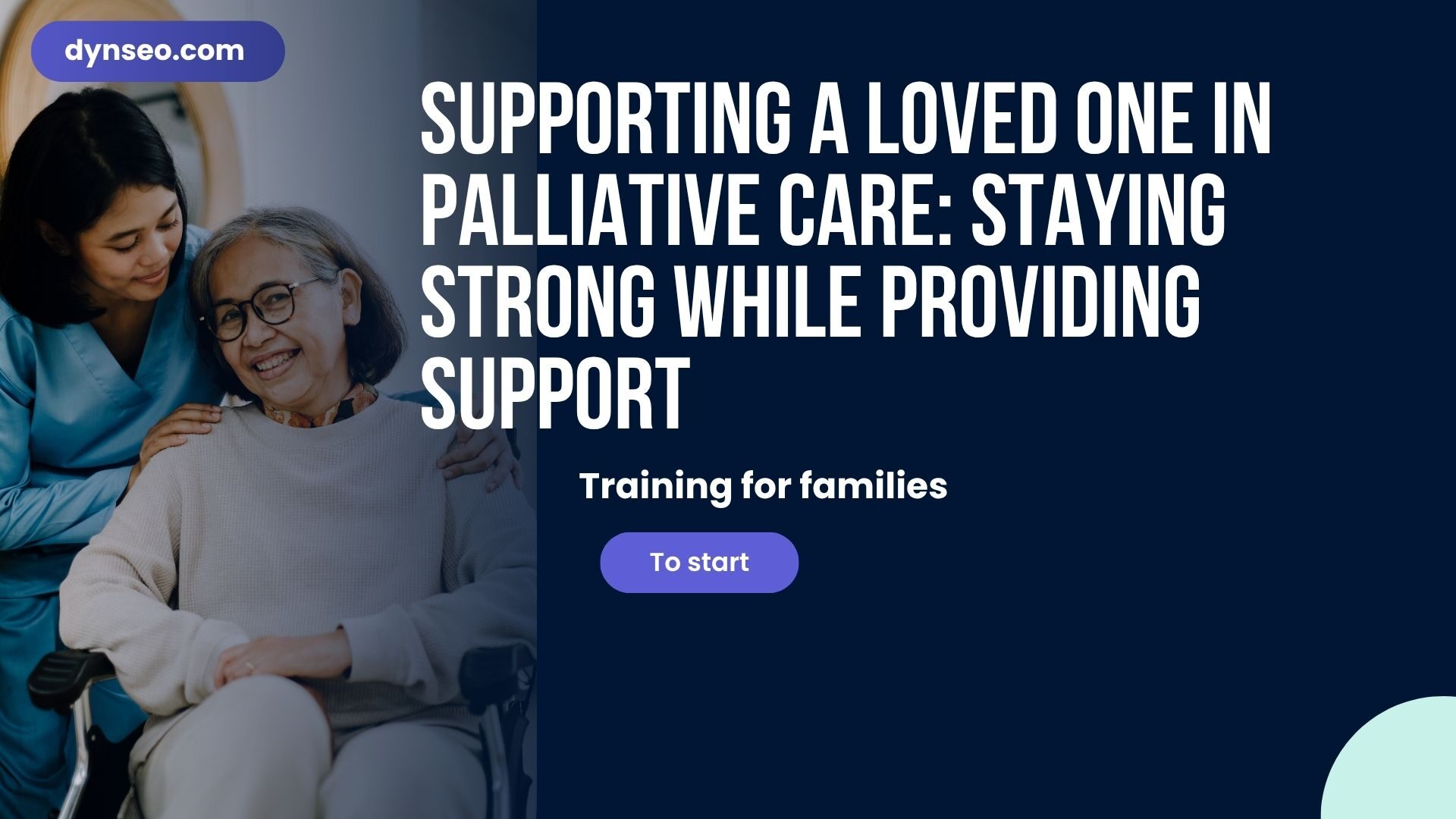
Support, assist, do not stay alone
Breaking isolation also involves understanding and having good references. DYNSEO's online training, certified Qualiopi, helps families and professionals better understand the disease, assist accurately, and take care of themselves. Accessible at your own pace, they usefully complement social support and support groups so that you no longer face the ordeal alone.
Discover the training →3. Who is social support for?
Social support and support groups are aimed at all people affected, closely or remotely, by illness, disability, or loss of autonomy. Patients themselves find a space to share their experiences, emotions, and strategies with people who understand them. Family caregivers — spouses, children, parents — find a rare place to unload their burden, be recognized, and supported in a role that is often invisible and exhausting. Extended family and friends can also find references to better support. And health and support professionals have every interest in knowing these resources to direct the people they assist.
Why is it important for patients, relatives, and professionals to know about and value social support? Because breaking isolation is everyone's business. When the patient dares to seek connection, when the caregiver allows themselves to be supported, when the surroundings encourage these steps, and when professionals actively direct towards existing resources, the circle of isolation breaks. Conversely, when everyone remains locked in their solitude out of guilt, modesty, or ignorance, suffering worsens in silence. Therefore, raising awareness, encouraging, and facilitating access to social support is a shared responsibility and one of the most effective and humane levers to improve the quality of life for patients and their loved ones.
🧑 Patients
Share experiences, break solitude, exchange advice and strategies with peers.
👪 Family caregivers
Unload their burden, be recognized and supported, break isolation and exhaustion.
👵 Friends & family
Better understand, better support, encourage support initiatives.
🩺 Health professionals
Know the resources to actively direct patients and caregivers.
🤝 Associations & volunteers
Animate, facilitate and bring to life spaces for speech and support.
4. The different forms of social support
4.1 A range of resources to know
Social support is not limited to speaking groups: there is a whole range of resources that it is valuable to know in order to find the one that corresponds to one's situation and preferences. In-person speaking groups, organized by associations, hospitals, care facilities, or collectives, offer the richness of direct contact. Online groups and forums allow for distance exchanges, without the constraint of travel — a major advantage for geographically isolated people, those with reduced mobility, or those who are very tired.
In addition to groups, other forms of support exist: patient and caregiver associations, specialized by illness or situation, which offer information, listening, support, and lasting connections; helplines, accessible at any time; individual psychological support, complementary to collective support; respite care for caregivers; adapted collective activities (workshops, physical or cultural activities) that recreate connections while doing good. The table below presents these different forms of support and what they provide, to help everyone orient themselves towards what suits them best.
| Form of support | What it provides | Particularity |
|---|---|---|
| In-person speaking group | Sharing, listening, and connection in direct contact | In-person |
| Online group/forum | Distance exchange, without travel constraints | Remote |
| Patient & caregiver associations | Information, listening, support, lasting connection | Specialized |
| Helplines | Confidential, accessible, and immediate listening | Phone |
| Individual psychological support | Personalized support, complementary to collective support | Individual |
| Adapted collective activities | Recreate connections through sharing enjoyable activities | Friendly |
4.2 An essential focus: specific support for caregivers
Among all forms of social support, that intended for family caregivers deserves special attention, as caregivers are often the great forgotten ones. Completely focused on the person they are supporting, they forget themselves, neglect their health and social life, and lock themselves into exhausting solitude. However, caregiver burnout is a real risk that threatens both their health and the quality of the support they can provide. Social support is, for them, a true lifeline.
Today, there are many systems specifically dedicated to caregivers: caregiver speaking groups, where one can share burdens and often unconfessable emotions (fatigue, anger, guilt, the need to take a break) with people who understand; caregiver cafés and friendly meeting places; support and respite platforms; training dedicated to caregivers; specialized listening lines. The status of caregiver is now recognized, and rights exist. The essential message that this guide wants to convey is that taking care of oneself and seeking support is not a betrayal of the sick loved one: it is, on the contrary, the condition for being able to support them in the long term, without collapsing. A supported, listened to, and not alone caregiver can accompany better and longer. Breaking the isolation of the caregiver is therefore beneficial for both them and the person they support.
5. Recreating connections in daily life: beyond groups
5.1 Maintaining social connections and shared moments
Breaking isolation does not only go through formal systems: it also plays out daily, in the way of actively maintaining social connections and shared moments. Maintaining, as much as possible, existing relationships, outings, visits, calls; daring to seek and accept support from one's surroundings; preserving enjoyable and social activities; and continuing to feel part of social life, despite illness: all of this is deeply protective, both for morale and health. Actively fighting against withdrawal, even in small ways, makes a real difference.
Shared moments, in particular, have immense value. Sharing an activity, a meal, a game, a memory, a fit of laughter, recreates connections and complicity, and reminds that the relationship exists beyond illness or the role of caregiver. For people with reduced mobility, who are very tired, or geographically isolated, digital tools can also help maintain connections: video calls with loved ones, online exchanges, shared activities at a distance. The challenge is not to let illness or disability reduce life to the sole dimension of care, and to continue to nourish what makes life worthwhile: relationships, pleasure, sharing. This maintenance of connection, day after day, is one of the most effective barriers against isolation.
5.2 Cognitive Stimulation as a Support for Connection
Beyond emotional support, shared activities and cognitive stimulation can also become valuable supports for connection, particularly between a patient and their loved ones, or within collective activities. Sharing a fun and stimulating activity creates a moment of complicity, pleasure, and connection, which elevates the relationship beyond mere caregiving. DYNSEO's cognitive stimulation applications can contribute to this. For seniors and elderly people, SCARLETT offers gentle and accessible cognitive stimulation, which can become a support for shared moments, at a respectful pace. For adults, CLINT provides varied and progressive stimulation.
These applications are obviously not a solution to isolation in themselves — nothing replaces human connection and social support. But they can be modest supports for connection: a pretext for a shared moment between a loved one and a patient, a common activity in a group or workshop, a time of intergenerational complicity (with the children's application COCO, for example, to share a moment with grandchildren). Used in this spirit — not as yet another solitary activity, but as a support for connection — they help recreate bonds and shared joy. The priority remains always the human relationship; these tools are merely occasional facilitators, to be mobilized when they bring connection and joy.
🟪 SCARLETT — Seniors
Gentle cognitive stimulation, a possible support for a shared moment between a senior and their loved ones.
Discover SCARLETT →🟦 CLINT — Adults
Varied cognitive stimulation, to share to transform an activity into a moment of complicity.
Discover CLINT →🟩 COCO — Intergenerational Connection
To share a fun activity with children or grandchildren, recreating bonds between generations.
Discover COCO →🟥 MY DICTIONARY — Communication
To support communication and expression when speech is difficult, and maintain the connection.
Discover MY DICTIONARY →🧪 Identify an impact on morale and cognitive functions
Isolation and distress can affect morale, but also concentration and memory. Without diagnostic value, DYNSEO cognitive tests can provide an initial screening, in addition — never as a replacement — to support from health professionals, whom one should not hesitate to turn to in case of difficulty or significant suffering.
6. How to take the step and find support
6.1 Dare to take the first step
Knowing the benefits of social support is one thing; daring to take the step is another. The first step is often the most difficult, hindered by guilt, modesty, fatigue, or fear of the unknown. Yet, it is this first step that opens the door. The essential advice is to start small and without pressure: gather information, take one piece of information, attend a group once without committing, make a call to a helpline, or simply talk to a professional about the need for support. One can test, see if it fits, and adjust.
To find existing resources, several entry points exist: talk to one's doctor, the care team, or a social worker, who know the local systems and can guide; inquire with patient and caregiver associations specialized in one's situation; consult care structures and facilities, which often offer groups; explore online resources and platforms dedicated to caregivers. It is important not to get discouraged if the first resource tried does not fit perfectly: there are different forms of support, different groups, different atmospheres, and everyone can find the one that suits them. The essential thing is to take that first step out of isolation.
6.2 Educate and inform oneself to better support
Beyond direct emotional support, understanding the illness or situation one is going through, and knowing how to provide support, is another powerful way to break isolation and feel less helpless. Knowledge restores the power to act: understanding what is happening, knowing what to do, knowing one's rights and resources, transforms a feeling of helplessness into the ability to act. That is why information and training are valuable complements to social support.
DYNSEO online training, Qualiopi certified and accessible at one's own pace, fits into this approach: they help families and professionals better understand illnesses, disabilities, and support, adopt good practices, and — for caregivers — take care of themselves. Educating oneself is also about stepping out of the solitude of those who do not know and feel overwhelmed, to join a community of informed and equipped people. Combined with social support and discussion groups, these resources offer comprehensive support: the emotional support of sharing, and the practical support of knowledge. Together, they allow one to no longer face the ordeal alone, nor helpless.
💡 Good to know: there is no single "right" way to seek support. In-person or online support groups, associations, helplines, individual support, training: it's up to each person to find, among this range, the resource or resources that suit them. The important thing is not the form, but to take that first step out of isolation. And if one resource doesn't work, others exist: it's worth persevering.
💬 You don't have to go through this alone
Whether you are a patient or a caregiver, breaking isolation is one of the most valuable supports you can offer yourself. Sharing, being listened to, informing yourself, and training: these are all paths to no longer face the ordeal alone. Take the first step — you deserve it.
❓ Frequently Asked Questions
What is a support group?
A support group is a space for exchange and listening that regularly brings together people facing a common situation — the same illness, the same disability, or the role of caregiver. Everyone can freely express what they are experiencing, their emotions, and their difficulties, and be listened to without judgment by people who understand, because they are going through a similar ordeal. Led by a professional or peers, organized by associations, care structures, or collectives, these groups offer a framework of trust, confidentiality, and kindness. It is neither a therapy in the strict sense nor just a friendly coffee chat, but a structured space for sharing and mutual support.
What are the benefits of a support group?
They are numerous: breaking the feeling of loneliness by discovering that you are not alone in facing this ordeal; releasing emotions by putting words, in a safe environment, to what is usually kept to oneself; exchanging practical advice and resources drawn from the lived experience of others; finding hope and strategies by seeing how others cope; regaining a social role and a sense of usefulness; and recreating connections. For caregivers in particular, it is a rare space to unload their burden and be recognized. The benefits on morale, coping ability, and quality of life are acknowledged.
Is social support really useful, or just a comfort?
Social support is much more than just a comfort: it is a recognized protective factor for physical and mental health. Isolation, on the contrary, fuels anxiety, depression, accelerates the loss of autonomy, and promotes caregiver burnout. Social connection, sharing, and the feeling of being understood support morale, strengthen coping ability, reduce stress, and improve quality of life. Breaking isolation is therefore not a pleasant "plus" but a real health and well-being issue, for the patient as well as for their loved ones. Seeking support is a genuine act of care.
I am a caregiver and I feel guilty about thinking of myself. Is that normal?
Yes, this guilt is very common among caregivers, who often feel that they "do not have the right" to complain or take care of themselves while their loved one is the one who is ill. However, taking care of oneself and seeking support is not a betrayal: it is, on the contrary, the condition for being able to provide long-term support without collapsing. An exhausted caregiver can no longer provide support. Caregiver support groups are precisely spaces where one can unload this burden and these often unacknowledged emotions, among people who understand. Allowing oneself this support is a healthy and beneficial approach, for you as well as for your loved one.
Are there online support groups?
Yes, alongside in-person groups, there are online groups and forums that allow for remote exchange, without the need to travel. This is a major advantage for people who are geographically isolated, have reduced mobility, are very tired, or do not have a group near them. Remote support can also take the form of confidential and accessible helplines. Everyone can thus find the form of support that best suits their situation and constraints. The important thing is not the form — in-person or remote — but to take that first step out of isolation.
How can I find a support group or support near me?
There are several entry points: talking to your doctor, the care team, or a social worker, who know the local resources; inquiring with patient and caregiver associations specialized in your situation; consulting care structures and establishments, which often offer groups; and exploring online resources and platforms dedicated to caregivers. The advice is to start small and without pressure: gather information, attend once without committing, test. And do not get discouraged if the first resource does not suit you: there are others, and everyone can find one that fits them.
Does social support replace medical or psychological follow-up?
No. Support groups and social support are powerful levers for well-being, but they do not replace medical follow-up nor, when necessary, individual psychological support. They complement the care pathway, not substitute it. In cases of significant suffering, deep distress, or depression, it is essential to consult a health professional (doctor, psychologist, psychiatrist). Collective support and individual support are indeed complementary: one can benefit from both. If you are going through a very difficult time, do not hesitate to talk to a professional.
How can training help break isolation?
Understanding the illness or situation one is going through, and knowing how to provide support, is a powerful way to feel less helpless and less alone. Knowledge restores the power to act: understanding what is happening, knowing what to do, knowing one's rights and resources transforms a feeling of helplessness into the capacity for action. DYNSEO's online training, Qualiopi certified and accessible at one's own pace, helps families and professionals better understand and support, and — for caregivers — to take care of themselves. Combined with social support, they offer comprehensive assistance: the emotional support of sharing and the practical support of knowledge.
🌟 Breaking isolation is already a step towards feeling better
With social support, support groups, and DYNSEO resources, patients and their loved ones can reconnect, find listening ears, and gain strength. You are not alone: take the step, inform yourself, train yourself, and connect with those who understand.
Did this content help you? Support DYNSEO 💙
We are a small team of 14 people based in Paris. For 13 years, we have been creating free content to help families, speech therapists, care homes and healthcare professionals.
Your feedback is the only way we know if our work is useful. A Google review helps us reach other families, caregivers and therapists who need it.
One action, 30 seconds: leave us a Google review ⭐⭐⭐⭐⭐. It costs nothing, and it changes everything for us.