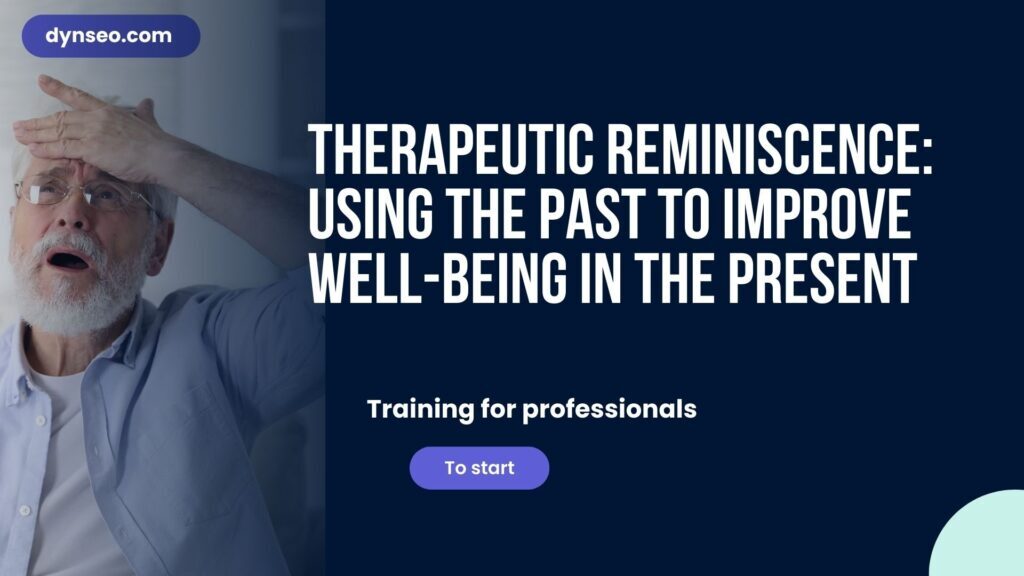
Therapeutic reminiscence:
complete guide for caregivers
Understand therapeutic reminiscence, learn to practice it with your elderly loved ones, and discover how revisiting the past can transform the present — for family caregivers and elderly care professionals
Dans cet article
La formation associée
Les ressources citées
 Thermomètre des émotions
Your elderly loved one often talks about the past, their youth, people who have long since passed away. They sometimes seem more present in their memories than here and now. This phenomenon is not an escape — it’s a resource. Therapeutic reminiscence transforms these memories into a tool for well-being, cognitive maintenance, and social connection. This complete guide explains what therapeutic reminiscence is, why it works, and how to practice it daily even without specialized training.
1. Therapeutic reminiscence: definition and foundations
1.1 What is therapeutic reminiscence?
Therapeutic reminiscence is a non-pharmacological approach based on the structured evocation of past memories. It uses objects, photos, music, or scents to stimulate autobiographical memory and create a space for sharing, appreciation, and pleasure.
🧠 Why past memory is more accessible than present memory
In neurodegenerative diseases (Alzheimer's disease, dementias), recent memory is the first to be affected — but long-term memory (childhood, youth, early adult life memories) remains accessible much longer. This paradox is explained by the different nature of the memory circuits involved. Therapeutic reminiscence precisely exploits this preserved memory to maintain the connection with identity and with others.
1.2 Documented benefits
Reduction of anxiety and depression
Several studies have shown that reminiscence sessions significantly reduce anxiety and depressive symptoms in elderly people, including those with mild to moderate dementia.
Cognitive maintenance
Reminiscence stimulates autobiographical memory, language, executive functions (organizing a narrative), and attention — skills that deteriorate in neurodegenerative diseases.
Strengthening the bond with loved ones
Sharing memories creates a space of reciprocity and intimacy that daily care does not always allow. Caregivers often discover their loved one in a new light — a whole life before the illness.
Preservation of identity and dignity
Illness can erase the present, but memories remind who the person was — and still is. Reminiscence is an act of recognition of each person's unique identity.

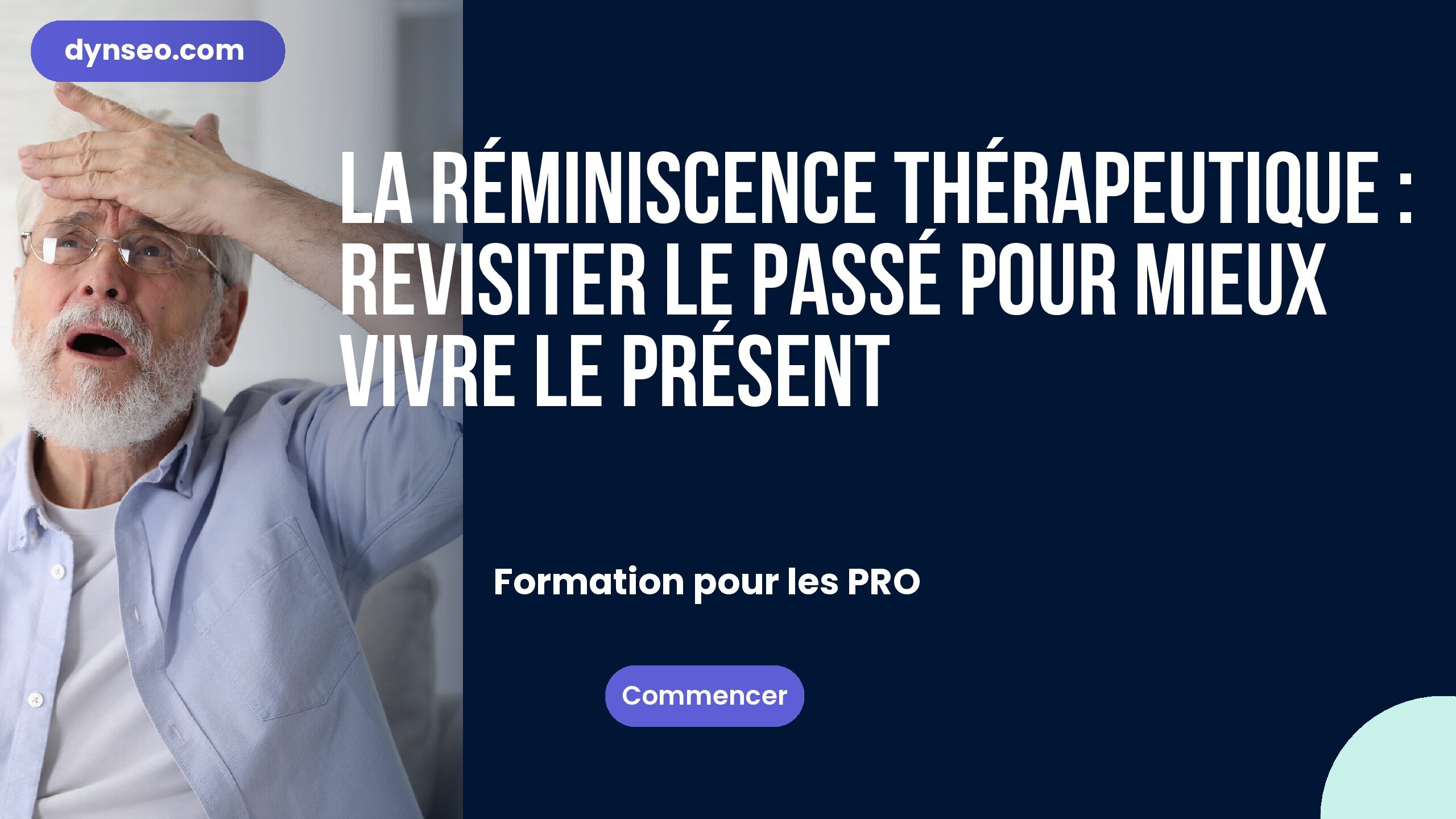
Therapeutic reminiscence: revisiting the past to better live the present
Online training at your own pace for family caregivers and elderly care professionals. Learn to conduct reminiscence sessions, choose appropriate materials, manage emotions that may arise, and integrate this approach into the daily life of your loved one or your residents.
💻 100 % online
⏱️ At your own pace
👥 Families & Professionals
2. How to practice reminiscence daily
2.1 Reminiscence materials
Photo albums
Wedding, children, and travel photos are the most powerful triggers
Period music
Musical memory is remarkably preserved — youth songs reopen communication
Old everyday objects
Kitchen utensils, tools of the trade, childhood games — touch stimulates sensory memory
Scents and fragrances
Olfaction is the sense most directly connected to emotional memory — bread, coffee, flowers
Historical documents
Newspapers, postcards, period images — linking personal experiences to collective history
Stories and books
Readings of tales heard in childhood, memorized poems, nursery rhymes — verbal memory
2.2 Leading a reminiscence session
Choose the right moment
Reminiscence works best when the person is rested and relaxed — neither too tired nor before a meal. 20 to 30 minutes is an ideal duration. Avoid moments of agitation or after care.
Prepare materials in advance
Choose 3 to 5 objects or photos related to a theme (cooking, vacations, work, childhood). The theme helps structure the conversation without imposing it.
Open questions and active listening
"What does this remind you of?" rather than "Do you remember that day?" — open questions free the narrative. Listen without interrupting, do not correct memory inaccuracies.
Value all memories, even fragmentary ones
An incomplete memory, an emotion without a story, a smile at a photo — all of this has value. Do not seek historical accuracy. Seek emotional contact.
Conclude serenely
End the session on a positive note — a song together, a sincere thank you for sharing. If painful emotions have arisen, ensure the person is calm before leaving them.
For family caregivers: Reminiscence is also a gift for you. These conversations reveal parts of life you did not know — your parent's childhood, the trials they faced, the joys that shaped who they are. These moments are precious for the grieving work that will come.
2.3 Managing difficult emotions that may arise
🎯 When memories are painful
Some memories evoke losses, traumas, regrets. Do not abruptly change the subject — let the person express the emotion, then gently steer towards a brighter memory from the same period. If tears or great sadness persist, remain present in silence. Your presence is enough.
🎯 When confusion or aggression arises
If the person confuses times (believes deceased people are alive, for example), do not correct — gently enter their frame of reference. If agitation or aggression appears, stop the session without turning it into a confrontation. Note what triggered the agitation to avoid it next time.
3. Reminiscence and DYNSEO tools
📚 DYNSEO Resources — Reminiscence and cognitive stimulation
SCARLETT Application
SCARLETT complements reminiscence with cognitive stimulation activities — memory, attention, language — tailored for elderly people.
CLINT Application
CLINT for more autonomous seniors wishing to maintain their cognitive functions playfully and independently.
Cognitive tests
The DYNSEO cognitive tests allow for the evaluation of memory functions before and after a reminiscence program.
Emotion thermometer
The emotion thermometer helps people with limited language express their emotional state during and after sessions.
“The first time I brought photos of my childhood farm to my mother, she hadn't spoken my name for months. She looked at the photos for a long time, then she said to me, 'this is our home.' She recognized me, in the memory.”
— Daughter of a resident with moderate Alzheimer's diseaseRevisiting the past to better live the present — together
Therapeutic reminiscence is not a complicated technique reserved for professionals. It is a human and accessible practice that transforms a photo album or an old song into a moment of precious connection. DYNSEO training provides you with all the tools to practice it with confidence and kindness.
Access the Qualiopi training →FAQ — Therapeutic Reminiscence
Is therapeutic reminiscence effective in the advanced stages of dementia?
Yes — even in advanced stages, old autobiographical memory (childhood, youth) remains partially accessible. Reminiscence at this stage no longer aims for an elaborate narrative but for sensory and emotional stimulation — a familiar song, a familiar object, a childhood smell can generate positive emotional responses (smiling, relaxation, vocalization). These responses have real therapeutic value even in the absence of language.
How many times a week should reminiscence be practiced?
For family caregivers at home: 2 to 3 times a week, in sessions of 20 to 30 minutes, is an ideal rhythm. Short daily sessions (10-15 minutes) around a daily activity (looking at photos during morning coffee) can also be very effective. Irregularity is preferable to abandonment — even one session per week has documented positive effects.
How to create a "reminiscence box" for my loved one?
The reminiscence box is a box containing significant objects from the person's life — photos, work-related items, period newspapers, fabrics, postcards, small childhood objects. To create it: gather memories from your loved one's past during moments of clarity; ask other family members for their contributions; identify the major themes of their life (work, hobbies, vacations, children). Once created, the box can be used for years.
Can reminiscence be practiced in a group?
Yes — group reminiscence (3 to 8 people from the same generation) amplifies social benefits. Participants remind each other of memories, create a sense of generational solidarity, and reduce isolation. In nursing homes, reminiscence groups led by trained professionals are a preferred therapeutic activity. DYNSEO training specifically covers the facilitation of individual and group sessions.
Is the DYNSEO training on reminiscence valid for my employer in a nursing home?
Yes — the DYNSEO training "Therapeutic Reminiscence" is Qualiopi certified, making it eligible for OPCO (Skills Operators) funding and the training plan of health and medico-social establishments. As a professional in a nursing home, discuss it with your training manager or HR — this training can be funded as part of your continuing professional development.
Did this content help you? Support DYNSEO 💙
We are a small team of 14 people based in Paris. For 13 years, we have been creating free content to help families, speech therapists, care homes and healthcare professionals.
Your feedback is the only way we know if our work is useful. A Google review helps us reach other families, caregivers and therapists who need it.
One action, 30 seconds: leave us a Google review ⭐⭐⭐⭐⭐. It costs nothing, and it changes everything for us.