Adapted Nursing Care for Autistic People: Complete Guide
Discover how to understand the specific needs of autistic patients, adapt nursing care, and master communication tools for optimal medical support.
Dans cet article
Autistic people face major obstacles in accessing healthcare. The hospital environment, with its intense sensory stimuli, unpredictable waiting times, and multiple social interactions, generates considerable anxiety. The nurse, a key player in medical support, plays a decisive role in the quality of the care experience. This guide presents essential adaptations, communication techniques, and strategies to provide safe, respectful, and effective care to autistic people.
🏥 Access to Care: A Journey Full of Obstacles
Studies show that autistic people are significantly less well cared for than the general population. Refusal of care is common, whether due to anticipatory anxiety, difficulty expressing symptoms, or lack of adaptation in the care offer. Autistic people, however, present frequent comorbidities (gastrointestinal disorders, epilepsy, sleep disorders, dental problems) that require regular medical follow-up.
A nurse trained in the specifics of autism can transform the care experience. By understanding sensory particularities, adapting their communication, and anticipating sources of anxiety, they help make care accessible and build a trusting relationship that will facilitate future consultations. This skill benefits not only the autistic patient but also the entire caregiving team, reducing tension situations and improving the quality of care.
🔇 Adapt the care environment
The hospital environment is often sensory hostile for autistic people. Fluorescent lights, the noise of medical devices, the smell of antiseptic products, the contact of the gown and medical equipment are all potentially intolerable stimuli. The trained nurse knows how to identify these sources of stress and mitigate them as much as possible.
Visual environment
Favor natural or dimmed lighting, reduce visual stimuli, provide a clean and predictable space
Sound environment
Reduce background noise, offer noise-canceling headphones, warn before sound alarms
Temporal organization
Minimize waiting times, offer quiet slots, structure the care process with visual supports
Adapted care rooms
More and more healthcare facilities are implementing care pathways adapted for autistic people. This may include dedicated consultation slots (early in the morning when the hospital is calm), separate waiting rooms, adapted care rooms (modular lighting, soothing decor, available sensory materials), and trained staff. The nurse plays a key role in establishing and facilitating these adapted pathways.
Even in the absence of a formal device, the trained nurse can implement simple yet effective adjustments: turning off the fluorescents and using a lamp, closing the door to reduce hallway noise, removing unnecessary visual elements from the care room, and ensuring that the room temperature is comfortable. These small gestures, which cost nothing, can radically transform the care experience for the autistic patient.
💡 Prepare the visit in advance
For scheduled care, advance preparation is essential. The nurse can send the family photos of the care environment, an illustrated outline of the consultation, and information about what the child will see, hear, and feel. This predictability significantly reduces anxiety and facilitates the care process. Visual tools (social scenarios, image sequences) are particularly effective in preparing the autistic person for medical situations.
💬 Adapted communication in the care context
Communication with an autistic patient requires specific adjustments that training allows one to master. The nurse must adapt their language, use visual supports, and respect each person's information processing time. A simple and concrete instruction, accompanied by an illustration or a demonstration on oneself, will be better understood than a long and abstract explanation.
Informed consent for care takes on a particular dimension with autistic patients. The nurse must ensure that the person truly understands what will happen, using supports adapted to their communication level. For non-verbal individuals, observing behavioral signals of comfort or discomfort is essential. Refusal of care, even expressed in unconventional ways, must be respected and an alternative sought.
Communicating about pain and sensations
Describing sensations related to care is particularly important for autistic patients who may need very concrete and literal information to prepare. Saying "you will feel a little pinch" is preferable to "it will be nothing," which is too vague, or "it doesn't hurt," which can be interpreted literally and generate distrust if the person does indeed feel something. Honesty and precision are the best allies of the nurse.
- Concrete language: use simple and literal words, avoid figurative expressions and implications
- Visual supports: photos of equipment, illustrated sequences of care, visual pain scales
- Anticipation: describe in advance each step of the care, the expected sensations, and the duration
- Choice: offer options when possible (which arm for the blood draw, sitting or lying down)
- Temporal aspect: use a visual timer to show how long the care will last
🩺 Pain assessment in autistic people
Pain assessment is a major challenge in caring for autistic people. Contrary to a persistent misconception, autistic individuals are not insensitive to pain. Their perception of pain may, however, be different (hyper or hyposensitivity), and their expression of pain may take unusual forms that elude untrained caregivers.
An autistic person in pain may exhibit atypical signs: increased stereotypies, heightened social withdrawal, unusual aggression, changes in appetite or sleep, self-harm, fixation on a body part, or conversely, apparent lack of reaction despite significant injury. The trained nurse knows how to recognize these signals and not confuse the absence of conventional pain expression with the absence of pain.
Adapted assessment tools
Classic pain scales (NRS, VAS) are not always applicable to autistic individuals who may have difficulty understanding the concept of a scale or quantifying their feelings. Adapted tools exist, such as the GED-DI scale (Pain Assessment Grid – Intellectual Disability) or the modified FLACC scale. The trained nurse knows how to choose the tool most suited to each patient's profile and combine it with clinical observation and information from those close to the person who knows their usual pain manifestations.
⚠️ The myth of insensitivity to pain
The idea that autistic people do not feel pain is a dangerous myth that can lead to underestimation and undertreatment of pain. Research shows that autistic people feel pain comparably or even more intensely than neurotypical people, but express it differently. The trained nurse must remain vigilant and never minimize complaints or the absence of complaints from an autistic patient.
✋ Adapting care gestures
Every care gesture can be a source of anxiety or distress for an autistic person if tactile sensitivity is not taken into account. The trained nurse adapts the pressure of their gestures, verbally warns before any contact, offers alternatives when possible, and respects the person's pace.
Blood draws, for example, can be facilitated by several adaptations: prior application of a numbing cream (even if pain is not the main issue, the sensation is modified), use of a fabric tourniquet rather than a rubber one if it is better tolerated, the option to look or avert their gaze according to the person's preference, and distraction with an object or a preferred activity during the procedure.
Adapted therapeutic touch
Some autistic people exhibit significant tactile defensiveness that makes any physical contact potentially aversive. The trained nurse knows that firm and predictable touch is generally better tolerated than light and unexpected touch. They always inform the person before touching them, respect more sensitive areas of the body, and use appropriate materials when possible (nitrile gloves rather than latex if the smell is an issue, hypoallergenic adhesive bandages for sensitive skin).
Medication administration may also require adaptations. Tablets can be crushed and mixed with a preferred food if the oral form is problematic. Injections can be scheduled at times when the person is more relaxed. Hygiene care can be broken down and adapted to the person's sensory tolerances.
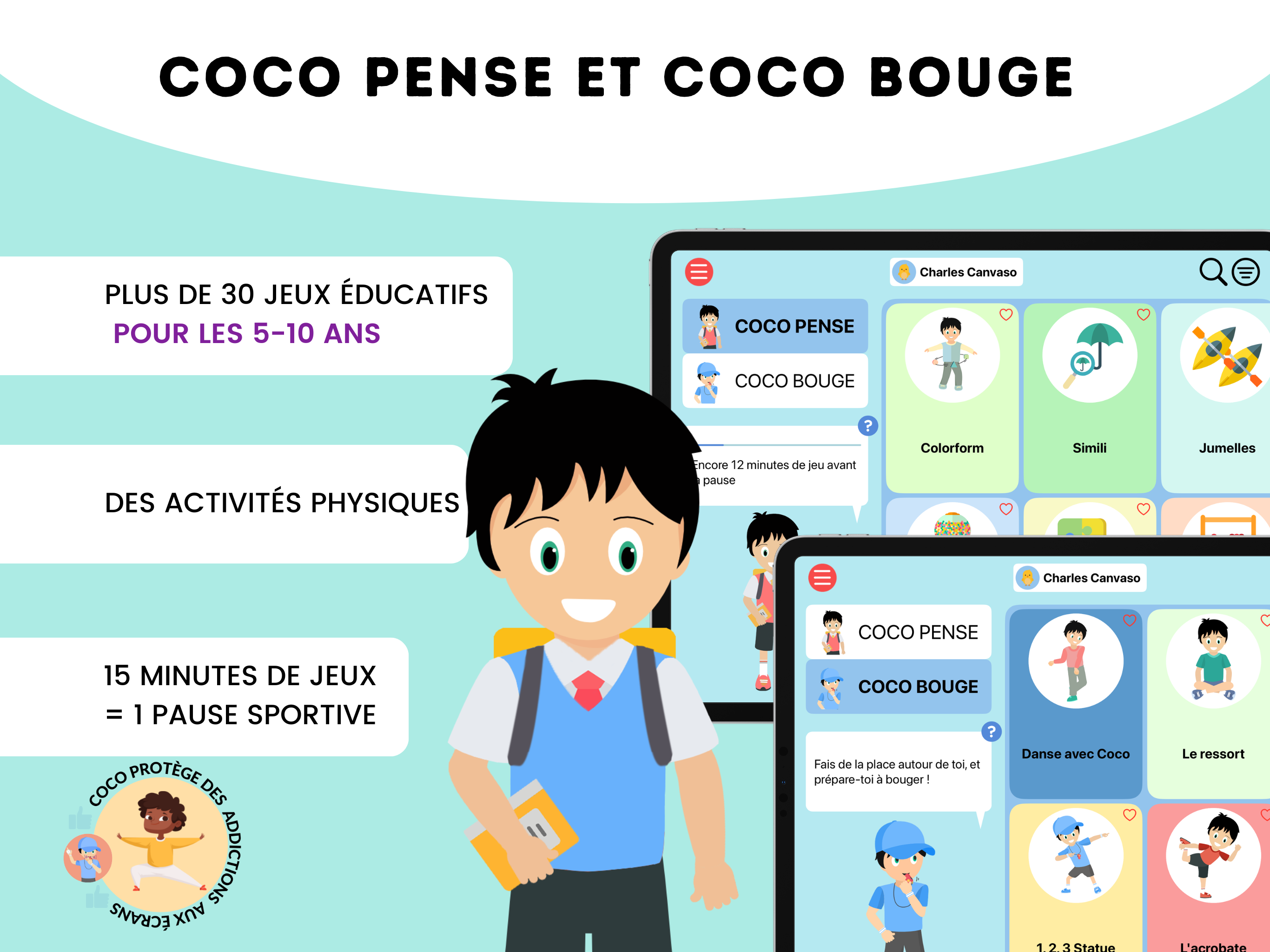
🎮 COCO THINKS and COCO MOVES: well-being and stimulation during hospitalization
The COCO THINKS and COCO MOVES program from DYNSEO can be a valuable ally for nurses accompanying hospitalized or regularly cared for autistic children. By offering adapted cognitive and physical activities, it contributes to the child's well-being and facilitates care moments.
A tool for distraction and regulation
During waiting times, often a source of major anxiety for autistic children, COCO offers structured and predictable engagement. Cognitive games capture the child's attention and reduce anxious anticipation of the upcoming care. The physical activities of COCO MOVES allow the child to expend energy and regulate themselves sensorily, which then facilitates cooperation during care. The nurse can use COCO as a transition tool between playtime and care moments, establishing a reassuring routine.
🎯 Discover COCO THINKS and COCO MOVES
An adapted cognitive and motor stimulation program, also useful in the hospital context for the well-being of autistic children.
Discover the COCO program →🚨 Emergency situations and crisis management
Medical emergency situations involving autistic people present a particular challenge for nurses. The emergency environment combines all sources of stress for an autistic person: noise, light, unpredictable waiting, multiple physical contacts, and the presence of many unfamiliar people. The trained nurse knows how to anticipate distress and adapt their care to minimize the risk of crisis while ensuring necessary care.
In the event of a behavioral crisis related to sensory overload or anxiety, the nurse should prioritize a calm and non-confrontational approach. Reducing stimuli (lowering lights, speaking softly, limiting the number of people present), offering a soothing object or activity, and allowing time for the person to regulate themselves are often more effective strategies than physical restraint, which may worsen the crisis.
The DYNSEO guides for supporting autistic children and supporting autistic adults provide additional useful information for caregivers wishing to better understand the needs of individuals with ASD.
🎓 Training with DYNSEO
DYNSEO offers a certified Qualiopi training “Supporting a child with autism: keys and solutions for daily life” that provides nurses and other caregivers with fundamental knowledge about ASD and practical tools to adapt their support.

This online training, accessible at one's own pace, is ideal for nurses who wish to enrich their practice without disrupting their work schedule. It covers essential aspects of supporting autistic individuals, from understanding sensory particularities to managing difficult situations, along with tools for adapted communication.
🎓 Train in autism support
Qualiopi certified training accessible online, for adapted and caring nursing care for individuals with ASD.
Discover the training →🎯 Conclusion
The training of nurses in the specifics of autism is a public health issue. By adapting the care environment, communication, and technical gestures, trained nurses help make care accessible to autistic individuals and reduce health inequalities. Digital tools like COCO THINKS and COCO MOVES provide complementary support to facilitate the care experience and maintain cognitive well-being during hospitalization periods.
Every trained nurse is an essential link in the care chain for autistic individuals. By understanding specific needs, demonstrating creativity in adapting care, and collaborating with families and educational teams, they transform the care experience and pave the way for regular and quality medical follow-up.
Caring with understanding:
Adapted nursing care for every patient.
Did this content help you? Support DYNSEO 💙
We are a small team of 14 people based in Paris. For 13 years, we have been creating free content to help families, speech therapists, care homes and healthcare professionals.
Your feedback is the only way we know if our work is useful. A Google review helps us reach other families, caregivers and therapists who need it.
One action, 30 seconds: leave us a Google review ⭐⭐⭐⭐⭐. It costs nothing, and it changes everything for us.