Traumatic brain injury: post-injury behavioral disorders and coping strategies
After a traumatic brain injury, behavioral disorders are often more difficult to cope with than physical sequelae — for the person and for their loved ones. This comprehensive guide explains the mechanisms, describes the most common disorders, and presents validated coping strategies.
Dans cet article
La formation associée
Les ressources citées
 Carte signaux alerte - Formation DYNSEO
 Carte des besoins sensoriels TSA
 Plan de gestion des crises TSA
 Test mémoire
 Test concentration
 Test fonctions executives
A car accident, a fall, a sports impact — and in a few seconds, life changes. The person is hospitalized in intensive care, then rehabilitated for weeks or months, appearing to recover physically. But at home, something has changed. They get upset over nothing. They no longer take any initiative. They say hurtful things without seeming to realize it. They cry or laugh at the wrong moment. And when it is mentioned, they deny any problem — or react with an aggression that is not typical of them. These post-traumatic behavioral transformations are documented, predictable according to the location of the injuries, and — to a large extent — addressable with the right strategies. This guide is intended for those affected by a traumatic brain injury, their families, and the professionals who support them. It provides the necessary neurological foundations for understanding, clinical markers for identification, and concrete strategies for action.
1. Traumatic brain injury: understanding to better support
1.1 Definition, types, and epidemiology
Traumatic brain injury (TBI) results from a mechanical shock applied to the head, causing a temporary or permanent alteration of brain function. In France, approximately 155,000 hospitalizations for traumatic brain injury are recorded each year — of which 80% are mild TBIs, 10% moderate TBIs, and 10% severe TBIs. TBIs preferentially affect young adults aged 15 to 35 (road accidents, contact sports, falls) and people over 65 (domestic falls) — two populations with very different support needs.
The usual classification distinguishes mild TBI (Glasgow Coma Scale 13-15, loss of consciousness less than 30 minutes, post-traumatic amnesia less than 24 hours), moderate TBI (GCS 9-12), and severe TBI (GCS ≤ 8). However, this prognostic classification has limitations in predicting behavioral sequelae: some mild TBIs can leave significant behavioral sequelae (persistent post-concussion syndrome), while some moderate TBIs recover better than expected due to neuroplasticity and the quality of rehabilitation.
hospitalizations for TBI per year in France — the leading cause of death and acquired disability among 15-35 year-olds
of moderate to severe TBIs present persistent behavioral disorders at 1 year (SOFMER, 2021)
of caregivers of TBI patients develop burnout syndrome or depression within 2 years following the accident
average age at the time of TBI in French studies — the majority are young active adults
1.2 Pathophysiology of behavioral disorders: why TBI modifies personality
Post-TBI behavioral disorders result from two main lesion mechanisms. Focal lesions — brain contusions, hematomas, lacerations — affect specific areas of the brain and produce deficits corresponding to the functions of those areas. Diffuse axonal lesions — shearing of nerve fibers due to acceleration-deceleration forces — affect the connections between brain regions and disrupt the coordination of neural networks, even when the areas themselves are not destroyed.
The frontal lobes are particularly vulnerable in TBIs, as they are located at the front of the skull and undergo direct impacts and intense shearing forces during acceleration-deceleration movements. However, the frontal lobes govern precisely the most complex and human functions of our behavior: impulse control, emotional regulation, social judgment, empathy, planning, and initiative. Frontal lesions — even subtle on imaging — can produce profound behavioral changes, often more socially disabling than the motor or language sequelae that are more visible.
🧠 Why do frontal lesions produce behavioral disorders: The prefrontal cortex is the conductor of social behavior — it modulates the amygdala (emotion center), controls impulses from subcortical areas, and maintains self-representation and social rules. Frontal lesions "disconnect" this conductor, leaving the more impulsive subcortical areas without sufficient regulation. The result is often described by families as "a person who has lost their filter".
1.3 Post-concussion syndrome: when mild TBI leaves invisible sequelae
Mild TBI (concussions) deserves special attention as it represents 80% of TBIs and is often minimized — both by healthcare teams and by the patients themselves. However, between 15 and 30% of people who have suffered a mild TBI develop a persistent post-concussion syndrome, characterized by symptoms lasting more than 4 to 6 weeks after the shock: headaches, intense fatigue, difficulties with concentration, irritability, sleep disturbances, anxiety, and depressive symptoms.
These symptoms are real and objective — functional imaging studies show alterations in brain connectivity in these patients. But their invisibility — no cast, no visible scar, no obvious motor deficit — often generates painful misunderstandings: family members minimizing ("but you didn't have anything serious"), premature return to work or studies, insufficient care. These misunderstandings worsen symptoms by creating a performance pressure that the post-concussive brain cannot yet support.
2. Post-TBI behavioral disorders: a complex clinical picture
2.1 Overview: six major categories
Post-TBI behavioral disorders form a wide and heterogeneous spectrum, the expression of which depends on the location and extent of the lesions, the patient's prior personality, their family and professional environment, and the rehabilitation strategies implemented. Despite this heterogeneity, six major categories of behavioral disorders are regularly identified in the neurological literature.
⚡ Impulsivity and disinhibition
- Disproportionate emotional reactions
- Socially inappropriate comments
- Decisions made without consideration of consequences
- Risky behaviors (driving, spending)
- Inability to wait, extreme impatience
- Loss of verbal and behavioral "filter"
😶 Apathy and loss of initiative
- Absence of projects, desires, initiatives
- Total passivity, dependence on external stimulation
- Indifference to activities that were once important
- Flat affect, little emotional reactivity
- Passive resistance to rehabilitation activities
- Often confused with depression (but distinct)
😤 Irritability and aggressiveness
- Very low frustration threshold
- Sudden and intense outbursts of anger
- Verbal aggression, sometimes physical
- Exaggerated sensitivity to noise, light, interruptions
- Disproportionate reactions to ordinary requests
- Sincere remorse after episodes
😢😂 Emotional lability
- Uncontrollable crying or laughing for no clear reason
- Very rapid mood changes
- Emotional reactions disconnected from the context
- Inability to modulate emotional expression
- Significant social discomfort related to these episodes
🚫 Anosognosia
- Denial or underestimation of deficits
- Belief of being completely cured when this is not the case
- Refusal of certain aids or accommodations
- Premature return to dangerous activities
- Conflicts with caregivers who "exaggerate"
😰 Anxiety and PTSD
- Fear of falling again or having an accident
- Re-experiencing the traumatic event
- Hypervigilance, frequent startle responses
- Avoidance of situations reminiscent of the accident
- Sleep disturbances, repeated nightmares
2.2 Lesional localization and behavioral profile
| Injured brain area | Typical behavioral disorders | Points of vigilance for caregivers |
|---|---|---|
| Frontal lobe (orbital-frontal) | Disinhibition, impulsivity, socially inappropriate behaviors, lack of empathy | Do not interpret as a deliberate choice — it is an injury, not contempt |
| Frontal lobe (medial) | Profound apathy, akinesia, akinetic mutism in severe cases | Frontal apathy is not laziness — it requires structured external activations |
| Frontal lobe (dorsolateral) | Executive deficits: planning, flexibility, working memory, organization | Provide external structures (check-lists, agenda, routines) to compensate |
| Temporal lobes | Irritability, aggressiveness, memory disorders, sometimes symptoms similar to temporal dementia | Altered memory generates great anxiety — maintain stable references |
| Limbic system / amygdala | Emotional lability, fear, anxiety, PTSD, emotional hyperreactivity | Avoid overstimulating environments; plan for decompression spaces |
| Diffuse axonal injuries | Cognitive fatigue, generalized slowing, attention difficulties, diffuse irritability | Break activities into smaller parts, respect rest needs, avoid overload |
2.3 Post-TBI fatigue: the often-overlooked aggravating factor
Post-traumatic brain fatigue is one of the most frequent and underestimated symptoms after a TBI — present in 50 to 80% of patients, regardless of the severity of the trauma. This fatigue is distinct from ordinary fatigue: it sets in quickly in response to any cognitive or social activity, it is disproportionate to the effort exerted, and it does not always disappear with rest. Neurologically, it reflects the higher energy cost that the injured brain now requires to perform tasks that were automatic before the TBI.
Post-TBI fatigue has a direct impact on behavioral disorders: episodes of irritability, impulsivity, and emotional lability are systematically more frequent and intense in a state of brain fatigue. Understanding this link is fundamental for caregivers — difficult behaviors at the end of the day or after intense activity are not whims: they are the manifestation of an exhausted brain that has temporarily lost its regulatory capacity.
3. Coping strategies: from understanding to action
3.1 The ABC model applied to TBI: understanding before intervening
The ABC model (Antecedents – Behavior – Consequences) is a behavioral analysis tool borrowed from Applied Behavioral Analysis (ABA) that proves particularly useful in managing post-TBI behavioral disorders. Rather than reacting impulsively to problematic behavior, this model invites identifying the conditions that precede the behavior (environmental triggers, time of day, previous activities, level of fatigue), the exact nature of the behavior, and the consequences that follow — particularly the responses from caregivers that may inadvertently reinforce it.
This analysis, often conducted with the help of a neuropsychologist or a rehabilitation professional, allows for constructing targeted interventions on the triggers (modification of the environment, management of transitions) and on the responses of caregivers (avoiding responses that reinforce the problematic behavior). It also allows for documenting progress over time, which is essential in a context where change can be slow and improvements subtle.
Confrontation to anosognosia
“You can see that you can't drive like before!” — Direct confrontation activates defensive resistance and worsens relational tension without improving awareness of the deficit.
Indirect approach through concrete experience
Offer controlled experiences that allow the person to recognize their difficulties themselves, with the support of the neuropsychologist. Avoid direct confrontations outside the therapeutic framework.
Punishing or ignoring impulsivity
Treat post-TBI impulsivity as intentional behavior to be sanctioned. Punishment is not processed by the damaged frontal system in the same way — it may even increase agitation.
Anticipating and structuring the environment
Identify triggering situations, modify them in advance, offer concrete behavioral alternatives (pause, breathing, agreed signal), and positively reinforce alternative behaviors.
Overstimulating an apathetic person
Multiply activities to “get the person out of their apathy.” Overstimulation worsens cognitive fatigue and can paradoxically increase withdrawal.
Progressive and structured activation
Introduce one targeted activity per day, chosen according to previous interests, with a fixed duration and a clear end signal. Gradually increase the number of activities over several weeks.
Responding to anger with anger
The emotional mirror amplifies escalation. An intense emotional response from those around stimulates the patient's already hyperactive limbic system and increases the intensity of the episode.
Calm de-escalation and temporary withdrawal
Low tone, slow pace, respectful physical distance. In case of escalation, temporarily withdraw from interaction (not from the relationship): “I’ll be back in a few minutes.” Return once calm is restored.
3.2 Five adaptation strategies by behavioral profile
3.3 Adapting the environment and routines: the most accessible levers
Before any specific behavioral intervention, adapting the physical and social environment of the TBI patient is the most accessible and immediately effective lever to reduce the frequency and intensity of difficult behaviors. A predictable, structured environment with low sensory load, regular routines, and transitions announced in advance significantly reduces agitation and irritability behaviors while preserving the limited cognitive resources of the injured brain.
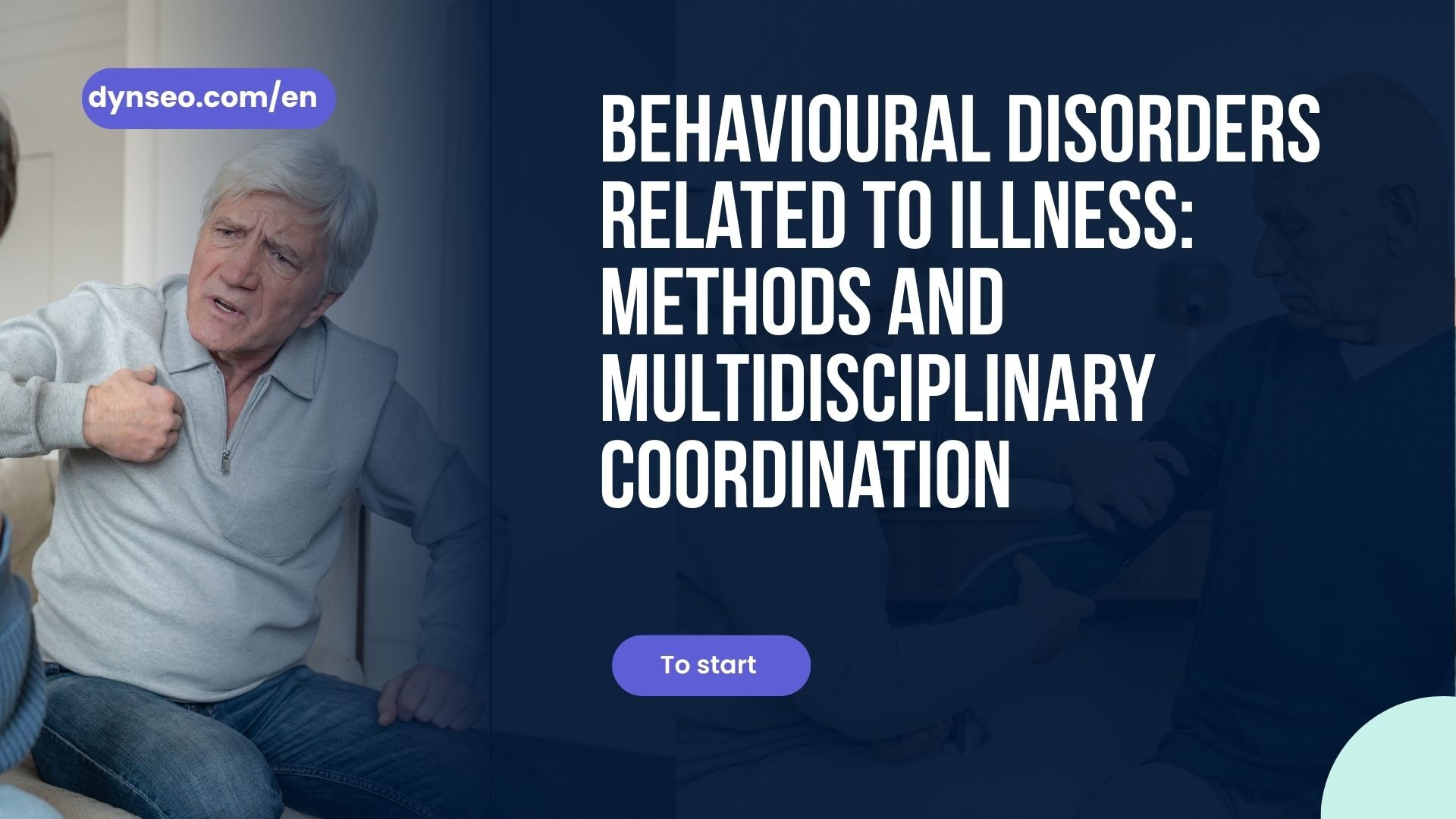
Practical principles include reducing background noise (television, continuous radio), organizing the living space to be recognizable and stable, displaying a daily visual schedule, limiting the number of simultaneous interlocutors, and verbally preparing for changes and transitions (“In 10 minutes, we are going to…”). The DYNSEO Sensory Needs Map provides a structured framework to identify the specific sensitivities of the TBI patient and adapt the environment accordingly.
4. Managing behavioral crises: anticipate and structure
4.1 The alert signal map: personalized prevention tool
Post-TBI behavioral crises — agitation, aggression, intense disorientation — generally do not occur without precursor signs. Each TBI patient develops, over time, their own specific signals that indicate a rise in tension: some fidget their feet, others start to speak louder, while others abruptly withdraw from the conversation or fixate on a point in space. Once identified and shared with all members of the entourage and care team, these signals allow for intervention before the situation escalates.
The DYNSEO Alert Signal Map is a structured document that lists, for a given patient, their specific triggers, personal precursor signals, and the de-escalation interventions that work for them. Displayed in care spaces and shared with all caregivers, it ensures consistency in behavioral responses — regardless of the interlocutor present at the time of the crisis.
4.2 The crisis management plan: from reactive to proactive
A formalized crisis management plan is the organizational tool that transforms behavioral management from a reactive mode (improvising in response to each episode) to a proactive mode (having a clear protocol for each level of intensity). This plan, ideally co-constructed with the multidisciplinary team (neuropsychologist, coordinating nurse, rehabilitation team), defines target behaviors, their usual triggers, precursor signals, interventions by intensity level, and the people to contact in case of a situation exceeding the caregiver's capabilities.
The DYNSEO Crisis Management Plan offers a suitable and shareable format. Its formalization produces several beneficial effects: it reduces improvisation under pressure (when the caregiver's brain is also in a state of alert), ensures consistency among all caregivers, and psychologically secures caregivers who know they have a protocol to rely on — reducing their own anticipatory anxiety.
💡 Practical advice for caregivers: In case of a crisis, your first goal is to reduce stimulation, not to solve the problem that triggered the crisis. Lower your voice, reduce the number of people present, suggest a change of space — these non-verbal interventions are more effective than any argument in the first few minutes. Only revisit the trigger once calm has been restored.
4.3 The emotional regulation toolkit: for the patient and for the caregiver
Emotional regulation — for the patient with TBI and for their surroundings — is at the heart of long-term behavioral support. For the patient, a repertoire of accessible regulation strategies even in a state of cognitive fatigue (breathing, attentional diversion, neutral sensory activity) can significantly reduce the duration and intensity of difficult emotional episodes. For the caregiver, having their own regulation tools is a sine qua non condition for their sustainability in their role.
The DYNSEO emotional regulation toolkit and the DYNSEO cognitive restructuring sheet can be used in parallel: the first for rapid de-escalation strategies in the situation, the second for in-depth work on the negative automatic thoughts generated by the caregiver situation (“I am responsible for their behaviors,” “I can't take it anymore, I am a bad caregiver”…).
5. Care pathways and professional resources
5.1 The multidisciplinary team: actors and roles
The optimal management of post-TBI behavioral disorders requires a multidisciplinary team whose skills complement each other. The neurologist coordinates medical follow-up, assesses sequelae, and prescribes medications (notably for emotional lability, anxiety, or post-TBI depression). The neuropsychologist conducts cognitive and behavioral assessments, develops cognitive and behavioral rehabilitation plans, and trains the surroundings in appropriate strategies. The speech therapist addresses language and communication disorders, which are common after left temporal TBI, and works on aspects of social communication. The occupational therapist adapts the environment and activities to the patient's actual capabilities to promote the recovery of autonomy.
For moderate to severe TBIs, passing through a specialized neurological rehabilitation unit (neurological SSR, UEROS — Evaluation, Retraining, and Social Orientation Unit) is often essential to benefit from a coordinated multidisciplinary approach. The disability rights / assessment office direct towards suitable structures and available funding (recognised disability status at work, Personal Independence Payment, disability rights / assessment office). The UNAFTC (National Union of Families of Brain Injured and Cerebral Lesioned) is the French associative reference for families and offers support groups, training, and assistance with orientation.
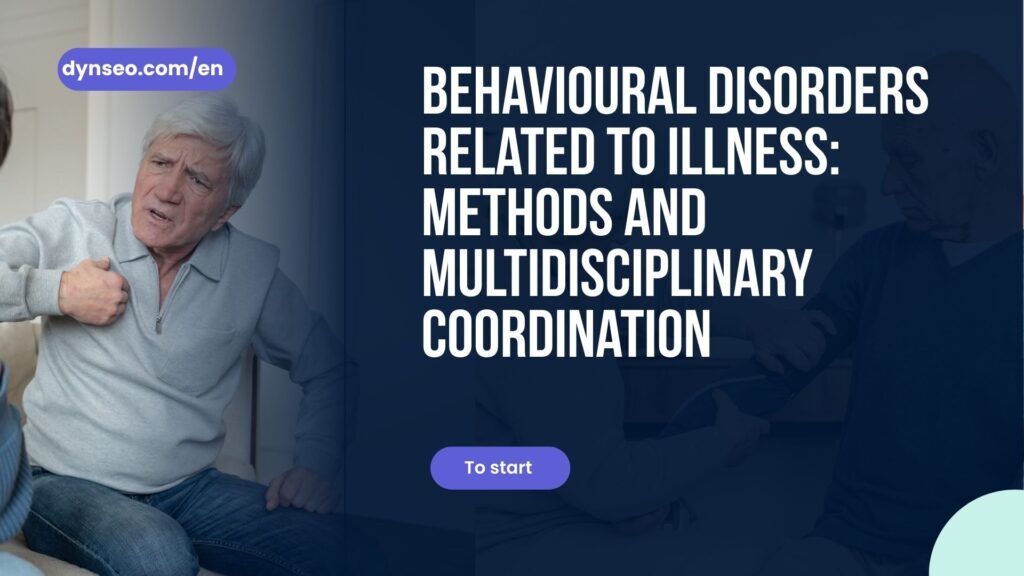
Behavioral disorders related to the disease — Methods and multidisciplinary coordination
This Qualiopi certified training is intended for health professionals, caregivers, social workers, and facility supervisors who support brain-injured individuals with behavioral disorders. It covers the neurobiological foundations of brain injuries and their behavioral consequences, validated assessment and intervention methods, adapted communication strategies, and multidisciplinary coordination. Deployable in teams, fundable by OPCO.
Discover the training →5.2 Supporting family caregivers: a public health issue
Family caregivers of patients with moderate to severe TBI are at high risk of burnout, depression, and anxiety disorders. This vulnerability is explained by the combination of several factors: the physical and emotional burden of care, daily confrontation with difficult behaviors, mourning for the person they once knew, often radical reorganization of the family life project, and the lack of social recognition of their role. Studies show that a burned-out caregiver is not only suffering themselves but also inadvertently generates less appropriate interactions with the patient, paradoxically worsening the behavioral disorders they are trying to manage.
Supporting caregivers must be an integral part of the care plan — not a luxury for those who "have the time.Available resources include support groups for TBI caregivers (local advice centre for older people, health networks), individual psychotherapy for caregivers, respite solutions (day care, temporary accommodation, trained life assistants for TBI), and specific training on post-TBI behavioral disorders.
6. DYNSEO tools for post-TBI behavioral support
DYNSEO practical tools
🚨 Alert signal card
Document specific triggers and precursor signals for the TBI patient — a shareable tool with the entire team to ensure consistency in behavioral responses.
Download →🌡️ Sensory needs card
Identify the sensitivities and sensory overloads of the TBI patient to adapt the environment and reduce triggers of agitation and irritability.
Download →📋 Crisis management plan
Formalized protocol for managing difficult behavioral episodes by intensity level — from preventive de-escalation to acute crisis management.
Download →🧰 Emotional regulation toolbox
Emotional regulation strategies for the patient and the caregiver — de-escalation techniques, calming exercises, sensory interventions accessible even in a state of cognitive fatigue.
Download →🧠 Cognitive Restructuring Sheet
For caregivers: identify and modify negative automatic thoughts that fuel exhaustion and guilt related to supporting a loved one with TBI.
Download →→ See all DYNSEO practical tools
DYNSEO Applications for Cognitive Stimulation Post-TBI
🧠 CLINT — Adults
Cognitive remediation application for adults — memory, attention, executive functions. Adaptive pathways based on neurological profile. Ideal as a complement to post-TBI neuropsychological rehabilitation.
Learn more →👴 SCARLETT — Seniors
For older TBI patients, SCARLETT offers progressive cognitive stimulation with an adapted interface, particularly useful for TBI due to falls in elderly people.
Learn more →💬 MY DICTIONARY — Communication
Alternative and augmented communication for TBI patients with aphasia or severe expression difficulties — maintaining connections with others despite language disorders.
Learn more →🤖 DYNSEO AI Coach
Personalized support to guide families and professionals in choosing tools and strategies suited to the specific behavioral profile of the TBI patient.
Learn more →DYNSEO Cognitive Tests
→ Access all DYNSEO cognitive tests
DYNSEO Training
→ See the complete catalog of DYNSEO training
🧠 Support post-TBI behavioral disorders with DYNSEO resources
Alert signal card, Crisis management plan, Emotional regulation toolbox, JOE application — resources designed for brain-injured patients and their relatives, by specialists in cognitive stimulation and behavioral rehabilitation. In addition to specialized multidisciplinary follow-up.
❓ FAQ — Behavioral disorders after traumatic brain injury
1. Are behavioral disorders after a mild TBI taken seriously by doctors?
Gradually more and more, but the road remains long. For decades, mild TBI has been minimized with the unfortunate phrase "you have nothing, you can go home." Advanced functional imaging studies (diffusion MRI, PET scan) have shown that mild TBI can cause diffuse axonal injuries that are invisible on standard MRI. The French Society of Neurology and SOFMER have published recommendations on the management of post-concussion syndrome. If your doctor minimizes persistent symptoms more than 4 weeks after a mild TBI, request a specialized neurological or neuropsychological consultation.
2. My loved one has become very irritable since their TBI — is this permanent?
No — post-TBI irritability is one of the symptoms that responds best to combined interventions: behavioral neuropsychological rehabilitation, environmental adaptation, management of cognitive fatigue, and sometimes medication. Longitudinal studies show that irritability improves in the vast majority of cases over the 12 to 24 months following the TBI, especially with appropriate management. Recovery depends on the extent of frontal injuries, the quality of environmental support, and the timeliness of behavioral rehabilitation.
3. How to explain the behavioral disorders of TBI to children?
The explanation to children should be age-appropriate, concrete, and reassuring. For younger ones: "Dad/Mom had an accident in their head. Their brain is injured and sometimes it makes them do things they wouldn't normally do. It's not their fault and it's not your fault." For teenagers: an accessible neurological explanation can help — the injured brain temporarily loses its emotional "brake." In any case, naming what is happening ("their brain is injured") is more protective than silence or euphemisms. Psychological support for the children themselves is often beneficial.
4. My loved one denies having difficulties (anosognosia) — what can I do concretely?
Anosognosia is a neurological symptom, not a psychological denial. Repeated direct confrontation is ineffective and generates painful conflicts. The most effective strategies are: working with the neuropsychologist on concrete situations where difficulties are observable, using consented video recordings of performances (driving in a simulator, cognitive games), and adapting the environment for safety without waiting for awareness. Awareness of deficits is often gradual — it can take months and occur differently depending on the areas of deficit.
5. Is a return to professional life possible after a TBI with behavioral disorders?
Yes, in many cases — but it generally requires a structured approach. UEROS (Units for Evaluation, Retraining, and Social Orientation) specialize in supporting the return to social and professional life after TBI. They offer assessments, retraining programs, and guidance towards suitable jobs or training. The recognised disability status at work opens rights to workplace adjustments and AGEFIPH funding. Returning to work is often possible part-time at first, with adjustments targeting cognitive fatigue management and situations at risk of irritability.
6. What is the difference between behavioral disorders from TBI and those from Stroke?
The neurological mechanisms are similar — brain injuries with behavioral impact depending on the location. But several differences are important: TBI preferentially affects young adults (very different life context and needs from an elderly post-Stroke patient), diffuse axonal injuries are more characteristic of TBI, post-TBI fatigue is often more intense and longer-lasting, and the recovery profile can be different. The psychological context is also distinct: Stroke often occurs on a background of vascular fragility, while TBI often occurs completely unpredictably in a previously healthy person — the existential shock is particularly intense.
7. Can applications like JOE be used in the acute phase of rehabilitation?
The JOE application is designed for cognitive stimulation at home, in the recovery phase — it is not an intensive neuropsychological rehabilitation tool intended for the acute phase. In the acute phase (first months post-moderate to severe TBI), cognitive rehabilitation should be supervised by a neuropsychologist who adjusts the intensity and type of stimulation according to progress. After the accident, when institutional rehabilitation ends, JOE can serve as a tool for maintaining and consolidating gains, in addition to neuropsychological and speech therapy follow-ups. Ideally, its use should be validated with the patient's referring neuropsychologist.
8. Are there specific financial aids for families of TBI patients?
Yes. The Personal Independence Payment can fund human, technical, and animal aids for disabled individuals after TBI. The recognised disability status at work provides access to workplace adjustments and AGEFIPH funding. Life accident guarantee funds (FGAO) and insurance companies can compensate for sequelae within the framework of legal recourse. The disability benefit can be granted when TBI leads to a lasting professional incapacity. UNAFTC and local disability rights / assessment office can guide families through these often complex processes.
🧠 Train yourself to better support TC patients
The Qualiopi certified training from DYNSEO — for families as well as for professionals — provides the neurobiological and behavioral keys to understand and support post-TC disorders. Practical complementary tools to structure daily life, manage crises, and prevent caregiver burnout.
Did this content help you? Support DYNSEO 💙
We are a small team of 14 people based in Paris. For 13 years, we have been creating free content to help families, speech therapists, care homes and healthcare professionals.
Your feedback is the only way we know if our work is useful. A Google review helps us reach other families, caregivers and therapists who need it.
One action, 30 seconds: leave us a Google review ⭐⭐⭐⭐⭐. It costs nothing, and it changes everything for us.