Generalized anxiety: recognizing and managing crises
5 to 7% of the population suffers from generalized anxiety disorder. Between constant worry and sudden panic attacks, understanding anxiety is the first step to managing it effectively.
Dans cet article
La formation associée
Les ressources citées
 Test anxiété test
1. Generalized anxiety disorder
Characteristics of GAD
GAD is characterized by excessive and difficult to control worry simultaneously covering many areas: health of loved ones, finances, work, punctuality, future. The person often knows that their worries are disproportionate — but cannot stop them. This "floating worry feeling" is accompanied by at least 3 of the following symptoms: restlessness or nervousness, fatigue, difficulty concentrating, irritability, muscle tension, sleep disturbances.
2. Panic attacks
An intense and sudden peak of fear
A panic attack is an episode of sudden intense fear reaching its peak in less than 10 minutes. It is accompanied by intense physical symptoms — palpitations, shortness of breath, choking sensation, dizziness, numbness, chills, chest pain — and a conviction that something serious is happening ("I am going to die", "I am losing control"). Despite their terrifying nature, panic attacks are medically benign. Their danger lies in the anticipatory anxiety they generate — and the gradual avoidance of all situations where an attack might occur.
⚠️ From panic attack to agoraphobia
If left untreated, panic attacks can generate a vicious cycle: the fear of having an attack leads to increasingly avoiding situations, gradually restricting the living area until agoraphobia (fear of spaces where one cannot easily escape). This process is insidious but entirely reversible with appropriate treatment.
3. Immediate management: emergency techniques
The most accessible technique
Inhale for 4 seconds → hold for 4 → exhale for 4 → hold for 4. Repeat for 4 to 6 cycles. Slow breathing activates the vagus nerve and the parasympathetic system, reducing heart rate and stress response in 5 to 10 minutes.
Returning to the present moment
Mentally name: 5 things you see, 4 that you hear, 3 that you touch, 2 that you smell, 1 that you taste. This sensory anchoring technique interrupts the spiral of anxious thoughts by bringing attention back to the immediate present.
4. Treatments
CBT is the reference treatment for GAD and panic disorder: it targets catastrophic thoughts, intolerance to uncertainty, and avoidance behaviors, with 60-70% remission. SSRIs/SNRIs are effective as maintenance medications. Mindfulness meditation and regular physical exercise complement the management. Caffeine, alcohol, and lack of sleep worsen anxiety and should be reduced.
💭 DYNSEO Resources — Anxiety
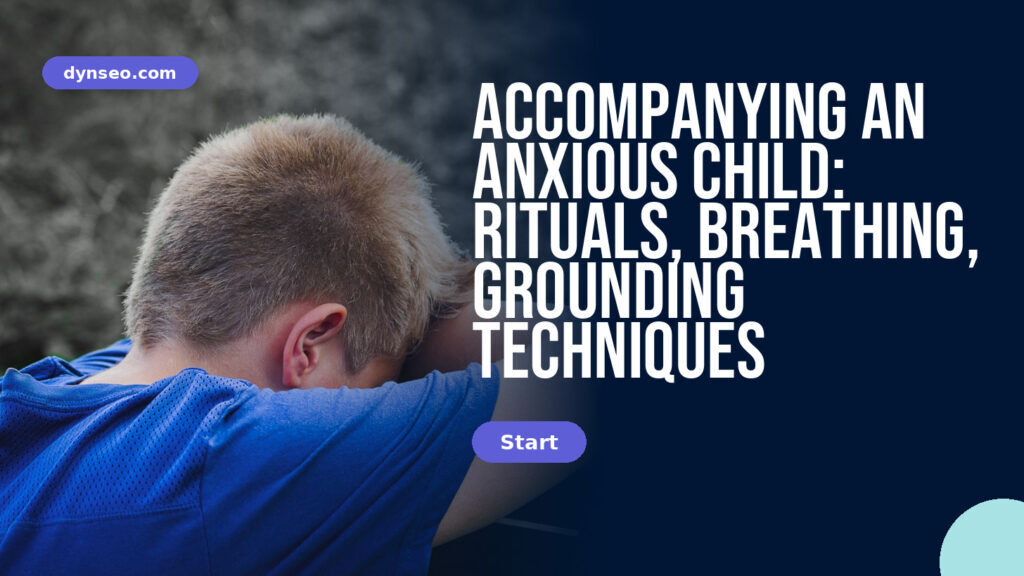
• Training "Supporting an Anxious Child" — rituals, breathing, grounding
• DYNSEO Stress & Anxiety Test — free assessment
• DYNSEO Tools — strategies for calming down
FAQ
What is GAD?
Excessive and uncontrollable worry about many areas for 6+ months, with physical symptoms (tension, fatigue, insomnia) and psychological symptoms (irritability, difficulty concentrating). Affects 5-7% of the population.
Difference between panic attack and normal anxiety?
A panic attack is sudden (peak in less than 10 min), with intense physical symptoms and fear of dying or losing control. Medically benign but terrifying to experience.
Is CBT effective?
Yes — 60-70% remission, long-lasting effects. It is the reference treatment for GAD and panic disorder.
How to quickly calm a crisis?
Square breathing (4-4-4-4), grounding with the 5 senses, muscle contraction-relaxation. These techniques activate the parasympathetic system in 5-15 minutes.
Does anxiety affect concentration?
Yes — chronic anxiety consumes attentional resources, generating difficulties in concentration and working memory. Reversible with treatment.
Conclusion: anxiety is treatable
Generalized anxiety is not a character weakness nor a fatality. It is a treatable disorder, with well-understood mechanisms and effective treatments. The first step is often the hardest — recognizing that worry has become a problem and deciding to seek help. The DYNSEO stress and anxiety test can serve as a first indicator before a professional consultation.
Did this content help you? Support DYNSEO 💙
We are a small team of 14 people based in Paris. For 13 years, we have been creating free content to help families, speech therapists, care homes and healthcare professionals.
Your feedback is the only way we know if our work is useful. A Google review helps us reach other families, caregivers and therapists who need it.
One action, 30 seconds: leave us a Google review ⭐⭐⭐⭐⭐. It costs nothing, and it changes everything for us.