domestic accidents
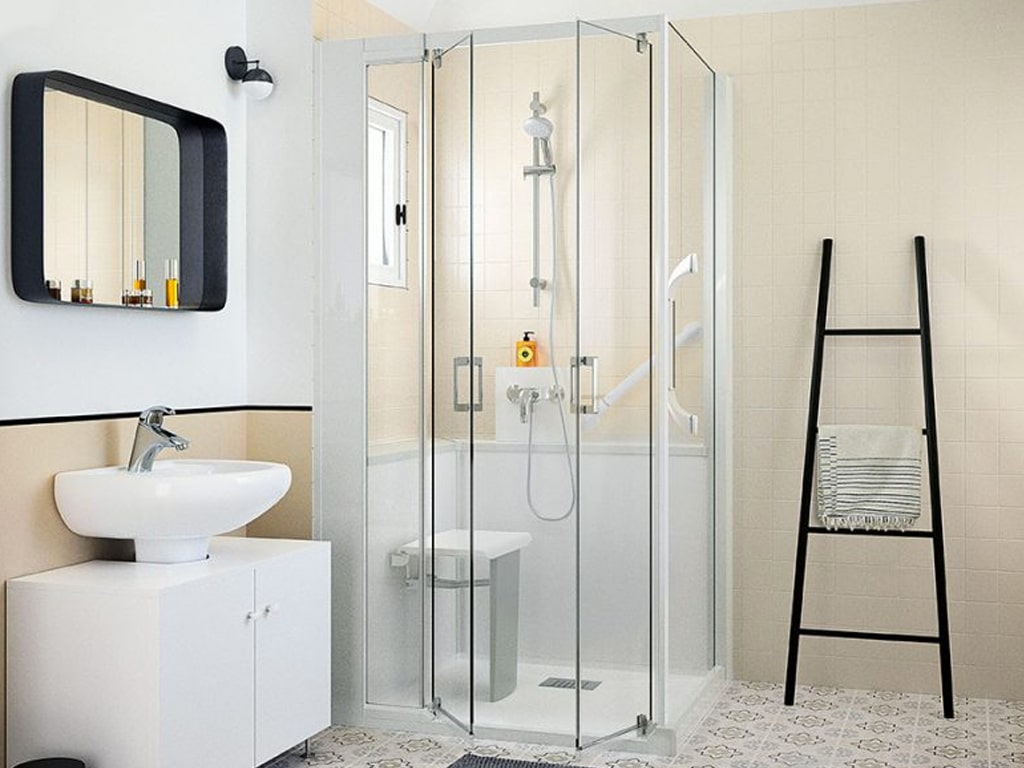
Finally, one of the biggest changes and yet one of the main ones is the securing of the bathroom. The bathroom is a particularly risky place because it is an essential part of the house, but very dangerous as elderly people can slip or fall (especially since these falls are part of the domestic accidents that injure elderly people the most).
This is why switching from a bathtub or a poorly adapted shower to a senior shower is an essential change to undertake. These secure and adapted showers ensure the safety and comfort of the elderly. Their goal is to minimize the risk of accidents during bathing.

Among the existing offers, the Mutuelle GSMC offers balanced health guarantees adapted to your situation, so you only pay for what you really need.
Thanks to the different offers of Mutuelle GSMC, benefit from:
quality services at fair prices,
a close relationship,
solidarity actions.
Many elderly people choose to stay at home even when they are at an advanced stage of old age and show signs of dependency.
In fact, in France, out of 8,500,000 people, only 255,000 live in retirement homes and other specialized establishments.
Since home care is widely favored, numerous solutions to promote autonomy have emerged. We especially talk about technical means and human means, as well as assistance from the State.
Dans cet article
The importance of home care for the elderly
Home care is a choice explained by the attachment that elderly people have to their home. It is a logical choice, after all, because it allows them to keep their lifestyle habits, especially the freedom to do what they want when they want (as much as possible, depending on their level of autonomy), which is not possible, for example, in a retirement home.
Additionally, staying at home offers the advantage of remaining close to their surroundings and especially to their family.
Furthermore, it is important to note that home care can be less expensive than moving into a retirement home. In fact, maintaining an elderly person at home requires making some adjustments in the living space.
Depending on the type of adjustments to be made, the cost of arranging the space is, on average, 4,280 euros, whereas the monthly fee for a retirement home is 2,200 euros. This comparison shows a clear difference, which can be an additional motivation to choose home care.
Existing home care solutions
As mentioned earlier, in order to maintain a person at home, some adjustments may be necessary to help them with their loss of autonomy.
We can categorize them as follows:
Technical means
Technical means have been designed specifically to allow seniors to accomplish daily tasks for which they have difficulties, due to their advanced age.
Among them, we can mention mobility equipment such as canes, walkers, electric scooters, wheelchairs, or stairlifts, those that help with hygiene like toilet risers, grab bars, walk-in tubs... There is also special equipment designed to provide them with comfort in everyday life, such as medical beds, support belts, ergonomic pillows...
It is important to note that, most of the time, seniors are resistant to changes. However, when faced with facts, they can understand, for example, that a house with multiple stories makes daily movement somewhat difficult and that a single-story apartment or house is more reassuring for family members who have less to worry about falls on the stairs. Or that their strength diminishes over time, and that their joints can no longer support heavy cast-iron pots, which therefore need to be replaced with lighter cooking utensils.
Technological means
Many technologies have been put to use for the home care of the elderly. The most well-known is undoubtedly teleassistance, an alarm system specially designed for elderly people to alert qualified operators in case of difficulties, falls, or discomfort. This system is notably designed to trigger automatically in certain situations such as falls.
Teleassistance works with a trigger that the elderly person wears, on their wrist or as a necklace. With this and a transmitter installed at their home, the senior can alert an operator when they need help. The operator can either call a relative of the senior to come and assist them or the emergency services.
Human means
Human support is crucial in the home care of the elderly, as it provides not only real human assistance but also prevents solitude and social isolation.
The most common human support for home care is professional home assistance. This is a person responsible for helping seniors with daily activities for which they face difficulties: feeding, bathing, mobility... Called a life assistant, this person has training and qualifications to best assist the elderly.
It is also possible to hire a housekeeper responsible for all maintenance tasks in the senior's home: cleaning, washing dishes, laundry, ironing, and sometimes even cooking. Some aids, like a companion, although they do not medically assist the elderly person, can be considered as a human means of home care. Indeed, they are responsible for breaking the senior's loneliness by keeping them company, talking to them...
Home care assistance
Assistance measures have been set up by the State to allow elderly people to stay at home and live as comfortably as possible.
Tax assistance for home care
It consists of a 50% tax credit benefiting elderly people who use the services of a home aid. Practically, it will be valid if the latter is assisted by a life assistant or a housekeeper.
Housing assistance
The housing aids in question here come from the national housing adaptation agency (ANAH), and are intended to give seniors the possibility to adapt their housing to their situation. The agency then provides a 25% tax credit for these adaptation works. The amount allocated is capped at 5,000 euros for people living alone and 10,000 euros for couples.
It also grants assistance for adaptation works such as installing a stairlift, installing automated shutters... Their amount ranges from 7,000 to 10,000 euros.
Assistance for seniors with loss of autonomy
There are many aids for seniors with loss of autonomy. Among them, we can mention the Personalized Autonomy Allowance (personal independence / care allowance) provided by the Departmental Council to cover various expenses: provision of hygiene or food products, home assistance...
Social Security also offers the solidarity allowance for the elderly to help seniors with low resources.
Finally, pension funds and mutual insurance provide assistance similar to personal independence / care allowance for seniors whose loss of autonomy is not considered severe.
Inquiring about mutual insurance offers
As a carer, it is important to be informed about all the aids and offers that exist, as it is true that medical appointments can sometimes be costly. Knowing about mutual insurance offers allows ensuring a follow-up of care as calmly as possible.
A mutual insurance, or complementary health, supplements basic guarantees. It partially or fully covers acts not reimbursed by Health Insurance and those that are very weakly covered, to ensure more optimal coverage.
The psychological benefits of home care
Maintaining the elderly at home is not limited to the physical aspects of daily life. Psychological benefits are just as important. By staying at home, seniors can retain a sense of control over their lives, which is crucial for their mental well-being.
- Preservation of identity: Staying in a familiar environment helps elderly people maintain their identity and memories.
- Reduction of anxiety: A change in environment, such as moving into a nursing home, can cause stress and anxiety. Home is often associated with positive memories.
- Social interactions: Being surrounded by family and friends fosters social interactions, essential for combating loneliness and depression.
Outdoor arrangements for secure home care
Besides interior adjustments, it is also essential to think about the exterior of the house to ensure the safety of the elderly. Here are some recommendations:
- Secured access: Install ramps and non-slip pathways to facilitate movement.
- Proper lighting: Ensure good lighting around the house to avoid falls at night.
- Green spaces: Designing an accessible garden can provide a relaxing space and encourage exercise, beneficial for both mental and physical health.
Innovations in home automation for seniors
Technology is evolving rapidly and now offers innovative solutions for the home care of the elderly. Home automation can play a key role in empowering seniors.
- Alert systems: Motion sensors can alert relatives in case of unusual activity.
- Remote control: Household appliances can be controlled remotely, allowing seniors to easily manage their environment.
- Voice assistants: These devices can help seniors remember their medications, make calls, or schedule appointments.
Community resources for the elderly
It is also essential to know about the community resources available to support the home care of the elderly. These resources can offer valuable assistance.
- Senior activity centers: These centers offer social activities, courses, and events to keep seniors active and engaged.
- Transport services: Adapted transport services can help seniors get to medical appointments or social activities.
- Support groups: Joining support groups can provide a space to share experiences and receive advice.
Did this content help you? Support DYNSEO 💙
We are a small team of 14 people based in Paris. For 13 years, we have been creating free content to help families, speech therapists, care homes and healthcare professionals.
Your feedback is the only way we know if our work is useful. A Google review helps us reach other families, caregivers and therapists who need it.
One action, 30 seconds: leave us a Google review ⭐⭐⭐⭐⭐. It costs nothing, and it changes everything for us.