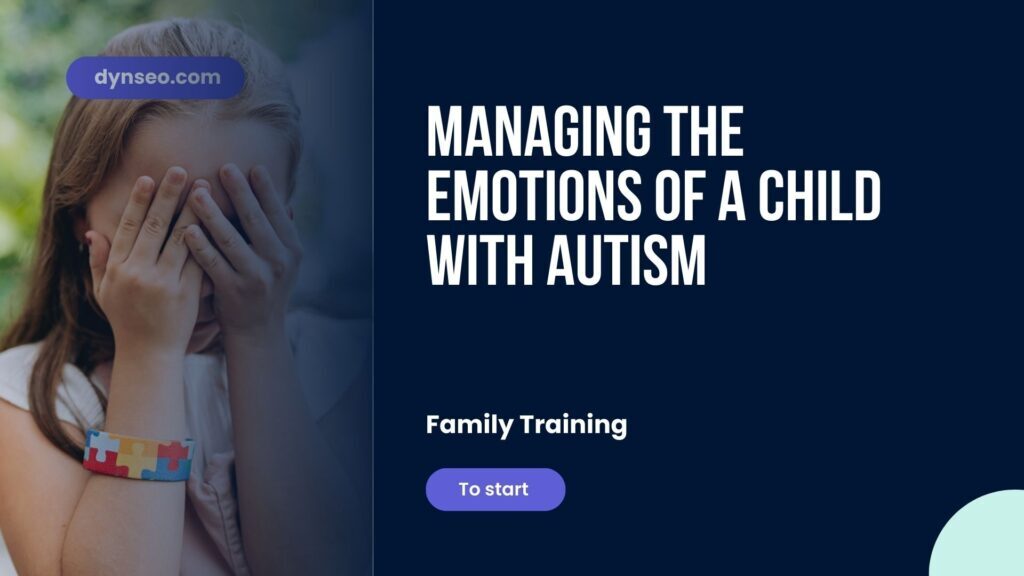
How to Manage Crises of an Autistic Student in Class: Situational Analysis and Solutions
In this article
1. Understanding autism and the mechanisms of crises
Autism, or autism spectrum disorder (ASD), affects communication, social interactions, and behavior. Autistic students may exhibit particular sensory sensitivities, difficulties managing changes, and specific communication needs. Understanding these characteristics is essential for effectively anticipating and managing crisis situations.
Crisis situations in autistic students are not whims but rather reactions to sensory overload, unexpected changes, communication frustration, or accumulated stress. These episodes can manifest as screaming, intense self-stimulatory behaviors, repetitive movements, or sometimes self-directed or outward aggression.
It is crucial to distinguish autistic crises from classic oppositional behaviors. The former are generally involuntary and result from a temporary inability to manage environmental stimuli, while the latter may be more deliberate and related to specific goals.
Main characteristics of autism in a school context:
- Challenges in verbal and non-verbal communication
- Sensory sensitivities (auditory, tactile, visual)
- Need for routines and predictability
- Restricted but deep interests
- Challenges in social interactions
- Different processing of information
Create a "sensory profile" for each autistic student, listing their specific sensitivities, preferences, and warning signs of overload. This tool will be valuable for customizing your approach.
2. Identify the warning signs of crises
Early recognition of the warning signs of a crisis is essential for effective intervention. These signals can be subtle and vary significantly from one student to another, requiring careful observation and a deep understanding of each child.
The warning signs generally manifest on three levels: behavioral, physiological, and emotional. Behaviorally, one may observe an increase in stereotypies (repetitive movements), growing agitation, or conversely, marked social withdrawal. The student may also show increased difficulty following usual instructions or exhibit excessive rigidity in response to minor changes.
Physiological manifestations include changes in breathing rate, excessive sweating, facial flushing, or visible muscle tension. Some students may also exhibit more frequent tics or intensified self-stimulatory movements.
Our specialists recommend using a structured observation grid to document behavioral patterns. This systematic approach allows for the identification of specific triggers and the adaptation of interventions.
• Changes in voice (volume, tone)
• Modifications in eating habits
• Alteration of sleep patterns
• Increased sensitivity to environmental stimuli
• Unusual concentration difficulties
Timeline of warning signals:
- Early phase (30-60 minutes before): Subtle agitation, repetitive requests
- Escalation phase (10-30 minutes before): Visible increase in stress, resistance to instructions
- Critical phase (0-10 minutes before): Obvious alarm signals, urgent intervention needed
COCO, our educational game app for 4-10 year olds: over 30 games to progress while having fun.
Discover the game →
COCO, our educational game app for 4-10 year olds: over 30 games to progress while having fun.
Discover the game →3. Create an adapted and secure classroom environment
The physical arrangement of the classroom plays a crucial role in crisis prevention. A well-thought-out environment can significantly reduce stress factors and provide autistic students with optimal conditions for their learning and emotional well-being.
Brightness must be carefully controlled, favoring soft natural lighting and avoiding flickering neon lights that can be particularly disturbing. The use of curtains or blinds will allow for adjusting the light intensity as needed. Similarly, the classroom's acoustics require special attention: installing absorbent materials can reduce reverberation and create a more comfortable sound environment.
The spatial organization should promote predictability and structure. Each area of the classroom should have a clearly defined function: individual work space, grouping area, quiet corner for emotional regulation. This structuring helps students with autism anticipate activities and feel safe.
Integrate calming digital tools like COCO THINKS and COCO MOVES into your relaxation space. These applications offer relaxation activities and breathing exercises tailored for children with autism.
4. Establish predictable and reassuring routines
Routines are a fundamental pillar for the emotional security of students with autism. The predictability of daily activities allows them to better manage their anxiety and develop a sense of control over their environment. This clear temporal structure significantly reduces the risks of destabilization and crises.
Establishing effective routines begins with creating a detailed visual schedule, using pictograms, photographs, or sequences of images. This tool should be placed in an easily accessible location and consulted regularly with the student. Transitions between activities should be particularly careful, with clear warning signals (visual timer, specific music, gesture signal).
It is essential to include elements of controlled flexibility in these routines. Rather than creating absolute rigidity, the goal is to gradually teach the student how to manage inevitable changes. This can involve the gradual introduction of small variations, always announced in advance and clearly explained.
Our approach involves developing "flexible" routines that incorporate elements of choice and adaptation, thus preparing the student for the changing realities of school life.
1. Fixed routine for 2-3 weeks
2. Introduction of announced minor variations
3. Development of coping strategies
4. Generalization to different contexts
Comprehensive training on managing difficult situations and autistic crises on a daily basis in the classroom.
See the training →
Comprehensive training on managing daily difficult situations related to autism in the classroom.
See the training →5. Develop Appropriate Communication Strategies
Communication with an autistic student in crisis requires specific adaptations to be effective and calming. The choice of words, tone of voice, body language, and even spatial positioning play a crucial role in de-escalating the situation.
Favor simple, concrete, and positive language. Avoid negative formulations or multiple instructions that can increase confusion and anxiety. For example, instead of saying "Don't shout, don't hit, stop moving," opt for "Breathe calmly with me" accompanied by a visual demonstration.
Paralanguage (tone, volume, rhythm) must be carefully controlled. A calm, deep, and slow voice generally has a soothing effect. Avoid significant tonal variations that may be perceived as threatening or unpredictable. Repeating short and reassuring phrases can also help create a predictable and secure sound environment.
Communication Techniques in Crisis Situations:
- Emotional Validation: "I see that you are upset"
- Offering Limited Choices: "Do you want to calm down here or in the relaxation area?"
- Positive Instructions: "Show me your calm hands"
- Temporal Anchoring: "In 5 minutes, we will do..."
- Reminder of Resources: "You can use your comforting object"
6. Implement Emotional Regulation Techniques
Teaching emotional regulation techniques to autistic students is a long-term investment in their autonomy and well-being. These strategies should be taught in advance, during calm moments, to be effective in stressful situations.
Breathing techniques suitable for autistic children may include "butterfly breathing" (short inhales and long exhales while gently flapping the arms), "square breathing" (counting to 4 for each phase: inhale, hold, exhale, pause), or using visual objects like liquid snow globes to pace breathing.
Sensory tools also play a major role in emotional regulation. Weighted cushions, textured stress balls, fidgets, noise-canceling headphones, and objects of varying textures can provide constructive alternatives for the distressed student. The important thing is to personalize these tools according to each child's specific sensory preferences.
Use the COCO THINKS and COCO MOVES app to teach interactive relaxation techniques. The playful and visual aspect of these tools facilitates learning and ownership by autistic students.
A free visual support to help the student identify and channel what they feel — from "I am calm" to "I am going to explode" — before the crisis erupts. To be displayed in class and included in the regulation kit.
Open the free tool →Test to assess the autistic student's ability to recognize and express their triggering emotions.
Take the test →
Test to assess the autistic student's ability to recognize and express their emotions.
Take the test →7. Managing crises: step-by-step intervention protocol
When a crisis occurs despite preventive measures, it is essential to have a clear and appropriate intervention protocol. Effective crisis management relies on quick action, the safety of everyone, and the preservation of the dignity of the student in difficulty.
The first step is to ensure the physical safety of the student and the group. This may require discreetly moving other students away from the area, securing potentially dangerous objects, and creating enough space around the child in crisis. It is crucial not to physically restrain the student unless there is imminent danger, and only according to the protocols established by the institution.
Verbal intervention should remain minimal and calming. Avoid complex questions, logical reasoning, or attempts to explain during the acute phase of the crisis. Focus on a caring presence, validating emotions, and offering concrete solutions to regain calm.
Ensure safety, assess risks, alert if necessary
Calm presence, emotional validation, reduction of stimuli
Offer alternatives, guide to the decompression space
Soothing techniques, breathing, use of sensory tools
Gradual return to calm, hydration, rest if necessary
Debriefing, identification of triggers, adjustments
8. Collaborating effectively with families and professionals
Managing autistic crises cannot be effective without close collaboration among all stakeholders surrounding the student. This collaborative approach helps maintain consistency in interventions and maximizes the chances of success of the strategies implemented.
Communication with families must be regular, constructive, and two-way. Parents have an intimate knowledge of their child, their specific needs, particular triggers, and the strategies that work at home. This family expertise complements pedagogical expertise and should be valued and integrated into the school approach.
Collaboration with specialized professionals (school psychologists, speech therapists, occupational therapists, specialized educators) enriches the pedagogical approach with therapeutic and developmental perspectives. These professionals can propose specific adaptations, assessment tools, and training for the educational team.
Effective collaboration tools:
- Digital liaison notebook: Daily tracking of observations
- Regular team meetings: Monthly points with all stakeholders
- Personalized intervention plan (PIP): Evolving reference document
- Cross-training: Skill exchanges between professionals
- Shared emergency protocols: Clear procedures for everyone
To coordinate teachers, family, and professionals around the student: observations, triggers, and effective strategies shared in one place.
9. Use digital tools and visual supports
Educational technologies and visual supports are valuable allies in managing autistic crises. These tools can serve both prevention, direct intervention, and monitoring progress. Their use must be thoughtful and adapted to the specific needs of each student.
Augmentative and alternative communication (AAC) applications can be particularly useful for students with verbal expression difficulties. They allow for maintaining a communication channel even during moments of intense stress, facilitating the expression of needs and emotions. These tools must be familiar and accessible at all times.
Visual supports for emotional regulation, whether in the form of posters, cards, or interactive applications, provide concrete references for learning and implementing calming strategies. The visual aspect facilitates understanding and memorization for autistic students who are often visual learners.
Discover COCO THINKS and COCO MOVES, our suite of applications specially designed to support autistic children. These tools offer cognitive stimulation exercises, relaxation activities, and games promoting emotional regulation.
• Interactive emotional thermometers
• Visual timers for transitions
• Guided relaxation sequences
• Rhythmic breathing games
• Libraries of soothing sounds
Two complementary supports: stimulate and soothe on one side, communicate on the other.


10. Train the educational team and raise awareness among peers
Training the entire educational team is a fundamental pillar for effective management of autistic crises. This training should be both theoretical and practical, allowing each participant to understand the specifics of autism and master appropriate intervention techniques.
The theoretical training should cover the neurobiological foundations of autism, the various manifestations of the autistic spectrum, sensory and communication peculiarities, as well as scientifically validated pedagogical approaches. This solid theoretical foundation allows teams to develop an empathetic and professional understanding of the challenges faced by autistic students.
The practical dimension of the training includes role-playing, learning de-escalation techniques, and mastering specific tools. Teams should also be trained in behavioral observation, documenting incidents, and reflective analysis of practices.
DYNSEO online training to understand autism and manage difficult situations in class.


11. Continuously evaluate and adjust strategies
The effectiveness of strategies for managing autistic crises must be subject to regular and systematic evaluation. This continuous improvement process allows interventions to be adapted to the student's developments and practices to be refined based on observed results.
The evaluation must focus on several indicators: the frequency of crises, their intensity, their duration, identified triggers, the effectiveness of the various tested interventions, and the impact on the student's learning and well-being. This data collection must be rigorous and objective, relying on standardized observation tools.
The analysis of the collected data must involve all concerned parties: teachers, family, specialized professionals, and, as much as possible, the student themselves. This collaborative approach promotes a comprehensive understanding of the situation and allows for the identification of priority areas for improvement.
Key indicators to monitor:
- Number of crises per week/month
- Average duration of episodes
- Effectiveness of intervention techniques
- Post-crisis recovery time
- Impact on participation in activities
- Evolution of emotional autonomy
12. Preventing professional burnout and maintaining team well-being
The repeated management of autistic crises can generate significant stress among education professionals. It is essential to implement strategies for preventing professional burnout and supporting team well-being to maintain the quality of support in the long term.
Peer support plays a crucial role in managing professional stress. Establishing support groups, collective practice analyses, and decompression spaces allows teams to share their experiences, express their difficulties, and benefit from the support of their colleagues.
Continuous training and professional development also contribute to team well-being by strengthening their sense of competence and confidence in their interventions. Feeling prepared and competent in the face of challenges significantly reduces professional stress and anxiety.
Our support program integrates regular training, clinical supervision, and access to continuous professional development resources.
• Rotation of difficult responsibilities
• Recovery time after crises
• Access to psychological support
• Recognition of efforts and progress
• Training in personal stress management
Frequently Asked Questions
In case of a violent episode, the priority is the safety of everyone. Discreetly move other students away, remove potentially dangerous objects, and maintain a calm presence at a safe distance. Only physically restrain the student as a last resort and according to established protocols. Use a soothing voice and short phrases. Seek help from a colleague if necessary and document the incident for later analysis.
Adapt your explanation to the age of the students. Explain that some people have a brain that works differently and can be overwhelmed by emotions or sensations. Use simple metaphors (like a computer that "crashes" when there is too much information). Emphasize the importance of kindness and explain how they can help (stay calm, continue their activities, offer support when appropriate).
The duration of episodes varies significantly depending on the child, triggers, and the quality of intervention. It can range from a few minutes to several hours in the most complex cases. With appropriate strategies, most episodes resolve in 10-30 minutes. The important thing is to remain patient, maintain a kind approach, and not rush the return to normalcy. A post-episode recovery phase is often necessary.
Contact emergency services in case of: serious injuries to the student or others, severe self-harm behaviors, prolonged episode (more than 2 hours) without improvement, respiratory distress, or if the student shows signs of medical distress (seizures, loss of consciousness). Always inform the responders that it is an autistic child to adapt their intervention.
Digital tools like COCO THINKS and COCO MOVES applications can be very useful, but their use depends on the student's condition. During the acute phase, prioritize simple tools: soothing sounds, reassuring images, or relaxation videos. Avoid complex visual stimuli that could worsen sensory overload. Digital tools are more effective in prevention and during the recovery phase.
Discover our DYNSEO solutions for supporting children with autism
Our COCO THINKS and COCO MOVES applications have been specially designed to meet the needs of children with autism. They offer tailored activities to develop cognitive skills, promote emotional regulation, and support learning in a caring environment.
Crisis management plan for ASD: structured and customizable tool for effective intervention in class.
Discover the tool →
Structured and adaptable plan to anticipate and effectively manage autistic crises in class.
Discover the tool →Did this content help you? Support DYNSEO 💙
We are a small team of 14 people based in Paris. For 13 years, we have been creating free content to help families, speech therapists, care homes and healthcare professionals.
Your feedback is the only way we know if our work is useful. A Google review helps us reach other families, caregivers and therapists who need it.
One action, 30 seconds: leave us a Google review ⭐⭐⭐⭐⭐. It costs nothing, and it changes everything for us.