
Neuropsychologist and Cognitive Assessment: Evaluating the Abilities of an Autistic Child
Understanding Neuropsychological Assessment, the Tests Used, and How to Interpret the Results for Better Support
Dans cet article
Neuropsychological assessment is a valuable tool that helps to understand the cognitive functioning of an autistic child. It is conducted by a neuropsychologist who evaluates various brain functions (attention, memory, executive functions, etc.) and highlights the child's strengths and difficulties. This information guides support and educational adjustments. This guide helps parents understand what neuropsychological assessment is and how to use its results.
What is neuropsychological assessment?
Neuropsychological assessment is an in-depth evaluation of cognitive functions: mental processes that allow for seeing, learning, remembering, reasoning, and solving problems. In autistic children, this assessment helps to discern what is related to autism and what is related to specific cognitive strengths or difficulties. It establishes a valuable individual profile for support.
Average duration of the full assessment
Key cognitive functions assessed
Recommended between two assessments
Cognitive functions assessed
Intelligence (IQ)
IQ tests (WISC, WPPSI according to age) assess verbal and non-verbal reasoning, processing speed, and working memory. In autistic children, the profile is often uneven with significant differences between sub-tests. Therefore, overall IQ is less informative compared to an analysis of strengths and weaknesses.
Attention
The ability to stay focused, maintain attention, ignore distractions, and share attention between multiple tasks. Difficulties with attention are common in autism and can be confused with ADHD, hence the importance of an accurate assessment.
Executive functions
Planning, organization, mental flexibility, inhibition, working memory. These "orchestra conductor" functions are often affected in autism, explaining difficulties in organization, adapting to change, or time management.
Memory
Short-term memory, working memory, episodic memory (personal memories), semantic memory (knowledge). The memory profile of autistic children is often unusual, with strengths (memory of facts) and weaknesses (working memory).
Why conduct an assessment?
Neuropsychological assessment helps to understand why a child is facing certain difficulties (attention issues? planning? memory?), to identify their strengths, to guide rehabilitation, to request relevant educational adjustments, and to monitor development over time.
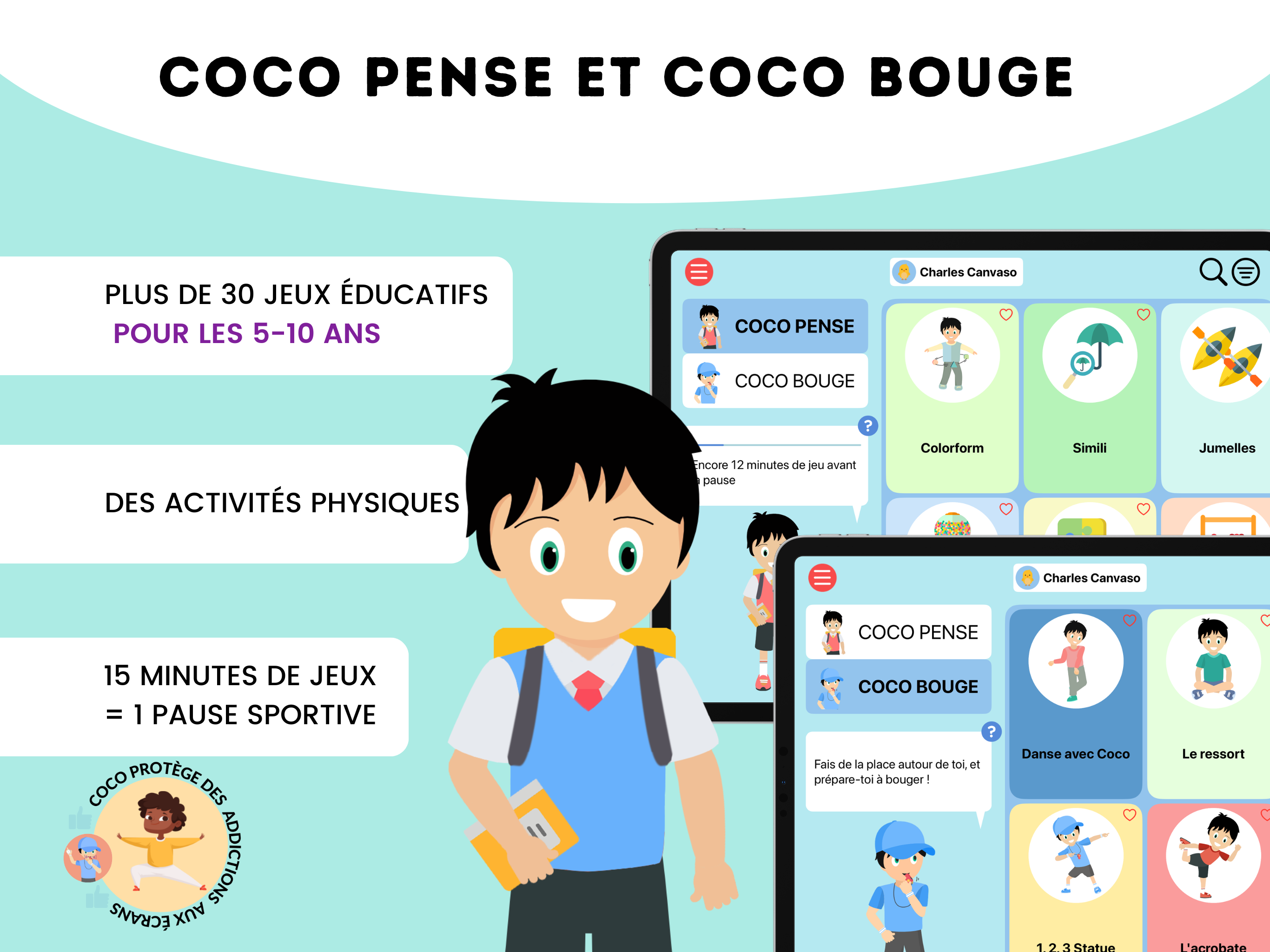
COCO: Training of cognitive functions
After the assessment, DYNSEO's COCO THINKS and COCO MOVES program allows training of the cognitive functions that need strengthening: attention, memory, reasoning. The games target specific tasks and allow for adaptation for progress at different levels. The dashboard tracks progress, in accordance with the neuropsychologist's recommendations.
Discover COCOInterpreting and using the results
The assessment report is technical but the neuropsychologist should explain it in an accessible way during the presentation. Parents may request clarification and concrete recommendations. The report can be shared with the school (for adjustments), with other professionals (for care coordination), and can serve as a reference for measuring development.
"Our son's neuropsychological assessment was very clear. We understood why he feels so much difficulty in being organized despite his intelligence: his executive functions were much lower than his reasoning abilities. This helped us ask for the right adjustments at school and target rehabilitation. It is an investment that is truly valuable."

DYNSEO training to understand cognitive functions
"Supporting a child with autism: keys and solutions for daily life" training helps parents understand their child's cognitive functioning and implement appropriate strategies in daily life, consistent with the recommendations of the assessment.
Find training- Choose a neuropsychologist trained in autism
- Prepare the child for the appointment (location, duration, type of activities)
- Bring existing assessments and reports
- Ask for clear reports and concrete recommendations
- Share the report with the teaching team
- Incorporate recommendations into the individual project
- Plan for reassessment in 2-3 years
Conclusion: A tool for support
The neuropsychological assessment is not the end but a tool to better understand and support your child. Accurately identifying its strengths and cognitive difficulties helps target interventions and obtain necessary adjustments. Tools like the COCO program can train tasks to reinforce in a fun and appropriate way.
To deepen your understanding of autism, see the guide to supporting autistic children and the guide to supporting autistic adults.
Did this content help you? Support DYNSEO 💙
We are a small team of 14 people based in Paris. For 13 years, we have been creating free content to help families, speech therapists, care homes and healthcare professionals.
Your feedback is the only way we know if our work is useful. A Google review helps us reach other families, caregivers and therapists who need it.
One action, 30 seconds: leave us a Google review ⭐⭐⭐⭐⭐. It costs nothing, and it changes everything for us.
