Preparing Medical Appointments with an Autistic Child
Social scenarios, gradual desensitization, and communication strategies for calm and effective medical consultations.
Dans cet article
Medical appointments are often daunting experiences for families of autistic children. The noisy waiting room, the unfamiliar environment, the invasive gestures of the caregiver, the unpleasant sensations of the examination: everything converges to create a situation of intense stress that can result in a crisis, refusal to cooperate, and an incomplete examination. However, with appropriate preparation and effective communication with caregivers, medical consultations can gradually become calmer and more productive.
😰 Why medical appointments are so difficult
For an autistic child, a medical appointment combines almost all possible stress factors: an aggressive sensory environment (lights, antiseptic smells, noises), an unpredictable situation (what will happen?), unwanted physical contact (palpation, auscultation), difficult communication (doctor's questions, instructions to follow), and often a long wait in an unfamiliar place.
Moreover, the perception of pain in autistic individuals is often atypical. Some children exhibit hypersensitivity that amplifies unpleasant sensations, while others show hyposensitivity that masks real pain and makes expressing pain difficult for caregivers to decode. These particularities require specific attention from healthcare professionals.
Aggressive environment
Fluorescent lights, medical smells, noise from machines and other patients in the waiting room
Total unpredictability
The child does not know what will happen, what gestures will be made, and how long it will last
Physical contact
Examination gestures involve physical contact often poorly tolerated by children hypersensitive to touch
📋 Preparing for the consultation in advance
Preparation is the most powerful tool to reduce anxiety related to medical consultations. It should begin several days before the appointment and use concrete supports adapted to the child's level of understanding.
The medical social scenario
A social scenario describing the course of the consultation is a valuable tool. It presents the place (photo of the office or hospital), the person (photo of the doctor if possible), the steps of the consultation (we sit down, the doctor talks, he looks in the ears, he listens to the heart…) and what happens afterward (we go home, we do a pleasant activity). This scenario is read or shown to the child several times before the appointment.
Desensitization through play
Playing doctor at home with a medical kit allows the child to become familiar with the instruments (stethoscope, otoscope, tongue depressor) and the gestures of the examination in a reassuring context. The child can first examine a stuffed animal, then be examined by the parent, reversing roles to feel in control of the situation.
- D-7: introduce the social scenario, play doctor regularly
- D-3: show photos of the place and the doctor, review the social scenario
- D-1: remind the program for the next day, prepare the bag (comfort item, noise-canceling headphones, calm activity)
- Day D: review the social scenario before leaving, bring regulation tools
💡 The consultation bag
Prepare a bag dedicated to medical appointments containing: a comfort item (stuffed animal, fidget), noise-canceling headphones, a calm activity for the waiting room (tablet with COCO, book, quiet game), the social scenario, a reward for after the consultation, and possibly snacks. This bag, always ready, becomes a reassuring reference associated with consultations.
⏳ Managing the waiting room
The waiting room is often the most challenging moment. The child must wait in an uncomfortable sensory environment, not knowing how long the wait will last, surrounded by strangers. Several strategies can make this moment more bearable.
Requesting the first appointment of the day or the first after the lunch break significantly reduces waiting time. If waiting is unavoidable, suggesting to wait outside or in the car rather than in the waiting room can be an option. A visual timer showing the estimated waiting time reduces anxiety related to uncertainty. An engaging activity on a tablet (like COCO games) or a book occupies the mind and reduces perceived time.
🩺 During the medical examination
During the examination, collaboration between the parent and the caregiver is essential. The parent knows the sensory particularities of their child and can guide the caregiver on the necessary adaptations. The caregiver, for their part, brings their medical expertise and ability to adapt their gestures.
Some universal principles facilitate the examination: show and explain each gesture before doing it (“I will look in your ears with this little light”), proceed from the least invasive to the most invasive, allow the child to touch the instruments, respect the need for breaks, praise each step of cooperation, and accept that a complete examination may not always be possible in one consultation.
🦷 Specific consultations: dentist, ophthalmologist, ENT
Some specialized consultations present particular challenges that require specific preparation and sometimes more extensive organizational adaptations.
The dentist
The dental consultation combines intense sensory stimuli (noise of the drill, vibrations, taste of products, light in the eyes, lying down position) and invasive gestures in a particularly sensitive area. Gradual desensitization, with familiarization visits before any treatment, is highly recommended. Some dental offices specialize in welcoming patients with specific needs and have adapted equipment (decorated ceiling visible when lying down, music headphones, dim lighting).
The ophthalmologist
The ophthalmological examination requires specific cooperation (fixing gaze, verbal responses, tolerance of drops and light) which can be difficult for an autistic child. Preparation with photos of the examination and a role-play imitating gaze fixation is helpful. The ophthalmologist can adapt their examination using techniques that do not require the child's active cooperation.
⚠️ The medical passport
A "medical passport" is a synthetic document that you give to the caregiver before the consultation. It summarizes essential information: diagnosis, sensory particularities, communication mode, strategies that work and those to avoid, the child's interests that can be used to capture their attention, and contacts of the follow-up team. This short document (one page) allows the caregiver to quickly adapt without you having to explain everything again at each consultation.
🎮 COCO THINKS and COCO MOVES: occupation and regulation
The COCO THINKS and COCO MOVES program is an excellent companion for medical appointments. On tablet, the games of COCO THINKS keep the child occupied in the waiting room in a constructive and calm manner. Engagement in a familiar and mastered activity reduces anxiety and helps the child stay regulated in a stressful environment.
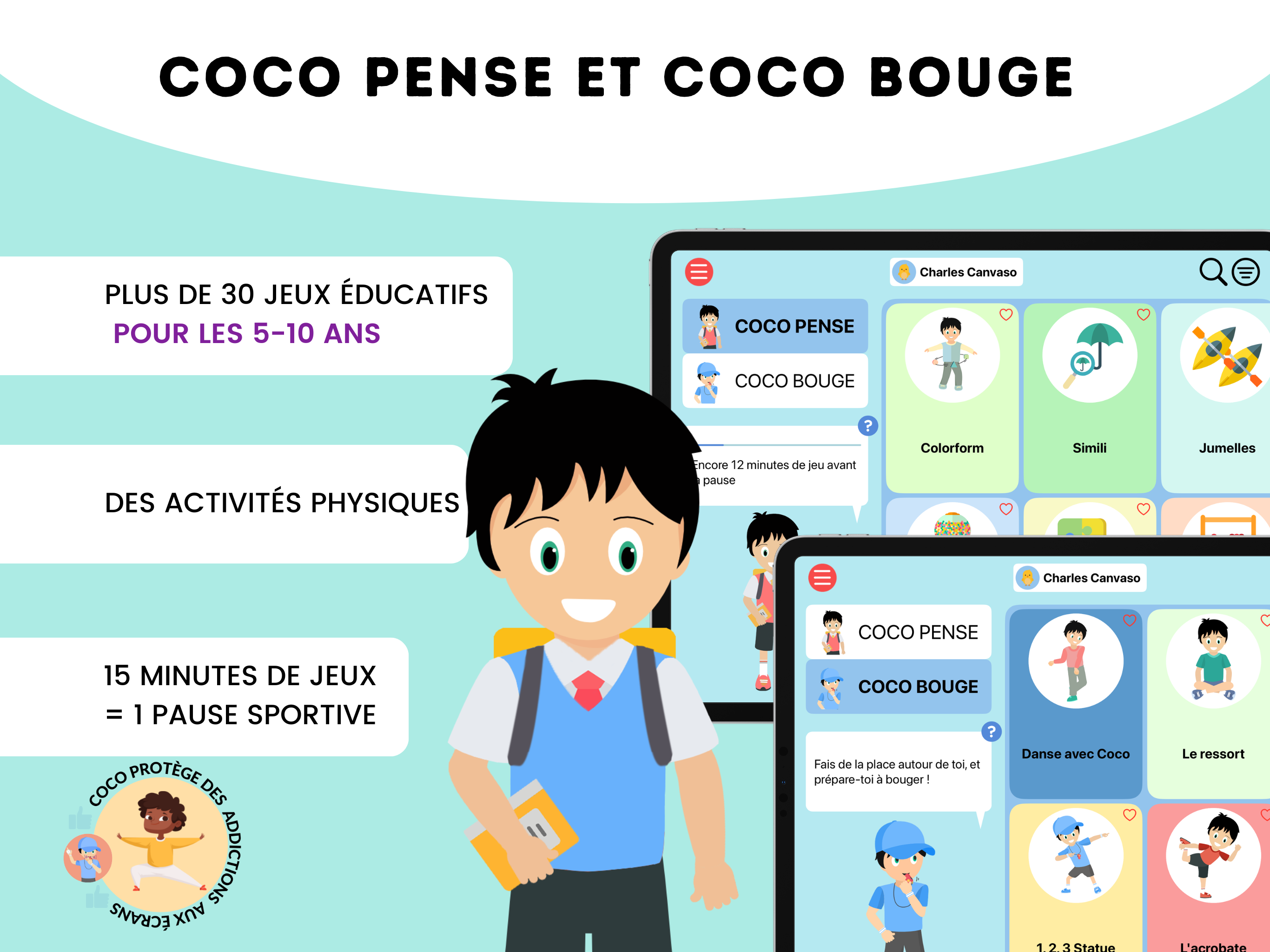
🎯 Discover COCO THINKS and COCO MOVES
A familiar and reassuring program that your child can use in the waiting room to stay calm and occupied.
Discover the COCO program →💬 Communicate effectively with caregivers
Communication with caregivers is a key role of the parent. Not all healthcare professionals are trained in autism, and it is up to parents, experts in their child, to convey essential information for the consultation to go as smoothly as possible.
Communicating the essentials concisely is important because healthcare professionals have time constraints. The medical passport is the ideal tool. In addition, a few key phrases communicated upon arrival make a difference: "My child is autistic, he is sensitive to noise and touch," "He understands visual instructions better than verbal ones," "You can show him the instruments before using them, it helps him prepare."
The DYNSEO guides for supporting autistic children and supporting autistic adults offer additional advice for navigating the healthcare system with an autistic child.
🎓 Train with DYNSEO

🎓 Prepare for everyday challenges
Qualiopi certified training accessible online to master daily support strategies, including medical appointments.
Discover the training →🎯 Conclusion
Medical appointments with an autistic child can be transformed by appropriate preparation. Social scenarios, desensitization through play, medical passport, consultation bag, and regulation tools like COCO THINKS significantly reduce stress and improve the quality of care.
Each successful consultation reinforces the child's confidence and facilitates subsequent consultations. It is a long-term investment that ensures better access to care, better health, and better quality of life for the whole family.
Prepare, support, reward:
Accessible care for every child.
Did this content help you? Support DYNSEO 💙
We are a small team of 14 people based in Paris. For 13 years, we have been creating free content to help families, speech therapists, care homes and healthcare professionals.
Your feedback is the only way we know if our work is useful. A Google review helps us reach other families, caregivers and therapists who need it.
One action, 30 seconds: leave us a Google review ⭐⭐⭐⭐⭐. It costs nothing, and it changes everything for us.