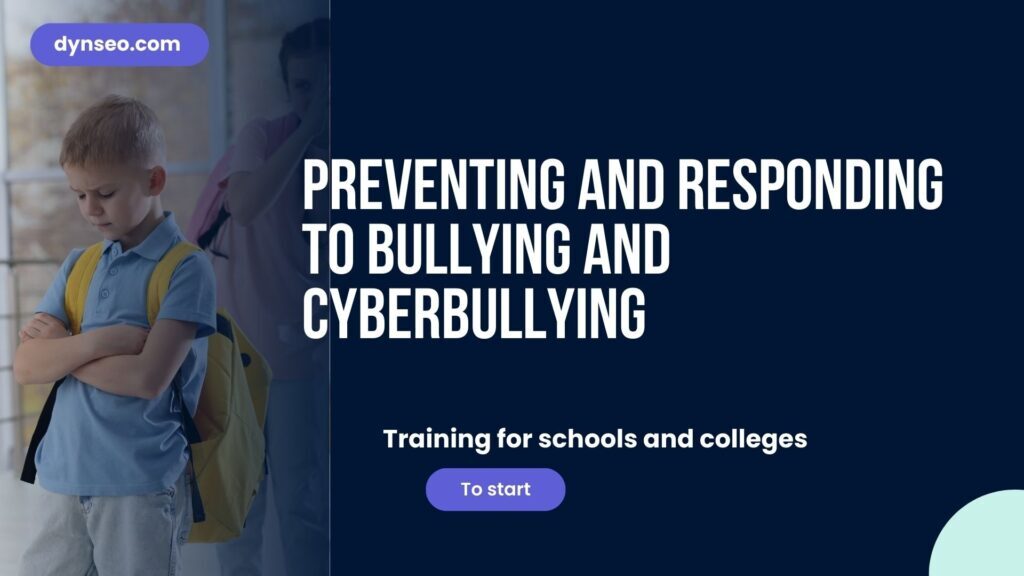
Preventing and addressing school bullying and cyberbullying: the complete guide to understanding what is at stake
Two children from the same class go home on the same evening. One was pushed in the hallway, received an insult, and has already forgotten it by the time he gets home. The other received nothing visible today, but he knows that tomorrow, like yesterday, he will be excluded from the group, mocked quietly, kept at a distance, and that his phone will continue to vibrate in the evening. The first experienced a conflict. The second is experiencing bullying. Knowing how to prevent and address school bullying and cyberbullying starts exactly there: with the ability to distinguish what looks similar on the surface but has nothing to do with the mechanisms or consequences.
In this article
The associated training
The cited resources
 Homework Planner
 Backpack Checklist
This guide is aimed at professionals who work with children and adolescents — educational teams, school health personnel, supervisors, and interventionists in institutions — and anyone who wants to understand what is really at stake, beyond preconceived notions. It does not offer miracle recipes or remote diagnoses. It details exactly what we are talking about, which psychological and social mechanisms are involved, how to spot the signs without succumbing to alarmism, and what research and official recommendations suggest today. The goal is simple: to provide solid references to observe accurately, react at the right moment, and know whom to direct.
The essentials in 30 seconds
Bullying is neither a conflict nor a squabble: it is a repeated violence, based on a power imbalance, from which the victim cannot defend themselves alone. Cyberbullying extends the mechanisms without time or place limits.
- Three criteria define bullying: repetition, intent to harm or nuisance effect, and asymmetry between the perpetrator and the target.
- It is never a two-person story: the group that watches, laughs, or remains silent plays a central role in maintaining the situation.
- The signs are often indirect: withdrawal, somatic symptoms, academic decline, avoidance of school; rarely a spontaneous account.
- Many preconceived ideas worsen the situation: “it builds character,” “he needs to defend himself,” “they're just words.”
- What really helps: protecting the target, acting on the group, never organizing a direct confrontation, and relying on resources and health professionals.
What are we really talking about
The word "bullying" is now used incorrectly and excessively, to the point of losing its meaning. A single argument, an isolated mockery, a disagreement between two equally strong students are not bullying, even if they hurt at the moment. Providing a rigorous definition is not a theoretical exercise: it is what prevents trivializing a serious situation and not dramatizing an ordinary incident in group life.
Researchers and institutions agree on three criteria that, when combined, characterize bullying. None is sufficient on its own; it is their combination that makes the difference.
Repetition
The actions occur regularly, over days, weeks, or months. It is not an event; it is a climate established over time. The victim knows, upon waking up in the morning, that it will happen again.
Intent or effect of harm
The acts aim to hurt, humiliate, exclude — or produce this effect even without a clearly stated intention. What matters is the actual harm suffered, not the justification of the perpetrator ("it was just for fun").
Power imbalance
The target cannot defend themselves on equal terms. The asymmetry can stem from number, popularity, physical strength, verbal ease, or control of information. This is what makes the injunction "defend yourself" absurd.
Bullying, conflict, incivility: three distinct realities
Confusing these concepts leads to inappropriate responses. One tries to "reconcile" where protection is needed, or calls for a heavy procedure where regulation suffices. The following table helps to clarify.
| Conflict | Bullying | |
|---|---|---|
| Power dynamics | Balanced, reversible | Asymmetrical, the target cannot defend themselves |
| Frequency | Occasional | Repeated, established over time |
| Dominant emotion | Anger, shared frustration | Fear, shame, feeling of helplessness in the target |
| Aftermath | Repair possible, the relationship can be rebuilt | The target remains in fear that it will happen again |
| Appropriate response | Mediation, peer regulation | Protection of the target, action on the group, never direct confrontation |
Mediation assumes two parties of comparable status seeking a solution. In a bullying situation, putting the target face to face with their aggressor(s) amounts to making them responsible for resolving a violence they are experiencing, and exposes them to retaliation. This is one of the points on which official recommendations are most firm.
The main forms of bullying
Harassment is not limited to physical blows. It takes several channels, often combined, and the least visible forms are often the most destructive, precisely because they escape the attention of adults.
Physical
Shoving, hitting, vandalism, intrusive gestures. This is the most noticeable form, and therefore the one most often taken seriously — but far from being the most common.
Verbal
Insults, mockery, degrading nicknames, threats. Repeated, these attacks undermine self-esteem while being easy to deny (“ I was just joking ”).
Social or Relational
Exclusion, rumors, organized group exclusion. Invisible and insidious, this form leaves the target without tangible proof to show.
Digital
Online extension of the previous forms: messages, sharing images, exclusion from groups. Without time or location limits, it pursues the target right into their home.
Some insights on the scale of the phenomenon
Figures vary according to measurement methods and the ages studied, which calls for caution. According to UNESCO, globally, nearly one in three students reports having been bullied by their peers in the month prior to the survey. In France, the Ministry of National Education has made the fight against harassment a national priority and has implemented the pHARe program in schools and colleges. It is sufficient to retain a rough estimate here: harassment is not a marginal phenomenon; it potentially affects several students in each class, and some situations remain invisible to adults.
The mechanisms at play, explained simply
To act rightly, one must understand what sustains a harassment situation. Contrary to popular intuition, it is almost never a matter of “bad” versus “good.” It is a system of roles, fueled by a group, that reinforces itself if no one intervenes.
The triangle that does not exist: why the victim-perpetrator duo is a mirage
We often imagine two people: the one who hits and the one who suffers. The reality is broader. Around this core revolves an entire group that gives harassment its oxygen. Imagine a street scene: if no one stops, an incident continues; if just one person intervenes, the dynamic breaks. The playground or discussion thread operates in the same way.
The Author
They initiate the actions. They often seek a status, recognition, a sense of control. They may themselves have been exposed to violence elsewhere. This does not excuse anything, but it partly explains it.
The Followers
They participate without having initiated: they laugh, share, add a comment. They seek to remain on the "right side" and fear becoming the next target.
The Passive Witnesses
They see, often disapprove in silence, but do not act. Their inaction, interpreted as approval, fuels the author's sense of impunity.
The Defenders
They defend the target or alert an adult. They are the ones who can shift the dynamic. The key to prevention is to increase their numbers.
This model of roles has a direct and liberating consequence: bullying is not resolved by "repairing" a victim, nor by only punishing an author. It is defused by acting on the group, that is, by shifting passive witnesses to a defender role. This is the fundamental principle of the most effective approaches.
Why the Target Does Not Speak
The first question from adults is almost always: "Why did they say nothing?". Silence is not passivity or weakness; it obeys very concrete mechanisms.
- Shame. The victim often ends up believing they deserve what is happening to them, or that they are "worthless" for not being able to cope. Speaking means exposing this shame.
- Fear of Retaliation. Reporting risks making things "worse", especially if adults react awkwardly by confronting the students.
- The Code of Silence. The group values the act of "not snitching". The target internalizes this rule and remains silent to avoid adding the label of "informant" to that of victim.
- Protection of Loved Ones. Many children remain silent to avoid worrying their parents, or out of fear of disappointing them.
Since the child will likely not come forward on their own, it is up to the adult to approach them, observe, and create the conditions for possible dialogue: a moment without witnesses, without judgment, without interrogation. One does not force a narrative; one shows that they have noticed and that they are available.
Any Child Can Become a Target
A persistent idea suggests that bullying targets "different" children who, in some way, have "attracted" it. This is false and dangerous. A pretext is always found afterward — an appearance, a background, a way of speaking, a good or bad grade, a disability, a presumed orientation — but this pretext is not the cause: it is manufactured by the group to justify what it is already doing. In other words, it is not the child's characteristic that triggers bullying; it is bullying that seizes upon a characteristic. Keeping this in mind avoids two pitfalls: looking for what the victim "should change" and believing that a child "without particularity" would be safe. None are.
The Snowball Effect
A situation that is not addressed tends to worsen on its own. Each act of aggression without consequences for the perpetrator reinforces their sense of impunity and their status within the group. Each silence from witnesses confirms to the target that they are alone. Gradually, the victim internalizes the degraded image that is reflected back to them: they withdraw, making them more visible as a target, which further fuels the cycle. Understanding this mechanism explains why time works against the target and why early intervention, even if imperfect, is better than a late and perfect response.
Cyberbullying: What Really Changes
Cyberbullying is not a phenomenon separate from school bullying: it is most often its extension. The same students, the same group dynamics, but a context that profoundly alters its impact. Understanding these differences avoids two symmetrical errors: minimizing it ("it's just messages") or treating it as a completely separate world.
| What Distinguishes Cyberbullying | Concrete Consequence |
|---|---|
| No respite: 24 hours a day, 7 days a week | The home, once a refuge, is no longer one; there is no decompression zone |
| A potentially vast audience | Humiliation can be seen by hundreds of people, far beyond the classroom |
| The permanence of traces | Content reappears, is redistributed; the victim relives the event with each share |
| The feeling of anonymity | Behind a screen, restraint falls; some write what they would never say face to face |
| The distance from suffering | Not seeing the target's face reduces empathy and facilitates escalation |
Common Forms
Cyberbullying is not limited to insults. It takes on various forms that are useful to name: spreading rumors or humiliating photos, intentionally excluding someone from a discussion group, identity theft, creating degrading accounts or polls, the "raid" where numerous accounts attack the same person in a short time, or the pressure exerted by sharing intimate images. Each form requires particular vigilance, but all are based on the three criteria mentioned earlier: repetition, intention or harmful effect, imbalance.
When faced with online content, the first useful reflex is to keep dated screenshots (message, username, page address) before any reporting or deletion. These elements are valuable for platforms, the institution, and, if necessary, the authorities. Do not contact the alleged perpetrator directly: document, report, protect.
A clarification is needed: cyberbullying is not "less serious" because there is no physical contact. For the target, the harm is often experienced as more complete, as they no longer have a place to breathe. Closing an account is not enough: rumors circulate, screenshots are shared, and the child constantly fears what is being said in their absence. This is why the response cannot be limited to a technical advice like "block and ignore"; it must combine human support, action on the real group behind the accounts, and mobilization of the resources available for this purpose.
Existing resources in France
It is important for a professional to know the official support points and how to communicate them. In France, the number 3018 is the national number against digital violence (free, confidential), with a dedicated application that allows for the quick removal of content. The 3020 is the number dedicated to school bullying. The 119 (Child in Danger) collects situations of children in danger. These systems are resources, not a sufficient response on their own: they are linked to the action of the institution and, when the child's suffering requires it, with a health professional.
Signs to know, and what is not
Since the child rarely speaks, detection relies on observing indirect signals. No single sign is proof of bullying: it is their accumulation, persistence, and especially their change from the norm that should raise alarms. A naturally discreet teenager is not necessarily suffering; a usually outgoing teenager who suddenly withdraws deserves attention.
Signals from the target's side
At school
Refusal to attend class, stomach or headache on school mornings, unusual tardiness, altered routes, unexplained drop in grades, loss of belongings or repeatedly damaged clothing.
Emotionally
Withdrawal, new irritability, sadness, loss of self-esteem, disparaging remarks about oneself. The child may also become aggressive at home, the only place where they dare to release the pressure.
Physically
Sleep disturbances, nightmares, loss or change of appetite, fatigue, repeated somatic complaints without a medical cause found. The body often expresses what words cannot.
Screen-related
Strong reactions upon receiving a message, anxious checking of the phone, or conversely, sudden abandonment of a very engaged social network or game. The relationship with screens changes without explanation.
What resembles bullying without being it
As much as it is important to recognize signs, it is equally important to avoid overinterpretation, which undermines the alert and exhausts teams. Several situations mimic the signs of bullying.
| What you observe | May be harassment | May be something else |
|---|---|---|
| The child no longer wants to go to school | Avoidance of a violent situation | School anxiety, phobia, learning difficulty, family event |
| Decline in results | Burnout related to a suffered situation | Learning disorder, sleep problem, inappropriate orientation |
| Withdrawal and sadness | Isolation organized by the group | Depressive episode, grief, changes typical of adolescence |
| Conflict with a peer | Harassment if repeated and asymmetrical | Occasional disagreement among equals, reversible |
The role of the professional is not to make a diagnosis, but to describe dated and situated facts — “is isolating during every recess for three weeks,” “refused to enter class two Mondays in a row” — and to pass them on to the appropriate authorities. For any signs of marked or persistent suffering, referral to a doctor or psychologist is necessary: identifying issues is everyone's responsibility, while clinical evaluation is the role of a healthcare professional.
Do not forget the perpetrator
A child who bullies is not simply “a mean child.” This behavior may signal, for them as well, a difficulty: exposure to violence, a poorly channeled need for status, discomfort. Identifying and supporting the perpetrator is part of the response, not out of leniency, but because punishing without understanding does not prevent recurrence and does not provide lasting protection for other students.
Debunking common misconceptions one by one
Many well-intentioned reactions, passed down from generation to generation, actually worsen bullying situations. Naming them allows us to break free from them.
| Common misconception | Why it is false, and what it produces |
|---|---|
| “It has always existed, it builds character.” | The repetition of violence does not toughen; it damages self-esteem and can leave lasting scars. Normalizing it allows it to continue. |
| “He needs to learn to defend himself.” | By definition, the target is in a position of inferiority: asking them to defend themselves alone amounts to blaming them for being victimized and exposes them to escalation. |
| “They are just words, childish behavior.” | Verbal violence and exclusion are among the most frequent and destructive, precisely because they are invisible and denied. |
| “Children will sort it out among themselves.” | Without adult intervention, group dynamics tend to reinforce the perpetrator, not protect the target. |
| “They should just change schools.” | Moving the victim places the burden on them, leaves the system intact, and does not prevent cyberbullying from continuing. |
| “We will call them both in to explain themselves.” | Direct confrontation exposes the target to retaliation and puts them in the position of the accused: this is contraindicated. |
A thread connects all these misconceptions: they place the burden on the victim and leave the group and the perpetrator unaccountable. Reversing this reflex is the first step towards effective action. Protect first, understand the system, act on the collective: this is the reverse logic, and the right one.
❌ To avoid : « What did you do to make them target you? » — this question, even if clumsy, instills guilt. To favor : « I believe you, it's not your fault, and we will take care of it together. » Three messages in one sentence : acknowledgment, shifting responsibility, and a commitment to act.
Transform these guidelines into professional reflexes
20 lessons, 100% online and at your own pace, to learn how to identify, react without worsening the situation, and mobilize the right resources against school bullying and cyberbullying.
Discover the trainingWhat research and recommendations say
Several decades of work, particularly from Scandinavian countries, and the initiatives implemented in France converge towards stable principles. Knowing them prevents us from reinventing responses that we already know do not work.
Act on the climate, not just on the cases
The most robust approaches do not merely address situations on a case-by-case basis : they work on the overall school climate. An environment where relationships are nurtured, where rules are clear and shared, and where the voices of witnesses are valued, mechanically produces less bullying. Prevention is not a one-off module; it is a culture within the institution.
Rely on witnesses
This is one of the most robust lessons : acting on witnesses is more effective than focusing solely on the perpetrator-victim duo. A group that no longer fuels, no longer encourages, and dares to report deprives bullying of its engine. Many programs are based on this shift : giving children concrete words and actions to no longer be passive spectators.
In France : the pHARe program
The Ministry of National Education has generalized the pHARe program in schools and colleges. It is based on training resource personnel, forming dedicated teams, raising student awareness, involving families, and a method of handling situations that prohibits direct confrontation. For a professional, training also means knowing how to fit into this national framework rather than improvising alone.
The timeliness and consistency of the response
Two parameters consistently emerge from the research : the earlier the intervention, the more effective it is, and the more consistent the response from one adult to another, the more it protects. A child quickly detects inconsistencies : if one supervisor reacts and another turns a blind eye, if the same remark is sanctioned one day and ignored the next, the message sent is that there are zones and moments where "it passes". The fight against bullying therefore requires a shared framework, known to all staff, including those who do not have a direct educational role. This also justifies the need to train teams broadly rather than relying on the goodwill of a few.
Direct confrontations between the perpetrator and the target, purely punitive sanctions without working on the group, and the systematic relocation of the victim are among the responses deemed ineffective, even counterproductive. They can exacerbate the situation and reinforce the target's sense of helplessness.
The role of psychosocial skills
Research highlights the importance of developing psychosocial skills in all children: being able to name their emotions, regulate them, empathize with others, cooperate, and ask for help. These skills cannot be taught through a poster, but through regular and embodied activities. It is foundational work that reduces both the risk of becoming a perpetrator and the vulnerability to becoming a target. Cognitive and educational stimulation applications, such as the COCO app for children aged 5 to 10, can additionally support attention, memory, and regulation, which are the foundations on which these skills are built.
The key stages of the process
When a situation is identified, there is a timeline that protects the target and avoids missteps. It does not replace your institution's protocols or national systems: it provides guidelines to avoid navigating blindly.
- Welcome the words and reassure. Listen without questioning like an investigator, believe the child, clearly tell them that they are not responsible and that they did the right thing by speaking up. This is the foundation for everything else.
- Immediately protect the target. Ensure their safety, adjust what can be adjusted without stigmatizing them, and avoid anything that would put them in the presence of the perpetrator.
- Gather and record the facts. Note dated and concrete elements, keep digital evidence, without conducting your own biased investigation.
- Alert and communicate. Inform the team and hierarchy according to procedures, mobilize resource persons and systems (3020, 3018, 119 depending on the situation).
- Act on the group. Work with witnesses and the perpetrator according to the method chosen by the institution, without direct confrontation, to diffuse the dynamics.
- Ensure long-term follow-up. A situation is not resolved just because it has calmed down: regularly check that the target is doing better and that nothing is resurfacing quietly.
Many situations seem resolved but then discreetly resurface. Planning regular check-ins with the target and remaining attentive to subtle signals prevents harassment from re-emerging in another form, especially online, which is harder to detect.
Prevent before having to react
Taking action in response to an established situation is essential, but it is always more costly than preventing it from arising. Prevention does not rely on a spectacular action once a year: it is played out in daily life, through a multitude of small gestures that, together, shape an environment. Clearly naming the rules of respect and reminding everyone without dramatizing, regularly valuing students who protect rather than those who dominate, organizing the most at-risk times and places such as recess, hallways, or locker rooms, and openly discussing digital usage without demonizing screens: these are all accessible levers. A classroom where everyone knows that an adult will respond, and that a witness who alerts will be supported and not mocked, is a classroom where bullying struggles to take hold.
Involving families without opposing them
Families — both the target and the perpetrator — are partners. For the target, they are informed, reassured about the measures taken, and not made to feel guilty. For the perpetrator, they are involved in the educational work without being put on the defensive, as a cornered parent will protect their child instead of cooperating. Again, it is facts and a framework, not judgments, that make dialogue possible.
What really helps, what is useless
In identical situations, some responses protect while others worsen the situation. Here is a practical sorting between the two.
- Believing the target from the outset and removing any responsibility from them for the situation.
- Acting on the group and mobilizing witnesses to cut off the engine of bullying.
- Documenting dated facts and preserving digital evidence before any reporting.
- Relying on the institution's protocols and national measures.
- Ensuring regular follow-up over time, even after a calm period.
- Referring to a healthcare professional as soon as there is marked or persistent suffering.
- Organizing a direct confrontation between the perpetrator and the target.
- Asking the victim to "defend themselves" or to "let it go".
- Moving the target while leaving the system intact.
- Sanctioning without any educational work or action on the collective.
- Minimizing ("it's just words") or promising that "it will sort itself out".
- Conducting a one-sided investigation outside of any framework.
Concrete words for key moments
Knowing exactly what to say can often make a difference in the moment. Here are some protective phrases to adapt to the child's age.
| Situation | Words that help |
|---|---|
| The child dares to speak | “Thank you for telling me. I believe you. You are not to blame. We will take care of this together.” |
| They minimize what they are experiencing | “What hurts you matters, even if others find it trivial. I take you seriously.” |
| They fear retaliation | “We will act without putting you in danger. I won’t do anything that puts you in front of them.” |
| A witness comes to see you | “You did the right thing by coming. It’s not reporting; it’s protecting someone.” |
Concrete resources to support daily life
Some difficulties surrounding bullying — anxiety, loss of bearings, overwhelming emotions — can be supported by simple resources. The emotional regulation toolkit for teens and the cognitive restructuring sheet for anxiety help articulate what is happening and regain a sense of control. To reconnect a student disengaged due to school avoidance, the weekly homework planner, the backpack checklist, or a school gamification system provide concrete support points. These resources are free, just like the entire tool catalog. They never replace human support or, if necessary, the follow-up of a healthcare professional: they extend it.
What is each person's responsibility
An effective response to bullying is always collective. Confusing roles leads either to inaction (“it's not my place to act”) or to excessive zeal that bypasses competent professionals. The table below clarifies who does what.
| Your daily role | What is the responsibility of the team and the institution | What is the responsibility of specialized professionals |
|---|---|---|
| Observe and describe dated facts | Cross observations, activate the protocol | Assess psychological distress (doctor, psychologist) |
| Welcome the words, reassure, protect | Coordinate action within the group | Make a diagnosis, propose treatment |
| Preserve digital evidence | Ensure official reporting | Handle any potential legal follow-up |
| Alert without conducting an accusatory investigation | Involve families within a framework | Support the child over time (care, guidance) |
| Ensure close follow-up | Foster a positive school climate culture | Support the perpetrator if follow-up is indicated |
In the presence of a life-threatening risk — self-harming behavior, serious threat, acute distress — do not hesitate: contact your country's emergency services immediately and follow the institution's procedures. In France, 119 (Child in Danger) can be contacted for any situation involving a child in danger. Caution always takes precedence over analysis.
This clarity of roles has another benefit: it protects the professionals themselves. Supporting bullying situations is challenging; it engages one's emotions, sometimes even personal memories. Knowing precisely where one's responsibility ends, to whom to pass information, and which resources to rely on prevents exhaustion and the feeling of helplessness that can overwhelm someone who thinks they must resolve everything alone. Documenting, passing on information, and relying on the collective is not shirking responsibility: it is exactly what makes action sustainable.
Retaining this distribution liberates and empowers everyone: no one has to bear everything alone, and each person has an indispensable role. It is precisely because bullying is a group phenomenon that it calls for a team response.
To go further
Everyday situations10 difficult situations encountered daily and how to respond concretely
ToolboxActivities, resources, and concrete adjustments to implement in response to bullying
Professional posturePosture, teamwork, and skill development around school bullying
To complement this approach, the catalog of free tools and the cognitive tests from DYNSEO provide directly usable resources. On the application side, CLINT is aimed at adults and the field of mental health, while COCO supports younger individuals in developing attention and self-regulation.
Frequently Asked Questions
How to differentiate between a simple conflict and harassment?
Three criteria help to decide: repetition, intent or harmful effect, and power imbalance. A conflict involves two people of comparable strength, it is occasional and reversible: the relationship can be rebuilt. Harassment is repeated, established over time, and the target cannot defend themselves on equal terms. The dominant emotion speaks volumes: in a conflict, anger is shared; in harassment, the target mainly feels fear, shame, and helplessness. In case of doubt, one should describe the observed facts and report them rather than concluding alone.
Why should one never organize a confrontation between the perpetrator and the victim?
Because a direct confrontation assumes two parties of equal status, which is never the case here. Putting the target face to face with their aggressor(s) places them in the position of the accused, exposes them to retaliation, and makes them bear the burden of resolving a violence they are experiencing. Official recommendations, particularly within the framework of the pHARe program, prohibit this approach. Instead, one acts separately: protect the target, work with the group and with the perpetrator using a structured method, without ever bringing them together to "explain" themselves.
What to do concretely in the face of cyberbullying?
The first reflex is to keep evidence: dated screenshots with the username and the page address, before any reporting or deletion. Do not contact the alleged perpetrator yourself. Then report the content to the platform and rely on dedicated resources: in France, 3018 for digital violence, 3020 for school harassment, 119 for a child in danger. Inform the institution according to the procedures. Finally, support the child, as the lack of respite inherent to the digital world makes this form particularly distressing.
My child or the student says nothing: how to know?
Silence is more the rule than the exception, due to shame, fear of retaliation, or the desire to protect loved ones. Therefore, one should rely on indirect signals: refusal to go to school, stomach aches in the morning, drop in grades, withdrawal, sleep disturbances, unusual reactions to screens. No sign is proof by itself: it is their accumulation and especially their change from the norm that should raise concern. Rather than waiting for a confidence, approach the child in a moment without witnesses, without interrogation, showing that you have noticed and that you are available.
Is a bullying child necessarily a "mean" child?
No. A perpetrator's behavior often indicates a difficulty: poorly channeled quest for status, exposure to violence elsewhere, discomfort. This does not excuse the actions and does not prevent the establishment of a firm framework, but it guides the response. Punishing without understanding or working with the group does not prevent recidivism and does not provide lasting protection for other students. Supporting the perpetrator, helping them develop empathy and emotional regulation, is part of an effective response. If significant discomfort appears, a referral to a healthcare professional is indicated, for them as well.
This guide is intended for general professional information. It does not replace a clinical evaluation, the protocols of your establishment, or the support of a healthcare professional. For any child showing signs of significant or persistent distress, referral to a doctor or psychologist is necessary. In case of immediate danger, contact your country's emergency services without delay.
Effectively preventing and addressing school bullying and cyberbullying is not about having a recipe; it’s about adopting a perspective: recognizing repeated and asymmetrical violence where others see a "squabble," understanding that the group contributes to the situation as much as the perpetrator, protecting the target without ever putting them on the front line, and engaging in a team response rather than acting alone. These guidelines require practice and reinforcement. This is the purpose of dedicated training: to move from intuition to reliable professional reflexes.
Train to act accurately
20 lessons, 100% online, unlimited access at your own pace, €90. Certified organization Qualiopi (No. 11757351875), certificate of completion awarded to each participant.
Discover the training — €90Did this content help you? Support DYNSEO 💙
We are a small team of 14 people based in Paris. For 13 years, we have been creating free content to help families, speech therapists, care homes and healthcare professionals.
Your feedback is the only way we know if our work is useful. A Google review helps us reach other families, caregivers and therapists who need it.
One action, 30 seconds: leave us a Google review ⭐⭐⭐⭐⭐. It costs nothing, and it changes everything for us.