
📄 PDF Collections Your workbooks for the holidays, in PDF Discover →
Logo

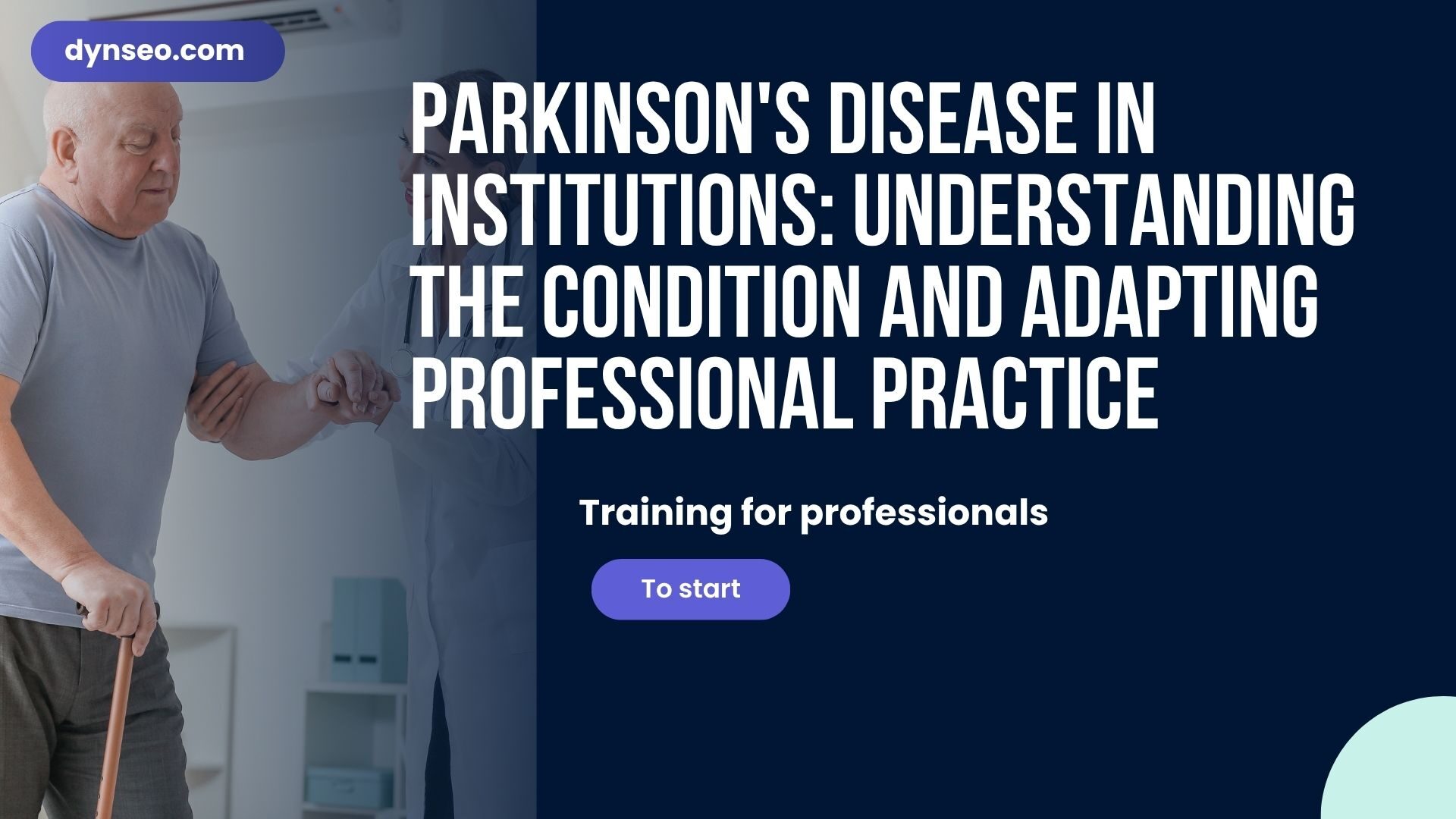
Parkinson’s Disease in Institutions: Understanding the Condition and Adapting Professional Practice

Categories: Family
Wishlist Share
Share Course
Page Link
Share On Social Media

About Course

This 6 to 7-hour training is aimed at professionals working in facilities (care assistants, nursing assistants, nurses, activity coordinators, caregivers in and caregivers in nursing homes, community nursing services, or hospital-at-home care). Parkinson’s disease is much more than a motor disorder: it affects cognition, emotions, sleep, communication, and autonomy in a progressive and unpredictable manner. This training provides professionals with a comprehensive understanding of the disease in all its dimensions and concrete tools to adapt care, activities, and the support relationship at each stage of progression. At the end of the training, each participant will be able to adjust their practice to the specific profile of each resident with Parkinson’s disease, taking into account motor fluctuations, treatment effects, and cognitive and emotional needs.

Show More

Course Content

Module 1 – Understanding Parkinson’s Disease

  • Lesson 1 – Neurological mechanisms of Parkinson’s disease
    11:30
  • Lesson 2 – Motor symptoms — recognizing and understanding
    11:10
  • Lesson 3 – Non-Motor Symptoms — The Iceberg of Parkinson’s
    11:25
  • Lesson 4 – The progression of the disease by stages
    11:17

Module 2 – Treatments and their effects on daily life

Module 3 – Adapting care to motor constraints

Module 4 – Cognitive disorders and stimulation in institutions

Module 5 – Communication and support relationship

Module 6 – Sleep, pain, and quality of life

Module 7 – Coordination and teamwork around the resident with Parkinson’s disease

Module 8 – Complex situations and practical cases

Student Ratings & Reviews

No Review Yet
No Review Yet

Frequently asked questions

Parkinson’s Disease in Institutions: Understanding the Condition and Adapting Professional Practice

Who is the Parkinson's disease training for professionals in institutions designed for?

It is designed for professionals working in care facilities: care assistants, nursing assistants, nurses, activity coordinators, caregivers in nursing homes, community nursing services and hospital-at-home care. The training, Parkinson's Disease in Institutions: Understanding the Condition and Adapting Professional Practice, helps them adjust care, activities and the support relationship to each resident with Parkinson's.

Does this training cover non-motor symptoms of Parkinson's disease, or only tremors and movement?

It covers both. The first module explains the neurological mechanisms, the motor symptoms and how to recognise them, the non-motor symptoms (described as the iceberg of Parkinson's) and the stages of the disease. The training stresses that Parkinson's also affects cognition, emotions, sleep, communication and autonomy in a progressive, unpredictable way.

Will I learn about Parkinson's medication and ON/OFF fluctuations?

Yes. The second module explains dopa therapy, the reference treatment, then motor fluctuations with ON and OFF phases, treatment side effects to watch for, and non-drug treatments and advanced devices. A later module also looks at managing medication as a team, so you can adapt care to each resident's fluctuations.

What practical care adaptations does the Parkinson's training teach?

It teaches how to adapt toileting and hygiene, dressing, eating and swallowing, and mobility and fall prevention to motor limitations. It also covers adapted communication and cognitive stimulation, managing hallucinations, and real situations such as freezing and falls, ending with an evaluation and a personal action plan.

How does the online Parkinson's training from DYNSEO work, and how long are the lessons?

The DYNSEO training is 100 % online and followed at your own pace, with no fixed schedule. The whole course takes about 6 to 7 hours. Each lesson lasts between 15 and 25 minutes, so you can progress step by step, one lesson at a time, around your working day.

Can I go back over the lessons after finishing the Parkinson's training?

Yes. Access to the training stays open over time, so you can return to any lesson as often as you wish. This is useful for revisiting topics such as motor fluctuations, swallowing, freezing or communication whenever a situation with a resident with Parkinson's calls for it.

What do I get at the end of the Parkinson's disease training?

You receive a certificate of completion at the end of the course, after the final evaluation, personal action plan and final quiz. You will also be able to adjust your practice to the profile of each resident with Parkinson's, taking into account motor fluctuations, treatment effects and cognitive and emotional needs.

Hi, I am Coach JOE!
En ligne

🛒 0 My cart