Letter to my DYS child: messages of encouragement and support
Being the parent of a DYS child often means having a heavy heart seeing them suffer. This guide gives you the words — and the letters ready to offer — to tell them what they need to hear, at the right time and in the right way.
Dans cet article
La formation associée
Les ressources citées
 Aide mémoire confusions b/d p/q
 Grille de relecture orthographique
 Tableau 3 colonnes
 Imagier des sons complexes
 Tableau de suivi articulatoire
 Test mémoire
 Test concentration
Your child comes home from school in silence, red-eyed, head down. Or they violently drop their bag saying "I'm useless." Or they refuse to open their notebooks for three days. You know they are not useless. You know they work twice as hard as others for results that are half as visible. You see their invisible efforts, their real fatigue, their intelligence that school has yet to measure. But finding the right words in those moments is difficult. This guide is here for that. It not only gives you the keys to understand what a DYS child experiences internally, but also four complete letters — tailored to their age and situation — that you can give them, read to them, or simply place on their desk one evening. Letters that say what parents know deep down but sometimes struggle to articulate out loud.
1. What a DYS child experiences internally: the emotional reality
1.1 Much more than a school difficulty: an identity wound
DYS disorders — dyslexia, dysorthographia, dyscalculia, dyspraxia, dysphasia — are neurobiological learning disorders. But in a child's daily life, they do not manifest as abstract disorders: they manifest as repeated failures in tasks that "everyone" succeeds at, as looks from others, as red grades, as teachers' sighs, as hours of work that do not yield the expected results.
What the DYS child gradually builds from these experiences is a representation of themselves that can become profoundly negative. The child does not say "I have a phonological awareness disorder" — they say "I'm useless at reading." They do not say "my visuospatial processing pathways are atypical" — they say "I'm stupid." This shift from specific difficulty to a global self-definition is one of the most dangerous mechanisms of unsupported DYS disorders: the child ends up believing that what they cannot do entirely defines them, forgetting everything they can do.
Research in school psychology shows that the self-esteem of unsupported DYS children significantly declines between first grade and third grade — precisely the period when written learning becomes central and when gaps with peers become visible and commented on. This early decline in self-esteem has consequences that go far beyond the school journey: it influences life choices, the level of ambition the child allows themselves, their ability to ask for help in adulthood.
of DYS children have significantly degraded school self-esteem by second grade (INSERM, 2018)
more risk of anxiety syndrome in unsupported DYS children vs. monitored DYS children (personal independence / care allowance, 2020)
of children are affected by a DYS disorder in France — an average class of 25 students has 2 to 3 DYS children
of academic self-esteem in DYS children whose parents practice positive reinforcement communication
1.2 The most common limiting beliefs in DYS children
To talk to your DYS child in a truly effective way, you must first understand the thoughts they do not always express out loud — the inner beliefs that color their view of themselves and the future. These beliefs, formed through repeated experiences of failure and comparison, are cognitive shortcuts that the brain generates to make sense of a difficult reality. They are not the truth — but they are real for the child who holds them.
📉 Beliefs about their abilities
- “I am useless, stupid, less intelligent than others”
- “I will never succeed, it’s pointless to try”
- “Even when I work, it doesn’t work”
- “I am different from others in a bad way”
- “Others don’t need to put in as much effort to succeed”
😰 Beliefs about how others see them
- “Others mock me or pity me”
- “The teacher thinks I don’t make an effort”
- “My parents are disappointed in me even if they don’t say it”
- “I am a shame / a problem for my family”
- “My friends will eventually not want to be with me”
🔮 Beliefs about the future
- “I won’t be able to pursue the studies I want”
- “DYS is forever, it will never change”
- “I will always be behind others”
- “I won’t find a job that suits me”
- “My life will be harder than others’”
💔 Beliefs about family
- « I make my parents suffer / I complicate their lives »
- « My brother / sister doesn't have these problems, I am the problem »
- « They pretend to be confident but I worry them »
- « I don't want them to know how hard it is »
- « I have to hide my difficulties from them to protect them »
1.3 What the letter does that the conversation doesn't always do
One might wonder why to write a letter rather than simply say the same things out loud. The answer lies in the psychology of communication under emotional stress. When a child is in a state of emotional distress — after a bad day at school, after a failed assignment — their nervous system is in defensive mode. The words spoken in those moments are received through the filter of their suffering: encouragements may sound hollow, explanations may seem like minimizations, and even declarations of love may be interpreted as pity.
The written letter works differently. The child reads it at their own pace, in the moment they choose, often alone — without the social pressure of having to react in real-time. They can reread it as many times as they wish. It can become an object they keep, that they consult on bad days, that they find years later and that will remind them of what you really thought of them. It is also a commitment on your part, materialized by the written word: written words carry a different weight than spoken words. For a DYS child, whose relationship with writing is often painful, receiving a beautiful and meaningful letter is also a strong symbolic act.
2. What your child needs to hear
2.1 The five fundamental messages
Before giving a letter to your child, it is useful to understand the five fundamental messages that must come through any supportive communication to a DYS child. These messages are not magic formulas — they are deep truths about them, about you, and about what DYS really means, which you will express in your own words.
3. Four letters ready to offer to your child
3.1 How to use these letters
The four letters that follow are templates that you can use as is, adapt, or simply read for inspiration in your own wording. The essential part is not the exact words but the messages they convey. You can replace the generic name with your child's name, add references to situations or strengths that are unique to them, or remove anything that does not fit your family context. What matters is that your child feels that this letter is about them — specifically them, not a generic DYS child.
Letter 1 — For a child aged 6 to 8 who has just learned they are DYS
After the announcement of the diagnosis or at the beginning of support
My love,
I wanted to write you this letter because there are important things I want you to know — really know, not just heard once and forgotten.
The doctors told us that your brain works in a particular way to learn to read and write. It's called dyslexia. It is not an illness. It is not something you did wrong. It’s simply that your brain has chosen another route to get to the same place. And sometimes, this other route is longer and more difficult at first.
But you know what they say about the most difficult paths? They often lead to the most beautiful places.
I want you to know that you are not worthless. Not at all. You are actually someone truly remarkable. You notice things that others do not see. You have a way of thinking that surprises and amazes. You are curious, funny, and you understand people in a way that is rare.
The difficulties you have in class are not your fault. They do not mean that you are less intelligent. They mean that you need a little help to find your way — and that’s why we are here, with you, to walk alongside you on this path.
I love you just as you are. Not as you should be. Not if your results improve. Right now, just as you are, with all your difficulties and all your strengths.
With all my love, forever.
Letter 2 — For a child aged 9 to 12 who is experiencing repeated school difficulties
After a difficult period at school, a failed assignment, or a moment of discouragement
My dear,
I know that these last few times have been tough. I’ve seen how hard you work. I’ve seen the hours you spend on your homework, the nights you fall asleep exhausted on your notebooks, the mornings you leave for school with that little weight in your stomach. I see all that, even when you don’t say it.
And I want you to know: what you do every day takes immense courage. Really. You are facing something that is objectively harder for you than for others. Your brain works twice as hard to achieve the same result. This is not an excuse — it’s the neurological reality. And in this reality, your efforts are worth double.
Your grades do not reflect who you are. They do not measure your creativity, nor your way of solving problems in a way that no one else would have found, nor your empathy, nor the intelligence of your questions. School measures certain things — it does not measure everything.
There are famous people who had a brain like yours: Richard Branson, Steven Spielberg, Agatha Christie. Not because it made them simpler — but because their way of thinking differently was precisely what made them extraordinary.
We will continue to search together for the tools that help you. But whatever the path, I want you to know that in my life, you are already a success. Not future. Present.
I am proud of you. Really, really proud.
Letter 3 — For a teenager who is losing confidence in themselves
For a teen who talks about not being able to make it, who questions their abilities or their future
My [first name],
I’m not going to tell you that it’s easy. It’s not easy. And you have the right to find it unfair — because, in some respects, it is.
But I want to tell you something that took me a long time to understand myself, and that I want you to have now: the way your brain works is also what makes you you. Your way of seeing the world differently, coming up with ideas that others wouldn’t, finding connections where others see separate boxes — this is not a manufacturing defect. It’s a different architecture.
I know that sometimes you doubt your future. And I understand where that doubt comes from — years of a school that hasn’t always seen you. But this future, I want you to know that I see it. I see the areas where you excel. I see your intelligence in the conversations we have, in your passions, in the way you analyze people and situations.
DYS disorders do not define a ceiling. They define a different path.
Successful DYS adults — and there are many, in all fields — do not succeed despite their different brain. They succeed with it. Because they have learned to turn what was a constraint in class into an asset in real life.
I’m not asking you to believe it today if it’s too hard. I’m just asking you to let me believe it for you, for now, until you can do it yourself.
I love you. Unconditionally. Forever.
Letter 4 — After a particularly difficult time at school
After a mockery, a school humiliation, a painful report card, or a hurtful comment from an adult
My heart,
I know that what happened today hurt you. And I wish I had been there to prevent it.
What you were told — or what you felt in that classroom — was wrong. Not wrong because I am your parent and I defend my children (even though that is also true). Wrong because it is neurobiologically, scientifically, humanly wrong.
You are not "behind." You are following a different path. The difference between the two is fundamental: being behind can be caught up on the same road — the different path leads elsewhere, not less far.
What you feel tonight — anger, sadness, the desire to give up everything — these feelings are normal and they have the right to be there. You don't have to pretend that everything is okay if it's not. Cry if you need to. Tell me how you feel if you want. Or keep it to yourself if you prefer, for now.
But tomorrow morning, remember this: the people who make you feel less than what you are say more about their own understanding of the world than about you.
You continue. Not because it's easy. Because you are bigger than this difficult moment. And because I will be there, by your side, at every step.
I am proud of you. Tonight more than ever.
4. Beyond letters: strengthening self-esteem in daily life
4.1 The micro-moments that build or destroy confidence
Big letters and important conversations have their place — but the self-esteem of a child with DYS disorders is built (or destroyed) mainly in the micro-moments of daily life. The way you react when they show you their corrected homework, the tone you use to approach revisions, what you prioritize commenting on in their notebooks — these repeated interactions dozens of times a week have a cumulative impact far greater than big occasional discussions.
Comments focused on mistakes
“More mistakes!” / “Did you forget the accents again?” — Even said with kindness, focusing on mistakes confirms the belief “I am worthless.”
First recognize effort and progress
“I saw that you reread it twice — that’s exactly what we’re working on.” → Name the virtuous behavior before correcting the mistake.
Comparisons with siblings or peers
“Your brother doesn’t have this problem” / “Other children manage” — even if unintentional, comparison confirms the belief of inferiority.
Comparison with one’s own progress
“Do you remember three months ago, these words were impossible for you? Look now.” → Measure yourself against yourself, not others.
Valuing only academic results
Celebrating only good grades and remaining neutral towards other successes creates a link between personal value and academic performance.
Value widely: sports, art, social, character
Regularly naming successes in all areas — including kindness, perseverance, creativity — broadens identity beyond school.
4.2 Talking about DYS with your child according to their age
Explaining DYS to your child is a delicate exercise: too technical, the explanation doesn't resonate; too minimized, it doesn't help them understand their difficulties; too dramatized, it causes anxiety. The optimal register depends on the child's age and level of maturity.
| Age | What they understand | The key message | What not to say |
|---|---|---|---|
| 5–7 years | Concrete differences, not abstract explanations | “Your brain learns in a special way. That's why we're going to get help.” | Medical terms, prognoses, comparisons of “level” |
| 8–10 years | The principle of neurological difference, the notion of strengths and difficulties | “You have a DYS brain — it's made differently, not worse. It has superpowers and challenges.” | Implying it's temporary if it's not; minimizing real difficulties |
| 11–14 years | Accessible scientific explanations, examples of DYS personalities | “Here’s what happens in the DYS brain, and here’s why some things are harder for you. It’s not an excuse — it’s an explanation.” | Promising that “it will go away”; using DYS as a systematic excuse for unrelated difficulties |
| 15 years and up | Nuance, research, basic neurobiology | “DYS doesn't go away, but the strategies you develop now will serve you for life.” | Deciding for them what they disclose to friends/teachers; denying the difficult aspects of reality |
5. DYNSEO tools to support the DYS child on a daily basis
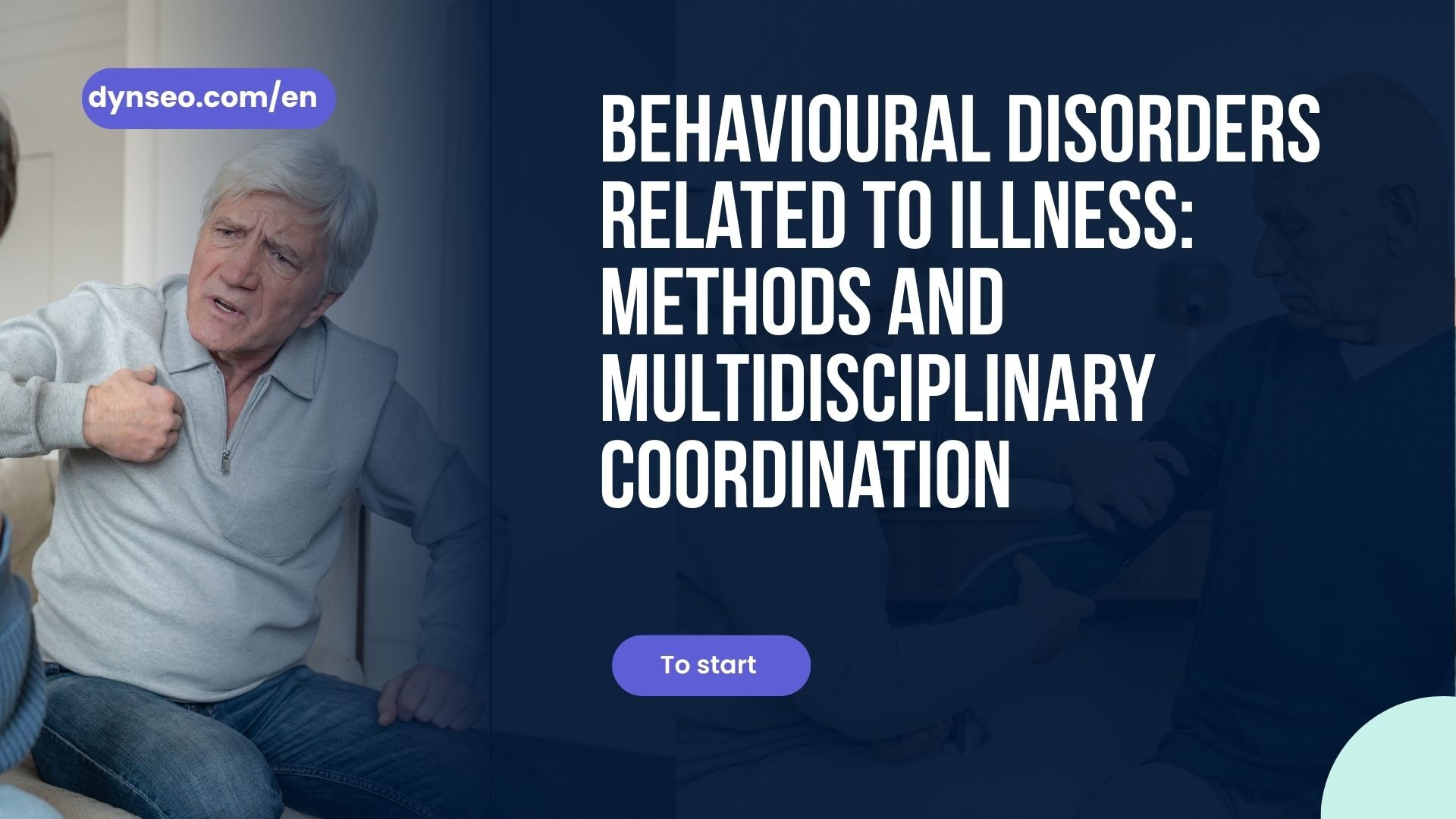
Behavior changes related to illness — Practical guide for relatives
For parents of DYS children whose difficulties generate significant refusal, avoidance, anxiety, or discouragement behaviors, this Qualiopi certified training provides neurobiological guidelines and concrete strategies to understand these behaviors and respond in a kind and effective manner. It supports caregivers — parents, grandparents, siblings — in their daily support role.
Discover the training →Practical DYNSEO tools for the DYS child
🔤 Reminder for b/d p/q confusions
A discreet and effective visual support for one of the most common challenges of dyslexia. To be kept on the desk at home and in class with the teacher's agreement.
Download →✅ Spelling proofreading grid
A step-by-step guide for proofreading written productions. Transforms proofreading (often discouraging) into a structured and less anxiety-provoking procedure.
Download →📖 Flash reading syllable cards
Syllabic decoding cards to automate the grapheme-phoneme correspondence — the basis of fluent reading. Ideal for quick daily training (5 min).
Download →🔊 Complex sound picture book
Progressive auditory discrimination exercise, useful for dyslexic children who confuse similar sounds. Strengthens phonological processing at the base of reading.
Download →🗣️ Articulation tracking chart
For children with dysphasia or expressing oral difficulties, this tracking chart allows visualization and targeting of progress in articulation.
Download →DYNSEO applications for cognitive stimulation for children
🧒 COCO — Children 5–10 years
Fun cognitive stimulation application for children aged 5 to 10. Attention, memory, and information processing exercises — adapted to DYS and ADHD profiles.
Learn more →🧠 JOE — Teens
For DYS adolescents who want to work on their attention and executive functions. Engaging interface, adaptive pathways, visible progress.
Learn more →💬 MY DICTIONARY — Communication
For children with dysphasia or significant verbal expression difficulties. Alternative and augmented communication accessible from a young age.
Learn more →🤖 DYNSEO AI Coach
Personalized support for families: help in choosing tools, answers to questions about DYS, suggestions for activities tailored to the child's profile.
Learn more →DYNSEO cognitive tests
→ Access all DYNSEO cognitive tests
DYNSEO training
→ See the complete DYNSEO training catalog
💌 Your DYS child deserves all the tools to progress
From letters to practical tools, including cognitive stimulation applications and certified training for families — DYNSEO supports DYS children and their parents at every step of the journey. Because behind every successful DYS child, there is a support system that has found the right words and the right tools.
❓ FAQ — Emotionally supporting your child with DYS
1. My child refuses to talk about their DYS — should I insist?
The refusal to talk about their difficulties is very common among DYS children, especially between the ages of 10 and 14. This refusal is a way to protect their self-image: bringing up the subject risks confirming it. A written letter is particularly useful in this context: it conveys a message without requiring a response, without creating confrontation, and without putting the child in a position to react in real time. Never force the conversation about DYS — create non-stressful sharing spaces (in the car, during a walk) and wait for the child to be ready to engage.
2. How can I avoid my support being perceived as pity?
The difference between support and pity lies in the posture. Pity says "you are suffering and I feel sorry for you" — it places the child in the role of victim. Support says "you are facing something difficult and I am with you" — it places the child in the role of actor. In your letters and conversations, always start from strengths and efforts, not difficulties. Phrase it in terms of a challenge to overcome, not an insurmountable obstacle. Avoid overly soft tones, overly compassionate looks — the child instantly perceives them as condescension.
3. My child hides their difficulties from their friends — should I advise them to talk about it?
The decision to disclose their DYS disorder to their friends is entirely up to the child — not their parents. Your role is to provide them with the information so they can make an informed choice: some children feel relieved to explain their difficulties to their close friends; others prefer to keep it private and manage very well. What matters is that the child does not feel ashamed of their DYS — that they can talk about it if they wish, without anxiety. Shame, not the DYS themselves, is the real problem to address.
4. How can I manage my own emotions as a parent in the face of my child's difficulties?
Parents of DYS children often experience a mix of difficult emotions: guilt ("is it my fault?"), helplessness ("I can't help them"), sadness (for their child's suffering), and exhaustion (hours of homework, medical appointments). These emotions are normal and legitimate. Two common mistakes: completely repressing them (they will resurface in other ways) or expressing them in front of the child (which confirms to them that they are a problem and a source of suffering). A personal speaking space — psychological follow-up, DYS parent group, conversations with a partner away from the child's reach — is valuable for navigating these emotions without dumping them on the child.
5. My child said "I'm useless" or "I don't want to go to school" — what should I do?
These phrases are alarm signals that deserve immediate and compassionate attention. In the moment, validate the emotion without validating the belief: "I see that you are really exhausted and discouraged. It's normal after what you're going through." Avoid counter-arguing immediately ("But no, you're not useless!") — in a state of distress, the child is not in a position to assimilate an argument. Then, if these phrases come up often or are accompanied by signs of anxiety or depression (frequent crying, sleep disturbances, loss of appetite, social withdrawal), discuss it with the treating physician or school psychologist.
6. Are DYNSEO tools suitable for kindergarten and first grade children?
The COCO application is specifically designed for children aged 5 to 10 — it is therefore perfectly suitable for the last year of kindergarten and first grade. Practical tools (memory aids for b/d/p/q confusion, flash reading cards) can be used as soon as the child starts learning to read — usually in first grade — with the help of an adult. For younger children showing early signs of DYS or language difficulties, referral to a speech therapist as early as the small section of kindergarten is recommended.
7. How can I positively involve the teacher in the emotional support of my DYS child?
The teacher is a crucial actor in the child's school self-esteem: a kind word from them often carries as much weight as dozens of words from parents. The first step is to inform the teacher of the diagnosis (with the child's consent for older children) and to share the child's strengths as well as their difficulties. The second is to request, within the framework of the PAP or not, simple adjustments such as valuing oral productions, not correcting in front of the class, allowing extra time. A sincere parent-teacher partnership around the child is one of the most powerful protective factors against the deterioration of school self-esteem.
8. Is the DYNSEO training for relatives eligible for funding?
The DYNSEO training "Behavioral changes related to illness — Practical guide for relatives" is Qualiopi certified (No. 11757351875). It is accessible online, at your own pace, from any device. Funding options vary depending on the situation: employees can use their CPF (Personal Training Account), job seekers may benefit from Pôle Emploi funding (France Travail), and some mutual insurance companies or pension funds offer contributions for health training. Contact DYNSEO to find out about the funding options suitable for your situation.
💌 Download DYNSEO tools to help your DYS child
Memory aid for b/d/p/q confusions, proofreading grid, flash reading cards, sound picture book — tools designed by specialists to make learning less painful and more effective. And to go further in your support: the DYNSEO certified training for relatives.
Did this content help you? Support DYNSEO 💙
We are a small team of 14 people based in Paris. For 13 years, we have been creating free content to help families, speech therapists, care homes and healthcare professionals.
Your feedback is the only way we know if our work is useful. A Google review helps us reach other families, caregivers and therapists who need it.
One action, 30 seconds: leave us a Google review ⭐⭐⭐⭐⭐. It costs nothing, and it changes everything for us.