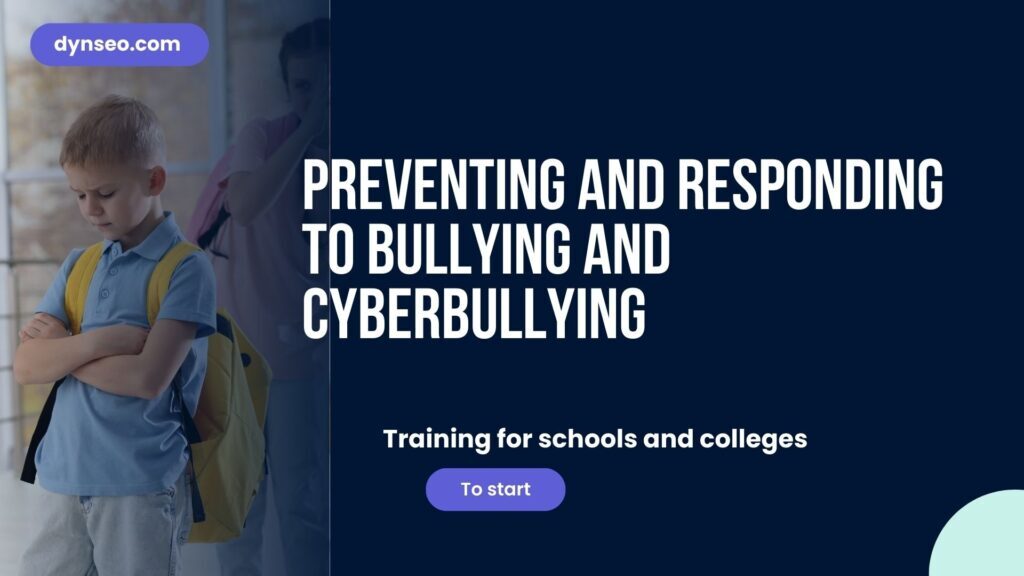
Preventing and acting against school bullying and cyberbullying: 10 difficult everyday situations and how to respond
School bullying almost never presents itself with a label. It sneaks into a hallway between classes, in a fit of laughter that always falls on the same student, in a notification received at 10 PM that drains a face of its colors the next morning. In the face of these ordinary scenes, the real question for professionals is not theoretical: it is “to prevent and act against bullying, what exactly to do right now, with the right words?” This article does not recount the mechanisms from afar: it describes ten real situations from the school and educational daily life, as they happen.
Dans cet article
La formation associée
Les ressources citées
 Planificateur de Devoirs
For each one: the scene, what is happening on the student’s side, the spontaneous reaction that worsens the situation, then the step-by-step approach — with the exact phrases to say, the posture to adopt, and how to prevent the situation from recurring. The tone is meant to be protective for the children involved: we observe, we collect, we protect, and we direct towards a health professional as soon as a sign of suffering appears.
The essentials in 30 seconds
Most bullying situations that reach an adult come disguised: a stomach ache, a drop in grades, a “it was just for fun.” Knowing what to say in the first ten minutes is as important as the procedure initiated afterward.
- Believe first, investigate later — the adult's first reaction conditions everything that follows.
- Never confront the victim and the perpetrator or organize a “mediation” in a situation of confirmed bullying.
- Write down the facts — dated, located, factual — and transmit according to the institution's protocol (in France, the pHARe program and 3018 for digital issues).
- Cyberbullying is preserved before being reported: we capture, we do not delete.
- Any sign of suffering is referred to the school doctor or psychologist: the adult protects, they do not diagnose.
1. He invents a reason not to go to recess
10:05 AM, the bell rings for recess. A 4th-grade student lingers, searching for his coat which he just put away, offers to help you erase the board. For the past two weeks, he finds a reason every morning to stay in class during free time.
What is at stake: the playground is the least supervised space and the most conducive to bullying. A child who makes excuses to avoid it is not throwing a tantrum about organization: he is fleeing a place that has become dangerous in his eyes. Avoidance is a recognized warning signal, not a character trait. Interpreted as shyness or indifference, it leaves the child alone with his fear.
- Welcome the excuse without dismantling it: “Okay, you can stay two minutes with me.” You create a safe time instead of forcing the exit.
- Open a door, privately and without interrogation: “I noticed that you prefer to stay in class in the morning. Is there a time of day that you don’t like too much?” An open question, not a “are you being bothered?”
- Observe the playground in the following days: where does he position himself, with whom, who approaches him, who moves away. Note dated facts.
- Report to the school life team and reinforce adult presence in the identified areas. Targeted supervision is an immediate protective measure.
Avoid repetition: establish supervised recess times (cooperative games, quiet corner) and identify blind spots in the playground. A child needs to know that an adult is watching.
❌ To avoid: “Come on, go outside for some fresh air, it will do you good!” — a phrase that sends the child alone to what he fears and teaches him that the adult does not understand.
2. Laughter always returns to the same student
5th-grade class. Every time a student speaks, a small laugh ripples through the back of the class, a few glances are exchanged, a nickname is whispered. He lowers his head and never raises his hand again. The overall atmosphere seems “good-natured”.
What is at stake: ritualized humiliation. Bullying is distinguished from simple teasing by three criteria that the Ministry of National Education reminds us of: repetition, intent to harm, and power imbalance. When the laughter always targets the same person, we are no longer in the realm of joking: the group has designated a target and the adult, by not intervening, implicitly validates the rule.
- Name the fact, not the intent, in a calm voice and in front of the group: “I just heard laughter when Léa spoke. In this class, we listen to everyone without comment.” You set a rule, you accuse no one.
- Protect the target without overexposing her: never say “stop making fun of her,” which further designates her.
- Address the student privately after class: “I noticed that it’s often the same person who is targeted. I wanted to check that everything is okay for you.”
- Document: date, class, what was said and heard. Three noted occurrences are better than an impression.
Avoid repetition: work on the classroom climate (co-constructed rules, rotating roles, cooperative activities) rather than sanctioning an isolated laugh. It is the group that allows or forbids.
❌ To avoid : laughing at oneself “ to de-dramatize ” or throwing out a “ okay, that's enough ” general statement that commits to nothing and signals that the behavior is tolerated.
3. A student shows you a message received the night before
End of class. A 9th-grade student stays behind, holding out her phone with a slightly trembling hand : a message received at 10:40 PM, insulting, followed by several others. “ I don't know if it's serious, I just wanted to show you. ” She is watching for your reaction.
What is at stake : she is testing you. Showing this message is an enormous act of courage, often preceded by weeks of silence. Cyberbullying extends harassment beyond the walls of the school : there is no refuge, neither at night nor on weekends. The very first reaction of the adult determines whether the student will ever speak again — to you or anyone else.
- Welcome, do not minimize : “ You did well to show me. I believe you, and it's not your fault. ” These three sentences are the foundation of everything.
- Preserve the evidence : capture, do not delete. Take a screenshot with the date, the username, the timestamp : “ We will keep a record, it's important to protect you. ”
- Explain the next steps, without promising absolute confidentiality : “ I can't keep this to myself because my role is to protect you. I will talk to [referent] and we will decide together on the steps to take. ”
- Direct to dedicated resources : in France, 3018 (national number against digital violence, free and confidential) and 3020 (school bullying). Reporting to the platforms is possible with the support of these services.
A point of vigilance often overlooked : the student who confides in you almost never shows you everything at once. The message she hands you is a test, the least painful part of a heavier whole. If your reaction is appropriate, the rest will come ; if it disappoints, the door will close for a long time. Hence the importance of not commenting on the content (“ oh dear, that's violent ”) or asking ten questions in a row : we listen, we secure, we thank, we explain the next steps. The pace belongs to the child.
Avoid repetition : address in class, beforehand, digital reflexes : do not respond to the aggressor, block, capture, talk to an adult. Digital prevention happens before the crisis, not during.
❌ To avoid : “ You need to delete that and block, don't think about it anymore ” — we erase the evidence and send the student back to solitude. Also avoid blaming them for being on the network in question.
4. A photo or rumor is circulating in a class group
You are informed that an embarrassing photo of a student, or a rumor about them, has been circulating since the morning in a class discussion group. Several students have seen it, some have reacted with emojis, the person concerned may not even be aware yet.
What is at stake : the amplification effect inherent to digital media. A humiliation that yesterday would have remained in a hallway spreads in a few minutes to an entire class, with “ spectators ” who, by reacting, become actors without always being aware of it. The distribution of images without consent may constitute offenses : the subject goes beyond school discipline.
- Act quickly to stop the spread : ask, through the team, to stop the shares and preserve the elements. “ Every person who reshared worsens the situation and their own responsibility. ”
- Protect the targeted student as a priority : inform them gently, before they learn about it from the group, and reassure them that adults are taking care of it.
- Do not conduct the investigation alone : pass it on to the management and the reference person, who will decide on the reports (platform, 3018, and depending on the severity, the authorities).
- Talk about the role of witnesses in class : “ Doing nothing is already choosing a side. Talking to an adult is helping. ”
Avoid repetition : work on the notion of active witness and the right to image. A group that knows that a share needs to be reported regulates itself differently.
❌ To avoid : asking to see and circulate the photo “ to understand ”, which redistributes it ; or treating the matter as a simple internal discipline issue when it may fall under the law.
5. No one wants to team up with him
You form pairs for a task. One student remains alone. When you suggest that a group includes them, shoulders shrug, a “ oh no not him ” slips between two tables. This is not the first time : in sports, at the canteen, it’s the same silent scenario.
What is at stake : exclusion, a relational form of bullying, the hardest to prove and the most corrosive. There is neither hitting nor insults : just an organized void around a child. Often read as shyness or a “ difficult character ”, it leaves the target convinced that the problem is them.
- Take control of the groups instead of letting students choose : compose the pairs yourself, with specific roles for each. You remove the group's power to exclude.
- Create visible successes for the excluded student : assign them a task where they shine, value it in front of others without overdoing it.
- Receive the leaders of rejection discreetly : “ I noticed that [first name] often ends up alone. I’m counting on you to change that. ” You hold them accountable without humiliating.
- Check on the state of the excluded child and, at the slightest sign of distress (withdrawal, lasting sadness, devaluing remarks), refer them to the national education psychologist or the school doctor.
Avoid repetition : regularly vary the groups, value cooperation over competition, and identify exclusion dynamics early. Tools like the school gamification system can help reward mutual aid.
❌ To avoid : “ Well, you’re on your own then ” — a phrase that confirms exclusion ; or forcing a group to “ take ” the student, which fuels rejection.
These ten minutes that change everything can be learned
Knowing what to say when a student hands over their phone, how to gather words without worsening the situation, when and how to report : the training “Preventing and acting against school bullying and cyberbullying” covers every gesture, 100 % online, at your own pace, 20 lessons, unlimited access. Certified Qualiopi organization, certificate of completion.
Discover the training — 90 €6. “It was just for fun,” says the one who harasses
You receive the student whose behaviors are problematic. Even before your first question, he defuses: “But it was just for fun, everyone does it, he just takes it badly.” The tone is confident, almost annoyed to be there.
What is at stake: the trivialization, a central mechanism of harassment. “It was just for fun” shifts the responsibility onto the victim (“he takes it badly”) and dilutes the blame within the group (“everyone does it”). The perpetrator is not always a “mean” child: often, he has not measured the effect, or reproduced a group dynamic. The role of the adult is not to demonize him but to reframe without destroying.
- Distinguish the act from the person: “I’m not saying you are mean. I’m saying that what you did hurt someone, and that needs to stop.”
- Refocus on the effect, not the intention: “A joke is when everyone laughs. Here, one person laughs and another cries. It’s no longer a joke.”
- Set a clear framework and follow-up: remind them of the rule, the consequence set by the institution, and what you expect concretely from now on.
- Never confront the perpetrator and the victim: no “apologize in front of her,” no one-on-one mediation in a proven harassment case. This re-exposes the victim to the power dynamics.
Avoid repetition: non-blaming group approaches exist (recommended within the pHARe program): they mobilize the surroundings to stop the situation without seeking a single culprit. They can be learned and implemented as a team.
❌ To avoid: humiliating the perpetrator in return or demanding immediate apologies to the victim, which relieves the adult but worsens the position of the harassed child.
7. A concerned parent, the child denies everything
A mother calls you: her son cries at night, doesn’t want to go to school anymore, she is sure that “something is happening.” You receive the student: he looks at his shoes and repeats “no, everything is fine, my mother is worrying for nothing.”
What is at stake: the law of silence. A harassed child often denies, out of shame, fear of retaliation, or fear that “it will get worse” if an adult intervenes clumsily. Denial does not invalidate the parent’s alert: it sometimes confirms it. It is necessary to hold both truths: take the parent seriously, and respect the child’s pace.
- Do not seek a confession: do not insist on “getting a confession.” Instead, open a door: “You don’t have to talk to me about it today. Just know that my door is open, and whatever you tell me, we will handle it together, never against you.”
- Provide a discreet channel: a note slipped, an identified reference, an address to write to. Some children communicate in writing before speaking face-to-face.
- Support the parent: thank them, explain what you will observe, without promising results or concluding too quickly. “You did well to call. We will be attentive and we will talk again.”
- Observe and cross-check the team's views on concrete facts for a few days, and report according to the protocol.
Avoid repetition : inform families about alert channels and the harassment referent of the establishment. A parent who knows who to talk to alerts earlier.
❌ To avoid : « He says everything is fine, so there’s nothing » — concluding from denial. Also avoid calling the child in front of several adults, which locks their speech.
8. His grades are dropping, he has a stomach ache every morning
A previously studious student sees his results collapse in a few weeks. The infirmary receives him several times for stomach pains, always in the morning, with no identified cause. He is increasingly absent. In class, he seems elsewhere.
What is at stake : somatization and disengagement, frequent indirect signals of harassment. Psychological suffering expresses itself in the body and in learning before it is expressed in words. These signs do not alone prove harassment — they can have many other causes — but they require opening the question and, above all, not diagnosing anything oneself.
- Connect observations between teachers, school life, and the infirmary : it is the intersection of signals, not an isolated sign, that alerts.
- Open the conversation without labeling : « I feel like something is more difficult right now. I’m not going to force you to talk about it, but I’m here. »
- Refer to health professionals : school doctor, nurse, psychologist from the National Education. Any sign of suffering falls under their responsibility, not the teacher's, for evaluation as well as for follow-up.
- Adjust the school routine during this time : lighten the pressure on assessments, secure routes and dreaded times.
A useful reference for the team : it is never an isolated sign that should alert, but a bundle. A single bad grade says nothing ; a general decline combined with targeted absences, repeated visits to the infirmary, and social withdrawal paints a picture that must be taken seriously. This is precisely why written, factual, and shared transmissions matter so much : each adult sees only a fragment, and only the intersection of observations allows for reading the situation without over-interpreting or missing anything.
Avoid repetition : support learning and organization to limit the spiral of failure (for example with a weekly homework planner), and work on emotional management. For younger children, the COCO app offers cognitive stimulation games and well-being routines suitable for 5-10 year olds.
❌ To avoid : « You need to pull yourself together, you can do better » — penalizing the drop in results without seeking the cause, which adds pressure to the distress.
9. A serious content reaches you outside school hours
On a Sunday evening, a student or a parent sends you particularly violent messages : threats, remarks suggesting a desire to disappear, sexual content involving a minor. You are at home, without the immediate support of the establishment.
What is at stake : crossing a threshold of seriousness. Some content no longer falls under mere educational management but under child protection, even criminal law. The expected reflex is not to act alone but to refer immediately to the established procedures, while keeping a record of what has been transmitted to you.
- Take any statement mentioning a vital danger seriously. In case of immediate danger, contact your country's emergency services without delay.
- Direct to dedicated numbers : in France, 3018 for digital violence, 119 (Allô Enfance en Danger) in case of a minor in danger, 3020 for school harassment.
- Keep the received elements (timestamped captures) and forward them as soon as possible to the head of the establishment and the designated person, who will initiate official reports.
- Do not stay alone with the information : serious content requires sharing responsibility, never bearing it alone.
Avoid repetition : ensure that every adult in the establishment knows the alert chain and the numbers to call, including outside school hours. The procedure is only useful if it is known before it is needed.
❌ To avoid : responding to the author, promising confidentiality to the child about content that jeopardizes their safety, or waiting until Monday "to avoid disturbing".
10. A witness wants to talk but refuses to "snitch"
A student approaches you, embarrassed : "I can tell you something, but you mustn't say it came from me, otherwise they will come after me too."
What is at stake : the decisive role of witnesses. Harassment only persists through the silence of those who see. A witness who speaks is a valuable resource — and a child to protect in turn. The way you welcome this moment determines whether others will dare to speak up tomorrow.
- Value the gesture : "What you're doing is courageous, and it's exactly what needs to be done. It's not snitching, it's protecting someone."
- Be honest about confidentiality : "I will do everything to protect you and not put you in the spotlight. We will think together about how to act without it falling back on you." Do not promise the impossible.
- Gather facts : what, where, when, who — without turning the child into an investigator or asking them to monitor.
- Forward according to the protocol, protecting the source, and give feedback to the witness that their words were helpful.
Avoid repetition : establish a culture of active witnessing — distinguish "reporting" from "protecting" — and discreet reporting channels. The emotional regulation tools for teens also help to put words to these situations.
❌ To avoid : "You need to give me the names in front of everyone" or treating the witness as a mere informant ; it's the best way to silence any future speech.
Preventing and acting against harassment, what to do: the summary table
Each situation calls for a reflex and a trap to avoid. This table condenses the conduct to follow ; it does not replace your establishment's protocol, it facilitates its application at the moment the scene occurs.
| Situation | ✅ The reflex to have | ❌ To avoid |
|---|---|---|
| Avoids recess | Create a safe time, open the floor privately, target supervision | Sending them back alone "to get some air" |
| Laughter at the same student | State the rule in front of the group, document, follow up privately | Laughing or making a vague "that's enough" remark |
| Received message shown | Believe, capture without deleting, direct to 3018 | "Delete it and forget about it" |
| Photo/rumor circulating | Stop the spread, protect the target, report | Asking to see and circulate the photo |
| No one wants them | Take control of the groups, create successes | "You're isolating yourself then" |
| "It was just for fun" | Separate the act from the person, refocus on the effect | Humiliating or imposing immediate apologies |
| Parent alerts, child denies | Open a door, respect the pace, take the parent seriously | Concluding "there's nothing" based on denial |
| Declining grades, stomach aches | Cross signals, direct to school health | Sanctioning the drop in results |
| Serious content outside school hours | Dedicated numbers, keep, do not stay alone | Waiting until Monday, promising a dangerous secret |
| Witness hesitating | Value, protect the source, forward | Demanding names in public |
In the face of statements suggesting a desire to disappear, a self-harming gesture, a death threat, or content involving immediate danger, the emergency procedure is applied without delay and the emergency services of your country are contacted. No situation analysis, no discretion, no waiting "to avoid dramatizing" takes precedence over the immediate safety of a child.
School bullying is the subject of a national prevention program (pHARe) in schools and colleges, and school bullying has been a criminal offense since the law of March 2, 2022. Recognized support resources are 3020 (school bullying) and 3018 (digital violence and cyberbullying). Always refer to your institution's protocol and designated contact person.
To go further
This article focuses on everyday scenes. To deepen the understanding of the mechanisms, the implementation of prevention, and the team posture, the other aspects of the series provide complementary insights.
In-depth guideThe complete guide to understanding what is at stake in school bullying and cyberbullying
ToolboxActivities, resources, and concrete adjustments to implement against bullying
Professional postureTeamwork, communication, and skills development in response to bullying
In terms of directly mobilizable resources, the DYNSEO free tools catalog notably offers a cognitive restructuring sheet for anxiety and a toolbox for emotional regulation useful for adolescents. To assess and support the cognitive functions of vulnerable students, the cognitive tests and the application CLINT (adults and mental health) complement the range, alongside COCO for younger children.
Frequently asked questions
What to do in the very first minutes when a student confides ?
Three messages take precedence over everything else : “I believe you”, “You did well to talk about it”, “It’s not your fault”. We welcome without minimizing, we do not seek to "downplay", we do not promise absolute confidentiality — as protecting the child may require discussing it. We explain the next steps in simple words : who we will inform and why. This initial reaction conditions trust and the possibility for the child to speak again later. Then comes the factual gathering, followed by reporting according to the institution's protocol.
Should a confrontation between the victim and the perpetrator be organized ?
No. In a situation of confirmed bullying, direct mediation and requests for immediate apologies are discouraged : they re-expose the victim to the power dynamics that have already weakened them and can worsen retaliation. The imbalance between the two children is not that of an ordinary conflict. Non-blaming approaches, mobilizing the group to end the situation without designating a single culprit, are preferred within the framework of the national pHARe program. They are learned and implemented as a team, with the support of the designated contact person and management.
How to react to cyberbullying without destroying evidence ?
The rule is simple : capture, do not delete. Take timestamped screenshots, note the usernames and the platform, and then keep these elements. Do not respond to the perpetrator and help the student block the relevant account once the evidence is saved. These elements are essential for effective reporting. In France, 3018 (free and confidential) supports victims of digital violence and can assist with procedures with the platforms. Inform the head of the institution and the designated contact person, who will decide on official reports based on the severity.
A child denies being bullied while their parents are worried: what to think ?
Denial is common and does not invalidate the alert : shame, fear of retaliation, fear of worsening the situation often lead the child to minimize. Take the parent's report seriously while respecting the child's pace. Do not demand a confession : open a door, offer a discreet channel (identified contact person, written note), and observe concrete facts as a team for a few days. Thank the parent and explain your approach without promising a result. If signs of distress appear, refer to the school doctor or psychologist.
When does the situation exceed the scope of school management ?
As soon as serious threats appear, statements suggesting a desire to disappear, content of a sexual nature involving a minor, or immediate danger. These situations fall under child protection, and even criminal law. In case of life-threatening danger, contact your country's emergency services without delay. In France, 119 (Allô Enfance en Danger) receives reports of minors in danger. Keep the elements, never stay alone with the information, and immediately pass it on to management, which will trigger official reports.
This article provides general professional guidelines. It does not replace the protocols of your establishment or the evaluation by a healthcare professional. Any signs of psychological distress in a child — withdrawal, persistent sadness, worrying statements, somatizations — should be directed to the school doctor, nurse, or psychologist, who are the only ones qualified to assess and guide follow-up.
Prevent and act against harassment: move from reflex to method
Knowing what to do in each of these ten situations, with the right words and at the right time, is learned and shared as a team. The training "Prevent and act against school harassment and cyberbullying" includes 20 lessons, 100% online, with unlimited access. Certified Qualiopi organization (N° 11757351875), certificate of completion issued.
Discover the training — €90Did this content help you? Support DYNSEO 💙
We are a small team of 14 people based in Paris. For 13 years, we have been creating free content to help families, speech therapists, care homes and healthcare professionals.
Your feedback is the only way we know if our work is useful. A Google review helps us reach other families, caregivers and therapists who need it.
One action, 30 seconds: leave us a Google review ⭐⭐⭐⭐⭐. It costs nothing, and it changes everything for us.