Memory Rehabilitation
in Speech Therapy: Techniques and CLINT
This guide is aimed at both healthcare professionals wishing to deepen their knowledge of memory rehabilitation techniques, patients undergoing speech therapy rehabilitation, and their relatives. Memory rehabilitation is a dynamic field that benefits from constant advances in cognitive neuroscience — the techniques presented here reflect the current state of knowledge and validated clinical practices.
In this article
1. Initial Memory Assessment
Before starting memory rehabilitation, it is essential to conduct a comprehensive initial assessment. This assessment allows the speech therapist to understand the patient's current cognitive abilities, strengths, and weaknesses, as well as the specific areas of memory that require particular attention. The assessment may include standardized tests, clinical interviews, and observations to obtain a complete picture of the patient's memory.
This assessment phase is fundamental as it allows for the personalization of the rehabilitation program. Two patients with similar diagnoses may have very different memory profiles — one may have preserved episodic memory but impaired working memory, while the other may present the opposite profile. Without accurate assessment, it is impossible to effectively target therapeutic interventions.
✦ What an initial memory assessment includes
- Verbal memory tests — recalling lists of words, phrases, texts
- Visuo-spatial memory tests — recalling figures, positions
- Working memory tests — digit span, dual task
- Episodic memory tests — recalling recent and past events
- Semantic memory tests — general knowledge, vocabulary
- Clinical interview with the patient and their relatives about daily difficulties
This assessment is not a judgment — it is a starting point. Many patients dread this step for fear of "doing it wrong" or being confronted with the extent of their difficulties. The speech therapist always presents the assessment as a compassionate understanding tool, highlighting strengths as well as weaknesses. This positive approach creates the necessary trust conditions for active engagement in the rehabilitation program.
2. Cognitive Stimulation Techniques
Cognitive stimulation techniques are widely used in speech therapy to improve patients' memory. These exercises aim to stimulate cognitive and mnemonic abilities through structured activities.

a) Spaced repetition
Spaced repetition involves regularly presenting information at progressively longer time intervals. This promotes the consolidation of long-term memory and improves information retrieval. The speech therapist can use this technique by asking the patient to repeat words, phrases, or lists of information at precisely spaced intervals.
🖼️ b) The association of images and words
The association of images and words is an effective technique for improving associative memory. Patients are encouraged to create links between visual images and words to facilitate information retrieval. For example, the speech therapist may present a series of images representing objects and ask the patient to name each object. By associating the image with its name, the patient strengthens their associative memory.
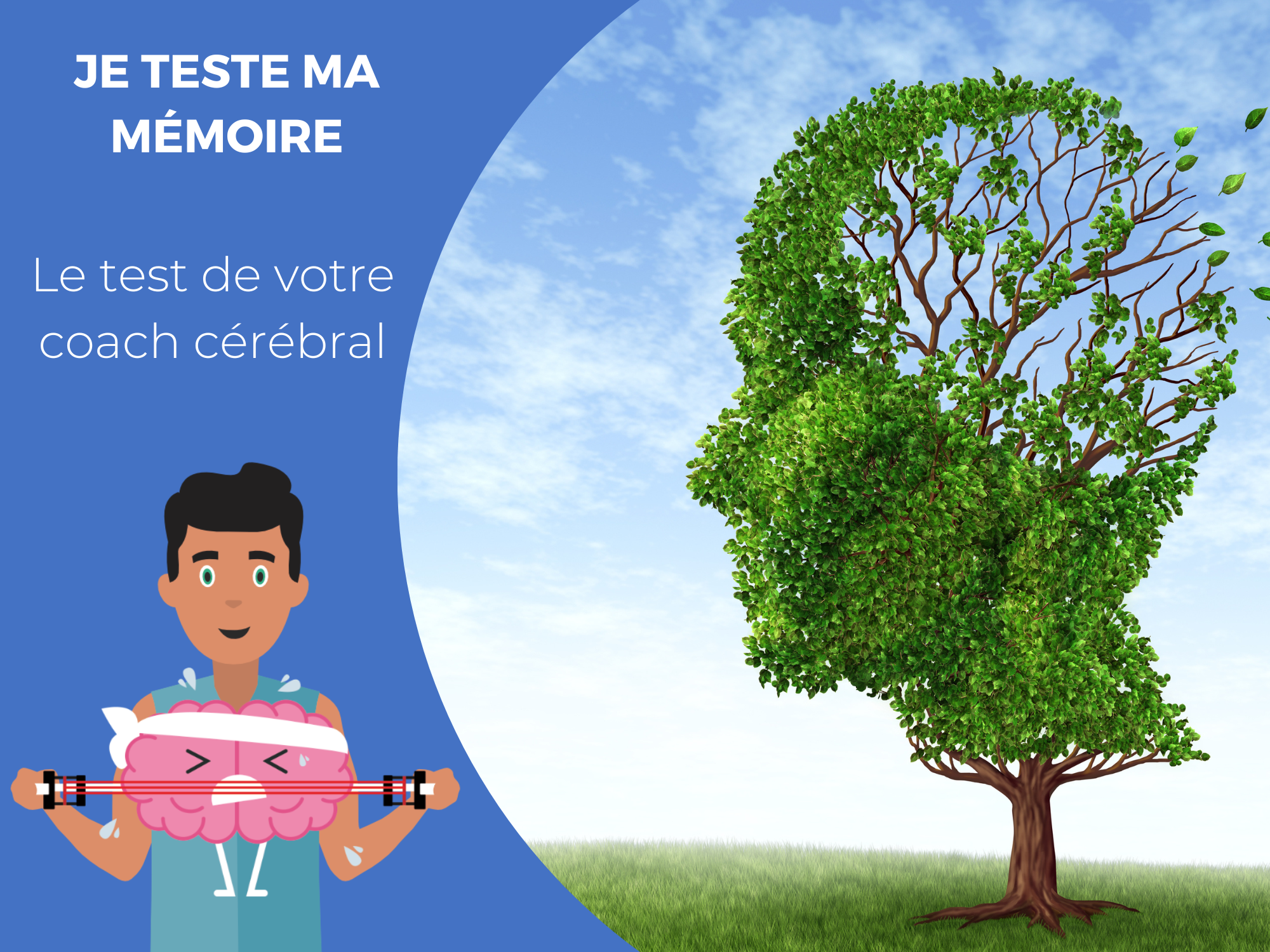
b) The practice of active repetition — Test your memory
Active repetition involves actively repeating the information to be memorized rather than simply reading or passively hearing it. This can include repeating aloud, rewriting important information, or teaching concepts to someone else. Active repetition engages the brain more and facilitates the encoding of information into long-term memory.
🔤 c) Mnemonic techniques
Mnemonic techniques are memory aids used to facilitate memorization. They can include the use of rhymes, mnemonic phrases, acronyms, or visual associations to help retain complex information. For example, to remember the order of the planets in the solar system, the phrase “My Very Educated Mother Just Served Us Noodles” can be used (Mercury, Venus, Earth, Mars, Jupiter, Saturn, Uranus, Neptune, Pluto).
🧩 d) Memory games
Memory games are both stimulating and entertaining. They allow patients to engage in playful activities while strengthening their memory. Card games, puzzles, memory-specific board games, or mobile applications dedicated to memory exercises can be used. The CLINT DYNSEO app offers over 30 cognitive games suitable for adults and seniors, usable in sessions or at home.
💭 e) Recall exercises
Recall exercises involve asking patients to remember specific information — retrieving personal memories, words, lists of objects, or events. These exercises strengthen episodic and semantic memory. The speech therapist can use questions or cues to help the patient recall the information, practicing guided retrieval and then increasingly autonomous retrieval.
These cognitive stimulation techniques are often used in combination — a speech therapy session may include spaced repetition exercises, followed by a memory game on a tablet, and then a guided recall activity. The variety of approaches maintains motivation and stimulates different aspects of memory. CLINT DYNSEO allows the speech therapist to recommend specific games for each technique, ensuring continuity between sessions and home exercises.
CLINT, our brain training program for adults: stimulate memory, attention, logic, and language.
Discover the game →
3. Organization and Structuring Strategies
Memory can be improved by using organization and structuring strategies. These techniques help patients better manage information, structure it logically, and facilitate later retrieval.
📋 a) Creating Lists and Diagrams
Creating lists and diagrams allows patients to visually organize information. For example, the speech therapist may encourage the patient to make shopping lists, create daily schedules, or create diagrams to represent complex concepts. These visual tools help reinforce memory and understanding.
🗂️ b) Grouping and Categorization
Grouping information by logical categories makes it easier to memorize. Our brain naturally remembers information better when it fits into coherent structures than isolated items. The speech therapist can train the patient to identify relevant categories in a list of information to memorize, and then organize their retrieval according to these categories.
📍 c) The Memory Palace
The memory palace (or method of loci) is an ancient technique particularly effective for patients with relatively preserved visuospatial memory. It involves mentally associating the information to be memorized with specific locations in a familiar place — their home, their usual route. Retrieval of information occurs by "mentally walking through" this place. This technique can be adapted to different levels of cognitive ability.
Organization and structuring strategies are not temporary compensations — they gradually become cognitive automatism. As the patient practices grouping, creating diagrams, and logically organizing information, their brain internalizes these structures and applies them spontaneously in new situations. This is called transfer of learning — a sign that rehabilitation produces lasting effects.
4. Training for Functional Memory
Training for functional memory aims to improve memory in practical and everyday situations. This may include exercises to improve memory for names, places, appointments, procedures, social skills, etc. The goal is to enable patients to regain independence and autonomy in their daily activities.
✦ Examples of functional goals in memory rehabilitation
- Remembering people's names: elaborate encoding technique (associating the name with a physical characteristic or a mental image).
- Memorizing appointments: use of calendars, alarms, and training in prospective memory (mentally planning future actions).
- Remembering procedures: step-by-step practice, checklists, verbal rehearsal.
- Navigating environments: visual cues, mental maps, spatial associations.
- Managing medications: pill organizer systems, alarms, association with daily rituals.
- Maintaining conversations: compensation techniques (rephrasing, asking for clarification, note-taking).
Functional training is often the most motivating step for patients because progress is immediately noticeable in their daily lives. Unlike purely cognitive exercises, the benefits of functional memory translate directly into autonomy and quality of life — being able to remember a medical appointment without assistance, recalling the name of the neighbor, finding one's way around the city — all concrete successes that reinforce motivation to continue rehabilitation.
The gradation of difficulty is a central principle of functional training. One starts with very guided situations, with many cues and a reduction of cognitive demand, then gradually removes the aids as the patient gains competence. This progression develops not only the targeted skills but also the patient's confidence in their own abilities — which is often as important as objective performance in functional recovery.
Maintaining your memory daily: simple and effective methods for speech therapists.
See the training →
5. Technology Integration — CLINT DYNSEO
Technology offers interesting opportunities for memory rehabilitation in speech therapy. Mobile applications, specific software, and digital tools can be used to create interactive exercises, task reminders, memory games, and visual aids. The use of technology can make exercises more engaging and stimulating for patients.
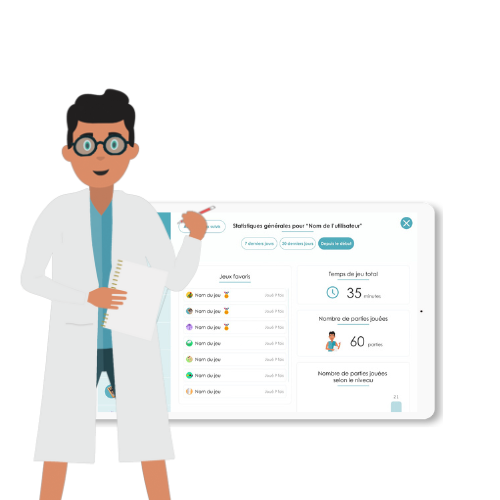
CLINT is an application with over 30 cognitive and cultural games to work on all cognitive functions — memory, language, attention, and strategy. The JOE application works without WiFi — it can therefore be used during sessions with the speech therapist, at home, and between sessions. This allows for continuity in the work and improves training outcomes.
You can see your statistics and your progress over time thanks to the dashboard of the JOE application. This allows the healthcare professional to adapt the work and activities according to your goals. You can also track your progress, discover your weaknesses and strengths.

Download CLINT — 7-day free trial
Available on Android (Google Play) and iOS (App Store). CLINT can be used alone at home, as a complement to speech therapy sessions, or in online coaching with a DYNSEO expert. Its offline functionality makes it usable anywhere — even while traveling or in a care facility.
Memory rehabilitation in speech therapy is a complex process that requires an individualized approach tailored to the specific needs of each patient. By using the best rehabilitation techniques — cognitive stimulation exercises, organization and structuring strategies, functional memory training, and technology integration — speech therapists can help patients improve their memory abilities, regain their self-confidence, and enhance their quality of life. Do not hesitate to consult a speech therapy professional for a comprehensive assessment and a personalized rehabilitation plan.
The integration of technology in memory rehabilitation is not limited to cognitive applications. Digital organization tools — synchronized calendars, alarm reminders, voice notes, task lists — serve as compensatory aids that can radically transform the autonomy of a patient with prospective memory difficulties. The speech therapist can assist the patient in setting up these tools and using them effectively — a skill that is all the more valuable as these tools are now part of the digital environment of all adults.
6. The Key Role of Family and Environment
The success of a memory rehabilitation program does not solely rely on the therapeutic techniques applied during sessions. The living environment and support from family members also play a crucial role in reinforcing the progress made with the speech therapist. By integrating simple strategies into daily life, loved ones can boost cognitive stimulation and actively contribute to the process.
🕐 Promote a stable and reassuring routine
A structured environment with regular schedules (meals, activities, rest) helps anchor reference points in the patient's memory. The predictability of the environment reduces the cognitive load required for daily navigation, freeing up resources for other learning.
📌 Use visual reminders in the home
Stick post-its on the fridge, set up a wall calendar or a digital clock indicating the date and time. These compensatory aids enhance daily autonomy by reducing reliance on internal memory for temporal and organizational information.
🎮 Play memory games together
Involving loved ones in playful cognitive stimulation sessions enhances the patient's motivation. Applications like CLINT can be used with family to play and progress together — transforming rehabilitation into a moment of sharing rather than a solitary exercise.
💬 Regularly exchange on positive memories
Affective memory is often better preserved in cognitive disorders. By sharing anecdotes, looking at photos, or listening to familiar music, we revive memories and stimulate autobiographical memory — one of the forms of memory most resistant to time and diseases.
🔇 Create a calm and distraction-free environment
Too much noise or visual stimuli can disrupt concentration and memory consolidation. Setting up a quiet corner for exercises promotes learning and information consolidation. This recommendation is particularly important for patients with attention disorders associated with memory difficulties.
The surrounding environment also plays a crucial role in the motivation to continue rehabilitation in the long term. Memory rehabilitation is a slow and sometimes discouraging process — progress may seem imperceptible over a week, while it is significant over several months. Loved ones who value every small improvement, create opportunities for success in daily life, and maintain their expectations within a reachable challenge zone — these loved ones are indispensable co-therapists. The application CLINT, used with family or a caregiver, transforms this support into a moment of sharing and common pleasure.
The social dimension of memory rehabilitation is often underestimated. Loneliness and social isolation are major risk factors for cognitive decline. Interventions that maintain or restore social ties — cognitive stimulation groups, collective activities, family games — have a protective effect on memory that adds to the specific benefits of rehabilitation techniques. The application CLINT, used in a group with a family caregiver or in collective sessions offered by certain professionals, combines the benefits of cognitive stimulation and social interaction.
Memory test to assess memory capabilities before and after rehabilitation.
Take the test →
7. Neuroplasticity and Memory Rehabilitation — The Scientific Foundations
Memory rehabilitation is based on the principle of neuroplasticity — the brain's ability to structurally and functionally change in response to experience and learning. For a long time, it was believed that the adult brain was “frozen” after a certain period of development. Research in neuroscience has radically changed this view — the adult and even elderly brain is capable of creating new synaptic connections, recruiting new regions to compensate for deficient functions, and improving its performance with targeted training.
This plasticity is the neurobiological basis for the effectiveness of rehabilitation in speech therapy. When a patient regularly practices spaced repetition exercises, image associations, or memory games like those of CLINT DYNSEO, they are not just "training" in the athletic sense — they are causing physical changes in the structure and connectivity of their brain. These changes are visible in magnetic resonance imaging and persist over time if practice is maintained.
This plasticity has limits — it cannot fully compensate for extensive brain injuries or an active neurodegenerative process. But in the context of speech therapy rehabilitation, it provides the biological substrate for real, measurable, and lasting improvements. This is precisely why regularity is so important in memory rehabilitation — a daily practice of 15-20 minutes produces cumulative neurobiological effects that are distinctly different from sporadic practice, even if the latter is longer per session.
Brain plasticity is also modulated by behavioral factors. Aerobic physical exercise, by increasing the production of BDNF (brain-derived neurotrophic factor), creates more favorable neurological conditions for learning and memory consolidation. Studies show that starting a memory rehabilitation session 30 minutes after a moderate exercise session produces better learning outcomes than the same session without prior exercise. This finding has direct practical implications for the design of rehabilitation programs — integrating physical exercise as "neurological warm-up" to optimize plasticity during cognitive exercises.
8. The Different Types of Memory in Speech Therapy
To effectively understand and target memory rehabilitation, it is essential to distinguish the different types of memory, which correspond to partially distinct neurological systems.
✦ The Main Types of Memory and Their Rehabilitation
- Episodic Memory: memories of dated and situated personal events in time. Heavily affected in Alzheimer's disease. Rehabilitated through guided recall, journals, annotated photographs.
- Semantic Memory: general knowledge about the world, vocabulary, concepts. Often better preserved in Alzheimer's disease. Worked on through general knowledge games (Quizzle, Around the World in CLINT).
- Working Memory: temporary maintenance and manipulation of information being processed. Highly engaged in complex cognitive tasks. Trained through span exercises, dual-tasking.
- Procedural Memory: learning of automatisms and motor skills. Often preserved in moderate stages of Alzheimer's disease. Worked on through repeated practice of gestures and sequences.
- Prospective Memory: memory of what one needs to do in the future. Heavily impaired in ADHD and after Stroke. Rehabilitated through external reminder systems and planning training.
This differentiation of types of memory guides the work of the speech therapist in selecting appropriate techniques and games. CLINT DYNSEO offers games targeting each of these types of memory — allowing the speech therapist to recommend a personalized program according to the memory profile of each patient.
The differentiation of types of memory is also important for communication with the patient and their relatives. Explaining to a family that the patient with Alzheimer's disease forgets recent events (episodic memory) but recognizes familiar faces (affective memory) and still knows how to make coffee (procedural memory) — this explanation defuses painful misunderstandings and guides those around towards activities where connection remains possible. The games SCARLETT DYNSEO are designed based precisely on these types of memory preserved in Alzheimer's.
Understanding the types of memory also guides communication with the relatives of patients with memory disorders. “He forgets everything” is an inaccurate and often painful way to describe a profile that is much more nuanced. Understanding that some types of memory are preserved, while others are affected, allows relatives to adapt their interactions to leverage residual strengths rather than focusing on deficits. This strengths-based approach changes the relational dynamic — and often, it reveals abilities that the focus on forgetfulness had hidden.
9. Memory Rehabilitation after Stroke or Traumatic Brain Injury
Strokes (AVC) and traumatic brain injuries are among the most common causes of acquired memory disorders in adults. Memory rehabilitation after stroke has important specificities compared to the Alzheimer's profile.
Recovery after stroke is often faster and more complete than in neurodegenerative diseases, as the brain can recruit alternative pathways to compensate for damaged areas. Brain plasticity is maximal in the first months after the stroke — this is the “golden window” during which intensive rehabilitation produces the best results. Daily sessions, combining speech therapy and independent exercises with tools like CLINT, maximize the benefits of this plasticity window.
🧠 Specificities of Post-Stroke Rehabilitation
After a stroke, memory deficits are often associated with language disorders (aphasia), attention, or executive functions. Rehabilitation must therefore be multimodal — simultaneously targeting memory and associated cognitive functions. CLINT offers training programs integrating memory, language, attention, and planning — a comprehensive approach particularly suited to complex post-stroke profiles.
Traumatic brain injuries present a rehabilitation profile different from that of Strokes. Memory disorders are often accompanied by behavioral and emotional disorders (irritability, impulsivity, cognitive fatigue), which complicate rehabilitation and require a multidisciplinary approach. Rehabilitation must pay particular attention to fatigue — starting with short sessions (10-15 minutes) and gradually increasing, respecting the signals of cognitive fatigue (headaches, irritability, increased confusion). CLINT DYNSEO, with its flexibility in duration and choice of exercises, is suitable for this gradual progression.
10. Prevention of Cognitive Decline — Beyond Rehabilitation
Memory rehabilitation is not reserved for patients with established disorders. Regular cognitive training also plays an important preventive role in maintaining memory capabilities over the years. Longitudinal epidemiological studies show that people who maintain a high level of cognitive activity throughout their lives have a reduced risk of developing major cognitive disorders — and that even when brain injuries develop, their cognitive reserve protects them against the clinical expression of disorders.
This cognitive reserve is built throughout life — through education, the practice of multiple languages, varied intellectual activities, stimulating social relationships, and active cognitive training. Tools like CLINT DYNSEO, used regularly and preventively, help maintain this reserve by keeping memory circuits active and continuing to challenge them progressively.
Preventing cognitive decline is also a matter of overall lifestyle. Regular physical exercise improves cerebral vascularization and stimulates the production of neurotrophins that support the survival and plasticity of neurons. Quality sleep is essential for memory consolidation — it is during sleep that the day's learnings are transferred from short-term memory to long-term memory. Stimulating social relationships keep language and emotional communication circuits active. And a diet rich in antioxidants, omega-3s, and polyphenols protects neurons against oxidative stress. CLINT DYNSEO fits into this preventive arsenal as a structured and progressive cognitive training tool, complementary to these lifestyle factors.
Ultimately, memory rehabilitation in speech therapy is an expanding field, benefiting from advances in cognitive neuroscience and new technologies. Speech therapists today have a remarkably rich toolbox — validated clinical techniques, adapted digital applications like CLINT, and a better understanding of the role of the entourage and environment. The key remains personalization — adapting the program to each memory profile, each functional goal, and each life context. It is this personalization, combined with the regularity of practice and the supportive involvement of the entourage, that produces the most significant results for patients' quality of life.
The prevention of cognitive decline is a long-term investment that should begin well before the first signs of disorder appear. Studies show that cognitive habits in one's forties and fifties significantly influence the risk of dementia twenty or thirty years later. It is never too early to start regular cognitive training — and it is never too late for that training to produce measurable benefits. CLINT DYNSEO, designed for adults of all ages, offers adaptive training that can accompany a person from early prevention to advanced stages of rehabilitation.
An often-overlooked dimension of cognitive prevention is the management of chronic stress. Chronic stress raises cortisol levels, which over time damages the hippocampal structures involved in the formation of new memories. Stress reduction interventions — meditation, physical exercise, cognitive-behavioral therapies — therefore have a direct preventive effect on cognitive health. This observation highlights the importance of a holistic approach to cognitive health, integrating biological factors (sleep, diet, exercise), psychological factors (stress, emotions), and social factors (connections, cognitive stimulation).
Frequently Asked Questions
CLINT works without WiFi and can be used both during sessions with the speech therapist and between sessions at home. This continuity is valuable because memory rehabilitation requires regular practice for progress to consolidate. The speech therapist can recommend specific games based on the cognitive functions worked on in the session and track home practice statistics via the dashboard. The patient can thus maintain stimulation 4 to 5 times a week, instead of only during weekly sessions.
The duration of a memory rehabilitation program in speech therapy varies depending on the nature and severity of the disorders, the underlying cause (Stroke, traumatic brain injury, neurodegenerative disease), and the patient's goals. In general, a structured program lasts between 3 and 12 months, with weekly sessions with the speech therapist complemented by daily exercises at home. For neurodegenerative diseases like Alzheimer's disease, rehabilitation is continuous, focused on maintaining residual abilities and gradually adapting strategies.
Yes — numerous studies show that memory rehabilitation is effective at all ages, including among elderly people. The brain retains plasticity throughout life — it is always capable of creating new synaptic connections and learning new compensatory strategies. Gains are often more modest and slower than with younger patients, but they are real and have a significant impact on quality of life and autonomy. The EDITH DYNSEO app is specifically designed for seniors and people with Alzheimer's disease.
In conclusion, memory rehabilitation in speech therapy is much more than a series of memorization exercises — it is a holistic approach that mobilizes the patient's preserved cognitive resources, the plasticity capabilities of their brain, the creativity of the speech therapist, the support of their surroundings, and the possibilities of digital technologies. CLINT DYNSEO fits into this approach as a powerful complementary tool — a cognitive coach available 24/7, adaptive and progressive, that extends the benefits of speech therapy sessions into the patient's daily life. Consulting a speech therapist for an evaluation and a personalized program remains the essential first step — CLINT can then become the daily training partner that makes the difference between weekly rehabilitation and continuous rehabilitation.
🧠 Train Your Memory with CLINT DYNSEO
30+ cognitive games · Works without WiFi · Personalized dashboard · Memory coaching via video available · 7 days free trial.
For professionals wishing to integrate CLINT into their speech therapy practice, a progressive approach is recommended. Start by presenting the application during a session — explore a few games with the patient, observe their reactions, identify the games that match their abilities and interests. Recommend a daily practice of 15 minutes at home, specifying the games to prioritize according to therapeutic goals. Check the practice statistics during the next session and adjust the recommendations. This progressive integration transforms CLINT from an ancillary tool into a central component of the rehabilitation program.
The collaboration between the speech therapist, the patient, their surroundings, and technological tools like CLINT represents the future of cognitive rehabilitation — a continuous, personalized support that is not limited to the weekly hour in the office but daily enriches the patient's life. It is this continuity, made possible by digital technologies, that fundamentally changes the prospects for recovery and cognitive maintenance.
Patients who succeed best in their memory rehabilitation are generally those who have developed an active learning attitude — who do not just do the recommended exercises but question why these exercises work, who seek to apply the strategies in their daily life, and who note and celebrate their own progress. This active learner posture is in itself a skill that the speech therapist can cultivate — by explaining the neurobiological mechanisms behind the techniques, inviting the patient to identify their own effective strategies, and valuing their expertise on their own cognitive functioning. The patient is the expert of their own memory — the speech therapist provides them with the tools to exercise this expertise.
Did this content help you? Support DYNSEO 💙
We are a small team of 14 people based in Paris. For 13 years, we have been creating free content to help families, speech therapists, care homes and healthcare professionals.
Your feedback is the only way we know if our work is useful. A Google review helps us reach other families, caregivers and therapists who need it.
One action, 30 seconds: leave us a Google review ⭐⭐⭐⭐⭐. It costs nothing, and it changes everything for us.