Jobs where autistic people excel: focus on sectors that are hiring
ADHD, ASD, Asperger: behind these labels lie often exceptional professional talents. An overview of the sectors that have understood this reality — and how to leverage it for your company's performance.
Dans cet article
La formation associée
Les ressources citées
 Carte des besoins sensoriels TSA
 Plan de gestion des crises TSA
Autism in the workplace is still too often approached from the perspective of a disability to be compensated for, an effort to be made, a difference to be tolerated. This view is both inaccurate and counterproductive. Autistic people — whether they present with ASD (Autism Spectrum Disorder) with or without Asperger syndrome — frequently have exceptional cognitive profiles in specific areas: sustained concentration, analytical precision, encyclopedic memory, procedural rigor, systemic thinking, pattern detection. These strengths, when placed in the right professional environment, produce remarkable results. This guide lists the jobs and sectors where autistic people excel, identifies the organizational conditions that allow these talents to express themselves, and offers HR managers and leaders a concrete roadmap to turn ASD diversity into a real competitive advantage.
1. Understanding the cognitive profile of autistic people: strengths and challenges
1.1 A different brain function, not deficient
Autism Spectrum Disorder is primarily a neurological difference in the way the brain processes information, interacts with the environment, and communicates with others. This difference is neither an illness to be cured nor a defect to be corrected — it is a cognitive functioning mode with its specific strengths and areas of fragility. The neurology of autism is characterized notably by an hyperspecialization of attention: where a neurotypical brain distributes its attention broadly and flexibly, an ASD brain can focus extraordinarily deeply and for prolonged periods on a specific area or task.
This hyperspecialization is a double-edged sword in the workplace: it can produce absolute experts in their field, capable of finding errors that no one else sees, memorizing entire bodies of data, maintaining flawless procedural rigor — but it can also clash with the demands for flexibility, implicit social communication, and management of unanticipated change that characterize many contemporary work environments. The key is therefore to find — or create — professional contexts where the first characteristic is fully expressed, while the second is compensated for by intelligent organizational adjustments.
✅ Frequent cognitive strengths in ASD
- Deep and sustained concentration (hyperfocus)
- Encyclopedic memory on areas of interest
- Exceptional precision and analytical rigor
- Systemic thinking and pattern detection
- Procedural reliability — rules are followed
- Honesty and straightforwardness in exchanges
- Low confirmation bias — independent thinking
- Resistance to social pressure on decisions
⚠️ Fragility areas to support
- Implicit and implied social communication
- Management of unforeseen events and sudden changes
- Sensory overload in open spaces
- Multi-tasking and rapid cognitive flexibility
- Emotional expression and management in public
- Understanding informal social hierarchies
- Classic recruitment interviews (oral, storytelling)
- Unstructured interpersonal conflict situations
1.2 Autism statistics in France and in the workplace
In France, it is estimated that around 700,000 people are autistic — nearly 1% of the population. Globally, recent estimates from the WHO place the prevalence between 1 and 2% of the population. In the professional environment, the situation is concerning: according to a study by EHESP (2022), less than 30% of autistic adults are employed in France, compared to 65% for the overall working-age population. This gap is not related to skills — it is linked to the inadequacy of recruitment processes and work environments.
autistic people in France (source: HAS)
of autistic adults are employed in France (EHESP 2022)
of people with ASD are recognized as disabled but unemployed
performance for teams with high cognitive diversity (McKinsey 2020)
1.3 The legal framework: obligations and opportunities
The law of February 11, 2005 recognizes autism as a disability entitling individuals to a disability recognition and the obligation for reasonable workplace accommodations. The OETH requires any company with more than 20 employees to employ at least 6% of disabled workers — declared ASD employees count towards this quota. Companies that do not meet this threshold contribute financially to AGEFIPH (private sector) or FIPHFP (public sector), which in turn fund workplace accommodations, training, and employment support measures.
The DOETH (Mandatory Declaration of Employment of Disabled Workers) is annual and public in large groups — it is directly linked to the CSR and ESG indicators that are increasingly scrutinized by investors and clients. Recruiting and retaining ASD talents is therefore both a socially responsible act and a lever for optimizing your extra-financial reporting.
💡 Good to know: AGEFIPH funds up to 70% of the costs for workplace adjustments for an employee with ADHD recognized as having a disability — sensory adjustments to the office, adapted digital tools, support from a job coach, training for managers. These resources are largely underutilized by French companies.
2. Sectors and professions where autistic people excel
2.1 Tech and IT: a natural field
The technology and IT sector is undoubtedly the one where ADHD talents find their place most naturally — and several major global tech companies understood this before others. SAP launched its "Autism at Work" program as early as 2013, which recruited several hundred ADHD developers and testers worldwide, with productivity and quality results significantly above average in testing and data analysis positions. Microsoft followed with its "Autistic Hiring" program in 2015. In France, companies like Capgemini and Sopra Steria have developed partnerships with specialized associations to recruit ADHD talents into their technical teams.
The reasons for this alignment are structural: computer programming is a field where logical rigor, procedural patience, and the ability to detect errors in millions of lines of code are directly valued skills. An ADHD developer who can stay focused for 6 hours on a complex debugging problem, without being distracted by social chatter in the open space, is an extraordinary asset for a technical team. Similarly, an ADHD tester whose literal processing of instructions leads them to systematically test every edge case is much more reliable than a neurotypical tester who will make "logical" shortcuts.
2.2 Cybersecurity: lateral thinking as a rare skill
Cybersecurity is one of the professional fields where the atypical thinking of ADHD profiles is most directly valuable. A cybersecurity expert must be able to think "like an attacker" — that is, to spot vulnerabilities where everyone else sees a functional system, to question the implicit assumptions on which technical architectures are based, and to maintain sustained analytical vigilance over complex systems. These three skills correspond exactly to the cognitive profile of many autistic people: independent thinking from social conventions, the ability to see what others do not see, attention to detail that lasts for hours without fatigue.
The British GCHQ (equivalent to the DGSE) has officially stated that autistic profiles represent "an operational advantage" in its intelligence analysis and cybersecurity teams. Cybersecurity agencies specializing in recruiting ADHD individuals have emerged in the United States and the United Kingdom, with very high customer satisfaction rates.
Tech & Software Development
Development, testing, debugging, software architecture. Procedural logic and deep concentration are direct assets.
Cybersecurity & Data Analysis
Pattern detection, lateral thinking, analytical rigor. TSA profiles spot what others miss.
Scientific Research & R&D
Encyclopedic memory, methodological patience, focus on complex long-term problems.
Finance & Accounting
Numerical precision, procedural rigor, detection of anomalies in financial data.
Design & Graphic Arts
Attention to visual details, systemic thinking in composition, creative depth on long projects.
Documentation & Legal
Writing rigor, literal application of rules, memory of precedents and procedures.
2.3 Scientific research and R&D
Research laboratories and R&D departments are environments naturally more suited to ASD profiles than commercial open spaces. Work there is often solitary and focused, rules and procedures are clearly defined, results are evaluated on objective criteria rather than subjective impressions, and depth of knowledge on a specific subject is valued more than social versatility. These characteristics precisely match the cognitive profile of many autistic adults.
Recent studies in the field of neurology and cognitive psychology suggest that a significant proportion of the most influential researchers and scientists in history — including Alan Turing, often cited — exhibited cognitive characteristics consistent with the autistic spectrum. This correlation is not anecdotal: it reflects the structural correspondence between the demands of scientific research (rigor, depth, independence of thought, methodological patience) and the cognitive strengths frequently associated with ASD.
2.4 Finance, accounting, and auditing
Financial professions require arithmetic precision, procedural rigor, and error resistance that directly correspond to the frequent cognitive strengths in ASD. An ASD auditor who methodically checks each line of a balance sheet, never succumbing to the temptation to "trust" a visual approximation, can detect anomalies that go unnoticed by their neurotypical colleagues. An ASD financial analyst who models complex scenarios with extreme precision can bring distinct added value to a team.
Audit firms like EY have developed inclusive recruitment programs specifically aimed at neuroatypical profiles in their audit and analysis teams, with documented results in terms of quality and reliability of deliverables.
2.5 Professions in design, art, and creation
The creative field is often associated with extroverted and socially fluid individuals — but this is a frequent casting error in artistic teams. Many of the most talented designers, illustrators, musicians, and creatives are autistic — their different perspective on the world produces visual or auditory works of originality and precision that neurotypical creative processes do not easily achieve. The highly developed visual thinking of many ASD profiles (often associated with photographic memory) is a direct asset in graphic design, UX design, illustration, or animation professions.
Understanding autism in the workplace
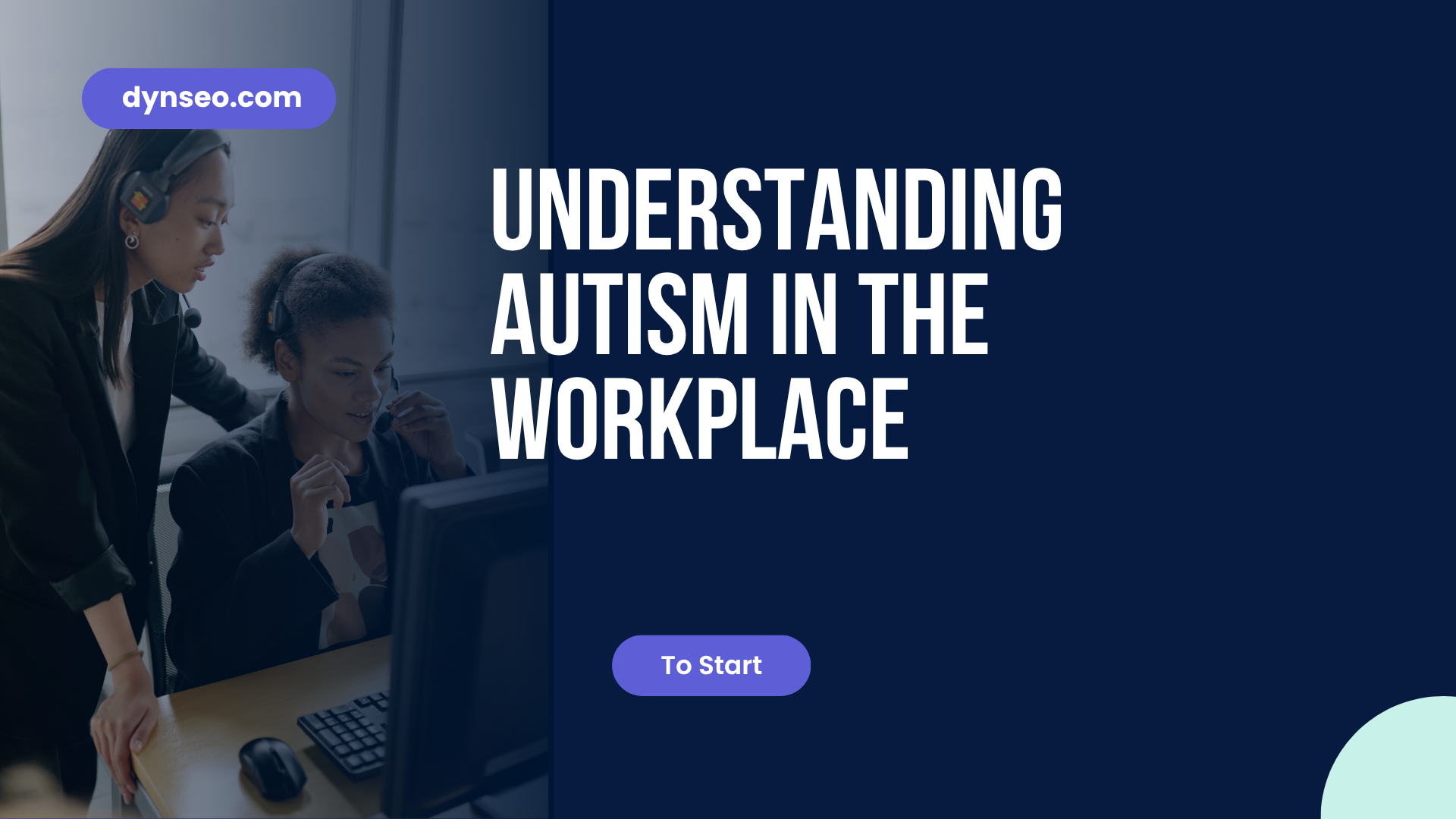
This online training, 100% remote and at your own pace, allows managers, HR directors, disability mission managers, and colleagues to better understand the cognitive functioning of autistic people (ASD, Asperger syndrome), identify their professional strengths, and adapt the work environment to promote their development and performance. Deployable in-house or inter-company, fundable via OPCO and skills development plan.
3. How to create conditions for ADHD talents to express themselves
3.1 Rethinking the recruitment process
The first obstacle to the employment of autistic people is the classic recruitment process — particularly unsuitable for their profiles. The unstructured oral interview, which implicitly evaluates social skills (eye contact, verbal fluency, spontaneous storytelling, responses to open questions), systematically filters ADHD profiles regardless of their actual job skills. A brilliant ADHD candidate in software development may fail a HR interview because they do not maintain eye contact and respond to questions too directly and too briefly according to the implicit social norms of the interview.
Companies that effectively recruit ADHD talents have adapted their processes: technical situation assessments rather than just oral interviews, questions previously sent in writing, explicit and objective evaluation criteria, the possibility of a workplace visit before the decision, paired interviews (HR + technical manager) to separate the evaluation of social skills from the evaluation of job skills. The ADHD Inclusive Recruitment Checklist from DYNSEO offers a turnkey protocol to adapt your process.
3.2 Adapting the physical work environment
The modern open space is the least suitable work environment for ADHD profiles — and one of the main factors for professional failure for autistic individuals whose skills are otherwise excellent. Ambient noise, simultaneous conversations, odors, bright lights, and frequent interruptions create sensory overload that can be exhausting and very difficult to manage over time. This overload does not disappear with time and "willpower" — it is structurally linked to ADHD neurological functioning.
Sensory accommodations are often simple and inexpensive: dedicated desk or quiet workspace accessible on demand, noise-canceling headphones, adjustable or natural lighting preferred, predictable organization of the day with as few surprises as possible, visual communication code to indicate "do not disturb" times. The ADHD Workplace Accommodation Guide and the Sensory Needs Map from DYNSEO help you identify and implement these accommodations.
3.3 Adapting managerial communication
Managerial communication with an ADHD collaborator requires some adjustments that actually improve the quality of communication for everyone in the team. The main rule is clarity and explicitness: avoid insinuations, ambiguous metaphors, implicit instructions, and understated feedback. "You might want to think about improving your communication with the team" will not be understood. "I invite you to send a summary email to the team after each meeting — by next Friday" will be understood and executed.
Predictability is the second pillar: announce changes in advance, avoid modifying schedules at the last minute, and if an unforeseen event is unavoidable, explain and frame it clearly. A trained manager can learn these adjustments in a few hours — the training Understanding Autism in the Workplace from DYNSEO is specifically designed for this.
3.4 The role of the disability referent and job coach
In companies with more than 250 employees, the Disability Mission Referent (mandatory since the 2018 Professional Future Law) is the preferred contact for supporting ADHD collaborators. Their role: inform about rights (disability recognition, AGEFIPH-funded accommodations), coordinate adaptations with the manager and occupational doctor, and serve as a trust link with the collaborator. In SMEs where this role is not formalized, the occupational doctor takes over.
The job coach — a professional specialized in supporting neurodiverse individuals in ordinary environments — is an increasingly used tool in inclusive companies. They intervene upstream (job preparation), at the start (integration phase), and in follow-up (resolving occasional difficulties). Their cost is largely covered by AGEFIPH or FIPHFP.
4. Comparison: suitability of ADHD profiles / work environments
| Environment / Sector | ADHD Suitability | ADHD Strengths Mobilized | Key Accommodations |
|---|---|---|---|
| Software Development / QA | ⭐⭐⭐ Excellent | Logic, concentration, procedural rigor | Remote work, clear tasks, few meetings |
| Cybersecurity / Data Analysis | ⭐⭐⭐ Excellent | Lateral thinking, pattern detection, independence | Quiet space, autonomous tasks |
| Scientific Research / R&D | ⭐⭐⭐ Excellent | Depth, memory, methodological patience | Individual office, long-term objectives |
| Audit / Accounting | ⭐⭐⭐ Very good | Numerical precision, rigor, anomaly detection | Clearly defined procedures, few surprises |
| Graphic Design / UX | ⭐⭐ Good | Visual thinking, attention to detail, creativity | Solo work, precise written briefs |
| Sales / Customer Relations | ⭐ Variable | Encyclopedic product knowledge, honesty | Clear scripts, predictable situations, support |
| Team Management | ⭐ Difficult without support | Equity, clear rules, technical expertise | Communication training, co-manager, coach |
| Unstructured commercial open space | ✗ Unsuitable | — | Mandatory accommodation or repositioning |
5. French companies recruiting ADHD talents: models and inspirations
5.1 French pioneers in ADHD employment
Several French companies have developed exemplary approaches to the inclusion of autistic individuals. Renault launched a specific recruitment program for ADHD profiles in its engineering and industrial computing teams, with an adapted recruitment process (technical tests instead of classic oral interviews) and personalized follow-up for the first six months. The company reports significantly higher retention rates and quality of work levels in these positions.
Consulting firms like Accenture France have integrated neurodiversity into their overall HR strategy, with mandatory training for all managers and revised recruitment processes. Companies in the agri-food and logistics sectors have also developed partnerships with sheltered workshops to assign specific tasks to ADHD teams — a model that benefits all parties.
5.2 Partner associations and support systems
Specialized associations like Autism'Ailes, Autism Info Service, and the network of home-based special education support services support autistic individuals in their professional integration and can serve as partners for companies looking to develop their inclusive approach. These organizations often offer consulting missions to HR teams, co-recruitment, and post-hire follow-up.
Collaboration with DYNSEO is part of this partnership network: our online training allows internal teams to quickly upskill on understanding ADHD in the workplace, without mobilizing a heavy in-person organization. The DYNSEO B2B catalog is available at dynseo.com/nos-formations.
🎓 Train your teams on autism in the workplace
The training Understanding Autism in the Workplace from DYNSEO enables your managers, HR, and colleagues to better understand ASD profiles, identify their strengths, and adapt their environment. Qualiopi certified, fundable by OPCO, deployable in multi-collaborator licenses for your entire organization.
6. ROI of ASD inclusion: the figures that convince decision-makers
6.1 Productivity and quality: documented data
SAP, which has been one of the global pioneers in ASD recruitment with its "Autism at Work" program launched in 2013, has published precise data on the results achieved. ASD employees in the program show an error rate 30 to 50% lower than the average in software testing and data analysis positions. Their retention rate is 15 to 20% higher than the company average — a considerable asset in a sector where turnover is high and costly. The DG Employment of the European Commission has used this SAP data as a reference in its 2021 report on the employment of disabled people in Europe.
In France, a study conducted by IFOP for Autism France (2023) shows that 78% of managers who have had an ASD employee on their team believe that their integration had a positive impact on the quality of collective work — and 65% state that it improved the team's organizational practices (clarity of instructions, structuring of meetings, clarification of implicit rules).
6.2 The cost of non-inclusion: a simple calculation
The unemployment rate for autistic adults is 70% in France. Each qualified ASD adult who remains unemployed represents an economic and social cost: loss of productivity, social support costs, underutilization of human capital. For the company that misses out on an ASD talent due to an unsuitable recruitment process, the cost is also measurable: a senior developer position unfilled for 6 months represents an average of 150,000 to 250,000 euros of uncreated value according to benchmarks in the technology sector.
Add the benefits in terms of employer branding (recognized inclusive companies attract more quality candidates across all categories), equality index, and CSR reporting, and the business case for ASD inclusion becomes undeniable.
6.3 The equality index and ESG criteria
Major institutional investors and extra-financial rating agencies now integrate cognitive diversity and disability inclusion policies into their ESG evaluation grids. A company that can document its ASD inclusion program — adapted recruitment process, OETH employment rate, workplace adjustments made, manager training deployed — has an advantage in public tenders (social clause), CSR certifications (ISO 26000, Diversity Label), and relationships with committed financial partners.
7. Practical DYNSEO tools for ASD inclusion in the workplace
🗺️ Map of sensory needs for ASD
Identify specific sensory needs to adapt the work environment.
Download →🛑 Crisis Management Plan for ASD
Protocol to support an employee in a situation of overload or crisis at the office.
Download →💬 Adapted Communication Sheet for ASD
Formulations to prioritize and avoid for effective communication with an autistic employee.
Download →🪑 ASD Workplace Adaptation Guide
Checklist of sensory, organizational, and digital adaptations to implement.
Download →✅ Inclusive Recruitment Checklist for ASD
Adapt your recruitment process to no longer filter ASD talents based on their social skills.
Download →🗂️ Complete Tool Catalog
More than 50 practical tools for inclusive management and a neuroinclusive company.
See all tools →8. DYNSEO Applications to Support Your ASD Employees
🟦 CLINT — Adults
Cognitive stimulation for adults — memory, attention, executive functions. Recommended for ASD employees wishing to maintain their cognitive abilities.
Discover CLINT →🟥 MY DICTIONARY — Communication
Alternative and augmented communication application — ideal for non-verbal or atypical communicating autistic employees.
Discover MY DICTIONARY →🟨 SCARLETT — Seniors
Cognitive support for seniors. Relevant for senior ASD employees at the end of their careers.
Discover SCARLETT →🟩 COCO — Children
Application for children aged 5-10. Can support employee parents of autistic children in cognitive support at home.
Discover COCO →9. Going Further: DYNSEO B2B Training Catalog
Working in a sheltered workshop: Adapting the Work Environment
→ See the complete DYNSEO training catalog
→ Access DYNSEO cognitive tests
❓ FAQ — Autism, ASD and Employment in Companies
1. How to know if a candidate or employee is autistic without asking them directly?
You have neither the right nor the need to know. Your role as a manager or HR is to adapt the environment and practices to the observed needs — not to diagnose. If an employee shares difficulties that may be related to autism, refer them to the occupational doctor and the Disability Mission referent who can inform them about their rights (disability recognition, accommodations). The DYNSEO training helps you identify behavioral signals without ever labeling.
2. Can autistic people manage teams?
Yes, with the right accommodations. Some ASD profiles, particularly those with Asperger's syndrome, develop excellent managerial skills based on clarity of rules, fairness of treatment, and technical expertise. Difficulties often lie in the implicit reading of team emotions and managing interpersonal conflicts — skills that can be developed with specific support (coaching, behavioral therapy, training). The role of "expert" or "technical" manager (without heavy conflict management) is often well-suited.
3. Is telecommuting systematically recommended for autistic employees?
Not systematically, but often beneficial. Telecommuting reduces sensory overload from open spaces and allows the employee to control their environment. However, it can also exacerbate social isolation and difficulties with implicit communication. The hybrid model (2 to 3 days of telecommuting per week) with structured presence times is often the most suitable. The important thing is that the decision is co-constructed with the employee, not imposed.
4. What financial aids exist to accommodate the position of an ASD employee?
AGEFIPH (private sector) and FIPHFP (public sector) fund up to 70% of the accommodation costs for a worker recognized as having a disability. This includes: ergonomic equipment, specific software, acoustic/sensory adjustments to the office, support from a job coach, training for managers. The Disability Mission of your company or an AGEFIPH advisor can assist you in preparing funding applications.
5. How to manage an ASD employee who refuses any help or accommodation?
This refusal is common — often related to the fear of stigma or years of masking that have convinced the person that they must "act like everyone else." Respect this refusal at first. Create the conditions for them to evolve: a trusting relationship, guaranteed confidentiality, information about rights without pressure. Training managers in reassuring communication is key — the DYNSEO training dedicates a complete module to this.
6. Can autistic people work in sectors with high social interaction?
Yes, with appropriate framing. ASD employees work in sales, customer service, teaching, or healthcare — often with excellent results in terms of expertise/reliability. Difficulties arise in unstructured spontaneous interactions. Clear communication scripts, explicit procedures, and a predictable environment allow them to manage these interactions. Honesty and accuracy of the information provided are often remarkable assets in these jobs.
7. Is the training Understanding Autism in the Workplace fundable by OPCO?
Yes. The DYNSEO training is Qualiopi certified (No. 11757351875), making it eligible for OPCO funding as part of the skills development plan. DYNSEO offers multi-employee licenses for deployment across your managerial or HR team. Contact your OPCO for funding terms based on your sector.
8. Are there online tests to identify an autistic profile before a formal diagnosis?
DYNSEO offers online cognitive tests (non-diagnostic) that allow exploring certain dimensions of cognitive functioning. These tests are orientation tools that may lead to consulting a healthcare professional for a thorough assessment — they do not replace a diagnosis made by a neuropsychologist or a specialized psychiatrist. Find all available tests at dynseo.com/nos-tests.
🚀 Make neurodiversity a competitive advantage
The training Understanding autism in the workplace from DYNSEO provides your HR and managerial teams with the tools to recruit, integrate, and retain ASD talents. Qualiopi certified, fundable by OPCO, deployable in multi-collaborator licenses throughout your organization.