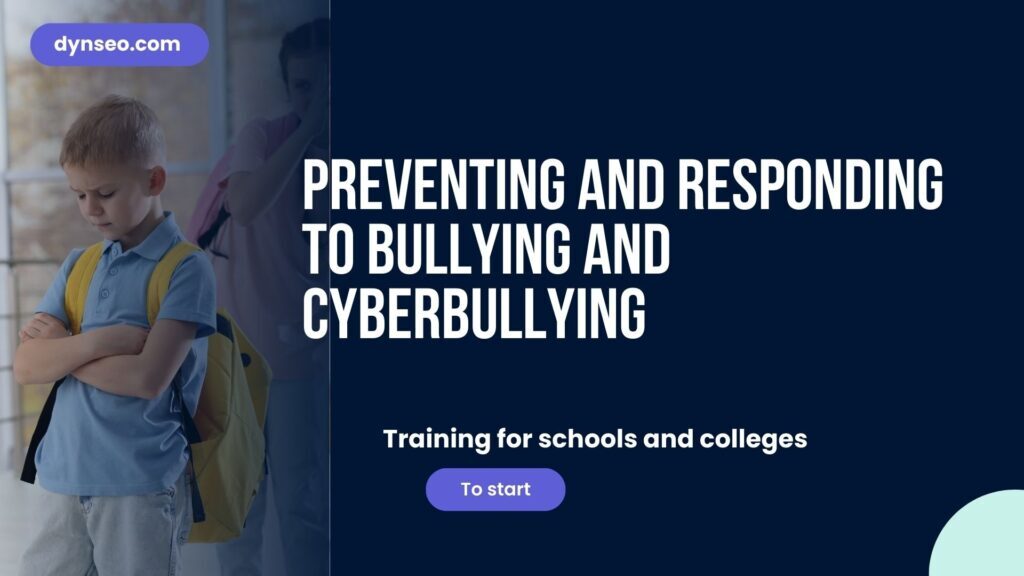
Formation « Prévenir et agir face au harcèlement scolaire et au cyberharcèlement » : programme, contenu et à qui elle s'adresse
Dans un établissement scolaire, le harcèlement se donne rarement à voir tel quel. Il arrive de biais, sous la forme d'un élève qui ne veut plus aller en récréation, d'une chute soudaine des résultats, d'un cartable « perdu » pour la troisième fois, d'un silence qui s'installe là où il y avait des mots. Trois observations exactes, trois signaux que l'on peut lire de travers si personne, dans l'équipe, n'a jamais appris à les décoder. La formation « Prévenir et agir face au harcèlement scolaire et au cyberharcèlement » répond précisément à ce manque : donner aux professionnels de l'éducation une grille de lecture claire et des gestes concrets.
Dans cet article
La formation associée
Cette page détaille cette formation en ligne DYNSEO : son contenu module par module, les métiers auxquels elle s'adresse, sa durée réelle, son tarif, ses modalités de déploiement en équipe — et le périmètre exact qu'elle couvre. L'objectif n'est pas de faire de vous un spécialiste isolé, mais de vous donner des repères fiables pour repérer, prévenir et agir, au bon moment et de la bonne manière.
L'essentiel en 30 secondes
Formation 100 % en ligne de 5 modules et 20 leçons (dont un quiz de validation), soit environ 6 heures, destinée aux enseignants et aux personnels éducatifs du primaire, du collège et du lycée. Tarif : 90 €. Accès immédiat et illimité.
- Pour qui — enseignants, CPE, AED, personnels de vie scolaire, direction, professionnels de santé scolaire, éducateurs et intervenants associatifs.
- Objectif — savoir comprendre, repérer, prévenir et agir face à une situation de harcèlement ou de cyberharcèlement.
- Ce qui est couvert — mécanismes du harcèlement, signaux d'alerte, recueil de la parole, prévention collective, protocoles d'intervention, spécificités du numérique.
- Ce qui ne l'est pas — le diagnostic clinique de la souffrance psychique, qui relève du médecin et du psychologue.
- Organisme — DYNSEO, certifié Qualiopi (N° 11757351875), attestation de fin de formation délivrée.
Le problème qu'elle résout sur le terrain
Le harcèlement scolaire est reconnu par le ministère de l'Éducation nationale comme une atteinte grave au bien-être et à la scolarité des élèves : il s'agit d'une violence répétée, dans une relation marquée par un déséquilibre de force, qui peut prendre une forme verbale, physique, relationnelle ou numérique. Le cyberharcèlement en prolonge la mécanique au-delà des murs de l'école : il suit l'élève jusque dans sa chambre, la nuit, le week-end, sans répit. Or ce qui rend ces situations si difficiles à traiter, ce n'est pas leur rareté : c'est qu'elles ressemblent, vues de loin, à autre chose.
| Ce qui est observé en classe | Interprétation fréquente | Ce dont il s'agit parfois |
|---|---|---|
| Un élève reste seul à chaque récréation | Timidité, caractère solitaire | Mise à l'écart organisée par le groupe |
| Ses résultats chutent brutalement | Manque de travail, paresse | Anxiété et charge mentale liées au harcèlement |
| Il arrive en retard ou « oublie » ses affaires | Étourderie, désorganisation | Évitement de trajets ou de moments redoutés |
| Il se plaint souvent de maux de ventre le matin | Refus scolaire, comédie | Somatisation d'une peur d'aller à l'école |
| Des rires éclatent quand il prend la parole | Ambiance de classe, blague | Humiliation ritualisée, tolérée par le groupe |
| Il consulte son téléphone avec angoisse | Addiction aux écrans | Cyberharcèlement en cours sur les réseaux |
Chaque ligne de ce tableau représente, en pratique, un moment où un adulte formé aurait pu changer le cours des choses. La formation apprend justement à passer de l'observation brute à l'interprétation juste, puis à l'action mesurée. Elle ne transforme pas l'enseignant en enquêteur ni en thérapeute : elle lui donne la lucidité nécessaire pour ne pas laisser passer, et la méthode pour réagir sans aggraver la situation.
À qui elle s'adresse
Cette formation vise les adultes qui, au quotidien, sont en contact avec les élèves et occupent une position d'observation privilégiée. Elle a été pensée pour le primaire, le collège et le lycée, avec un langage accessible et des exemples transférables à chaque niveau.
Enseignants
Ceux qui passent le plus de temps avec la classe et voient les dynamiques de groupe se nouer. La formation leur donne des repères d'observation et une posture de première réponse.
CPE et vie scolaire
Au carrefour des signalements, ils coordonnent le suivi. Le module d'intervention structure leur action dans les premières heures et sur la durée.
AED et surveillants
Présents dans les temps informels — couloirs, cour, cantine — là où le harcèlement se déroule souvent hors du regard des enseignants.
Santé scolaire
Infirmiers et personnels de santé qui reçoivent les plaintes somatiques : la formation aide à relier un symptôme récurrent à une possible situation de harcèlement, dans le respect de leur cadre professionnel.
Personnels de direction
Un socle commun pour l'établissement, qui facilite une réponse cohérente et l'articulation avec les dispositifs officiels de lutte contre le harcèlement.
Éducateurs et intervenants
Animateurs périscolaires, éducateurs, intervenants associatifs qui accompagnent les mêmes enfants dans d'autres temps de la journée.
Faite pour vous / pas faite pour vous
| Votre situation | Cette formation… |
|---|---|
| Vous encadrez des élèves sans avoir jamais été formé au repérage du harcèlement | ✔ Convient parfaitement |
| Votre équipe réagit au coup par coup et vous voulez un socle commun | ✔ Convient — c'est l'usage le plus fréquent |
| Vous voulez savoir quoi faire dans les 48 premières heures d'une situation déclarée | ✔ Convient — le module 4 y est dédié |
| Vous cherchez une prise en charge clinique de la souffrance psychique d'un élève | ✘ Voir plutôt un médecin ou un psychologue : la formation oriente, elle ne soigne pas |
| Vous êtes un parent, pas un professionnel de l'éducation | ✘ En partie — utile pour comprendre, mais l'angle reste professionnel |
| Vous cherchez un diplôme d'État ou une qualification réglementée | ✘ Non — il s'agit d'une attestation de fin de formation |
Le programme de la formation « Prévenir et agir face au harcèlement scolaire et au cyberharcèlement »
Le parcours compte 5 modules et 20 leçons, dont un quiz final de validation. La progression suit une logique simple et volontaire : comprendre, puis repérer, puis prévenir, puis agir, avant de traiter à part les spécificités du numérique. Chaque leçon est courte — de onze à quinze minutes environ — pour tenir dans les temps réellement disponibles d'une journée d'enseignant.
Comprendre le harcèlement scolaire — définitions et mécanismes
- Qu'est-ce que le harcèlement scolaire ? Définition et critères
- Les acteurs du harcèlement — victime, auteur, témoins
- Le cyberharcèlement — spécificités et nouvelles formes
- Réalité du phénomène et idées reçues
Repérer — les signaux d'alerte et l'observation en classe
- Identifier les signaux chez l'élève victime
- Observer la dynamique du groupe-classe
- Recueillir la parole de l'élève — comment et quand
- Les erreurs fréquentes de détection et leurs conséquences
Prévenir — construire un environnement scolaire protecteur
- Le rôle de l'enseignant dans la prévention quotidienne
- Les approches de prévention collective reconnues
- Travailler avec les familles en amont
- La culture d'établissement comme levier de prévention durable
Agir — protocoles d'intervention face à une situation déclarée
- Les premières 48 heures — que faire immédiatement
- Accompagner la victime — soutien et suivi dans la durée
- Gérer l'auteur — sans impunité ni exclusion systématique
- Travailler le groupe-classe après une situation de harcèlement
Cyberharcèlement — interventions spécifiques et éducation numérique
- Documenter et signaler un cyberharcèlement
- Éducation aux médias et à la citoyenneté numérique
- Les outils DYNSEO pour soutenir les élèves en difficulté émotionnelle
- Bilan, auto-évaluation et plan d'action personnel
Le recueil de la parole de l'élève (module 2) et les premières 48 heures (module 4). La première désamorce l'erreur la plus courante — poser trop de questions, trop vite, au mauvais endroit — qui peut faire taire un enfant pour longtemps. La seconde transforme un moment de panique en une séquence d'actions ordonnées, ce qui protège à la fois l'élève et le professionnel.
Give your team a common response to harassment
5 modules, 20 lessons, about 6 hours, unlimited access and a personalized certificate for each professional.
Discover the training — 90 €Format and organization
| Criterion | Detail |
|---|---|
| Format | 100 % online, short video lessons |
| Content | 5 modules · 20 lessons · validation quiz |
| Duration | About 6 hours in total |
| Rhythm | Free, no imposed end date |
| Support | Computer, tablet, smartphone |
| Access | Immediate after registration, unlimited over time |
| Required level | All levels, no prerequisites |
| Languages | 9 languages, including French, English, German, Spanish, Italian, Dutch, Portuguese |
| Validation | Certificate of completion |
| Price | 90 € per learner |
The asynchronous format addresses a constraint specific to the educational world: we cannot free an entire staff room for a whole day. The six hours are divided into sequences of about fifteen minutes, during available times — an hour of office hours, a time slot at the end of the day, a half-day set aside. Everyone progresses at their own pace, revisits a lesson when the situation actually arises in their class, and can always find a specific point thanks to unlimited access.
The final quiz is not a trick exam: it serves as active recall, to verify that the essential markers are in place before issuing the certificate. It is also a useful tool in team meetings, to establish a common vocabulary and a shared understanding of priorities.
What you will be able to do at the end
Identify warning signs
Distinguish a temporary behavior from a concerning pattern of signs, both in the victim and in the class group dynamics.
Gather a student's voice
Know when, where, and how to approach a child, with the right words, without rushing them or promising the impossible.
Prevent on a daily basis
Establish habits in your class and in the institution that make harassment less likely and speaking out easier.
Act in the first hours
Carry out a sequence of ordered actions in response to a declared situation: protect the victim, report, document, support.
Address cyberbullying
Document the facts, know which official resources to direct to, and integrate digital education into your practice.
Work with families
Involve parents beforehand and afterward, without opposing families against each other, and direct them to the right contacts.
When a student confides, a welcoming phrase is better than a question: “Thank you for telling me, you did well. We will take care of it together.” ❌ To avoid: “Are you sure? Aren't you exaggerating a bit?”, “Don't tell anyone,” or any promise of secrecy that the framework does not allow to keep. For any sign of marked suffering, refer immediately to the doctor or psychologist: the diagnosis is never the teacher's responsibility.
Qualiopi, certification and funding
DYNSEO is a certified training organization Qualiopi, registered under the activity declaration number 11757351875. The certification focuses on the quality of the process: defined educational objectives, adaptation to the targeted audiences, qualification of the trainers, collection of feedback, and continuous improvement of the content.
Each learner receives a certificate of completion in their name, to be added to the individual file and usable within the framework of professional development. It is neither a state diploma nor a regulated qualification: it is a certificate of participation in a training action, which reflects a real and traceable time of skill development.
On the funding side, the Qualiopi certification is the condition that allows an employer to consider coverage under the skills development plan or by their skills operator. The rules, ceilings, and procedures vary according to statuses, branches, and funders: the only reliable approach is to have the quote and program validated by the HR department, the training department, or the funding organization before the purchase. No amount of coverage can be guaranteed in advance.
Implementing training in an establishment
The online format facilitates collective deployment, provided that it is not limited to sending a link to everyone. A shared training only has an effect if it leads to common practices.
- Set an observable objective. For example: to have, by the end of the term, a reporting protocol known to all. Without an objective, the training remains just a checked box.
- Block the time. Two slots of fifteen minutes per week scheduled in the timetable are better than a directive of “do it when you can.”
- Designate a harassment referent. A person who advances a module in advance and leads five minutes of recap in team meetings.
- Ground each module in reality. After module 2, review a case of speech collection together. After module 4, run through the protocol for the first 48 hours.
- Articulate with official systems. Link the training to the establishment's prevention plan and existing national resources, to avoid contradictory responses.
- Plan a follow-up in three months. What has really changed in practices? This distinguishes useful training from consumed training.
Several free DYNSEO resources extend this collective work: the emotional regulation toolkit for teens helps equip vulnerable students, and the cognitive restructuring sheet for anxiety supports the care of very anxious children, always as a complement — never as a replacement — for follow-up by a health professional.
Pricing and registration
The training is offered at 90 € per learner. The price is displayed in the visitor's currency according to the country of connection, but the reference value remains the same.
- Open the training page and add it to the cart.
- Create the learner account, or log in, then confirm the payment.
- Access is immediate: the training appears in the learner's space and the first lesson starts right away.
For deployment on multiple positions or a quote for an entire establishment, the contact page of the site allows obtaining a proposal tailored to the number of learners. You can also explore the entire training catalog to build a coherent path throughout the year.
What this training is not
- It does not make any diagnosis. Identifying distress is not assessing psychological suffering: diagnosis and prognosis are the responsibility of the doctor and psychologist. The training teaches to observe, report, and refer, not to treat.
- It does not replace official systems. It works in conjunction with the establishment's protocols and national resources to combat harassment, without substituting them.
- It does not grant any legal power. Disciplinary or judicial follow-up falls under the competent authorities; the training helps document and report correctly.
- It is not a diploma. The certificate attests to participation, not to a regulated qualification.
- It is not an in-person training. There is no live trainer or group exchanges: it is an asynchronous video course, supplemented by a quiz.
To go further
This article presents the training. Four deep dives extend each aspect: a background guide to understand what is at stake, a collection of difficult everyday situations, a concrete toolkit, and a section on professional posture.
Everyday Situations10 difficult situations of school bullying and how to respond
ToolboxActivities, resources, and concrete arrangements to implement
Professional StanceTeamwork and skill development in the face of bullying
On the side of free resources, the application COCO offers children aged 5 to 10 games for cognitive stimulation and activities around emotions, useful for gently reopening the dialogue. The complete catalog of tools and the cognitive tests are freely accessible to complement your practice.
Frequently Asked Questions
How long does it take to complete the training ?
Count about six hours in total for the 5 modules and the 20 lessons, including validation quizzes. Each lesson lasts about fifteen minutes, and most professionals spread the course over three to six weeks, with two short slots per week. Access remains open afterwards, with no end date : you can return to a specific lesson, such as collecting speech or the first 48 hours, at the exact moment a situation arises in your class or institution.
Does the training provide unlimited access ?
Yes. Once the registration is validated, access is immediate and unlimited over time. The training appears in the learner's space and can be accessed on a computer, tablet, or smartphone as many times as necessary. This lasting access is particularly useful on a topic like harassment : the references are better anchored when you can review a lesson just before acting, rather than memorizing everything at once. The quiz can also be retaken to verify your knowledge away from the first reading.
Do you receive a certificate at the end ?
Each learner receives a personalized training completion certificate, issued by DYNSEO, an organization certified Qualiopi under the number 11757351875. This certificate attests to participation in the training action and can be added to the individual professional development file. It is neither a state diploma nor a regulated qualification, but a traceable and recognized document within a quality approach, particularly useful for highlighting the skills development of an educational team.
Can the training be funded ?
This is possible : DYNSEO's Qualiopi certification is generally required for funding under the skills development plan or by a skills operator. The rules, ceilings, and procedures vary according to statuses, branches, and funders, and no amount can be guaranteed in advance. The reliable approach is to have the program and quote validated by your HR department, your training department, or your funding organization before purchase.
Is there support in case of questions ?
Yes. For any questions about registration, access to the learner's space, or deployment on a larger scale within an institution, the contact page of the DYNSEO website allows you to reach the team and obtain a tailored quote. Remember that the training equips you for detection and action, but is not intended to replace specialized advice : for any situation involving the immediate safety of a child, contact your country's emergency services and official child protection agencies without delay.
This page describes the content of a training action. Funding conditions and training obligations vary according to statuses and employers : check with your HR department or your funding organization. This content does not constitute medical or legal advice : for any signs of distress in a child, refer to a doctor or psychologist, and in case of immediate danger, contact your country's emergency services.
Move from an isolated reaction to a team response
With the training "Preventing and Acting Against School Bullying and Cyberbullying", provide each professional with the guidelines to identify, prevent, and act: 5 modules, 20 lessons, unlimited access, and a personalized certificate.
Discover the training — 90 €Did this content help you? Support DYNSEO 💙
We are a small team of 14 people based in Paris. For 13 years, we have been creating free content to help families, speech therapists, care homes and healthcare professionals.
Your feedback is the only way we know if our work is useful. A Google review helps us reach other families, caregivers and therapists who need it.
One action, 30 seconds: leave us a Google review ⭐⭐⭐⭐⭐. It costs nothing, and it changes everything for us.