Working in a Multidisciplinary Team Around the Autistic Child
Discover how to coordinate interventions, communicate effectively among professionals, and build a coherent support system for each autistic child.
Dans cet article
The optimal support for an autistic child relies on the harmonious collaboration of a multidisciplinary team: psychologist, speech therapist, psychomotor therapist, occupational therapist, specialized educator, teacher, and doctor. The quality of this support depends as much on the individual competence of each participant as on their ability to work together in a coordinated manner. This guide explores the challenges of interprofessional collaboration, coordination tools, and strategies to build truly coherent support for the child.
🤝 The challenges of teamwork in ASD
Autism is a condition that simultaneously affects communication, social interactions, behavior, sensory processing, cognition, and motor skills. No professional can cover all these dimensions alone. Therefore, working in a multidisciplinary team is not a luxury but a necessity to provide comprehensive and coherent support that takes into account the person in all their complexity.
However, teamwork does not come naturally. Different disciplines have their own theoretical frameworks, specialized vocabulary, assessment methods, and intervention priorities. Without training in interprofessional collaboration, the risks are numerous: contradictory objectives, incompatible approaches, lack of coordination in interventions, loss of information between participants, and confusion for the family receiving divergent messages.
From Multidisciplinarity to Interdisciplinarity
It is important to distinguish between multidisciplinary work, where each professional operates in their field without real coordination, and interdisciplinary work, where professionals share a common frame of reference, define objectives together, and coordinate their interventions in an integrated manner. Interprofessional training aims precisely to develop this capacity for interdisciplinarity, which is the condition for truly comprehensive and coherent support.
👥 Know the role and skills of each professional
The first step in teamwork is mutual knowledge of the roles and skills of each professional. Too often, professionals have an unclear view of what other team members do, leading to unnecessary overlaps or, conversely, gaps in care. Interprofessional training clarifies these roles and creates synergies between different skills.
Psychologist
Cognitive assessment, behavioral intervention, parental guidance, and psychological support
Speech therapist
Communication, oral and written language, feeding, implementation of AAC
Psychomotor therapist
Motor development, body schema, tonic regulation, and sensory-motor integration
Occupational therapist
Daily autonomy, sensory integration, environmental adaptation, and fine motor skills
Specialized educator
Daily educational support, socialization, autonomy, and implementation of the project
Teacher
School learning, inclusion in ordinary settings, and pedagogical adaptations
Knowing each other's roles helps avoid inappropriate requests and mobilize the right skills at the right time. When an educator observes problematic eating behavior, they know they must refer to the speech therapist and the occupational therapist. When a teacher notices difficulties in handwriting, they can consult the occupational therapist or the psychomotor therapist. This smooth flow of information between professionals is a sign of an effectively functioning team.
📨 Effective interprofessional communication
Communication among team members is the glue of interdisciplinary work. It must be regular, structured, and targeted to be effective without being time-consuming. Interprofessional training develops the necessary communication skills: knowing how to convey relevant information concisely, using accessible vocabulary for all team members, and actively listening to the observations of other professionals.
Effective team meetings
Team meetings are the privileged moment for interdisciplinary coordination. To be effective, they must be structured with an agenda, a limited duration, and clear objectives. Each professional presents observations and progress in their field, and the team discusses necessary adjustments to the personalized project. The meeting minutes formalize the decisions made and the actions to be implemented by each professional.
- Synthesis meetings: in-depth review of the personalized project with all professionals, ideally every quarter
- Regulation meetings: short and targeted exchanges on specific situations requiring quick coordination
- Written transmissions: liaison notebooks, monitoring sheets, and reports shared among professionals
- Informal exchanges: spontaneous exchange moments that complement formal coordination mechanisms
💡 Speak the same language
One of the major obstacles to interprofessional communication is disciplinary jargon. The speech therapist talks about "language pragmatics," the psychologist about "executive functions," the occupational therapist about "sensory profile," and the educator about "challenging behaviors." Interprofessional training allows for the construction of a common vocabulary understandable by all, including families participating in exchanges. This common language facilitates communication and reduces misunderstandings.
📝 The shared personalized project
The personalized project is the central document that formalizes the objectives, means, and evaluation criteria of the support. In an interdisciplinary approach, this project is co-constructed by the entire team in consultation with the family and, when possible, with the autistic person themselves. It ensures the coherence of interventions by defining cross-cutting objectives that are worked on by each professional in their area of expertise.
For example, the objective "develop functional communication skills" will be worked on by the speech therapist in rehabilitation sessions, by the educator in daily activities, by the teacher in class, and by the parents at home. Each professional adapts their strategies to their intervention context while respecting the common framework defined by the team. This coherence is essential for the autistic person who needs stable and predictable reference points.
⚠️ The trap of contradictory objectives
Without coordination, the objectives of different stakeholders can contradict each other. For example, the speech therapist may encourage the use of pictograms while the educator insists on verbal language. Or the psychologist may work on tolerance to change while the teacher maintains a very rigid routine. These contradictions, sources of confusion for the child and frustration for the parents, can only be avoided through close coordination and a truly shared personalized project.
🛠️ Coordination and information sharing tools
Several tools facilitate coordination among professionals working with an autistic child. The choice of these tools depends on the configuration of the team (same location or dispersed stakeholders), available resources, and the desired level of formalization.
Digital tools offer interesting solutions for real-time information sharing: collaborative platforms, professional messaging applications, shared online files, and goal tracking tools. These solutions are particularly useful when professionals work in different locations and do not meet physically. Interprofessional training includes mastering these tools and best practices for information sharing while respecting professional secrecy and data protection.
The liaison notebook
The liaison notebook, whether paper or digital, remains a fundamental tool for daily coordination. It allows each stakeholder to record their observations, noted progress, encountered difficulties, and adjustments made. The family also contributes by reporting significant daily situations. This living document, shared by all stakeholders, ensures a continuity of information essential for the coherence of support.
🎮 COCO THINKS and COCO MOVES: a cross-functional tool for the team
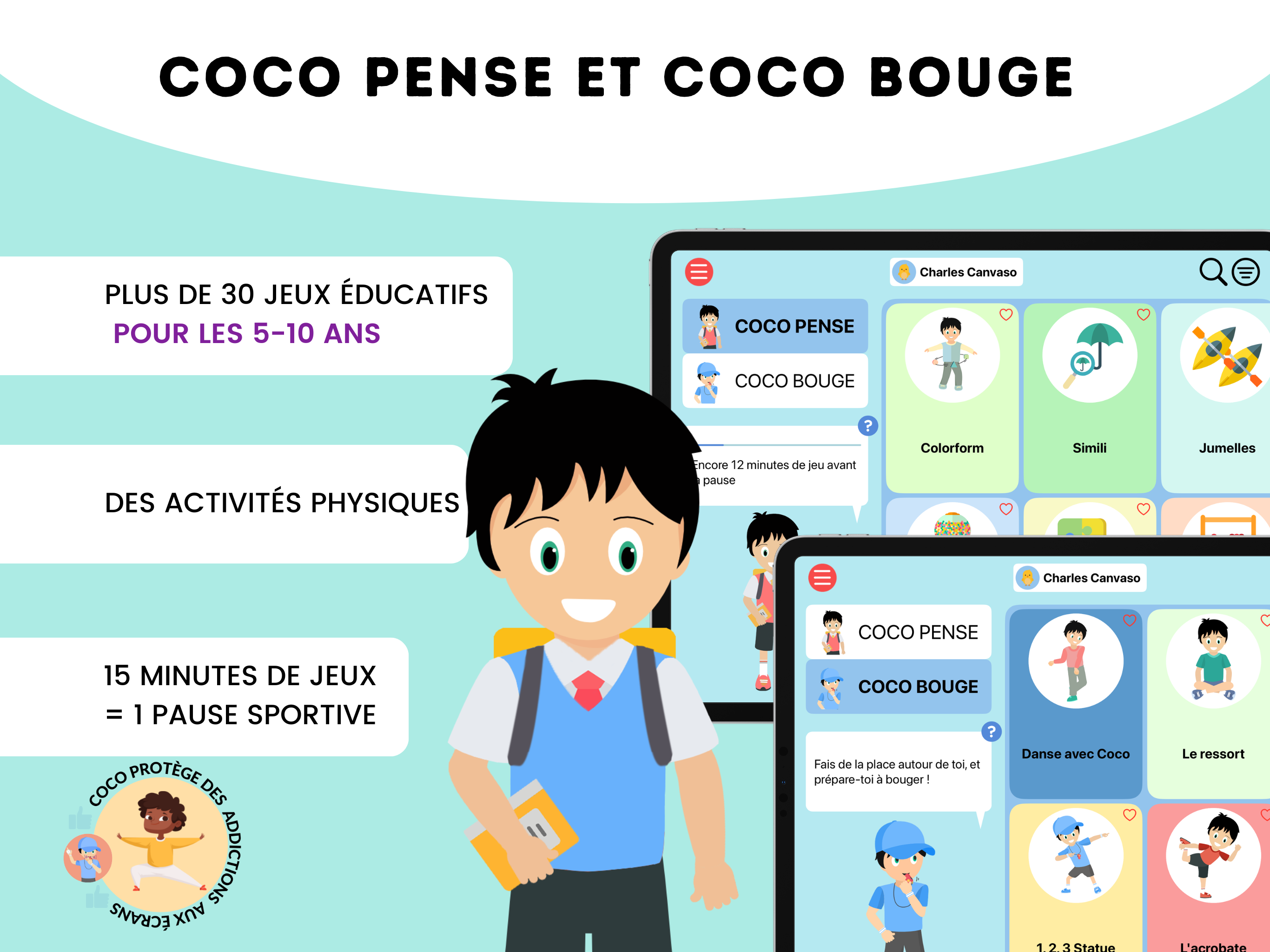
The COCO THINKS and COCO MOVES program from DYNSEO is a tool that can be used cross-functionally by the entire multidisciplinary team. Each professional can integrate it into their practice according to their specific objectives, while contributing to a common tracking of the child's cognitive performance.
A common language for the team
The use of a common tool like COCO creates a shared language around the child's cognitive performance. The psychologist can use it to assess executive functions, the occupational therapist to work on hand-eye coordination, the educator to propose a structured activity, and the family to maintain stimulation at home. The data collected by each stakeholder feeds into a global tracking that enriches synthesis meetings and facilitates collective decision-making.
🎯 Discover COCO THINKS and COCO MOVES
A cross-functional program for cognitive and motor stimulation, usable by the entire multidisciplinary team for coordinated tracking.
Discover the COCO program →👨👩👧👦 Integrating the family into the team
Parents are the essential partners of the support team. They know their child better than anyone else, observe their functioning in daily life situations, and ensure continuity of support between sessions. Interprofessional training includes developing specific skills to integrate parents into the care process in a respectful and effective manner.
Integrating the family means informing them transparently about objectives and methods, gathering their observations and priorities, providing them with strategies applicable in daily life, and supporting them in their role as caregivers. Parents are neither passive spectators nor therapists to be trained, but partners whose parental expertise and knowledge of their child are essential to the quality of support.
DYNSEO's guides for supporting autistic children and supporting autistic adults are useful resources to share with families to help them understand the stakes of support and strengthen their role in the team.
🎓 Training with DYNSEO
DYNSEO offers a certified Qualiopi training “Supporting a child with autism: keys and solutions for daily life” which constitutes an ideal common knowledge base for multidisciplinary teams. By taking this training together, professionals from the same team share a foundation of knowledge and skills that subsequently facilitates the coordination of their interventions.

🎓 Train your team together
Qualiopi certified training accessible online, ideal as a common knowledge base for the entire multidisciplinary team.
Discover the training →🎯 Conclusion
Interprofessional training is an essential investment for teams supporting autistic children. By developing communication, coordination, and collaboration skills, it transforms a collection of individual interventions into a truly integrated and coherent support. Shared tools like COCO THINKS and COCO MOVES facilitate this coordination by providing a common language and cross-functional tracking.
The autistic child needs coherence and predictability in their environment. A team that speaks with one voice, shares the same objectives, and coordinates its interventions offers this precious coherence. Interprofessional training is the key to this harmony in service of the child and their family.
Working together to provide better support:
The union of skills in service of each child.
Did this content help you? Support DYNSEO 💙
We are a small team of 14 people based in Paris. For 13 years, we have been creating free content to help families, speech therapists, care homes and healthcare professionals.
Your feedback is the only way we know if our work is useful. A Google review helps us reach other families, caregivers and therapists who need it.
One action, 30 seconds: leave us a Google review ⭐⭐⭐⭐⭐. It costs nothing, and it changes everything for us.