Designing, Leading, and Evaluating Memory Workshops: How to Evolve Your Practice?
A workshop can be well-prepared on paper and still be difficult to conduct: the group has different expectations, an instruction turns out to be too complex, or the assessment does not allow for deciding the next steps. These situations invite us to work on the method as much as the choice of activities.
The DYNSEO training "Effective memory workshops: designing, facilitating, and evaluating according to cognitive profiles" is dedicated to this professional organization. The SCARLETT notebooks can then serve as thematic supports to put into practice a preparation adapted to the people being supported.
Starting from a concrete difficulty in your practice
Before looking for new exercise sheets, identify the question to be solved. Is it the choice of theme, the presentation of the instruction, the distribution of speech, or the way to observe the session? A precise difficulty provides a more useful work objective than a general desire to renew activities.
You can start from a recent scene: a person did not want to write, two participants monopolized the conversation, or the support did not seem to interest anyone. First, describe what was proposed and what the people expressed. This description helps to choose a path without concluding too quickly about their abilities.
Designing based on participants and a goal
An operational objective allows for choosing the means. "Making space for each participant in a discussion about meals" leads to anticipating images, several modes of response, and different invitations. "Carrying out the same grid with the whole group" mainly describes a task, without specifying what one wishes to make possible.
A preparation sheet can contain the theme, the objective, the first support, an instruction, a possible aid, and a short variant. It serves as a reference during the meeting. Keep a place for the choice of people: a useful preparation should be adjustable when a proposal does not fit.

The complete collection (20 notebooks)
Twenty thematic notebooks gathered to vary the supports and prepare moments of memories or paper activities.
Discover the collection →Facilitating by adapting instructions and the flow of speech
Facilitation consists notably of making options visible: looking, telling, searching with a hint, or working independently. You can offer help without imposing it and explain a task change without presenting it as a failure. The way to formulate the invitation matters in the person's experience.
In a group, the same theme can connect several tasks. An image of the market can be commented on, associated with a recipe, or used for a word activity. The facilitator prepares these entry points and then sees which ones suit the participants of the day.
Evaluating to decide the next step
An animation assessment must make a decision possible: simplify an instruction, revisit a preference, change the medium, or propose a different format. Describe the choices, forms of participation, and useful aids. The correct answers constitute information among others.
You can also gather the group's feelings: do they want to revisit the theme, a shorter activity, or another mode of participation? This feedback helps to adjust the program. They must be distinguished from a cognitive evaluation or a clinical conclusion about the effect of the sessions.
What DYNSEO training offers
The displayed program presents a five-hour course aimed at professionals who create or lead workshops. It addresses five complementary axes:
- Identify the profiles of the group and clarify the objectives.
- Organize a progression, the materials, and the environment.
- Work on the posture and management of a heterogeneous group.
- Evaluate the sessions and adjust the program.
- Integrate the workshops into a project shared with the team.
Consult the training sheet to read the lessons and the current modalities. You will be able to relate these themes to the concrete difficulty you wish to work on in your establishment or service.
Linking training and your materials
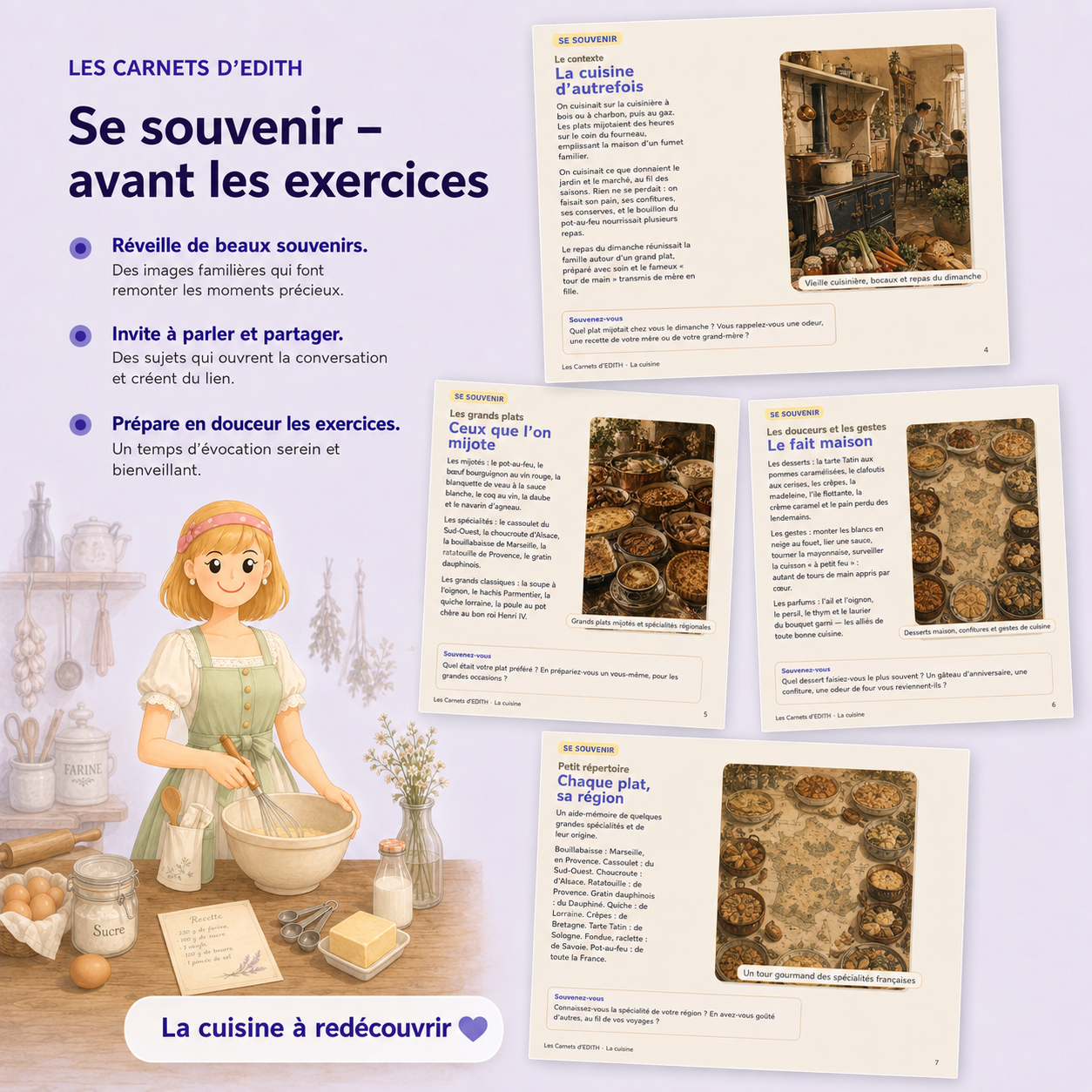
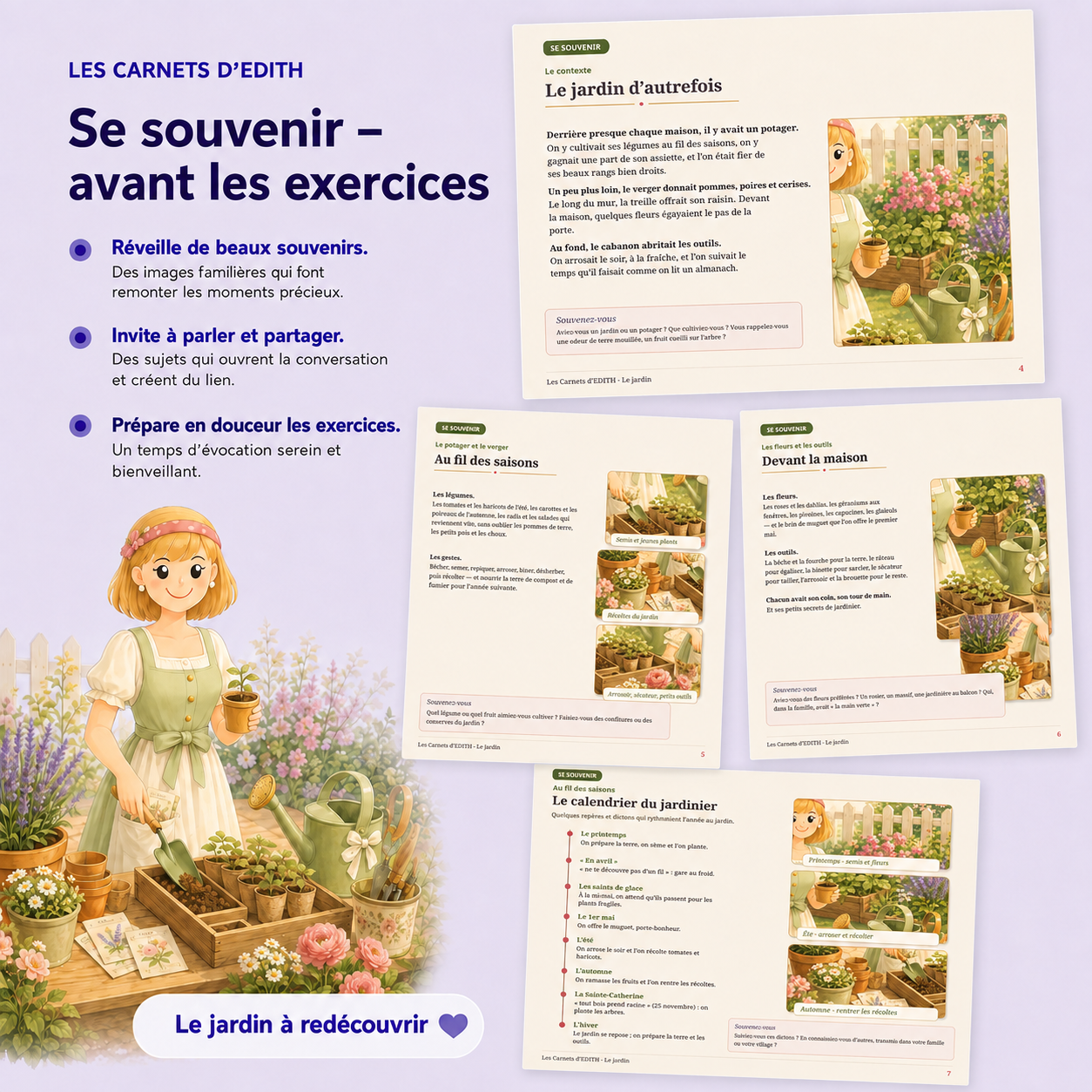
The SCARLETT notebooks offer varied universes: school, kitchen, landscapes, mechanics, sports, or traditions. After choosing an objective and a way to animate, select the notebook whose theme corresponds to the tastes of the individuals. The medium becomes part of the project, with an instruction and a prepared aid.
For a first team trial, choose a session and a common adjustment to observe. Then discuss what happened and what the participants expressed. This approach gives a concrete use to the materials and allows the program to evolve without multiplying changes at the same time.
Frequently Asked Questions
Who is the presented training aimed at?
The program targets professionals who design or lead memory workshops in establishments, day care, or at home. The sheet specifies the content and current modalities.
Do you need to already have a workshop program?
You can start from an existing session or a project to build. Identifying a concrete situation helps to link the themes of the training to your practice.
Do the notebooks replace the facilitator's preparation?
They provide thematic materials. The choice of objectives, instructions, aid, and assessment remains a task of preparation and animation.
Choose a support for your next meeting
Start with a theme that appeals to the participants, then choose the pages and activities that suit your session.
Cited resources
The characteristics of the PDFs and the composition of the sets are presented on the product sheets linked in this article. The outlines, questions, and variations proposed here are ideas for activities to adapt to your context. Consult the training program.
Did this content help you? Support DYNSEO 💙
We are a small team of 14 people based in Paris. For 13 years, we have been creating free content to help families, speech therapists, care homes and healthcare professionals.
Your feedback is the only way we know if our work is useful. A Google review helps us reach other families, caregivers and therapists who need it.
One action, 30 seconds: leave us a Google review ⭐⭐⭐⭐⭐. It costs nothing, and it changes everything for us.