RQTH and ADHD adult: should it be requested, what concrete benefits at work
The Recognition of the Quality of Disabled Worker remains one of the most feared decisions by adults with ADHD. However, its concrete professional benefits are real and often unknown. This guide provides you with all the information to make an informed decision.
Dans cet article
La formation associée

Les ressources citées
 Timer Visuel
Requesting RQTH with adult ADHD often means facing a wall of representations: "I am not really disabled", "My employer will see me differently", "I will be excluded from promotions", "ADHD is a childhood disease". These preconceived ideas are understandable — they reflect the legitimate fears of people who have often spent years compensating for their difficulties without help, out of pride and fear of others' judgments. But they prevent access to real rights, concrete accommodations, and financial support that can radically transform the professional experience of an adult with ADHD. This guide demystifies RQTH for adults with ADHD: what it really is, who it grants rights to, how to request it, and above all — what it concretely changes in daily professional life.
1. RQTH and ADHD adult: the preconceived ideas that block
1.1 Distinguishing fact from fiction
The first obstacle to RQTH for adults with ADHD is often psychological: the resistance to recognizing oneself as "disabled" in a sense that corresponds to their experience. This resistance is legitimate — but it often rests on erroneous representations of disability and RQTH that need to be deconstructed before examining the facts.
✗ Common misconceptions
- ADHD is not a "real" disability
- RQTH will stigmatize me at work
- My employer will have to grant it to me if they learn about it
- I will be put on a dead-end track
- RQTH appears in my professional file
- I must tell my employer everything about my ADHD
- RQTH is permanent — I will be "disabled for life"
- It is reserved for visible and severe disabilities
✓ The legal and practical reality
- ADHD is recognized as a disability by the 2005 law as soon as it impacts professional life
- RQTH is confidential — the employer only knows that you have it
- Your employer does not know the nature of your disability
- RQTH grants rights — it imposes no restrictions
- It does not appear on your CV or in your HR file
- You choose what you disclose and to whom
- It is granted for 1 to 5 years and renewable based on evolution
- It covers all disabilities recognized by the MDPH, including invisible ones
of new RQTH granted concern mental disorders — a category including ADHD (AGEFIPH 2023)
of RQTH requests for psychiatric and neurodevelopmental disorders between 2018 and 2023
average delay between adult ADHD diagnosis and RQTH request — a gap to be filled
of the cost of certain workplace adjustments funded by AGEFIPH for an employee with ADHD
1.2 What exactly is RQTH?
The Recognition of the Quality of Disabled Worker (RQTH) is an administrative recognition granted by the MDPH (Departmental House for Disabled People) which establishes that a person has a disability in the sense of the law of February 11, 2005, and that this disability impacts their professional capabilities. It grants access to a set of rights and provisions — without imposing any restrictions or obligations of disclosure beyond what the person chooses to share.
The RQTH is not a medical diagnosis — it does not define the nature of the disability in the documents sent to the employer. The occupational physician can describe adjustment needs without revealing the underlying diagnosis. The employer knows that you have an RQTH (because you choose to communicate it to activate the rights) but does not know the medical cause.
2. Does adult ADHD entitle one to RQTH?
2.1 The attribution criteria
The RQTH is granted by the Commission for the Rights and Autonomy of Disabled People (CDAPH) of the MDPH based on a medical and social file. The main criterion is the existence of a significant impact of the disorder on professional life. For adult ADHD, this impact may manifest as persistent difficulties in organization and planning, poor time management despite efforts, attention difficulties in open work environments, increased sensitivity to stress and deadline pressure, or disproportionate cognitive fatigue related to compensatory efforts.
A well-compensated mild ADHD, without a significant impact on professional performance, will not necessarily entitle one to RQTH — or the MDPH may grant an RQTH without opening specific rights to funded adjustments. More severe ADHD, with comorbidities (anxiety, depression, sleep disorders) and documented impact on professional life, will very likely entitle one to RQTH.
2.2 The required documents for the file
A solid RQTH file for an adult with ADHD generally includes the following elements, to be gathered with the help of the treating physician or psychiatrist.
📋 Documents for an adult ADHD RQTH file
- CERFA MDPH Form — Application file for disability recognition (available on mdph.fr or at the MDPH of your department)
- CERFA Medical Certificate — Filled out by the treating physician or psychiatrist, describing the diagnosis, symptoms, and their functional impact on professional life
- Neuropsychological Assessment — Report from the neuropsychologist confirming the ADHD diagnosis and describing the cognitive profile (strongly recommended — not always mandatory)
- Letter from the psychiatrist or general practitioner — Describing the concrete impact of ADHD on professional life: types of difficulties, duration, comorbidities
- Proof of identity and residence — ID card or passport, proof of residence less than 3 months old
- Professional project (optional) — Description of your current professional situation and desired adjustments — strengthens the coherence of the file
3. The concrete benefits of RQTH for an adult with ADHD
3.1 The 6 most impactful professional benefits
The RQTH is not a symbolic status — it is a key that opens access to concrete measures that can radically transform the professional experience of an adult with ADHD. Here are the most direct and measurable benefits.
Workplace adjustments funded by AGEFIPH
Noise-canceling headphones, quiet desk, task management software, ADHD coaching, ergonomic workstation — up to 100% of costs funded by AGEFIPH (private sector) or FIPHFP (public sector) for RQTH employees.
Enhanced monitoring by the occupational physician
An RQTH employee benefits from enhanced individual monitoring (EIM) by the occupational physician — with more frequent visits and the possibility to recommend adjustments that are mandatory for the employer.
Enhanced protection against dismissal
An RQTH employee benefits from specific protection in case of dismissal for medical unfitness: the occupational physician must seek suitable reassignment, and the employer has reinforced obligations for adjustments before any termination.
Priority access to certain training and programs
Priority access to training funded by AGEFIPH, supported employment programs, specific professional training aids for disabled workers, and certain adapted skills assessments.
OETH quota for the employer
Your RQTH increases the OETH employment rate of your company — which reduces its AGEFIPH contribution. You provide concrete administrative value to your employer, which can facilitate the implementation of adjustments.
Extended notice period in case of dismissal
In case of dismissal, the legal notice period for an employee with a recognized disability is doubled compared to the common law (up to a maximum of 3 months) — an additional protection during the professional transition period.
3.2 Specific workplace adjustments for ADHD funded by AGEFIPH
AGEFIPH funds workplace adjustments that directly compensate for functional limitations related to the disability. For an adult with ADHD recognized as having a disability, these adjustments can cover a wide range of tools and devices.
| Adjustment | Benefit for ADHD | AGEFIPH Funding |
|---|---|---|
| Professional noise-canceling headphones | Reduces sound distractions in open spaces — improves concentration | Yes — up to 100 % |
| Visual task management software (Asana, Trello Pro) | Externalizes planning and prioritization — compensates for impaired working memory | Yes |
| Visual timer (Physical Time Timer or app) | Materializes time — reduces time anxiety and procrastination | Partial |
| Professional ADHD coaching (10 to 20 sessions) | Develops organizational strategies and executive function management | Yes — up to 70 % |
| Partial remote work (3 days/week) | Eliminates distractions from the open space — improves concentration and reduces cognitive fatigue | Organizational — no direct AGEFIPH funding |
| Motorized sit-stand desk | Allows movement for profiles needing movement (residual motor hyperactivity) | Yes |
| Voice dictation software (Dragon Professional) | Compensates for writing encoding difficulties — frees concentration for content | Yes — up to 100 % |
| Adjustment of working hours | Adapts hours to natural attention peaks (often late morning for those with ADHD) | Organizational — employer agreement required |
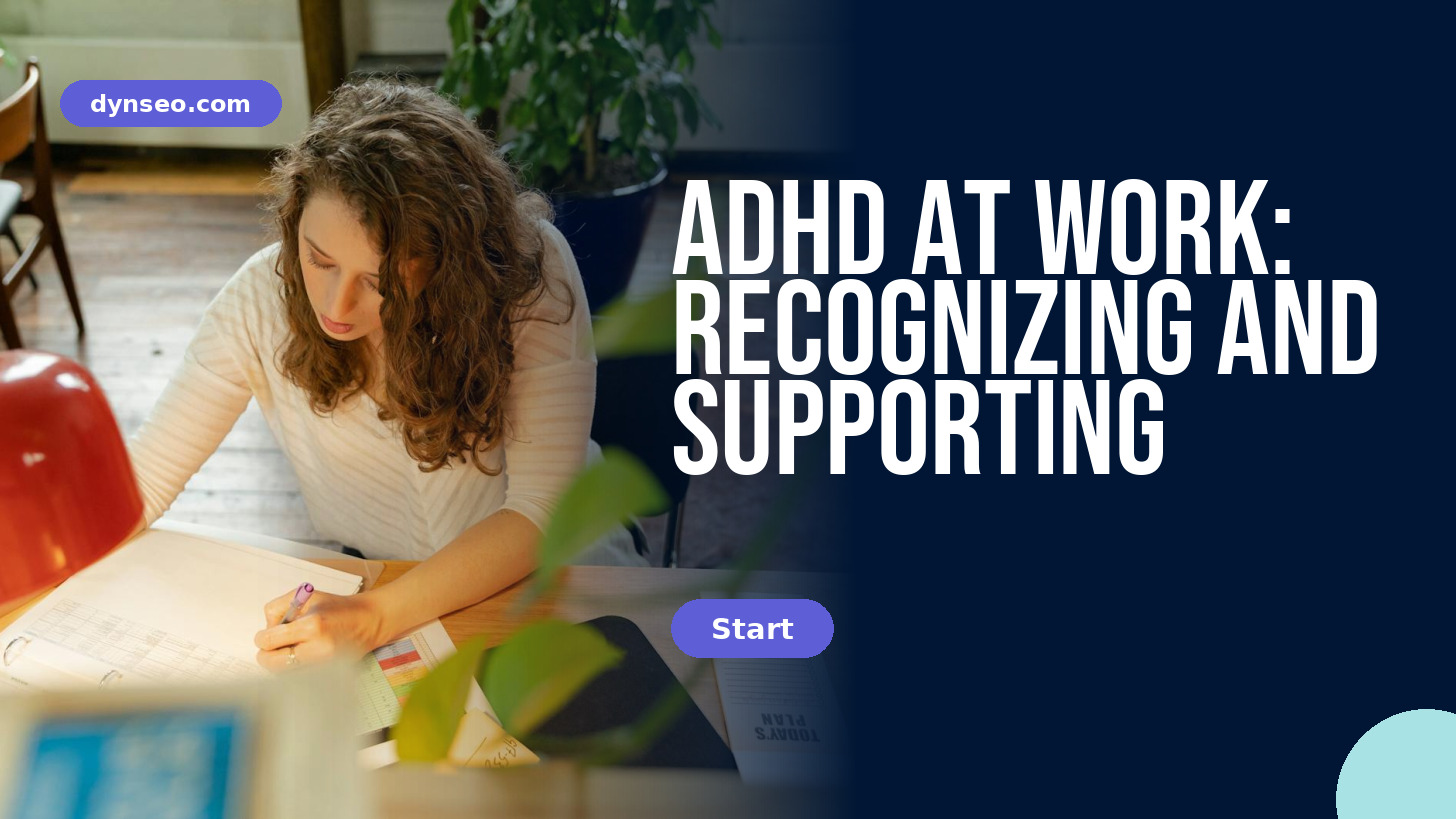
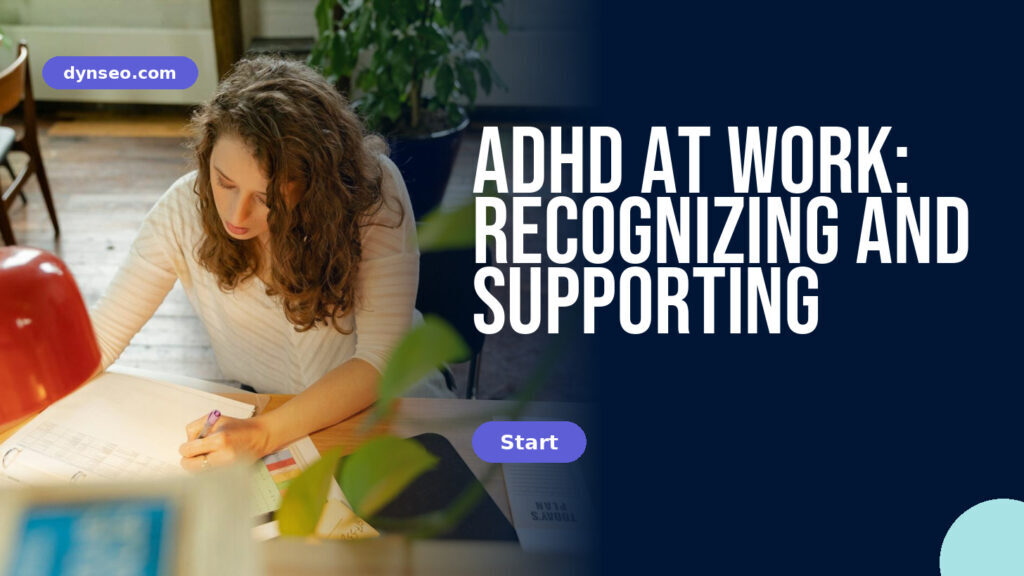
ADHD at work: recognize and support
This online training, 100% remote and at your own pace, gives your managers, HR directors, and disability mission leaders the keys to understand adult ADHD in the workplace, support RQTH processes without stigmatizing, and implement adjustments that unlock the potential of ADHD employees. Qualiopi certified, fundable through OPCO, deployable in multi-employee licenses.
Discover the training →4. Should you apply for RQTH? The decision matrix
4.1 The question to ask first
The RQTH is not an obligation — it is a right. The decision to apply for it is strictly personal and must be made freely, with full knowledge of all implications. There is no universal answer: the right choice depends on your current professional situation, your company's culture regarding inclusion, the real impact of your ADHD on your work, and your professional plans.
✅ The RQTH is probably useful if…
- Your ADHD difficulties significantly impact your performance
- You need expensive workplace accommodations (headset, coaching, software)
- You experience chronic cognitive fatigue related to compensation
- Your company has an active and supportive Disability Mission referent
- You fear future difficulties related to ADHD (more demanding position, new manager)
- You are frequently or long-term sick due to ADHD
- You wish to benefit from enhanced protection against dismissal
⚠️ Weigh the pros and cons if…
- Your ADHD is well compensated and does not impact your current performance
- You are in a company with an uncertain inclusion culture
- You have just been diagnosed and have not yet assessed the professional impact
- You are in a trial period or have recently changed positions
- You have not yet consulted the occupational physician about your needs
⛔ Maybe not the right time if…
- Your employer has a history of discrimination against declared RQTH
- You are in conflict with your employer or in labor court proceedings
- You do not have a formal diagnosis — without an assessment, the MDPH request will be rejected
- You plan to leave the company within 6 months
⚠️ Important : The decision to request the RQTH and to declare it to your employer are two distinct decisions. You can obtain the RQTH from the MDPH without ever declaring it to your employer — you retain the choice to activate it or not depending on the circumstances. However, to benefit from AGEFIPH funding and covered accommodations, you must declare it to your employer and authorize them to carry out the AGEFIPH procedures.
5. The RQTH process for an adult with ADHD: step by step
Obtain the formal diagnosis
The RQTH requires a medical diagnosis established by a physician — psychiatrist, neurologist, or general practitioner trained in adult ADHD. A complete neuropsychological assessment (neuropsychologist) is strongly recommended — it objectively documents the impact of ADHD on cognitive functions and significantly strengthens the MDPH file.
Download and complete the MDPH form
The RQTH application form (CERFA 15692-01) is available on your department's MDPH website. The medical certificate CERFA (CERFA 13878-01) must be completed by your doctor. These two documents are the core of your file.
Compile the complete file
Gather: CERFA form + medical certificate + neuropsychological assessment + reports of psychiatric consultations + identity and residence proofs. Optionally: letter explaining the impact of ADHD on your professional life (very useful to contextualize the file for the CDAPH).
Submit the file to the MDPH
Submit the complete file to the MDPH of your department of residence — in person, by registered mail with acknowledgment of receipt, or via the online platform if available in your department. Keep a complete copy of everything you send.
Wait for the decision of the CDAPH
The Commission for the Rights and Autonomy of Disabled Persons (CDAPH) examines your file and makes its decision within a legal period of 4 months. In case of an incomplete file, the MDPH has one month to notify you. In case of rejection, you can file a gracious or contentious appeal.
Activate the RQTH according to your needs
Once the RQTH is obtained, you freely decide whether to declare it to your employer or not. If you declare it, contact the Disability Mission referent to initiate the AGEFIPH procedures. Meet with the occupational physician to formalize the desired workplace adjustments.
6. What the employer gains when an employee declares their RQTH
6.1 A rare alignment between personal interest and company interest
The RQTH is one of the few systems where the interests of the employee and the employer are perfectly aligned. For the employee with ADHD, the RQTH opens access to adjustments that improve their performance and well-being. For the employer, the employee's RQTH improves the OETH rate, reduces the AGEFIPH contribution, and benefits from funding for adjustments — which will ultimately improve the employee's productivity.
Improvement of the OETH rate
Each declared RQTH improves the employment rate of disabled workers in the company — reducing the annual AGEFIPH contribution, sometimes by several thousand euros.
AGEFIPH funding for adjustments
Workplace adjustments (headsets, coaching, software) are funded up to 100% by AGEFIPH — with no significant cost to the employer while improving the employee's performance.
Improvement of performance
An ADHD employee who is well-supported and has the right adjustments is significantly more productive than an unsupported ADHD employee who compensates alone at the cost of chronic fatigue.
CSR recognition and employer brand
An active policy of inclusion for invisible disabilities (ADHD, autism, DYS disorders) is a differentiating argument in the CSR report, tenders, and employer brand communication.
7. Resources to support you in the RQTH process
7.1 The actors who can help you
The RQTH process may seem complex — but you are not alone. Several actors can support you at every step, for free or at low cost.
🤝 Your resources for the RQTH ADHD process
- Occupational doctor — First confidential contact. Can guide you, help you compile the file, and prescribe adjustments without revealing your diagnosis to your employer.
- Disability Mission Referent — In companies with more than 250 employees. Provides administrative support for the process, prepares AGEFIPH files, informs about rights.
- MDPH of your department — Has a multidisciplinary evaluation team. Can meet with you for an orientation interview before filing the application.
- AGEFIPH (private sector) / FIPHFP (public sector) — Territorial advisors who provide free support to employees and employers in implementing adjustments.
- HAN'UP / LADAPT / ADAPT — Associations specialized in supporting the employment of disabled people. Can assist you in the RQTH process and adapted employment.
- Psychiatrist or neuropsychologist — Compile the medical file necessary for the RQTH. Can write the accompanying letter describing the functional impact.
🎓 Train your managers to support the RQTH ADHD processes
The training ADHD at work: recognize and support from DYNSEO provides your managers and HR directors with the keys to support an ADHD employee in their RQTH process, implement adjustments funded by AGEFIPH, and create an inclusive work environment. Qualiopi certified, fundable by OPCO, deployable in multi-employee licenses.
8. Practical DYNSEO tools for ADHD employees and their managers
🎯 Attention refocusing cards
Visual aids to help refocus on the current task after an interruption — essential in open spaces.
Download →⚡ Impulsivity management sheet
Practical strategies to identify and manage impulsive behaviors at the office.
Download →⏱️ Visual timer
Visualize the remaining time — combats procrastination and reduces time anxiety.
Download →📊 ADHD prioritization matrix
Visually prioritize tasks — breaks the feeling that "everything is urgent at the same time".
Download →✅ ADHD workstation adjustment checklist
Complete list of adjustments to be made — from the physical environment to digital tools.
Download →🗂️ Complete tools catalog
More than 50 practical tools for inclusive management on a daily basis.
See all tools →9. DYNSEO applications to enhance cognitive functions
🟦 CLINT — Adults
Cognitive stimulation for adults — memory, attention, executive functions. Particularly recommended for ADHD adults looking to enhance their attentional and executive capacities in a playful way.
Discover CLINT →🟨 SCARLETT — Seniors
Cognitive support for seniors. Suitable for senior ADHD employees in a process of maintaining attentional capacities.
Discover SCARLETT →🟩 COCO — Children
Application for ages 5-10. Recommended for employees who are parents of ADHD children seeking suitable cognitive stimulation tools.
Discover COCO →🟥 MY DICTIONARY — Communication
Alternative and augmented communication. Can support adults with ADHD who have difficulties with structured written expression.
Discover MY DICTIONARY →10. Going further: the DYNSEO B2B training catalog
DYS disorders in the workplace: identify, adapt, and enhance
→ See the complete DYNSEO training catalog
→ Access DYNSEO cognitive tests
❓ FAQ — RQTH and ADHD adult
1. Is the RQTH visible on my CV or professional file?
No. The RQTH does not appear on your CV, in your HR file, or on your payslip. It is a confidential administrative recognition that you hold personally. You freely choose to communicate it to your employer (to activate the associated rights) or not. Even if you communicate it, your employer does not know the medical nature of your disability — they only know that you have an RQTH.
2. Can my employer force me to declare my RQTH?
No. Declaring the RQTH to the employer is a right, not an obligation. You cannot be compelled to reveal your RQTH status. However, without declaring to the employer, you cannot benefit from AGEFIPH funding for your workplace adjustments or the specific protections related to the RQTH (enhanced occupational health follow-up, protection against dismissal…). It is a personal balance to find according to your situation.
3. Can one obtain the RQTH without a neuropsychological assessment?
Technically yes — the neuropsychological assessment is not officially mandatory in the MDPH file. But in practice, a file without an objective neuropsychological assessment is much more fragile and may be rejected or result in an RQTH without recognition of a level of disability that opens up access to aids. For an adult with ADHD, a complete neuropsychological assessment significantly strengthens the file and increases the chances of obtaining the most significant aids.
4. Does the RQTH expire? Does it need to be renewed?
Yes. The RQTH is granted for a limited duration — generally 1 to 5 years depending on the case — at the end of which it must be renewed if the disability persists. For adult ADHD (permanent neurological disorder), the RQTH is generally renewed without difficulty. It is recommended to anticipate the renewal 3 to 4 months before expiration to avoid any interruption of protection.
5. Can one obtain the RQTH for ADHD if they are not on medication?
Yes, absolutely. The RQTH is not conditioned on the existence of medication treatment. It is conditioned on the functional impact of the disability on professional life — which exists regardless of whether treatment is provided or not. Many adults with ADHD obtain the RQTH without medication, based on the neuropsychological assessment and the description of the functional impact by their doctor.
6. Can an employee with ADHD request the RQTH without informing their manager beforehand?
Yes. The RQTH process is entirely independent of your manager. You contact the MDPH directly, without going through your company. If you later wish to activate the rights with your employer, you can go through the occupational health doctor or the Disability Mission referent — without necessarily going through your direct manager.
7. What adjustments are most impactful for an adult with ADHD in an open space?
In decreasing order of impact: partial telework (2-3 days), professional noise-canceling headset, workstation in a quiet or peripheral space, visual timer, visual task management software (Trello, Asana), and professional ADHD coaching. These combined adjustments can reduce the daily cognitive load of an adult with ADHD in an open space by 30 to 50%. Most are fundable by AGEFIPH for RQTH employees.
8. Does the DYNSEO ADHD at work training address the issue of RQTH for managers?
Yes. The training "ADHD at work: recognize and support" from DYNSEO includes a complete module on the RQTH — how to inform employees about their rights without stigmatizing, how to support the MDPH process through the Disability Mission referent, and how to activate AGEFIPH funding for workplace adjustments. Qualiopi certified (No. 11757351875), fundable by OPCO, accessible online at your own pace.
🚀 Train your teams to support RQTH ADHD processes
The training ADHD at work: recognize and support from DYNSEO gives your managers and HR all the keys to support ADHD employees in their RQTH processes and implement adjustments that unlock their potential. Qualiopi certified, fundable by OPCO, deployable in multi-employee licenses.