Welcome Centers for Adults with Autism: Complete Guide to Facilities
Explore the different welcome structures for adults with autism, their specific missions, and the best support practices tailored to them.
Dans cet article
La formation associée
The transition to adulthood is a decisive turning point for individuals with autism and their families. Unlike the childhood journey where specialized structures are relatively well identified, the support offer for adults remains complex and often unknown. Between living homes, medicalized reception homes, ESAT, SAVS, and SAMSAH, the options are numerous but the places are limited. This complete guide presents the landscape of welcome structures for adults with autism, their respective missions, and the criteria to best guide each person.
👤 Specificities of supporting the adult with autism
The adult with autism is not a child who has grown up. They have needs, aspirations, and rights specific to their age that must be respected. Staff training must first deconstruct the infantilizing representations that sometimes persist in establishments and promote an approach centered on the adult person, respectful of their identity and choices.
The sensory, communicative, and behavioral particularities of autism persist into adulthood, but they may manifest differently. Some individuals have developed compensatory strategies that mask their difficulties, while others exhibit challenging behaviors that have developed over time in the absence of appropriate support. Trained staff know how to identify these specificities and propose adjusted support that does not merely replicate models designed for children.
Living environment
A personalized living space, respectful of privacy and adapted to the sensory needs of each resident
Communication
Communication tools adapted to the level of each adult to express their needs and choices
Meaningful activities
Activities adapted to age and interests, including work, leisure, and social participation
🏗️ Designing adapted living spaces
The physical environment of the reception center has a major impact on the well-being and behavior of autistic residents. A well-designed environment reduces sensory stress, facilitates orientation and autonomy, and prevents a significant share of challenging behaviors. Staff training must include the principles of environmental design adapted to ASD.
Private spaces
The resident's room is their private space, their refuge. It should be designed to meet their individual sensory needs: adjustable lighting, the possibility to block out windows, sound insulation, choice of colors and materials in consultation with the person. Personalizing this space, while respecting collective constraints, contributes to a sense of security and identity.
Common spaces
Common spaces must offer a balance between opportunities for socialization and opportunities for withdrawal. Quiet corners, clearly identified, allow residents to isolate themselves when they feel the need without having to return to their room. Dining, activity, and relaxation areas are visually and functionally differentiated to facilitate orientation and understanding of the environment.
Sensory spaces
A dedicated sensory space (Snoezelen room, sensory corner) is a valuable investment for a center for autistic people. It offers a place for regulation and relaxation accessible at any time, and can be used therapeutically by trained professionals or freely by residents who know how to use it.
💡 Involve residents in the layout
As much as possible, residents should be involved in layout decisions that concern them. Offering choices (wall color, furniture arrangement, decoration) respects their right to self-determination and ensures that the environment truly meets their preferences. Visual supports can facilitate this participation for individuals with limited verbal communication.
🎯 Activities and adapted social life
The activities offered to autistic adults in the reception center must be meaningful, age-appropriate, and varied. The trap of inactivity or unsuitable activities (too childish, too complex, unmotivating) awaits establishments that have not thought about individualized programming.
The specific interests of residents are valuable levers for designing motivating activities. A resident passionate about trains can participate in a modeling workshop, another who loves music can join a music workshop, a third who enjoys gardening can get involved in maintaining a green space. These interest-centered activities respect the person and promote engagement, concentration, and well-being.
Inclusion in the community
The reception center should not be a closed world. The participation of residents in community activities (media library, swimming pool, shops, shows) is an essential goal that requires preparation, appropriate support, and raising awareness among external partners. Staff training must include strategies for preparing for outings and managing unforeseen situations in ordinary settings.
⚠️ Respect the pace of each person
Not all autistic people have the same abilities or desires when it comes to social participation. Some residents enjoy outings in small groups, while others prefer individual activities. Respecting each person's preferences and pace is fundamental. Proposing without imposing, encouraging without forcing, and accepting refusals are essential professional attitudes.
💪 Develop autonomy in adulthood
The development of autonomy does not stop at the end of childhood. Autistic adults can continue to acquire new skills throughout their lives, provided that the support is appropriate and learning opportunities are offered. Trained staff can identify the areas in which each resident can progress and provide graduated support towards greater autonomy.
Autonomy in care centers encompasses many areas: hygiene and personal care, participation in household tasks, money management, use of transportation, preparation of simple meals, management of one's schedule and leisure choices. Every skill acquired, even modest, enhances the resident's self-esteem and quality of life.
The DYNSEO guides for supporting autistic children and especially for supporting autistic adults provide detailed strategies for developing autonomy at every stage of life.
🕰️ Autism and aging: an emerging challenge
The aging of autistic people is a relatively new issue for care centers. With the improvement in life expectancy and the increasingly late diagnosis of some individuals, facilities are welcoming older autistic residents who have both autism-related needs and aging-related needs.
Aging can lead to an intensification of certain autistic traits, the emergence of new difficulties (cognitive decline, mobility issues, medical comorbidities), and the need to adapt support accordingly. Staff training must address this specific dimension to prepare teams to support the complete life journey of residents.
Cognitive stimulation takes on particular importance in the context of aging, as it contributes to maintaining cognitive abilities and preventing decline. DYNSEO programs, designed for different stages of life, provide tools tailored to this aspect of support.
🎮 Cognitive stimulation with DYNSEO programs
DYNSEO offers a range of cognitive stimulation programs tailored to different ages and profiles. For care centers for autistic adults, the program COCO THINKS and COCO MOVES (for younger residents) provides integrated cognitive and motor stimulation with very suitable levels.
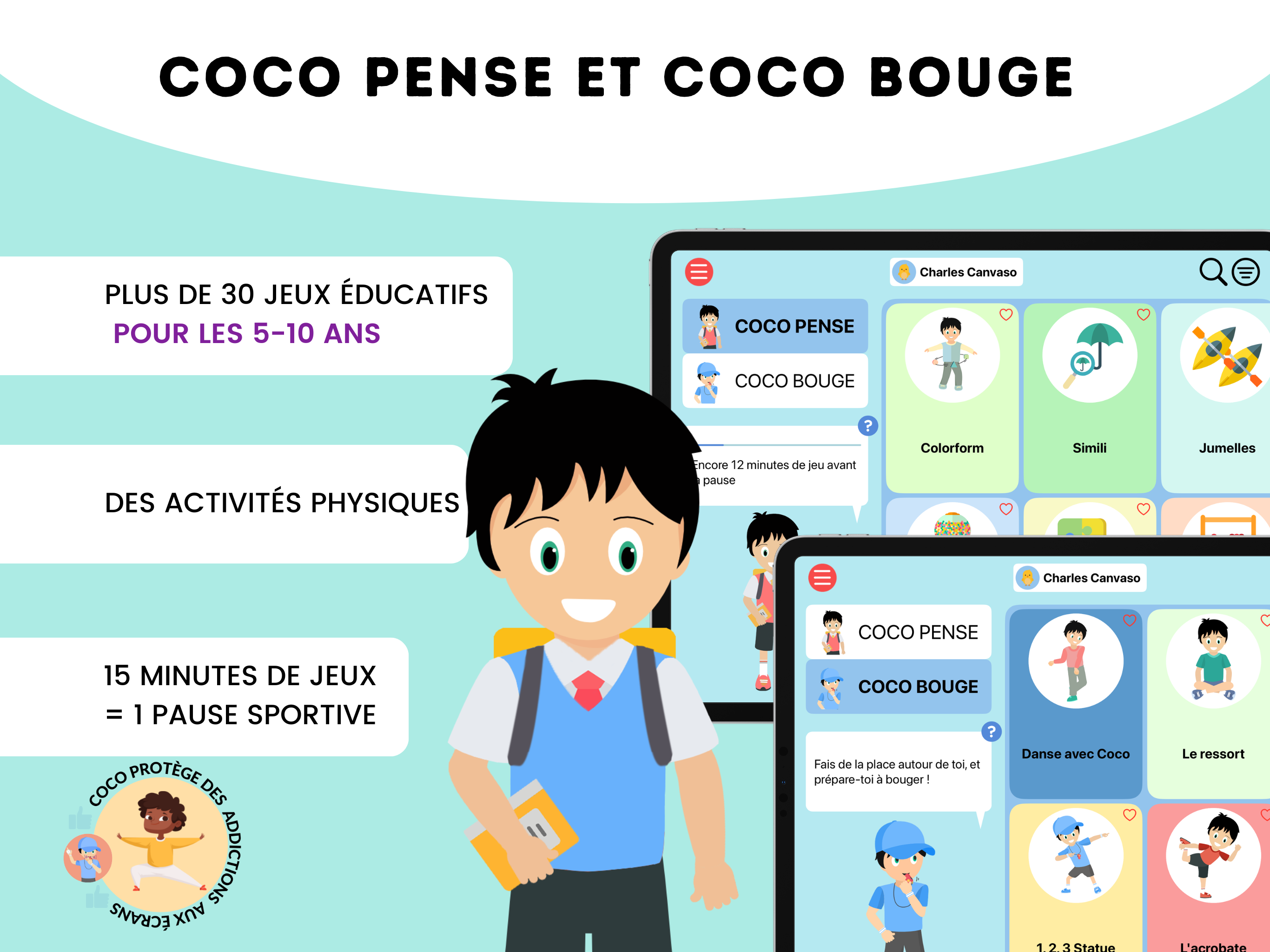
Using these tools in care centers allows for structured, motivating, and level-appropriate cognitive activities for each resident. Tracking data facilitates communication with families and medical partners and contributes to the ongoing assessment of skills and needs.
🎯 Discover DYNSEO programs
Cognitive stimulation tools suitable for all ages and profiles, ideal for care centers for autistic people.
Discover the COCO program →⚖️ Rights and self-determination
Respecting the fundamental rights of residents is the ethical foundation of all support in care centers. Autistic individuals, regardless of their level of communication or dependence, have the right to privacy, choice, information, consent, dignity, and participation in decisions that concern them. Staff training must place these rights at the center of reflection and train for respectful daily practices.
Self-determination, that is, the ability of the person to make choices and exercise control over their own life, is a fundamental support objective. Even for individuals with very limited communication, choices can be offered: choice of clothing, menu, activity, time for a shower. These daily micro-choices, facilitated by visual supports or concrete objects, contribute to the feeling of control and quality of life.
🎓 Train with DYNSEO
DYNSEO offers a certified Qualiopi training “Supporting a child with autism: keys and solutions for everyday life” whose principles are largely transferable to supporting adults. For a specific approach to adult issues, the DYNSEO guide for supporting autistic adults provides valuable complementary resources.

🎓 Train your team for appropriate support
Certified Qualiopi training available online, to create a truly adapted environment for autistic adults in your care center.
Discover the training →🎯 Conclusion
Creating an environment suitable for autistic adults in care centers is a global challenge that involves designing spaces, training staff, programming activities, and respecting the fundamental rights of residents. Continuous training for the entire team is essential to transform a simple accommodation place into a true living space where each autistic adult can thrive, progress, and exercise their choices.
Cognitive stimulation tools like those offered by DYNSEO help maintain abilities, prevent decline, and provide meaningful and motivating activities. But it is above all the human quality of support, based on understanding, respect, and kindness, that makes the difference in the daily lives of residents.
An adapted environment for a quality life:
Every autistic adult deserves a living space that suits them.
Did this content help you? Support DYNSEO 💙
We are a small team of 14 people based in Paris. For 13 years, we have been creating free content to help families, speech therapists, care homes and healthcare professionals.
Your feedback is the only way we know if our work is useful. A Google review helps us reach other families, caregivers and therapists who need it.
One action, 30 seconds: leave us a Google review ⭐⭐⭐⭐⭐. It costs nothing, and it changes everything for us.