Post-Crisis Debrief: Structured Method for the Care Team
A comprehensive methodology in 7 phases to transform each crisis into an opportunity for collective learning and mutual support
Dans cet article
La formation associée
After a behavioral crisis in a medico-social establishment, silence is often the first reflex. The team disperses, everyone returns to their tasks, the incident is recorded in the care file, and life resumes its course. However, this moment of apparent "return to normal" often hides invisible wounds, unresolved questions, and missed learning opportunities.
Why is post-crisis debriefing essential?
Post-crisis debriefing is not a luxury or an option reserved for exceptional situations. It is a professional and ethical necessity that simultaneously benefits three levels: the well-being of caregivers, the quality of care provided to residents, and the overall performance of the establishment.
Impact of systematic debriefing
The emotional support of caregivers
Managing a behavioral crisis - whether it involves verbal aggression, physical violence, or intense agitation - generates considerable physiological and emotional stress. The body activates its "fight or flight" response, releasing adrenaline and cortisol. Once the crisis has passed, these hormones take time to dissipate.
Without space to unload this tension, caregivers accumulate traumatic stress that can lead to several serious consequences:
Professional burnout
A chronic emotional fatigue that gradually erodes the ability to care and can lead to burnout
Post-traumatic stress
Mentally reliving the incident, hypervigilance, avoidance of certain residents or similar situations
Guilt and doubt
Persistent questions: "Could I have done differently?", "Is it my fault?", "Am I incompetent?"
Anticipatory fear
Growing apprehension towards certain residents or situations, impacting the quality of the caregiver-patient relationship
The debriefing offers a legitimate and structured space to express these emotions, feel heard and supported by the team, and normalize reactions that are actually perfectly human and understandable.
🎓 DYNSEO Training: Mastering the debriefing
Our training "Behavioral disorders related to illness: Methods and multidisciplinary coordination" includes a comprehensive module on organizing and facilitating post-crisis debriefings. You will learn facilitation techniques, group emotion management, and systemic analysis of incidents.
Discover the training →
Organizational learning
Each crisis contains valuable information. It is a "window" that opens onto what is not working well in the care system: gaps in protocols, lack of training, communication problems, inadequacy of resources, unsuitable environment.
Without structured debriefing, these lessons are lost. The same mistakes are repeated, the same triggering situations recur, and the establishment goes in circles without progressing. The debriefing transforms a negative experience into an opportunity for improvement:
- Identification of recurring triggering factors: Are certain times of the day, certain activities, certain caregivers more at risk? Why?
- Analysis of effective and ineffective interventions: What worked? What worsened the situation? These learnings can be capitalized for the entire team.
- Adjustment of protocols and practices: Are current procedures adequate? Do they need to be modified, enriched, or new ones created?
- Targeted training: What skills are lacking in the team? Therapeutic communication, stress management, minimal restraint techniques?
- Improvement of interprofessional coordination: How to work better together? How to communicate better between day/night teams, between caregivers and doctors?
The continuity and quality of care
For the resident at the center of the crisis, the debriefing is also beneficial, even if they do not participate directly. It allows for a better understanding of their specific needs, their unique triggers, and leads to the adjustment of their personalized care plan. The team coordinates around a coherent common approach, which reduces confusion and anxiety for the resident in the face of different responses from caregivers.
"A well-conducted debriefing transforms a crisis - a moment of rupture and suffering - into a lever for continuous improvement of care quality. It is investing in the future so that future crises are better managed, or even avoided."
When to organize a post-crisis debriefing?
The timing of the debriefing is crucial for its effectiveness. Too early, the emotions are still too vivid to allow for constructive reflection. Too late, the memories fade and the emotional impact loses its urgency. In reality, there are two complementary types of debriefing:
The immediate debriefing (defusing)
⚡ Defusing: Frontline intervention
Timing: Within 30 minutes to 2 hours after the incident
Duration: 15 to 30 minutes maximum
Main objectives:
- Check that no one is physically injured or in acute psychological distress requiring immediate care
- Briefly share what happened from each person's perspective - no in-depth analysis at this stage
- Express immediate emotions in a safe setting
- Normalize stress reactions ("What you are feeling is normal")
- Identify who needs additional support and direct them to appropriate resources
Format: Informal, quick, focused on emotional support and safety. No causal analysis, no search for solutions.
Who facilitates? The present health manager, the coordinating nurse, or the most experienced available colleague. No specific expertise in group facilitation is needed.
Example structure of a defusing:
- "How is everyone doing now? Is anyone injured or not feeling well?" (quick round, assessment of immediate needs)
- "What happened from each person's perspective?" (very brief factual reconstruction, without going into details)
- "What you are feeling is normal after such an event. Here’s what we will do..." (normalization, information about the upcoming debriefing)
- "We will meet again [near date, ideally within 48 hours] to discuss it in more depth." (announcement of the structured debriefing)
The defusing is not mandatory after every minor incident, but strongly recommended after any event that generated significant stress (physical violence, shouting, feeling of danger, intense fear).
The structured debriefing (the actual debriefing)
🔍 Structured debriefing: In-depth analysis
Timing: 24 to 72 hours after the incident (ideally 48h). This delay allows immediate emotions to settle a bit while keeping memories fresh.
Duration: 45 minutes to 1h30 depending on the complexity of the situation and the size of the team
Multiple objectives:
- Accurate and shared reconstruction of events - create a common version of what happened
- In-depth expression of emotions and experiences in a supportive environment
- Systemic analysis of triggering and contributing factors
- Critical but non-judgmental evaluation of interventions and their effectiveness
- Collective identification of key learnings
- Definition of a concrete action plan with responsibilities and deadlines
Format: Structured in 7 phases (detailed below), with a trained facilitator, in a calm and private location, without interruption
Who participates? All professionals directly involved in crisis management, the health manager, possibly the coordinating doctor or the psychologist of the establishment if available
Who facilitates? Ideally someone who was NOT directly involved in the incident (to maintain neutrality), trained in debriefing techniques, such as the psychologist, the senior manager, a member of a mobile support team, or a health manager from another unit
The structured method in 7 phases
Here is a proven methodology, inspired by psychological debriefing and professional practice analysis, which structures the debriefing into 7 distinct phases. Each phase has its specific objectives, its own timing, and requires particular facilitation skills.
Phase 1: Introduction and framing (5-10 minutes)
This first phase is crucial as it establishes the psychological safety framework necessary for participants to express themselves freely. Without this clear framework, the debriefing risks drifting towards blame, unspoken issues, or settling scores.
Objectives of this phase:
- Create a safe and confidential environment where everyone can express themselves without fear of judgment or sanction
- Explain the process and rules of the debriefing transparently
- Manage participants' expectations - tell them what the debriefing will and will not do
- Obtain everyone's commitment to respect the established framework
💬 Recommended introduction script
"Hello everyone and thank you for being here. We are gathered today to debrief together the incident of [date and time] involving [Mr./Ms. X]."
"The goal of this time is neither to find a culprit nor to judge who did well or poorly. We are not here to sanction. We are here to understand together what happened, how each person experienced it, and above all what we can learn to improve our practices and better manage similar situations in the future."
"This time belongs to you. It is a space where your emotions, your questions, your difficulties have their place."
Rules to clearly state and validate with the group:
- Absolute confidentiality: "What is said here stays here. Nothing will leave this room without the explicit agreement of the group. A written report will be prepared but anonymously and only for internal use."
- Mutual non-judgment: "Everyone has the right to express their feelings and point of view without being criticized, mocked, or challenged. We welcome all perspectives as valid."
- Respect for speech: "Do not interrupt the person speaking. We listen actively, even if we disagree. Everyone will have their speaking time."
- Freedom of speech AND right to silence: "No one is obliged to speak if they do not wish to. But everyone is strongly encouraged to do so because your experience is valuable to the group."
- Radical kindness: "We talk about observable behaviors and our feelings, not judgments of people. We say 'When you did X, I felt Y' and not 'You are incompetent'."
- Phones off: "To respect this moment and stay focused, please turn off your phones. We will not be disturbed during this hour."
Announced process: "We will follow 7 steps: first, we will reconstruct the facts together, then express our emotions, analyze the causes, evaluate our interventions, identify what we have learned, define concrete actions, and finally conclude this moment. This will take about an hour."
Phase 2: Factual reconstruction of events (10-15 minutes)
This phase aims to establish a shared and objective chronology before entering into emotions and interpretations. It is a cognitive step that lays the common factual foundations.
Objectives:
- Establish a common timeline shared by all
- Identify any divergences in perception (two people may have experienced the same scene differently)
- Stay focused on observable facts before moving into emotions and interpretations
- Create a coherent collective narrative that will serve as the basis for analysis
Facilitator's guiding questions:
- "What exactly happened? Who can describe the sequence of events?" (let someone start the narrative)
- "What time did it start? In what specific context?" (temporal and contextual anchoring)
- "Who was present at that moment? Who intervened and when?" (identification of actors)
- "What specific behaviors did you observe from Mr./Ms. X?" (factual description)
- "How did the situation evolve? When did it calm down?" (evolution over time)
- "Did anyone observe something different or would like to add?" (integration of all viewpoints)
Active role of the facilitator:
- Take visual notes: Use a whiteboard, flip chart, or post-its to create a visual timeline that everyone can see. Suggested format: Time | Event | Person(s) involved | Intervention made
- Reframe on facts if necessary: If participants drift towards emotions or interpretations, gently but firmly reframe: "I note your feelings, we will return to that in phase 3. For now, let's stick to observable facts: what did you see precisely?"
- Clarify vague terms: "When you say Mr. X was 'violent', what exactly did you observe as behavior?" (seek factual description behind the judgment)
- Signal divergences without deciding: "That's interesting, Martine saw X arrive first to intervene, while Paul saw Y. Both perceptions are valid - you were in different places. Let's note both versions."
📝 Practical tool: Reconstruction template
Create a table with 5 columns:
- Approximate time (2:30 PM, 2:35 PM, etc.)
- What happened (observable behavior of the resident)
- Context (ongoing activity, people present)
- Who intervened
- What intervention (concrete action taken)
Fill in this table collectively in real-time. By the end of this phase, everyone should have the same factual understanding of what happened.
Phase 3: Expression of emotions and experiences (15-20 minutes)
This is often the most anticipated and liberating phase for participants. After laying out the facts neutrally, we now enter into each person's subjective feelings. This is the heart of emotional support.
Objectives:
- Allow everyone to authentically express what they felt during and after the crisis
- Normalize emotional reactions ("What you felt is normal and legitimate")
- Create a space for mutual support and recognition of each other's difficulties
- Identify who might need individual psychological follow-up
Guiding questions:
- "Now that we have reconstructed the facts together, I would like each of you to tell us how you personally experienced this moment. What did you feel?" (roundtable where everyone expresses themselves)
- "What was the most difficult for you in this situation?" (identify moments of emotional peak)
- "How do you feel now, a few days later?" (assess current emotional state)
- "Are there thoughts that come back intrusively, images that you can't forget?" (screening for post-traumatic symptoms)
❤️ Key skills of the facilitator during this phase
- Active empathetic listening: Nods, kind eye contact, rephrasing ("If I understand correctly, you were very scared at that moment")
- Systematic normalization: "What you are describing - this fear, this anger, these tremors, this feeling of helplessness - is a completely normal reaction to such a stressful situation. Your body and mind reacted as they needed to in order to protect you."
- Validation without minimizing: "I understand how frightening it was for you", "What you experienced is really difficult", "You had the right to be afraid". Absolutely avoid "It's not that bad" or "It could have been worse".
- Encouraging without forcing: If someone doesn't want to talk, respect that: "It's okay if you prefer not to say anything right now. My door is open if you want to talk privately later."
- Managing intense emotions with kindness: If someone is crying, it's normal and healthy. Let the tears flow, offer tissues, a break if necessary, group support ("Take your time, we are here"). Tears should not be suppressed - they are part of the healing process.
Traps to absolutely avoid:
- Letting someone monopolize the conversation: After 5-7 minutes of one person's account, gently redirect: "Thank you for sharing. I suggest we also hear from others, and you can add more later if needed."
- Allowing judgments about colleagues: If someone says "I was scared because of your incompetence", immediately redirect: "I understand that you were scared, and that's legitimate. For now, let's talk about what YOU felt. We will analyze everyone's actions in the next phase in a constructive way."
- Minimizing someone's experience: Never compare experiences ("Yes, but he was hit, you just felt scared"). Every feeling is unique and valid.
- Turning this phase into analysis: If participants start analyzing causes or proposing solutions, defer: "Great, I’ll note these ideas for phase 4. For now, let's stay focused on your emotions."
🎮 SCARLETT : Preventing disorders through rewarding activity
Boredom and frustration are major factors in behavioral disorders. Offering suitable and rewarding activities can significantly reduce the frequency and intensity of crises.
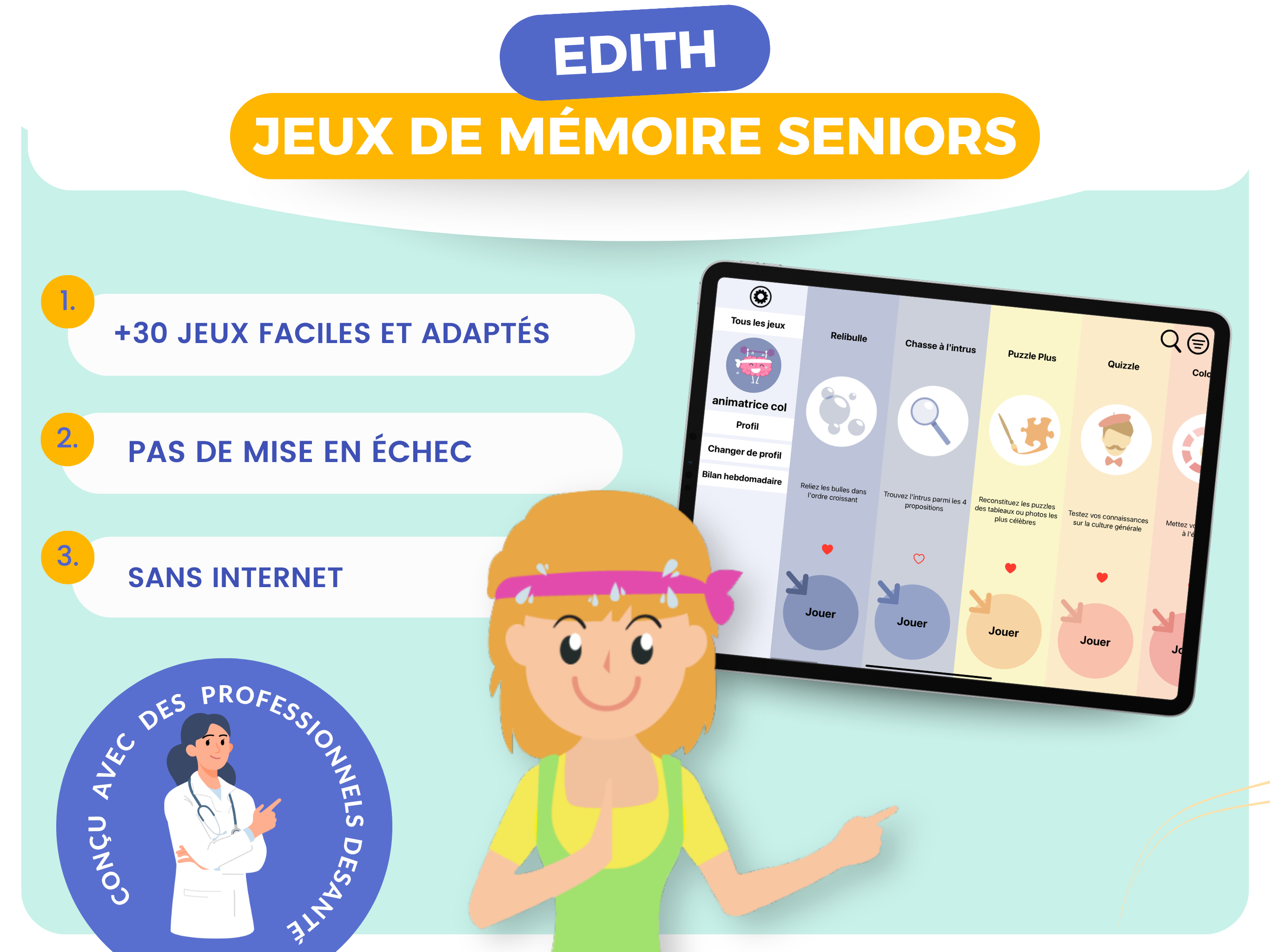
Our program SCARLETT offers over 30 cognitive games tailored for people with Alzheimer's disease and Parkinson's. These activities positively occupy time, stimulate preserved abilities, provide a sense of accomplishment, and can serve as a distraction strategy during anxiety spikes.
Discover SCARLETT →Phase 4 : Analysis of triggering and contributing factors (10-15 minutes)
We are now moving from an emotional phase to a cognitive analysis phase. The goal is to understand WHY this crisis occurred, adopting a systemic approach rather than seeking a single culprit.
Objectives :
- Identify the deep and multifactorial causes of the crisis
- Understand the broader context (not just the immediate trigger)
- Move away from a simplistic view of "difficult resident" to adopt an ecosystemic analysis
- Prepare for the next phase of intervention evaluation
Guiding questions :
- "What do you think triggered or contributed to this crisis?"
- "Were there any warning signs that we could have noticed earlier?"
- "What environmental, medical, organizational, or relational factors may have played a role?"
- "Did this crisis surprise you or was it predictable? Why?"
Use the bio-psycho-social model to guide the analysis :
Biological/medical factors
Untreated pain? Infection (urinary, respiratory)? Constipation? Medication side effects? Dehydration? Hypoglycemia? Sleep disorders? Progression of the disease?
Psychological factors
Fear or anxiety related to an event? Frustration due to loss of autonomy? Confusion due to dementia progression? Reaction to grief, bad news? Underlying mood disorder?
Environmental factors
Overstimulation (noise, light, crowd)? Understimulation (boredom, loneliness)? Change in routines? Absence of the primary caregiver? Conflicting interaction with another resident? Inadequate layout?
Organizational Factors
Lack of staff, team stress? Difficult time of day (morning toilet?)? Inadequate or unknown protocol? Failure to transmit information between teams? Insufficient training?
Facilitation Tool: The "Fishbone" Diagram (Ishikawa)
Draw a large horizontal fish on the board. The head represents the crisis. The main bones represent the 4 categories above. On each bone, note the contributing factors identified by the group. This visualization helps to see the multi-causality of the crisis.
At the end of this phase, the group should have identified at least 3-5 varied contributing factors. If only one factor is identified ("Mr. X was aggressive"), dig deeper: "Why was he aggressive at that specific moment? What was happening for him?"
Phase 5: Evaluation of Interventions (10-15 minutes)
This phase is delicate as it requires critical honesty without falling into blame. The goal is to identify what worked well AND what could be improved, with a focus on collective learning.
Objectives:
- Identify the interventions that helped to defuse the situation
- Recognize what was less effective or may have made things worse
- Identify good practices to generalize and pitfalls to avoid
- Prepare the improvement actions for phase 6
Guiding Questions:
- "What actions did we take? In what order?"
- "What seemed to help calm Mr./Mrs. X?"
- "What did not work as we hoped?"
- "Were there moments when our intervention may have worsened the situation? Without judgment, what did we learn?"
- "If we had to face a similar situation again, what would we do differently?"
Facilitator's Posture - Crucial to Avoid Defensiveness:
- Systematically value what worked well: "You managed to secure the other residents very quickly, that was an excellent reaction," "Calling the supervisor quickly allowed for reinforcements, that was the right decision"
- Explore difficulties without blaming: "Why do you think that approach did not work? What could we have known at that moment? In hindsight, what could we have done differently?"
- Identify ethical or practical dilemmas: "You found yourselves faced with a difficult choice between X and Y. It’s complex and there is not always an obvious right answer"
- Speak in collective "we": "What can WE improve?" rather than "What should YOU have done?"
Evaluation Criteria to Use:
- Speed of Response: Did we detect the warning signs? Did we react early enough?
- Relevance: Were the interventions appropriate for the specific situation and this person?
- Coordination: Did the team work together or was there confusion, contradictory orders?
- Safety: Did we ensure the safety of everyone (resident, other residents, caregivers)?
- Respect and Dignity: Did we preserve the resident's dignity as much as possible despite the difficult situation?
Phase 6: Identification of Learnings and Action Plan (10-15 minutes)
This is the most operational and forward-looking phase. We move from analysis to concrete: what do we do now to improve things?
Objectives:
- Transform the difficult experience into concrete and actionable learnings
- Define corrective actions (to prevent recurrence) and preventive measures
- Empower change agents with clear deadlines
- Give meaning to the crisis experienced - it becomes useful for improvement
Guiding Questions:
- "If you had to retain 2-3 key lessons from this experience, what would they be?"
- "What do we need to change concretely - in our practices, our protocols, our organization - to prevent this from happening again or to manage it better?"
- "Who does what and by when? Let’s be specific."
Types of Actions to Consider - Systematically Explore these Three Levels:
1. At the level of the resident concerned:
- Adjustment of the personalized care plan (new strategies identified)
- Medical consultation for re-evaluation (pain? treatment? infection?)
- Modification of the environment of their room or living spaces
- Review of proposed activities (more suited to their needs?)
- Involvement of other professionals (psychologist, occupational therapist, psychomotor therapist, art therapist)
- Meeting with the family to adjust support
2. At the team level:
- Specific training identified (crisis management, therapeutic communication, de-escalation techniques, therapeutic validation, minimal restraint, Humanitude, etc.)
- Creation or revision of protocols (alert protocol, specific crisis management protocol for this resident)
- Improvement of communication and transmissions between teams (communication book, more effective transmission meetings)
- Definition of clear roles in crisis situations (who does what, who coordinates)
- Establishment of regular supervision or practice analysis groups
3. At the organizational/institutional level:
- Adjustment of staffing at certain critical times of the day
- Acquisition of suitable equipment (personal protective equipment, technical aids, calming sensory materials)
- Redesign of spaces (creation of a Snoezelen space, therapeutic garden, decompression room)
- Revision of schedules to avoid certain risky situations
- Engagement of external resources (mobile geriatric team, memory consultation, elderly psychiatry)
🎯 SMART Tool for Concrete Actions
For each decided action, use the SMART format to make it truly actionable:
- Specific: What precise action? (Not "improve training" but "train the day team on de-escalation techniques")
- Measurable: How will we know it's done? (10 caregivers trained out of 12)
- Acceptable: Is everyone in agreement? Does the action make sense for all?
- Realistic: Do we have the means (time, budget, skills)? If not, what needs to be requested?
- Time-bound: By what specific date? (not "soon" but "by March 15")
Example of a SMART action:
"Train the day team (12 caregivers) on therapeutic validation techniques through a 3-hour internal training led by the psychologist or an external organization, by the end of the quarter (March 31). Budget: €600. Responsible: Health Manager Ms. Durand."
Formalize the action plan: The facilitator notes all actions on the board in table format with 4 columns: Specific Action | Responsible | Deadline | Necessary Resources
At the end of this phase, you should have between 3 and 7 concrete actions at most. More than 7 is unrealistic and you won't do them. Prioritize the most impactful ones.
Phase 7: Closure and Follow-up (5 minutes)
The last phase is essential to symbolically close this intense moment and prepare for what comes next.
Objectives:
- Synthesize the key points so that everyone leaves with a clear vision
- Emotionally close the session on a constructive note
- Plan the follow-up of actions and a feedback point
- Thank and value the team's commitment
Recommended closing script:
"We have reached the end of this debriefing. First, I want to thank you all for your presence, your honesty, and your commitment to this process. It is not easy to talk about difficult moments, and you have done so with a lot of professionalism and humanity."
Summary to be done (2-3 minutes):
- Brief reminder of the main facts reconstructed together
- Recognition of the expressed emotions and the team's courage in facing a difficult situation
- Recap of the 3-5 major learnings that you collectively retain
- List of decided actions with responsible persons and deadlines
Closing round (3-5 minutes):
"To finish, I would like each person to say in one word or a short phrase how they feel now, after this debriefing, compared to how they felt when arriving."
This round allows to:
- Measure the positive impact of the debriefing (generally people feel better after talking)
- Identify if someone still needs particular support
- Symbolically close this collective moment
- End on a lighter note and looking towards the future
Follow-up planning:
- "We will meet again in [time frame, usually 1 month] to review the progress of the actions decided today."
- "A written report of this debriefing will be sent to you within [short time frame, 3-5 days] by email or paper version."
- "If some of you feel the need to discuss this individually, my door remains open. Don't hesitate."
- "The psychologist of the establishment is also available if you feel the need."
Final thanks and appreciation:
"I want to commend your professionalism and humanity in this very difficult situation. What you do every day to support our residents is precious, important, and often challenging. You have my full appreciation and that of the establishment. Take care of yourselves."
💝 For caregivers: You also need debriefing
If you are a caregiver, you are probably experiencing crisis situations alone, without a team to support or debrief you. It is essential that you find spaces to talk about these difficult moments:
- Support groups for caregivers (France Alzheimer, local associations)
- Consultations with a psychologist specialized in gerontology
- Exchanges with other caregivers via forums or associations
- Structured training and support like our DYNSEO training

Our training "Behavioral Changes Related to Illness: Practical Guide for Caregivers" helps you understand, manage, and recover from behavioral crises, while preserving your mental health. You are not alone.
Discover the training →Practical tools for debriefing
Beyond the methodology, here are concrete tools you can implement in your establishment to facilitate and systematize debriefings.
The standardized debriefing grid
Create a template document (Word or fillable PDF format) that you will use for each debriefing. This ensures completeness and traceability. Suggested sections:
📋 Debriefing grid template
General information:
- Date and time of the incident
- Date and time of the debriefing
- Participants present (names and roles)
- Facilitator of the debriefing
- Resident concerned (initials for anonymization if widely shared)
Reconstruction of facts:
- Detailed timeline (who did what, when)
- People involved in the incident and in the intervention
- Behaviors observed from the resident (factual, without judgment)
- Interventions carried out by the team
- Total duration of the episode and moment of return to calm
Analysis:
- Identified triggering factors (bio-psycho-social-organizational)
- What worked well in our management
- What worked less well or could be improved
- Difficulties encountered by the team
- Perception discrepancies among participants
Emotional impact:
- Dominant emotions expressed by the team
- People who expressed a need for additional support
- Support measures implemented (referral to psychologist, etc.)
Learnings and actions:
- Main lessons learned (3-5 key points)
- Corrective actions decided (with responsible parties, deadlines, resources)
- Planned follow-up date
- Changes made to the resident's care plan
The emotional impact assessment scale
Simple but powerful tool: ask participants to rate their level of stress/impact on a scale of 1 to 10, at three different moments:
- During the incident (retrospective assessment: "At the moment, how were you feeling?")
- Right after the incident (in the hours that followed)
- At the time of the debriefing (now, a few days later)
This triple measure allows for:
- Visualizing the evolution and generally observing a decrease (reassuring for participants)
- Identifying who remains at a high level and may need additional support
- Measuring the calming effect of time AND the debriefing itself
- Keeping a quantitative record of the impact of incidents on the team
The mapping of support resources
Create a visible and accessible document for everyone (posted in the break room, available in both paper and digital versions) listing all available support resources:
- Internal resource people: Name, role, contact information (occupational psychologist, senior health manager, occupational physician, staff representatives)
- Institutional support systems: Listening cell if it exists, team supervision (dates and modalities), regular support groups, professional practice analysis
- Emergency numbers: In case of acute psychological distress (SOS Friendship 09 72 39 40 50, Red Cross Listening 0800 858 858, etc.)
- Available training: Internal and external catalog of training related to stress management, communication, behavioral disorders
- Rights and procedures: How to make a work accident declaration, how to request covered psychological support, how to ask for recovery time
Pitfalls to avoid during debriefing
Even with the best intentions and a solid methodology, certain pitfalls can compromise the effectiveness of the debriefing. Be vigilant about these common traps:
The courtroom trap
Manifestation: The debriefing turns into a search for blame, with accusations and defenses. How to avoid it: Remind at the introduction that the goal is collective learning, not punishment. Use systemic language: "What allowed/prevented..." instead of "Why did you.../didn't you..."
The minimization trap
Manifestation: "It wasn't that serious," "We've seen worse," "You have to toughen up in this job." How to avoid it: Systematically validate all expressed emotions. Never compare experiences. Remind that vulnerability is a strength, not a weakness.
The emotional entrapment trap
Manifestation: The debriefing gets stuck in emotional expression and leads to no concrete action. How to avoid it: Strictly respect the timing of each phase. After validating emotions, direct towards analysis and action. Offer individual follow-up to those in need.
The bad timing trap
Manifestation: Debriefing too early (emotions still too raw) or too late (memories faded, impact already made). How to avoid it: Systematically plan between 24 and 72 hours after the incident. Conduct immediate defusing if necessary, but do not confuse it with structured debriefing.
Conclusion: Debriefing, a win-win investment
Structured post-crisis debriefing is not a cost or an additional burden for already overloaded teams. It is a strategic investment that pays off at all levels and produces tangible benefits:
For caregivers:
- Official recognition of their experiences and the difficulty of their work
- Structured emotional support that prevents burnout and post-traumatic stress
- Skill development through collective analysis of situations
- Increased sense of professional effectiveness ("We are progressing, we are learning")
- Team cohesion strengthened by sharing difficult experiences
For residents:
- Continuous improvement of care quality and safety
- Prevention of future crises by adjusting practices
- Increased respect for their dignity and specific needs
- Better team coordination = less confusion and anxiety
For the establishment:
- Valuable culture of learning and continuous improvement
- Reduction of absenteeism related to stress and burnout
- Decrease in staff turnover (better supported, they stay)
- Better image and employer attractiveness
- Increased legal protection through rigorous documentation
Implementing a culture of systematic debriefing transforms crises - which are inevitable in supporting people with cognitive disorders - into opportunities for professional growth and strengthening team cohesion. This requires a commitment from management to allocate time, train competent facilitators, and value this approach. But the benefits, both human and organizational, are well worth the investment.
🎓 DYNSEO resources to go further
Comprehensive professional training:
Behavioral disorders: methods and coordination - including a module dedicated to debriefing and post-crisis management
Support for caregivers:
Practical guide for caregivers - with strategies to manage the emotional impact of crises
Tools for preventing behavioral disorders:
SCARLETT for seniors - Cognitive stimulation tailored to reduce boredom and frustration
Take care of your teams, they will take care of your residents. Debriefing is a cornerstone of this virtuous dynamic. 💙
Did this content help you? Support DYNSEO 💙
We are a small team of 14 people based in Paris. For 13 years, we have been creating free content to help families, speech therapists, care homes and healthcare professionals.
Your feedback is the only way we know if our work is useful. A Google review helps us reach other families, caregivers and therapists who need it.
One action, 30 seconds: leave us a Google review ⭐⭐⭐⭐⭐. It costs nothing, and it changes everything for us.